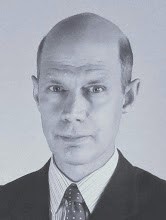
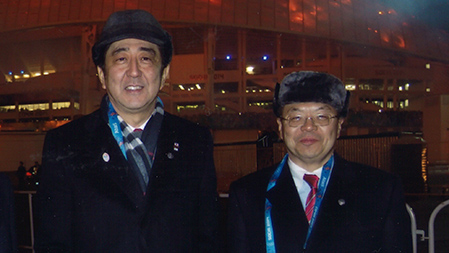
For the first three years of his second premiership, Abe Shinzo surprised many with his restraint and balance. His Cabinets, with a few exceptions, displayed with a mixture of scandal-free operations, diligent policy implementation and submersion of factional and personal rivalries. A deft hand at personnel and calendar management was evident.
Which is what is making the runup to today's announcement of a new Cabinet lineup such a downer. There are too many returnees, too many members of the Seiwakai (Mr. Abe's own faction), too many non-experts being placed as window dressing in posts requiring expertise and too few unfledged MPs getting their first shot at leading a ministry. Most of the first timers will be doubly hobbled because they will not even have a ministry behind them. Instead they will be state ministers shepherded around by the Cabinet Office.
Staying in place are Suga Yoshihide at Chief Cabinet Secretary, Takaichi Sanae at General Affairs, Aso Taro at Finance, Kishida Fumio at Foreign Affairs, Shiozaki Yasuhisa at Health/Pensions/Labor and the Komeito's Ishii Keichi at Infrastructure & Tourism.
Suga Yoshihide is the heart and soul of the Abe administration. Lacking the prerequisites for leadership of the modern LDP and without a thirst for the premiership, he returns to 1) being charge of the bureaucracy, including the recruitment and advancement of the top 600 bureaucrats, 2) being in charge of the Cabinet's work flow and 3) being the chief government spokesman.
Enough for anybody, really.
Takaichi and Shiozaki are Abe loyalists. Both served Abe as cabinet ministers in his first term (2006-07). Aso is something an Abe frenemy. He needs to be kept close even though 1) he cannot fundamentally be trusted and 2) his tongue repeatedly creates controversy.
Entering the Cabinet are Inada Tomomi and Seko Hiroshige. Both are more than mere Abe loyalists: they are sycophants. Seko indeed has played Mini-Me to Abe these past three years (Link), traveling with him around the world, making a particular spectacle of himself in dealings with Vladimir Putin. Both are largely amateurs in the policy areas they will be managing.
The inclusion of Inada and Seko in the Cabinet, combined with the retention of Takaichi and the rumored slide of Abe personal retainer Furuya Kenji into the vacant party post of elections chairman sends a distrubing message -- that Abe, post-House of Councillors 2016, is not in a mood to share with other factions and forces within the LDP. Closeness or service to the party president will be rewarded; all others will just have to lump it.
Loyalty is of course important for rulers. However, so are knowledge and perspective - neither of which sycophants and/or personal debtors can provide. Leadership demands that one restrain oneself, not take all one can, convincing those not in the inner circle that the system has rewards, not just humiliations, for them.
Abe's seeming abandonment of magnanimity and restraint has me worried. Abe put together a similar team of loyalist and fellow travelers in 2006, one which the news media dubbed the "Friends of Shinzo" Cabinet. Their calamitous performances individually and as a Cabinet make me worried about their echo today.
[For my earlier take on the proposed new lineup of the LDP secretariat, click here.]
Showing posts with label Aso Taro. Show all posts
Showing posts with label Aso Taro. Show all posts
Wednesday, August 03, 2016
Thursday, August 27, 2015
Abe Shinzo's Secrets

About three weeks ago Timothy Langley and I had a long YouTube conversation about the implications of the Wikileaks release of July 31 (Link). The release itself featured rather innocuous information regarding Japanese trade and climate change thinking in 2007. What was stunning was the information demonstrated that the United States' National Security Agency was intercepting, translating and then disseminating the transcripts of the telephone calls of Japanese government officials in Tokyo.
At that time of our conversation Mr. Langley told me that despite efforts of the current governments to downplay the significance of this spying, the story was not going away.
Looks like he was right:
Abe Asks U.S. to Investigate Alleged NSA Spying on Japanese GovernmentIt is a rare instance where the United States feels a need to express its regrets to a leader of Japan. Abe, however, has received an apology of sorts (Mr. Abe now knows what it is like to hear "Regret" when what one wants to hear is "Sorry") both from U.S. Vice President Joe Biden (Link) and now from President Obama himself.
Wall Street Journal
TOKYO—Prime Minister Shinzo Abe on Wednesday asked U.S. President Barack Obama to investigate alleged spying by the National Security Agency on the Japanese government and companies, Mr. Abe’s spokesman said.
Documents posted online by WikiLeaks last month suggested that conversations involving government officials, central bankers and Japanese companies had been secretly intercepted by the U.S. agency. In a phone conversation Wednesday morning Tokyo time, Mr. Obama expressed regret that the issue has caused trouble for Mr. Abe and the government, according to Chief Cabinet Secretary Yoshihide Suga...
(Link)
During the recording of the podcast on August 7, I thought the issue with legs would be the hunt for the door openers. The extent and depth of the infiltration into the communications of government officials, particularly the extraordinary number of telephone numbers tapped inside Japan's Ministry of Finance, indicated full cooperation, either knowing or unknowing, of Japanese entities and individuals. My thought was that the current Abe administration would demand to know who allowed the NSA access to Japan's communications networks or even physically into the ministries and the Prime Minister's Residence, that these collaborators or dupes might be reprimanded or even punished.
My thinking now, in light of Prime Minister Abe and President Obama having a conversation on a subject that should have been closed by the previous conversation with Vice President Biden, is that the prime minister has a much bigger worry on his mind.
The Wikileaks release featured analyses of internal communications from Abe's first term in office. The list of high priority targets includes "EXEC SCY TO CHIEF CAB SCY" - the executive secretary to the chief cabinet secretary -- meaning that the U.S. was listening in on the calls made by the executive secretary of the person who is the operations command center of Japan's bureaucracy, the Cabinet and the Prime Minister's staff.
Bad enough news for the alliance-- one has to have a serious attitude problem to dare tap such a nexus of power in a country that supports the U.S. in almost every instance (not to mention figures out how to pay for a lot of what the U.S. wants to do).
The timing of the tapping activity and closeness to the center of the intercepts, however, raises a searing question for Abe: what, if not everything, the United States government knows and has shared about what transpired inside the Prime Minister's Residence in late July, August and early September, 2007.
The facts that his Diet colleagues do not know.
The facts that his supporters do not know.
The facts that possibly only his closest aides, Aso Taro and Yosano Kaoru know.(Link)
The sports newspapers and the weeklies accounts of Abe's last weeks in office in 2007 were pretty wild and woolly. Abe has been insulated from the repercussions of these "revelations," however, because everyone knows the sports newspapers and weeklies will print anything, no matter how implausible, misrepresented or just plain made up.
But if the U.S. was listening in to the calls being made by Yosano's executive secretary, then some folks, maybe a lot of folks, might just know...the truth.
------------------------------------
Only semi-prophetic was I on Monday. While I did guess correctly that a close associate of the prime minister would claim the Abe administration's prudent stewardship of the Japanese economy was the reason for the sudden surge in the value of the yen, I missed guessing the identity of the perpetrator. I had hoped the claimant would be LDP Political Research Council Chair Inada Tomomi. Instead, it was the equally close Friend of Shinzo, Economic Revitalization Minister Amari Akira, who checked in with the fundamental stability claim (Link).
Image courtesy: Prime Minister's Residence
Monday, April 21, 2014
Prior To President Obama's Arrival - A Question Of Atmospherics

Source: Clay's Flickr photostream, under a Creative Commons License.
The Sunday visit to Yasukuni Shrine by Chairman of the National Public Safety Commission and Kishi family retainer Furuya Keiji (Link), the April 12 visit to the shrine of Minister of Interal Affairs and Communications Shindo Yoshitaka (Link), Prime Minister Abe Shinzo's sponsorship yet again of a masakaki decoration for the shrine during its Spring Festival (Link) and the battalion of members of the Diet scheduled to pay their respects at the shrine on Tuesday, all right on the eve of the Obama visit should not necessarily be viewed as provocative pandering to revisionist, fantabulist followers in defiance of the United States's message of disappointment at Prime Minister Abe Shinzo's visit on 26 December 2013 (Link)and the laying of wreaths at Chidorigafuchi by visiting U.S. Secretaries Chuck Hagel and John Kerry on 3 October 2013. (Link)
Instead getting all the visits of those who are just hell bent to pay some sort of tribute to Japan's loyally self-sacrificing imperial subjects out of the way before President Obama's plane touches down is supposed to be as a concession of sorts to the United States.
The insistence of the current level of reverence as moderation will suffer a loss of credibility if
a) either Finance Minister Aso Taro, State Minister for Administrative Reform Inada Tomomi and/or Education Minister Shimomura
b) any Liberal Democratic Party member of the Diet shows up at Yasukuni during the Obama visit.
Aso has been keeping his head down ever since his infamous "Is there not something to learn from the overthrow of the Weimar Constitution?" musings of last year (Link) and Inada and Shimomura deferred their visits. If any of these three ministers pops up in Kudanshita any time between now and Wednesday noon -- then we should not be surprised to see fireworks -- which in this blessed land are usually a summer phenomenon.
Incidentally, I recently visited the attached Yushukan (Link). I had long eschewed going, not wishing to give a yen to the shrine or its affiliates. However, when a certain officer of the Congressional Research Service asked if I were available to tag along on a visit, I broke my longstanding vow.
On the whole I found the place a lot less lurid than I expected, with the arguments more allusive and evasive than I could have imagined. Some parts are heinous -- the description of the fall of Nanjing, for example. However, on the whole, I came away with the feeling of the hopelessness of Japan's imperial enterprise, with all its jury-rigged suicide systems and walls of the faces of, as Steven Stills once wrote about a different time and a different struggle, "All the brave soldiers |That cannot get older." (Link - video)
If the goal of the Yushukan is to fill one with a sense of awe or sadness, it fails. What even the mildly questioning mind comes away with is a sense of the essential and obvious stupidity of the Japanese imperial enterprise.
The section of the museum on the build up to the Pacific War, with the focus on Japan's resources crisis in the face of U.S. embargoes, is a window into the fear Japanese conservatives have about energy, particularly nuclear energy and the nuclear fuel cycle. Looking at the exhibits at the Yushukan it is not surprising that the present generation -- who have never known anything but abundance -- are nevertheless paranoid about Japan ever being pushed into making a strategic choice out of a want of raw materials.
Thursday, October 03, 2013
Abe Shinzo's Friends Indeed
"It is called the Unbegun Symphony. It used to be called the Pathetic Symphony. Now these names as you may know, like the Jupiter Symphony and the Eroica Symphony...now these names as you may know, they are usually not given by the composer. They are given by friends or the musicians and stuff. This name, the Pathetic Symphony, was given to the piece by some of my old friends.
(Pause)
Well, I have a new set of friends now...and we're calling it the Unbegun Symphony."
- Peter Schickele, "The Unbegun Symphony" (1966) *
Well, he has a new set of friends now...
When I hear Abe Shinzo arguing for a stimulus package (taking cash out of the national treasury and distributing it to politically important constituencies) in order to offset the likely downturn in individual and corporate spending after the consumption tax rise (raised in order to pay for the higher health and pension costs associated with a larger population of retirees) so as to not derail the economic growth associated with Abenomics monetary policy (which, by targeting inflation, will eat away at the spending power of those on fixed incomes and/or living off their savings, i.e., retirees) and fiscal policy (which by accelerating the rate of increase of the national debt, threatens jumps in interest rates demanded by borrowers, which will increase the percentage of the national budget consecrated to debt service, decreasing the amount of money available for everything else, most importantly pensions and healthcare for the elderly) all against the advice of economists Honda Etsuro and Hamada Ko'ichi, the two identified "fathers of Abenomics," whilst simultaneously trying to drum up support globally for an as yet unknown set of structural reforms to be decided on...soon...because the set of reforms his brain trust of supposedly market savvy and creative CEOs produced for the big June announcement were either trivial (Link) or so nakedly self-serving (Rakuten CEO Mikitani Hiroshi going so far as to threaten to quit Abe's industrial competitiveness council if the sales of drugs and medical equipment over the Internet were not in included in the June announcement) as to embarrass the PM -- I blackly remember Professor Schickele's sardonic, "Well, I have a new set of friends now..."
In his return to power a year ago, Abe Shinzo seems to have secretly made a deal with himself and his eminence grise Suga Yoshihide. Abe would nod in the direction of old coterie of supporters and allies, the so-called "Friends of Abe" like Taka'ichi Sanae, Furuya Keiji and Inada Tomomi -- and yes, even the duplicitous and too glib Aso Taro -- relying upon them as the backbone for his challenge to the status quo within the Liberal Democratic Party. The muscle and momentum for the takeover of the party and the government, however, would come from the zaikai, with new style but still establishment business moguls like Mikitani, Takeda Phamaceuticals CEO and Keizai Doyukai head Hasegawa Yasuchika, JR Central Chairman Kasai Yasuyuki, Fuji Film CEO Komori Shigetaka as a set of "New Friends of Shinzo" -- persons whom when you talked to them seemed full of ideas on how to transform Japan into an economic powerhouse, a state capable of paying for the kind of raw politico-military power Abe had seemingly previously thought could only come through the imposition from above of a hair-trigger patriotic, paranoid obedience to authority -- you know, like the mindset the Chinese seem to be fostering.
The New Friends seemed full of the promise of a revived fukukoku kyohei, but a fukoku kyohei for the Facebook Age -- with the New Friends of Shinzo providing the ideas and capital for the fukoku and the Old Friends providing the applause for the Abe/Suga duarchy's tentative tiptoeing toward the kyohei.
As I watch Abe's epic, manic, economic speedballing -- meeting everyone, asking everyone's advice, with resulting announcements of new economic policies off-setting the effects of previous economic policies offsetting the effects of yet earlier policies engaged to counter the consequences of even older policies, with frenetic searches for new statistics demonstrating earlier that the latest policies are indeed working (Link) or that the current policies need yet newer policies to offset them -- I find myself worrying, "Won't the pressures of finding a path through the bewilderingly numerous, numbingly complex and often mutually contradictory plans of the New Friends of Abe cause the man to break down -- just like the unseemly power-grabbing and intransigence of the Old Friends did?"
A disconcerting thought for a sunny day.
Later - It is not a sign of the Apocalypse, but when the Yomiuri Shimbun, which is as a rule sycophantic in its coverage of the policies of the LDP prime ministers, is like me in shaking its head at the PM's mutually negating proposals (Link) then the sum of the parts of the current administration's ideas is clearly less than a whole.
----------
* The album An Hysteric Return: P.D.Q. Bach at Carnegie Hall is available here.
Thursday, September 19, 2013
Ignore What I Said. Please!
This morning the news organizations reported what is probably a non-story. Asking the rhetorical question, "Is he making light of the electorate?" the nation news providers pointed an accusative finger at Liberal Democratic Party Secretary-General for the House of Councillors Waki Masashi, who told a gathering held in honor of the LDP's women legislators:
Waki is a Tokyo University grad (Engineering) and a former national government bureaucrat -- albeit of the now demoted Construction Ministry. So despite being a card-carrying member of the LDP's Road Tribe, the Mos Eisley Spaceport of Diet groups, he cannot be assumed to be complete out of his senses.
So while it is difficult to ascertain what Waki thought he was saying -- and to whom -- an assumption that he was calling the voters "morons" is not plausible.
Two points:
One, this is the second major flareup over peculiar remarks about elected government by an LDP bigwig since the July 21 House of Councillors. The first was the brouhaha over Finance Minister and Deputy Prime Minister Aso Taro's suggestion to a Japan Institute of National Fundamentals-provided audience that those wishing to revise the 1947 Constitution should learn from the Nazi party's overturning of the Weimar Constitution. In that instance, initial transcripts left open the possibility that Aso was being sarcastic or ironic. Recently, sound recordings featuring the audience reaction to Aso's remarks indicate that whatever his intent, the audience clearly thought a Nazi-like takeover of the present Japanese state hilarious (Link J - audio) -- showing that major news outlets were not being unfair in their framing of Aso's weird ramblings.
Two, chasing-after-gaffes journalism -- merited in Aso's case, unmerited in Waki's -- is back from the grave. We are in a time of turmoil, where serious issues and ideas are being debated. Nevertheless journalists are wasting their time and ours on revealing politicians to be idiots -- which is a lot like reporting breathlessly about zebras having stripes.
The second point is bad news for persons looking for a Japan with the wherewithal to lift itself out of its doldrums. Attention spans are limited, and if the people's eyes and ears are clogged with trivialities, the voters will not be the guides for the politicians that they will need to be, this blessed land having nothing resembling an opposition in the Diet. Grim and frightening it is to watch august news institutions like national broadcaster NHK roll over and become mere PR outlets for the government and select businesses (Last night's 7 pm broadcast actually began with the announcer chirping, "Tonight there is wonderful news (ureshii nyusu): the sites of the stations of the proposed high speed linear motor line have been chosen!"). If what little time that is left for critical commentary is wasted on parsing the semantics of the perspective challenged -- then we are all in the pot, ready to be roasted.
Later - Many thanks to commenter "TheStrawMan" for noticing my skipping over the phrase marked in red above.
Still left unanswered is how the party composed of mere humans can conjure up and approve a system of selecting candidates which is idiot-proof.
「今の制度は政党の段階で候補者の選び方が未熟だ。まず政党が本当に正しい意味で国会議員を選べるか。これさえしっかりしていれば、あまり大きな声では言えないが、選ぶ人がアホでも、選ばれる人は立派なんです。」Given the audience at the reception, which included Prime Minister and LDP President Abe Shinzo (Link - J video), it is difficult to state with any certainty who it is Waki thinks deserves the label "moron" (aho). Nor can one easily discern who precisely the chosen persons (erabareru hito) are. Nor is it clear how "moron" selectors can chose "impressive" (rippa) persons.
"The current mean of selecting party candidates, by the steps established by the parties, is immature. First, can the parties really select members of the Diet correctly? If we can deal decisively with this one thing, although one cannot say it in too loud a voice, even if morons are making the selections, the selected persons are impressive."
Waki is a Tokyo University grad (Engineering) and a former national government bureaucrat -- albeit of the now demoted Construction Ministry. So despite being a card-carrying member of the LDP's Road Tribe, the Mos Eisley Spaceport of Diet groups, he cannot be assumed to be complete out of his senses.
So while it is difficult to ascertain what Waki thought he was saying -- and to whom -- an assumption that he was calling the voters "morons" is not plausible.
Two points:
One, this is the second major flareup over peculiar remarks about elected government by an LDP bigwig since the July 21 House of Councillors. The first was the brouhaha over Finance Minister and Deputy Prime Minister Aso Taro's suggestion to a Japan Institute of National Fundamentals-provided audience that those wishing to revise the 1947 Constitution should learn from the Nazi party's overturning of the Weimar Constitution. In that instance, initial transcripts left open the possibility that Aso was being sarcastic or ironic. Recently, sound recordings featuring the audience reaction to Aso's remarks indicate that whatever his intent, the audience clearly thought a Nazi-like takeover of the present Japanese state hilarious (Link J - audio) -- showing that major news outlets were not being unfair in their framing of Aso's weird ramblings.
Two, chasing-after-gaffes journalism -- merited in Aso's case, unmerited in Waki's -- is back from the grave. We are in a time of turmoil, where serious issues and ideas are being debated. Nevertheless journalists are wasting their time and ours on revealing politicians to be idiots -- which is a lot like reporting breathlessly about zebras having stripes.
The second point is bad news for persons looking for a Japan with the wherewithal to lift itself out of its doldrums. Attention spans are limited, and if the people's eyes and ears are clogged with trivialities, the voters will not be the guides for the politicians that they will need to be, this blessed land having nothing resembling an opposition in the Diet. Grim and frightening it is to watch august news institutions like national broadcaster NHK roll over and become mere PR outlets for the government and select businesses (Last night's 7 pm broadcast actually began with the announcer chirping, "Tonight there is wonderful news (ureshii nyusu): the sites of the stations of the proposed high speed linear motor line have been chosen!"). If what little time that is left for critical commentary is wasted on parsing the semantics of the perspective challenged -- then we are all in the pot, ready to be roasted.
Later - Many thanks to commenter "TheStrawMan" for noticing my skipping over the phrase marked in red above.
Still left unanswered is how the party composed of mere humans can conjure up and approve a system of selecting candidates which is idiot-proof.
Thursday, August 22, 2013
Politics And Society In Comic Verse - Special Taro Aso Edition

Deputy Prime Minister and Minister of Finance Aso Taro's recent peculiar musings on the Nazi takeover of Weimar Germany earned him international scorn.
Aso-sensei also has a taut face topped with a mop of improbably black (he will be 73 years old on September 20) hair severely parted to one side (see above).
The combination got one Takasaki Yusaku of Atsugi City, Kanagawa Prefecture to compose a 17 syllable poem:
髭書けば
顔も似てくる
副総理
Hige kakeba
kao mo nite kuru
fukusori
If you draw in the mustache
There is a resemblance in the face as well
Deputy Prime Minister
The editors of Tokyo Shimbun, which published Mr. Takasaki's poem on the paper's editorial page on August 17, decided that of the 10 poems it published that day, this one was the most in need of a visual prompt.
So the cartoonist Uno produced the below drawing, with the microphone head in just the right, or perhaps ultra-right, position:

Dear Aso-sensei, after this, it might be the time for you to do the switchover to the full Shirasu Jiro look (I agree. It is hard to believe that the one on the left is your grandfather, when Shirasu on the right seems the closer match). You have the money and personal style to make it work. Besides, you can babble convincingly about wanting to be as close to your grandfather as Shirasu was (like in this photo of the two of them on the plane bound for the San Francisco peace conference) while remaining a conservative icon, which Shirasu is.
Later - As for how it was that the internationalized Shirasu -- who opted out of serving the wartime government by taking up farming, returning to public service at the invitation of Yoshida Shigeru as a member of the Liaison Office facilitating the Occupation -- could become a conservative poster boy, see this Japan Times article.
For the zenith of Shirasumania, see this poster of a Takarazuka production of his life. And look, Shirasu is wearing Aso's hat. And yes, the individual in the uniform is supposed to be General Douglas MacArthur.
Beyond this be wonkery - Is there a specific use of "to write" (kaku - 書く) that applies for the penciling in of mustaches? I would have thought that "to draw, to paint" (kaku - 描く) would be correct character here.
This post has been edited to compensate for link rot - MTC
Photo image courtesy: Bloomberg News
Sunday, August 04, 2013
Oh Really, Minister Shimomura?
It had been a conundrum.
Of the four arch-revisionist Friends of Shinzo in the Cabinet -- Inada Tomomi, Shindo Yoshitaka, Furuya Keiji and Shimomura Hakubun -- all except Shimomura had paid their respects at Yasukuni. It took Inada a little bit longer to make the trip. However, she eventually made it, turning the event into a minor plug for her minor effort at organizing young reactionaries into a movement.
Until yesterday it seemed as though Shimomura, for all the horrible, authoritarian, illiberal nonsense he has sworn to inflict upon the primary-through-high-school education system, had the strategic sense to follow a less provocatively ideological line than the Terrible Trio.
Yesterday, Minister Shimomura stopped the seeming:
This revelation, on the heels of Aso Taro's brilliant attempt to convince an audience of revisionists to look to the undoing of the Weimar Republic, will do little to reassure folks outside of Japan that the barking mad within the Abe entourage are any less in lock-step than they were during the last Abe Cabinet.
As to the possibility of Shimomura's revelation of a clandestine visit's being a part of efforts to provide the proper atmospherics for an Abe climbdown on his vow to visit Yasukuni (Link) -- of that I would not be surprised. I would not be surprised if it turns out that Shimomura lied -- that he indeed has not paid his respects at Yasukuni since becoming a minister -- but was willing to say that he did in order to make it look as though the excursions into national pride malarkey the Abe administration can take are not as constrained by geo-politics and economics as they really are.
Later - Yes, I agree. Having the Minister of Education, Culture, Sports, Science and Technology claiming he makes Yasukuni visits on the sly is not helpful to Tokyo's bid for the 2020 Olympics.
Then again, given some of the illiberal governments of recent winners in the Olympics beauty pageant (Beijing 2008; Sochi 2014), having a lousy international reputation does not necessarily hurt one's standing among the Olympic villagers.
Of the four arch-revisionist Friends of Shinzo in the Cabinet -- Inada Tomomi, Shindo Yoshitaka, Furuya Keiji and Shimomura Hakubun -- all except Shimomura had paid their respects at Yasukuni. It took Inada a little bit longer to make the trip. However, she eventually made it, turning the event into a minor plug for her minor effort at organizing young reactionaries into a movement.
Until yesterday it seemed as though Shimomura, for all the horrible, authoritarian, illiberal nonsense he has sworn to inflict upon the primary-through-high-school education system, had the strategic sense to follow a less provocatively ideological line than the Terrible Trio.
Yesterday, Minister Shimomura stopped the seeming:
Minister reveals visit to Yasukuni Shrine(Link)
Jiji Press
Education minister Hakubun Shimomura revealed Friday that he has visited war-related Yasukuni Shrine in Tokyo since he took office in December.
"I've already visited there [Yasukuni Shrine]. I have also visited as a minister," Shimomura said at a press conference. He did not explain when he visited the shrine or the style of prayer he made...
This revelation, on the heels of Aso Taro's brilliant attempt to convince an audience of revisionists to look to the undoing of the Weimar Republic, will do little to reassure folks outside of Japan that the barking mad within the Abe entourage are any less in lock-step than they were during the last Abe Cabinet.
As to the possibility of Shimomura's revelation of a clandestine visit's being a part of efforts to provide the proper atmospherics for an Abe climbdown on his vow to visit Yasukuni (Link) -- of that I would not be surprised. I would not be surprised if it turns out that Shimomura lied -- that he indeed has not paid his respects at Yasukuni since becoming a minister -- but was willing to say that he did in order to make it look as though the excursions into national pride malarkey the Abe administration can take are not as constrained by geo-politics and economics as they really are.
Later - Yes, I agree. Having the Minister of Education, Culture, Sports, Science and Technology claiming he makes Yasukuni visits on the sly is not helpful to Tokyo's bid for the 2020 Olympics.
Then again, given some of the illiberal governments of recent winners in the Olympics beauty pageant (Beijing 2008; Sochi 2014), having a lousy international reputation does not necessarily hurt one's standing among the Olympic villagers.
Thursday, August 01, 2013
Finance Minister Aso Taro's Golden Tongue

Aso Taro's talking without thinking has gotten him into trouble again.
Japan Finance Minister's 'Weimar Constitution' Comment Draws Fire(Link)
JapanRealTime
[Snip]
During a Tokyo speech Monday, Mr. Aso — who also serves as deputy prime minister and was once prime minister — said Japan should learn how Germany’s constitution under the Weimar Republic was transformed by the Nazis before anybody realized what was happening.
"Germany's Weimar Constitution was changed before anyone noticed. It was changed before anyone was aware. Why don’t we learn from that technique," Japanese media quoted Mr. Aso as saying. The comments were confirmed by his office.
His aides said Mr. Aso was in his local district on the southern island of Kyushu on Wednesday and couldn't be reached for comment. But they said his remarks were taken out of context, and Mr. Aso didn’t say anything to praise Nazi Germany. Rather, he was trying to convey how discussions over constitutional revision should be conducted in a calm environment.
"Minister Aso referred to pre-war Germany as a negative example for Japan," said Ichiro Muramatsu, one of Mr. Aso's secretaries. "Continuing emotionally charged discussions could lead the discussions into a wrong direction. Mr. Aso didn't in any way support the Nazi constitution or the way they changed the Weimer constitution."
A report by Kyodo news agency also quoted Mr. Aso as saying how the Weimar constitution was the most "progressive" in Europe at the time, but that the Nazis emerged under it. "Even under a good constitution, things like that happen," he was quoted as saying...
As the human charged with doing damage control for Aso Taro, Mr. Muramatsu must enjoy some of the best job security of any person on the planet.
But what of Mr. Aso? Has this latest incident of mental diarrhea marked the end of his usefulness?
Aso Taro is by his own admission a cheerful dolt. His book Totsute mo nai Nihon is a gleeful celebration of his doltishness. His outbursts, simultaneously colorful and idiotic as they are, demand explanation by bon mot. Indeed, I have prepared a trio of such, for anyone who needs one:
- "It is not correct to say that Mr. Aso is a stranger to his own mind. It is clear, though, that the two are not communicating most of the time."
- "Claiming one can understand what Aso is trying to say presumes that Aso understands what it is he is trying to say. There is nothing in his history to support this latter assumption."
- "Aso was appointed Finance Minister because of his inability to understand what he would be defending. For Abenomics to fly, it needed an advocate at Finance who not only could not understand what he was saying, but who would not even try to understand what he was saying."
Unfortunately, in this instance, Aso Taro probably knew exactly what he was saying. His extraordinary "Isn't there something we can learn from the Nazi takeover of Weimar?" flourish was made to an audience provided by the Japan Institute for National Fundamentals (Kokka kihon mondai kenkyujo - Link) -- former Prime Minister's Residence frequent visitor Sakurai Yoshiko's talk shop for purveyors of myths of former national greatness and present-day national peril all wrapped in a love of the state power that Meiji oligarchs might have found overwrought (well, aside from Yamagata Aritomo, for whom no amount of love of state power could be overwrought).
When Aso was pointing out how easy it was for the Nazis to push aside the constitution of Weimar he was obviously not telegraphing an unstated "We must therefore be vigilant in preserving Japan's liberal democratic charter" to the assembled. He was telling these True Conservatives to stay cool, keep quiet and let an indigenous form of state-centered revisionism take over by degrees.
Over the course of these first months of the second coming of Abe Shinzo MOF minister Aso has provided the domestic and international news media with a string of bizarre statements, fashion and otherwise. These deviations from message have all rolled off his and the Abe Cabinet's collective backs with such ease that many critics of Abe Shinzo and Abenomics believe the domestic news media and the Abe government are in cahoots, or at least signed a secret armistice.
Aso's latest excursion into bizarro world, however, may be his last as Finance Minister. While Abe clearly appointed Aso because there was no chance of Aso ever understanding what the Finance Ministry bureaucrats wanted him to say (a trick Abe learned from Koizumi Jun'ichiro, who neutralized the Finance Ministry by appointing Tanigaki Sadakazu to lead it) he also needed Aso close by tied to an impossible-to-shirk mountain of major responsibilities so as to keep Aso from wandering off and indulging himself in the kinds of intra-party machinations that brought the first Abe premiership to crisis and collapse. Aso's motor mouth has therefore been allowed to run rampant, despite the titters of the world community.
With this utterance, however, Aso has crossed a red line. He has revealed the carefully concealed truth that the Abe Cabinet's core illiberal supporters, rather than being supplanted by the Economy Firsters in Abe's circle of advisors, have been merely biding their time offstage, secure in the final victory of their cause. For this blunder Aso may find himself bereft of a portfolio after the next Cabinet reshuffle -- which many news organizations are projecting will take place in the first days of September.
Aso's failure to check himself should be met with gratitude, not umbrage or opprobrium. He has once again, without fully intending to do so, pulled aside the curtain of respectability hiding the dark intentions of a political movement with little, when seen under the bright light of the rising sun, to recommend it.
For as long as he is in office Aso remains, as he has been, the Cabinet's inadvertent patriot.
Monday, July 22, 2013

Tuesday, March 19, 2013
Out Of My Brain
Why should I care?
Why should I care?
- The Who, "5:15" (1973)
Having seemingly lost the readership of Janne Morén to my obsession with surface values and trivia, I ask the readership for a favor: allow me to offer an explanation of my zeroing in on the pronunciation of the country's name, in the form of a translation of a paragraph from an article published in Nihon Keizai Shimbun's electronic edition of 4 January 2012:
[snip]
Over history, the prime ministers: "Nihon" or "Nippon"?
When Prime Minister Noda Yoshihiko gave his inaugural press conference as prime minister, he said, "in order to make Nihon healthy and strong." However, in the Democratic Party of Japan's campaign commercial he said, with force, "We will encourage the revival of a healthy Nippon!" Former Prime Minister Koizumi Jun'ichiro would use both Nippon and Nihon. For every time that he would shout Nippon with force in the Diet, he would repeatedly say Nihon when he would be giving a press conference about his visits to Yasukuni Shrine. Prime Minister Aso Taro, who decided that "either pronunciation is acceptable" would say Nippon in commercials but called his own book Totsute mo nai Nihon. It seems that for former Prime Minister Abe Shinzo, the overwhelming majority of utterances seem to have been Nippon. [My underline]
If, according to the Nikkei, Koizumi Jun'ichiro would choose which pronunciation of the country's name to use based upon whether he wanted to rouse an audience or calm it down, I am going to wonder/pay attention when NHK without explanation shifts 100% to the rousing version -- especially when the shift seems to happen when Abe Shinzo returns in glory from his own private Siberia.
Regarding The Voiced Plosive Consonant/Geminate Unvoiced Bilabial Stop
At the prompting of reader "Marcus" I have looked into the question of what is NHK's official position on the correct pronunciation of the name of the country, whether it is "Nihon" or "Nippon" -- and why as of late last year everyone on the network is saying the stuttering "Nippon."
[Note to readers: the below contains big chunks of Japanese text. It is not necessary to read the Japanese text to understand the post - MTC]
In 1998, the network received a number of inquiries about its stand on the country's name. Its response then was that according to its in-house guide, the correct pronunciation is "Nippon."
(Source)
Fascinating, no?
According to the findings of NHK's Media Research Bureau, the failure of financial institutions and the unveiling of scandals involving officials of the Bank of Japan in 1997-98, but even more so the shouting of the crowds at the 1998 World Cup soccer matches, had viewers peppering the network with questions about the official pronunciation of the country's name. Seeing tens of thousands of fans yelling the easy-to-chant "Nippon! Nippon!" rather than the softer, unvoiced alternative, then hearing announcers using "Nihon" seems to have confused a lot of folks.
Very kindly, the NHK executive in charge of daily word usage reproduces the pronunciation rules as they appear in the NHK company handbook of that time:
So that should have settled it, right? According to the NHK handbook, the correct pronunciation of the country's name is "Nippon" -- end of story.
Not so fast.
Within six years, the same division of NHK issued a clarification, this time with historical and public opinion survey data demonstrating that "Nippon" was not only not official, it was not popular:
(Source)
So, according to NHK's research, the 1934 recommendation of a Ministry of Education's advisory council that "Nippon" to be the official pronunciation was never adopted by the Government of Japan. NHK, in what seems to be a bit of pre-emptive self-policing, adopted the recommended pronunciation one week after advisory council made the recommendation.
Ridiculously and inevitably, NHK's adoption of "Nippon" became the evidence for other organizations that "Nippon" was the official pronunciation.
As the research bureau duly noted, the "Nippon" pronunciation was less popular in the younger age cohorts. Surveying all age cohorts, the research bureau found that in 2003 "Nihon" was used 61% of the time and "Nippon" 37% of the time, with the split having shifted since 1963, the first year NHK researchers asked the question, from "Nihon" 45.5% of the time and "Nippon" 41.8% of the time.
So that should have settled the matter. "Nippon" is the name in the handbook, not the official name. Use one or the other.
Of course, some folks want to make sure. In this case the Democratic Party of Japan's Iwakuni Tetsundo (yes, the former President and CEO of Merrill Lynch, Japan, among many other things) wanted an official answer...
[I have sent an email off to Iwakuni-sensei to find out why he wanted an official determination. When I hear back from him I will insert his explanation here.]
The question Iwakuni-sensei submitted can be found here. (Link - J)
The Aso Cabinet's response came in the form of a Cabinet Decision (kakugi kettei), the gist of which was:
- There has never been heretofore a Cabinet Decision on the matter of the official pronunciation of the country's name
- Both "Nippon" and "Nihon" are are in widespread usage so there is no reason to unify the pronunciation one way or the other.
(Link - J)
So, until such time as the Diet says otherwise, Nippon is officially just as good as Nihon, and vice versa. Indeed, it would be wrong to choose one or the other.
So then, what the heck is going on at the national broadcaster?
I decided, "OK, enough of the impressionistic musings. Count."
So this morning, I counted every instance of NHK news announcers and reporters using either "Nihon" or "Nippon" in the national broadcast from 07:00 to 07:45, with the words either standing alone or in compounds.
My results:
"Nippon" was used 7 times
"Nihon" was used 6 times
Of this
Instances when "Nippon" was used [# of times]:
- country name [5]
- nippon daihyo ("representing Japan") [1]
- nippon kokunai ("inside Japan") [1]
Instances when "Nihon" was used [# of times]:
- zennihon judorenmei ("All Japan Judo Federation") [2]
- nishi nihon ("western Japan")[2]
- higashi nihon ("eastern Japan") [2]
From the looks of it, NHK's announcers are following pronunciations outlined the handbook of 1998, no matter what the Cabinet may have decided in the interim. To the network's credit, the announcers are not over-correcting, using "Nippon" in compounds where has heretofore never appeared.
Nevertheless, hammering away with "Nippon" flies in the face of everyday usage. As explained in a Nihon Keizai Shimbun article of last year (Link - J - text is only partial. Copyright infringing full text versions can be found on listserves like Chiebukuro), a 2004 study of actual speech found that over 97% of the instances "Nihon" was being used. Even for compounds like nippon daihyo and nippon ichi where "Nippon" is the proper form, speakers were over-correcting, saying nihon daihyo and nihon ichi 80% and 77% of the time, respectively.
So, is there some sort of resolution to the conundrum of why NHK announcers have made the switch to thevoiced plosive consonant/geminate unvoice bilabial stop when talking about the country?
Not yet.
I did put the question of whether or not there have been mandated changes since the election to NHK News producer Takahashi Eisuke on Facebook.
His response was...colorful:
Perhaps the man in black will let Mr. Takahashi send me the email now.
[Note to readers: the below contains big chunks of Japanese text. It is not necessary to read the Japanese text to understand the post - MTC]
In 1998, the network received a number of inquiries about its stand on the country's name. Its response then was that according to its in-house guide, the correct pronunciation is "Nippon."
「ニホン」か「ニッポン」
1998.07.01
銀行・証券関連など最近のニュースで、企業名を含めて「日本」という言葉がよく出てきますが、「ニホン」か「ニッポン」か読み方はどうなっているのでしょうか。
両方の読みがあります。
解説
NHKでは、「日本」を正式の国号として使う場合は「ニッポン」、そのほかの場合は、言葉に応じて読み分けています。
昨年来の一連の銀行・証券の経営破たんや合併、大蔵・日銀汚職、それにワールドカップ・サッカー関連で、ニュースや番組に連日のように「日本」という言葉が出てきたためか、視聴者からのものを含めて「ニホン」か「ニッポン」かの問い合わせが目立ちました。
「日本」の付く語としては・・・
(1)「日本」と(2)「日本~」「~日本」があります。
このうち(1)については、正式の国号として使う場合は「ニッポン」。そのほかの場合には「ニホン」と言ってもよいとしています。「日本」が付く語の実際の読みについては、
[ニホン]と読む語 日本画、日本海、日本髪、日本橋(東京)ほか
[ニッポン]と読む語 日本(国号)、日本国民、日本橋(大阪)ほか
[ニホン]または[ニッポン]と読む語 日本一、日本記録、日本語ほか
[ニホン]を第1とし、[ニッポン]を第2とするもの 日本アルプスほか
以上4つのケースに読み分けています。(NHKことばのハンドブックP138)
ちなみに、応援の場合には歯切れの良い「ニッポン」が定着しています。4年後のワールドカップ・サッカーでは、心機一転、日本チームの快進撃を期待しています。「ガンバレ!ニッポン」
(メディア研究部・放送用語 豊島 秀雄)
(Source)
Fascinating, no?
According to the findings of NHK's Media Research Bureau, the failure of financial institutions and the unveiling of scandals involving officials of the Bank of Japan in 1997-98, but even more so the shouting of the crowds at the 1998 World Cup soccer matches, had viewers peppering the network with questions about the official pronunciation of the country's name. Seeing tens of thousands of fans yelling the easy-to-chant "Nippon! Nippon!" rather than the softer, unvoiced alternative, then hearing announcers using "Nihon" seems to have confused a lot of folks.
Very kindly, the NHK executive in charge of daily word usage reproduces the pronunciation rules as they appear in the NHK company handbook of that time:
"Nihon" is the correct pronunciation for some terms: Nihonga (Japanese-style painting), Nihonkai (Sea of Japan), Nihongami ((Japanese hairstyle), Nihonbashi (the location in Tokyo)
"Nippon" is the correct pronunciation for some terms: Nippon (official country name), Nippon kokumin (citizens of Japan), Nipponbashi (the location in Osaka)
Both "Nihon" and "Nippon" are equally correct for some terms: Nihon ichi/Nipponichi (No.1 in Japan), Nihon kiroku/Nippon kiroku (the Japan record), Nihongo/Nippongo (the Japanese language)
"Nippon" is not wrong but "Nihon" is preferable for some terms: Nihon Arupusu (the Japan Alps)
So that should have settled it, right? According to the NHK handbook, the correct pronunciation of the country's name is "Nippon" -- end of story.
Not so fast.
Within six years, the same division of NHK issued a clarification, this time with historical and public opinion survey data demonstrating that "Nippon" was not only not official, it was not popular:
「ニホン」か「ニッポン」か 「日本」の読み方の現在
平成15年度(後半)「ことばのゆれ」全国調査から(1)
2004年4月「放送研究と調査」
NHKに毎日寄せられる問い合わせのうち、昔から尋ね続けられてきた代表的なものに国名としての「日本」の読み方は「ニホン」なのか、それとも「ニッポン」なのか、というものがあります。
国号「日本」の読み方は、公式に定められたものがありません。国レベルでは、昭和9(1934)年に当時の文部省臨時国語調査会が呼称統一案として「ニッポン」にすることを決議しましたが、政府で採択されず、正式な決定がないまま現在に至っています。
教科書を発行する出版社にも「日本」の読み方について同じ質問がたびたび寄せられるそうで、たとえばある社のホームページでは、「法律をはじめ明確な規定はなく」とした上で、NHKの使用方針が例として紹介されているのです。そのほか、国語辞典などでもNHKの例が取り上げられていて、この読み方は非常に難しい問題のようです。
NHKでは、現在の放送用語委員会の前身「放送用語並発音改善調査委員会」が、昭和9年の発足当時に「正式な国号として使う場合は、『ニッポン』。そのほかの場合には『ニホン』と言ってもよい」という方針を決定していますが、それから70年、現在「日本」はどのように読まれているのでしょうか。今回、調査すると、「ニホン」が61%、「ニッポン」が37%という結果になりました。また、年代別では、若い人ほど「ニホン」が増える傾向がありました。ゆれてきた「日本」の読み方は、今後、NHKの使用方針と異なる「ニホン」派が増えていくのでしょうか。
今回は、現在の「ゆれ」の状況について、「日本銀行」の読み方など社会で関心が持たれているいくつかの事例を検証しながら、調査結果とともに報告します。
また、昭和9年の文部省臨時国語調査会が、国号としての「日本」の読み方を「ニッポン」にしたのは、NHKの決定からわずか1週間後のことで、NHKの決定が影響したとも言われています。このころの経緯についても合わせて調べました。
(Source)
So, according to NHK's research, the 1934 recommendation of a Ministry of Education's advisory council that "Nippon" to be the official pronunciation was never adopted by the Government of Japan. NHK, in what seems to be a bit of pre-emptive self-policing, adopted the recommended pronunciation one week after advisory council made the recommendation.
Ridiculously and inevitably, NHK's adoption of "Nippon" became the evidence for other organizations that "Nippon" was the official pronunciation.
As the research bureau duly noted, the "Nippon" pronunciation was less popular in the younger age cohorts. Surveying all age cohorts, the research bureau found that in 2003 "Nihon" was used 61% of the time and "Nippon" 37% of the time, with the split having shifted since 1963, the first year NHK researchers asked the question, from "Nihon" 45.5% of the time and "Nippon" 41.8% of the time.
So that should have settled the matter. "Nippon" is the name in the handbook, not the official name. Use one or the other.
Of course, some folks want to make sure. In this case the Democratic Party of Japan's Iwakuni Tetsundo (yes, the former President and CEO of Merrill Lynch, Japan, among many other things) wanted an official answer...
[I have sent an email off to Iwakuni-sensei to find out why he wanted an official determination. When I hear back from him I will insert his explanation here.]
The question Iwakuni-sensei submitted can be found here. (Link - J)
The Aso Cabinet's response came in the form of a Cabinet Decision (kakugi kettei), the gist of which was:
- There has never been heretofore a Cabinet Decision on the matter of the official pronunciation of the country's name
- Both "Nippon" and "Nihon" are are in widespread usage so there is no reason to unify the pronunciation one way or the other.
(Link - J)
So, until such time as the Diet says otherwise, Nippon is officially just as good as Nihon, and vice versa. Indeed, it would be wrong to choose one or the other.
So then, what the heck is going on at the national broadcaster?
I decided, "OK, enough of the impressionistic musings. Count."
So this morning, I counted every instance of NHK news announcers and reporters using either "Nihon" or "Nippon" in the national broadcast from 07:00 to 07:45, with the words either standing alone or in compounds.
My results:
"Nippon" was used 7 times
"Nihon" was used 6 times
Of this
Instances when "Nippon" was used [# of times]:
- country name [5]
- nippon daihyo ("representing Japan") [1]
- nippon kokunai ("inside Japan") [1]
Instances when "Nihon" was used [# of times]:
- zennihon judorenmei ("All Japan Judo Federation") [2]
- nishi nihon ("western Japan")[2]
- higashi nihon ("eastern Japan") [2]
From the looks of it, NHK's announcers are following pronunciations outlined the handbook of 1998, no matter what the Cabinet may have decided in the interim. To the network's credit, the announcers are not over-correcting, using "Nippon" in compounds where has heretofore never appeared.
Nevertheless, hammering away with "Nippon" flies in the face of everyday usage. As explained in a Nihon Keizai Shimbun article of last year (Link - J - text is only partial. Copyright infringing full text versions can be found on listserves like Chiebukuro), a 2004 study of actual speech found that over 97% of the instances "Nihon" was being used. Even for compounds like nippon daihyo and nippon ichi where "Nippon" is the proper form, speakers were over-correcting, saying nihon daihyo and nihon ichi 80% and 77% of the time, respectively.
So, is there some sort of resolution to the conundrum of why NHK announcers have made the switch to the
Not yet.
I did put the question of whether or not there have been mandated changes since the election to NHK News producer Takahashi Eisuke on Facebook.
His response was...colorful:
As for your request for the "company email detailing the change",I have just consulted with this mysterious guy in black suit sitting side by side with me round the clock and his answer was "If Michale Cucek thinks NHK switched it's official narrative on Abe administration suddenly and thus become cheerleader instead of critic,than the duty is upon this guy to provide much more detailed evidence with 5W1H rather than writing a blog post based on pure imagination,No?".However,he also told me to inform you to dial 0570-066-066 for NHK customer service and voice your complain.I have much more critical idea on your blog post.But the man in black insists me to halt my guns and not to engage too much in SNS.I have my family to feed and this guy is said to be connected directly to Abe,so i obey.Lucky you.
Perhaps the man in black will let Mr. Takahashi send me the email now.
Friday, January 25, 2013
That Aso Slip Of The Tongue
Okumura Jun wonders (Link) why I did not dance a jig over Finance Minister Aso Taro's "my brainstem does the talking" attempt to link dying with dignity and the cost of life-extending technologies. (Link)
There are a number of reasons.
First is I like Aso-san, a lot. He is by his own admission a simpleton, the worst student he ever met. While a holder of reactionary views, he is inconsistent, liking many things other reactionaries find corrupt and immoral. I admire and cherish his insouciance and his patriotism -- qualities so lacking in most of the fanatics whose company he keeps.
Second, Aso has competition. While he has earned most of the attention this week for both his "hurry up and die" comment and for losing his shirt in negotiations with Bank of Japan governor Shirakawa Masaaki (Link), economic revitalization minister Amari Akira is probably still ahead on points. From his wandering off message as regards the strength of the yen (Link) to his incredibly bizarre four strategic targets for Government of Japan economic policy (Link) Amari seems intent on embarrassing himself and his boss.
The Abe Cabinet and the Liberal Democratic Party leadership are full of ticking time bombs: the poverty-scarred Shimomura Hakubun at MEXT, policy research chief Takaichi Sanae (Link), National Public Security Commission head Furuya Keiji, Shindo Yoshitaka at MIC...
Jumping all over Aso for his well-intentioned gaffe will only numb audiences in advance of the waves of nonsense that will be issuing from the Friends of Shinzo over the coming days, weeks, months and years.
Which brings up the third reason why I let Aso's comment slide: there is so much that is substantively wrong in what Abe and Company want to do to Japan that to pick apart a gaffe is to be complicit in a diversion of attention. That Aso said what he said does not reveal a heretofore dark hidden agenda or mindset anymore than Yanagisawa Hakuo's baby-making machines metaphor did (Link). What we learned is that Aso cannot express a thought to save his life -- which we already knew.
There are a number of reasons.
First is I like Aso-san, a lot. He is by his own admission a simpleton, the worst student he ever met. While a holder of reactionary views, he is inconsistent, liking many things other reactionaries find corrupt and immoral. I admire and cherish his insouciance and his patriotism -- qualities so lacking in most of the fanatics whose company he keeps.
Second, Aso has competition. While he has earned most of the attention this week for both his "hurry up and die" comment and for losing his shirt in negotiations with Bank of Japan governor Shirakawa Masaaki (Link), economic revitalization minister Amari Akira is probably still ahead on points. From his wandering off message as regards the strength of the yen (Link) to his incredibly bizarre four strategic targets for Government of Japan economic policy (Link) Amari seems intent on embarrassing himself and his boss.
The Abe Cabinet and the Liberal Democratic Party leadership are full of ticking time bombs: the poverty-scarred Shimomura Hakubun at MEXT, policy research chief Takaichi Sanae (Link), National Public Security Commission head Furuya Keiji, Shindo Yoshitaka at MIC...
Jumping all over Aso for his well-intentioned gaffe will only numb audiences in advance of the waves of nonsense that will be issuing from the Friends of Shinzo over the coming days, weeks, months and years.
Which brings up the third reason why I let Aso's comment slide: there is so much that is substantively wrong in what Abe and Company want to do to Japan that to pick apart a gaffe is to be complicit in a diversion of attention. That Aso said what he said does not reveal a heretofore dark hidden agenda or mindset anymore than Yanagisawa Hakuo's baby-making machines metaphor did (Link). What we learned is that Aso cannot express a thought to save his life -- which we already knew.
Tuesday, January 22, 2013
A More Comprehensive View
Over at The Telegraph Ambrose Evans-Pritchard presents the pros and cons of Abenomics, with a bias toward an acceptance of Abe's program as being more than just a way of buying victory in the July House of Councillor's election. (Link)
I will admit it: I am a sucker for anyone who pays proper respect to Takahashi Korekiyo. Keysnesians of all nations should lay wreaths on the pedestal of the old man's statue (it is in the park next to the Canadian Embassy -- the former site of his home, the building having been moved to the Edo-Tokyo Open Air Architectural Museum) on the February 26 anniversary of his assassination.
 Statue of Finance Minister Takahashi Korekiyo
Minato Ward, Tokyo Metropolitan District
June 12, 2007
Image credit: MTCFormer prime ministers have returned to the government as finance ministers three times in the modern era. Takahashi was the first to do so. His record of leading Japan out of the Great Depression places him in the pantheon of the greats of not Japanese but World History.
The second was Miyazawa Kiichi, whose return to the cabinet as finance minister had a decidedly less spectacular effect on the country's economic well-being. Miyazawa will have to be remembered for having been in charge of the Economic Planning Agency during the miracle years*.
Our present finance minister, Ambassador from Mangaland, bon vivant and empathy-challenged (Link) Aso Francisco Taro is the third former PM to take the helm of the nation's financial apparatus in a time of (in this case decidedly minor) economic crisis.
What a degenerate era we live in.
--------------------
* Miyazawa, despite his huge contribution to the making of post-1945 Japan, has nearly vanished from public consciousness. The only online memorial to him seems to be a bleak page in the Hiroshima prefectural government's online Hall of Worthies. (Link - J)
I will admit it: I am a sucker for anyone who pays proper respect to Takahashi Korekiyo. Keysnesians of all nations should lay wreaths on the pedestal of the old man's statue (it is in the park next to the Canadian Embassy -- the former site of his home, the building having been moved to the Edo-Tokyo Open Air Architectural Museum) on the February 26 anniversary of his assassination.
 Statue of Finance Minister Takahashi Korekiyo
Minato Ward, Tokyo Metropolitan District
June 12, 2007
Image credit: MTC
The second was Miyazawa Kiichi, whose return to the cabinet as finance minister had a decidedly less spectacular effect on the country's economic well-being. Miyazawa will have to be remembered for having been in charge of the Economic Planning Agency during the miracle years*.
Our present finance minister, Ambassador from Mangaland, bon vivant and empathy-challenged (Link) Aso Francisco Taro is the third former PM to take the helm of the nation's financial apparatus in a time of (in this case decidedly minor) economic crisis.
What a degenerate era we live in.
--------------------
* Miyazawa, despite his huge contribution to the making of post-1945 Japan, has nearly vanished from public consciousness. The only online memorial to him seems to be a bleak page in the Hiroshima prefectural government's online Hall of Worthies. (Link - J)
Thursday, January 17, 2013
From All Sides Now
The negative reviews of Abenomics keep pouring in. So numerous are the voices raised in protest that the objections come now in all kinds of flavors:
- Clyde Prestowitz's MOSS ("More Of the Same Stuff" - Link) highlights one of the most infuriating aspects of Abe Shinzo's economic program. Abe & Co. have a supermajority in the House of Representatives, a four year mandate, a despised and divided opposition...and all they can come up with as plans for pulling Japan out of chronic deflation and low growth are a public works spending-heavy fiscal package and stripping the Bank of Japan of its independence. ARE YOU KIDDING ME?
(How egregious is the assault on the Bank of Japan? No one has raised a peep about Abe smothering the Financial Services Agency by handing the Agency portfolio to Finance Minister Aso Taro. Perhaps new Abe advisor Takenaka Heizo can suggest that a de facto reversal of the bust up of the old Finance Ministry* is a Really Bad Idea.)
- Following up on the suggestion that Dr. Noah Smith made almost three weeks ago -- that Abe Shinzo's real goal in roughing up the BOJ is to drive down the value of the yen (Link) -- Bank Rossii First Deputy Chairman Alexei Ulyukayev has declared the world on the brink of a "currency war." (Link)
It seems than goosing the profits of exporters through currency manipulation, indirect as that manipulation may be, prior to the March 31 end of the fiscal year, upsets folks in other countries.
Consequences...consequences...
- From domestic economists working for the research arms of financial giants, an assessment that the Abe fiscal stimulus package will create far fewer jobs than promised (Link). I am trying to figure out why these staff economists would have a vested interest in denigrating the stimulus. At present I cannot see an ulterior motive.
----------------
* In the kind of precious slip of the tongue that only an old-fashioned pol in full smirk can deliver, Aso Taro, in his first NHK interview after being named Finance Minister, called the Finance Ministry the Okurasho ("Ministry of the Great Storehouse") -- the pompous archaism the MOF abandoned as its official name twelve years ago.
- Clyde Prestowitz's MOSS ("More Of the Same Stuff" - Link) highlights one of the most infuriating aspects of Abe Shinzo's economic program. Abe & Co. have a supermajority in the House of Representatives, a four year mandate, a despised and divided opposition...and all they can come up with as plans for pulling Japan out of chronic deflation and low growth are a public works spending-heavy fiscal package and stripping the Bank of Japan of its independence. ARE YOU KIDDING ME?
(How egregious is the assault on the Bank of Japan? No one has raised a peep about Abe smothering the Financial Services Agency by handing the Agency portfolio to Finance Minister Aso Taro. Perhaps new Abe advisor Takenaka Heizo can suggest that a de facto reversal of the bust up of the old Finance Ministry* is a Really Bad Idea.)
- Following up on the suggestion that Dr. Noah Smith made almost three weeks ago -- that Abe Shinzo's real goal in roughing up the BOJ is to drive down the value of the yen (Link) -- Bank Rossii First Deputy Chairman Alexei Ulyukayev has declared the world on the brink of a "currency war." (Link)
It seems than goosing the profits of exporters through currency manipulation, indirect as that manipulation may be, prior to the March 31 end of the fiscal year, upsets folks in other countries.
Consequences...consequences...
- From domestic economists working for the research arms of financial giants, an assessment that the Abe fiscal stimulus package will create far fewer jobs than promised (Link). I am trying to figure out why these staff economists would have a vested interest in denigrating the stimulus. At present I cannot see an ulterior motive.
----------------
* In the kind of precious slip of the tongue that only an old-fashioned pol in full smirk can deliver, Aso Taro, in his first NHK interview after being named Finance Minister, called the Finance Ministry the Okurasho ("Ministry of the Great Storehouse") -- the pompous archaism the MOF abandoned as its official name twelve years ago.
Friday, January 04, 2013
The Aristocrats
Abe Shinzo - Prime Minister. Was Prime Minister. Grandfather was Prime Minister, Father was Foreign Minister.
Aso Taro - Finance amd Minister. Was Prime Minister. Grandfather was Prime Minister. Father was politician and mining/cement magnate.
Park Geun-hye - President-elect of South Korea. Father was president and dictator.
Kim Jong-eun - Leader of North Korea. Grandfather was Great Leader. Father was Dear Leader. Trophy singer wife.
Xi Jinping - General-Secretary of the Communist Party of China. Father was Vice-Premier. Trophy singer wife. Family purportedly insanely wealthy. (Link)
1) Do you think these guys could put their heads together and cook up a fine simulation of international relations and domestic politics in order to keep us occupied/entertained and themselves in power forever?
2) What's up with Ma Ying-cheou?
3) Yes, I am ignoring Benigno Aquino III. I do not know why. I guess I still love the Lady in Yellow.
Aso Taro - Finance amd Minister. Was Prime Minister. Grandfather was Prime Minister. Father was politician and mining/cement magnate.
Park Geun-hye - President-elect of South Korea. Father was president and dictator.
Kim Jong-eun - Leader of North Korea. Grandfather was Great Leader. Father was Dear Leader. Trophy singer wife.
Xi Jinping - General-Secretary of the Communist Party of China. Father was Vice-Premier. Trophy singer wife. Family purportedly insanely wealthy. (Link)
1) Do you think these guys could put their heads together and cook up a fine simulation of international relations and domestic politics in order to keep us occupied/entertained and themselves in power forever?
2) What's up with Ma Ying-cheou?
3) Yes, I am ignoring Benigno Aquino III. I do not know why. I guess I still love the Lady in Yellow.
Sunday, December 09, 2012
A Time For Puppets
山高皇帝遠
Shan gao huang-di yuan.
The mountains are high; the emperor is far away.
was the aphorism that came to mind in response to the joke. It is the same sentiment—that those who would disapprove are not around to stop us from doing what we want—that had the Beatles singing, “No one will be watching us/Why don't we do it in the road?”
Looking up the origins of the above proverb, I learn that it has a bleaker twin: "Heaven is high; the emperor is far away" – i.e., the sources of moral order are nowhere near, so you are at the mercy of the local authority.
* * *
The Bunraku puppet theater of Osaka is in residence in Tokyo until December 16, performing at the National Theater. The program is one of education, introducing the art form to adults. It starts with a kyogen adaptation, followed by a pair of brief explanatory lectures by representatives of three principal classes of performers, and then a long (one hour) tragedy.
Although the bunraku is one of the treasures of Japanese art and culture, the it has fallen on hard times. Audiences and private patronage are dwindling. Its stars, being less than one and a half meters tall and made of wood, have a hard time moonlighting in modern theater, television and cinema, as kabuki performers are able to do.
Part of the reason behind the decline is that the bunraku is based in Osaka. Once a rival center of influence and affluence to Edo/Tokyo (the country's major news media groups have their origins in Osaka, for example), Osaka is now a decidedly second tier city, beloved of its citizens but otherwise seen as scruffy, unattractive and in chronic economic decline.
For any classical art form to survive in Osaka would be difficult. For one as labor intensive as the bunraku, survival depends on the government subsidies.
Enter Hashimoto Toru, the boisterous and impatient mayor of Osaka and true leader of the Japan Restoration Association (Link). A crusader against waste and featherbedding in his hometown, Hashimoto has taken the axe to expenditures and Osaka-style governance to the cheers of an exhausted Osaka citizenry.
Among the targets of his axe have been Osaka City subsidies of the bunraku. Hashimoto has argued that the citizens of the city should not be forced to provide financial support an activity enjoyed by only a few. He has, under duress, seen the bunraku twice, hating it both times, finding the art form and the association that controls it hide-bound, fusty and inappropriate for the times.
For background on the Hashimoto-bunraku war, consult this and this
and this and this and this.
While Hashimoto strikes a populist pose, his views are not widely shared. The bunraku's tour in Tokyo is indeed supported by:
The Tokyo Metropolitan District
Chiba Prefecture
The Kanagawa Prefecture Board of Education
The Saitama Prefecture Board of Education
The All Japan Federation of Boards of Education
JTB
Kintetsu
The Nippon Keidanren
The Keizai Doyukai
The Tokyo Chamber of Commerce
Business organizations, professional organizations and corporations have bought blocks of seats for the cultural advancement of their members and employees.
The performers have worked in a little bit on their struggles with Osaka's mayor into the explanatory lecture in between the two plays. It has the tayu, the chanter of the joruri text, trying to give a modern equivalent for one rough and tumble character in a story:
"He's a sort of an Antonio Inoki* figure."
At which point the shamisen player derisively butts in:
"Oh, come on. How can you use such an old example? If you use that kind of relic as your illustration, you will make Hashimoto-san upset."
The audience cracks up. The tayu, smirking to the audience, replies:
"It is not an old-fashioned example...and who is this Hashimoto of whom you are speaking, anyway?
To which the shamisen player, his face also in a smirk, chirps:
"Why...Hashimoto Shinya**, of course."
At which the audience roars in approval.
It is unlikely that the bunraku, begging as it is at Hashimoto Toru's doorstep, would dare include this bit of cheek in a performance in Osaka. But the puppets and their masters are in Tokyo, where no one (except, of course, the occasional decidedly odd Japan politics blogger) will make a big deal out of a brief stab at Osaka's uncouth and self-adoring leader***.
Hence my reflexive thought of the Chinese proverb at the head of this post.
* * *
Hashimoto Toru's war with the bunraku and the theater's bit of fun illuminates some darker facets of this election.
Taking aim at an art form, one which puts Osaka on the map of world culture, shows Hashimoto's populism to be unfocused. Indeed, it is not populism at all. It is philistinism—a proud, even arrogant ignorance of culture and aesthetics.
Such ignorance would be acceptable if it were not coupled with a will to power—a will that Hashimoto has in spades.
The mating of the two elements results in Hashimoto's lashing out at everything he does not understand, no matter the actual significance of a particular item,. In action unbecoming, he uses the power of his tongue and office to crush whatever it is that has earned his ire on a particular day (tattoos on public workers, teachers who are not patriotic, public employees unions).
Hashimoto's inability to sort enemies from annoyances—and react to each according to its rank of importance—marks him as unworthy of higher office. The great populist Koizumi Jun'ichiro, whose family origins are almost as rough as Hashimoto's, made sure to take on powerful entrenched interests. Hashimoto's tendency to go after butterflies with sledgehammers should disturb those who might otherwise be lulled into inattention by his mastery of the quip, the riposte and details of policy.
* * *
That Hashimoto is a philistine is unremarkable. He is, after all, a self-made man of rough circumstances. He may ask, "What does traditional high culture have to do with me?" without transgression. One could go over with him the humble, outcast origins of great artistic traditions like the No theater...but one would first have to find a way around his defensiveness about his origins.
What is remarkable in this campaign is that the main party leaders, with the bold exception of Ishihara Shintaro, all seem to be philistines. Ishihara has literature, Koizumi had Elvis Presley (and XJapan). However, for the majority of the political leaders currently clogging our airways and textual news, one would be hard-pressed to identify a single art either practiced or enjoyed by any them. The only art that interests them seems to be the art of politics, which either paradoxically or inevitably, considering their fastidious concentration on it, not one of them practices with any finesse.
Expanding upon the paradox Okumura Jun noted in his exegesis on my post about the calligraphy of the leaders of the parties—that among those who profess to want to lead Japan back to its traditions are persons who are ignorant of them (Link)—the current crop of party leaders seem to want to be leaders of the Japanese people without taking joy in either being Japanese or people.
It is possible that it is not so much Noda Yoshihiko's duplicity, Abe Shinzo's radical reactionary beliefs, Kada Yukiko's willingness to hold Ozawa Ichiro's hand, Fukushima Mizuho's girlishness, Yamaguchi Natsuo's Gumby hair, Watanabe Yoshimi's accepting of public money only to use it to support his habit of yelling of insults from the sidelines, Shii Kazuo's aggressive anti-fashion or the sheer preposterousness of the micro-party leaders that is driving the voters away. It is the absorption of the political leaders into the job of being political leaders, where earnestness masquerades as determination, which makes it so hard for the public to take a shine to any of the leaders or their parties. Hobbies and interests alone cannot save one, as Aso Taro's and Tanigaki Sadakazu's stints as Liberal Democratic Party president demonstrated. However, a lack of identifiable trivial pursuits shows a disrespect for the human—an unnatural woodenness, as it were.
And no, Noda's noted fondness for alcohol does make the grade.
-----------------------------
* Born in 1943.
** Born in 1965
*** That Osaka is seen as an uncultured pit of a city, particularly by Tokyo denizens, is another reason the joke can be inserted into the Tokyo performances.
Shan gao huang-di yuan.
The mountains are high; the emperor is far away.
was the aphorism that came to mind in response to the joke. It is the same sentiment—that those who would disapprove are not around to stop us from doing what we want—that had the Beatles singing, “No one will be watching us/Why don't we do it in the road?”
Looking up the origins of the above proverb, I learn that it has a bleaker twin: "Heaven is high; the emperor is far away" – i.e., the sources of moral order are nowhere near, so you are at the mercy of the local authority.
* * *
The Bunraku puppet theater of Osaka is in residence in Tokyo until December 16, performing at the National Theater. The program is one of education, introducing the art form to adults. It starts with a kyogen adaptation, followed by a pair of brief explanatory lectures by representatives of three principal classes of performers, and then a long (one hour) tragedy.
Although the bunraku is one of the treasures of Japanese art and culture, the it has fallen on hard times. Audiences and private patronage are dwindling. Its stars, being less than one and a half meters tall and made of wood, have a hard time moonlighting in modern theater, television and cinema, as kabuki performers are able to do.
Part of the reason behind the decline is that the bunraku is based in Osaka. Once a rival center of influence and affluence to Edo/Tokyo (the country's major news media groups have their origins in Osaka, for example), Osaka is now a decidedly second tier city, beloved of its citizens but otherwise seen as scruffy, unattractive and in chronic economic decline.
For any classical art form to survive in Osaka would be difficult. For one as labor intensive as the bunraku, survival depends on the government subsidies.
Enter Hashimoto Toru, the boisterous and impatient mayor of Osaka and true leader of the Japan Restoration Association (Link). A crusader against waste and featherbedding in his hometown, Hashimoto has taken the axe to expenditures and Osaka-style governance to the cheers of an exhausted Osaka citizenry.
Among the targets of his axe have been Osaka City subsidies of the bunraku. Hashimoto has argued that the citizens of the city should not be forced to provide financial support an activity enjoyed by only a few. He has, under duress, seen the bunraku twice, hating it both times, finding the art form and the association that controls it hide-bound, fusty and inappropriate for the times.
For background on the Hashimoto-bunraku war, consult this and this
and this and this and this.
While Hashimoto strikes a populist pose, his views are not widely shared. The bunraku's tour in Tokyo is indeed supported by:
The Tokyo Metropolitan District
Chiba Prefecture
The Kanagawa Prefecture Board of Education
The Saitama Prefecture Board of Education
The All Japan Federation of Boards of Education
JTB
Kintetsu
The Nippon Keidanren
The Keizai Doyukai
The Tokyo Chamber of Commerce
Business organizations, professional organizations and corporations have bought blocks of seats for the cultural advancement of their members and employees.
The performers have worked in a little bit on their struggles with Osaka's mayor into the explanatory lecture in between the two plays. It has the tayu, the chanter of the joruri text, trying to give a modern equivalent for one rough and tumble character in a story:
"He's a sort of an Antonio Inoki* figure."
At which point the shamisen player derisively butts in:
"Oh, come on. How can you use such an old example? If you use that kind of relic as your illustration, you will make Hashimoto-san upset."
The audience cracks up. The tayu, smirking to the audience, replies:
"It is not an old-fashioned example...and who is this Hashimoto of whom you are speaking, anyway?
To which the shamisen player, his face also in a smirk, chirps:
"Why...Hashimoto Shinya**, of course."
At which the audience roars in approval.
It is unlikely that the bunraku, begging as it is at Hashimoto Toru's doorstep, would dare include this bit of cheek in a performance in Osaka. But the puppets and their masters are in Tokyo, where no one (except, of course, the occasional decidedly odd Japan politics blogger) will make a big deal out of a brief stab at Osaka's uncouth and self-adoring leader***.
Hence my reflexive thought of the Chinese proverb at the head of this post.
* * *
Hashimoto Toru's war with the bunraku and the theater's bit of fun illuminates some darker facets of this election.
Taking aim at an art form, one which puts Osaka on the map of world culture, shows Hashimoto's populism to be unfocused. Indeed, it is not populism at all. It is philistinism—a proud, even arrogant ignorance of culture and aesthetics.
Such ignorance would be acceptable if it were not coupled with a will to power—a will that Hashimoto has in spades.
The mating of the two elements results in Hashimoto's lashing out at everything he does not understand, no matter the actual significance of a particular item,. In action unbecoming, he uses the power of his tongue and office to crush whatever it is that has earned his ire on a particular day (tattoos on public workers, teachers who are not patriotic, public employees unions).
Hashimoto's inability to sort enemies from annoyances—and react to each according to its rank of importance—marks him as unworthy of higher office. The great populist Koizumi Jun'ichiro, whose family origins are almost as rough as Hashimoto's, made sure to take on powerful entrenched interests. Hashimoto's tendency to go after butterflies with sledgehammers should disturb those who might otherwise be lulled into inattention by his mastery of the quip, the riposte and details of policy.
* * *
That Hashimoto is a philistine is unremarkable. He is, after all, a self-made man of rough circumstances. He may ask, "What does traditional high culture have to do with me?" without transgression. One could go over with him the humble, outcast origins of great artistic traditions like the No theater...but one would first have to find a way around his defensiveness about his origins.
What is remarkable in this campaign is that the main party leaders, with the bold exception of Ishihara Shintaro, all seem to be philistines. Ishihara has literature, Koizumi had Elvis Presley (and XJapan). However, for the majority of the political leaders currently clogging our airways and textual news, one would be hard-pressed to identify a single art either practiced or enjoyed by any them. The only art that interests them seems to be the art of politics, which either paradoxically or inevitably, considering their fastidious concentration on it, not one of them practices with any finesse.
Expanding upon the paradox Okumura Jun noted in his exegesis on my post about the calligraphy of the leaders of the parties—that among those who profess to want to lead Japan back to its traditions are persons who are ignorant of them (Link)—the current crop of party leaders seem to want to be leaders of the Japanese people without taking joy in either being Japanese or people.
It is possible that it is not so much Noda Yoshihiko's duplicity, Abe Shinzo's radical reactionary beliefs, Kada Yukiko's willingness to hold Ozawa Ichiro's hand, Fukushima Mizuho's girlishness, Yamaguchi Natsuo's Gumby hair, Watanabe Yoshimi's accepting of public money only to use it to support his habit of yelling of insults from the sidelines, Shii Kazuo's aggressive anti-fashion or the sheer preposterousness of the micro-party leaders that is driving the voters away. It is the absorption of the political leaders into the job of being political leaders, where earnestness masquerades as determination, which makes it so hard for the public to take a shine to any of the leaders or their parties. Hobbies and interests alone cannot save one, as Aso Taro's and Tanigaki Sadakazu's stints as Liberal Democratic Party president demonstrated. However, a lack of identifiable trivial pursuits shows a disrespect for the human—an unnatural woodenness, as it were.
And no, Noda's noted fondness for alcohol does make the grade.
-----------------------------
* Born in 1943.
** Born in 1965
*** That Osaka is seen as an uncultured pit of a city, particularly by Tokyo denizens, is another reason the joke can be inserted into the Tokyo performances.
Friday, September 07, 2012
Do Not Study Too Hard, Hosono-san
Contrary to a heretofore unknown rule that cabinet members should not challenge the prime minister in party elections, Minister of (deep breath) the Environment, the Restoration from and Prevention of Nuclear Accident and Nuclear Power Policy and Administration (i.e. - the haaardest working man in the government), unfaithful husband and hot young hunk of political man meat Hosono Goshi is reportedly studying a run for the post of leader of the Democratic Party of Japan. It seems a host of front benchers from amongst the supporters of former Prime Minister Kan Naoto, Policy Research Coumcil Chairman Maehara Seiji and former Minister of Agriculture, Forestry and Fisheries Kano Michihiko, want Hosono to become the DPJ's face, giving the party at least a chance at fighting the brainless default vote for the Liberal Democratic Party or much worse, the as-yet unnamed and unfounded national party of 42 year-old Osaka wunderkind Hashimoto Toru.
"Studying" (kento shite iru/kento ni haita) in a political context usually means quite the opposite of the usual meaning of the word. When a government official or a party official says, "We are studying the matter" what he/she is usually saying is, "You have asked an incredibly stupid question about a wild hypothetical. I have not the least intention of answering your question you rancid excuse for a journalist. Now sit down and shut up."
However, in this instance, Hosono, whom we know can sometimes put his brain in park, may indeed be studying a bid for the party leadership in the usual sense of the word "study."
Why will Hosono, after his brief period of study (he will be making an announcement today) likely not challenge incumbent prime minister Noda Yoshihiko, who otherwise would have a lock on the DPJ leader election?
Having a fourth DPJ prime minister since August 2009 makes the party look stupid - This was the reason Maehara gave to his supporters when he met them at lunch yesterday (J). Unfortunately, Maehara group members went to Hosono in the evening and before the cameras presented him with a written request to run. Hosono received the request, responding, "The election of a party leader is to be approached with trepidation. In that, my feeling has not changed." (J)
Seen another way, were Hosono to run and win, he would be the fifth party leader since 2009, an even further indication of party flightiness.
Putting a new bright face on the party does not work - The LDP tried to save the House of Councillors election of 2007 by naming the young Abe Shinzo, a man with a history of underachievement, as the party's fresh face. It then revved up the public relations machine (remember the egregious Newsweek Asia edition cover story comparing Abe Akie to Jacqueline Kennedy?).
The result was not quite as salubrious as planned. (E)
Then there was Fukuda Yasuo's surprise resignation in 2008 in order to open the way for the happy-go-lucky, Akihabara-loving Aso Taro to be the face of the party in a snap election in the fall.
That did not pan out, due to a little something referred to as the Lehman Brothers Crash.
Then there was Hatoyama Yukio's sudden resignation as prime minister in June 2010, simultaneously purging himself and the scandal-hobbled Ozawa Ichiro from the leadership, allowing Kan Naoto, Mr. Clean, to take over in time to save the DPJ from a loss of its majority in the July House of Councillors election.
That did not work out as planned, either. (E)
Policies and party image, it seems, matter.
Why take the hit when you can pick up the pieces? - With the DPJ likely to suffer a crushing losses in the next round of elections, the leader, whoever he is, will have to resign to take responsibility for the defeats.
Why be that leader? Why not bide one's time and run for the party leadership in the aftermath of the electoral debacle, taking up the role of the architect of the party's resurgence?
Later - The news media are reporting that Hosono, unlike that fateful night under street lamp with Yamamoto Mona, is doing the sensible thing and not succumbing to flattering attention. (J)
"Studying" (kento shite iru/kento ni haita) in a political context usually means quite the opposite of the usual meaning of the word. When a government official or a party official says, "We are studying the matter" what he/she is usually saying is, "You have asked an incredibly stupid question about a wild hypothetical. I have not the least intention of answering your question you rancid excuse for a journalist. Now sit down and shut up."
However, in this instance, Hosono, whom we know can sometimes put his brain in park, may indeed be studying a bid for the party leadership in the usual sense of the word "study."
Why will Hosono, after his brief period of study (he will be making an announcement today) likely not challenge incumbent prime minister Noda Yoshihiko, who otherwise would have a lock on the DPJ leader election?
Having a fourth DPJ prime minister since August 2009 makes the party look stupid - This was the reason Maehara gave to his supporters when he met them at lunch yesterday (J). Unfortunately, Maehara group members went to Hosono in the evening and before the cameras presented him with a written request to run. Hosono received the request, responding, "The election of a party leader is to be approached with trepidation. In that, my feeling has not changed." (J)
Seen another way, were Hosono to run and win, he would be the fifth party leader since 2009, an even further indication of party flightiness.
Putting a new bright face on the party does not work - The LDP tried to save the House of Councillors election of 2007 by naming the young Abe Shinzo, a man with a history of underachievement, as the party's fresh face. It then revved up the public relations machine (remember the egregious Newsweek Asia edition cover story comparing Abe Akie to Jacqueline Kennedy?).
The result was not quite as salubrious as planned. (E)
Then there was Fukuda Yasuo's surprise resignation in 2008 in order to open the way for the happy-go-lucky, Akihabara-loving Aso Taro to be the face of the party in a snap election in the fall.
That did not pan out, due to a little something referred to as the Lehman Brothers Crash.
Then there was Hatoyama Yukio's sudden resignation as prime minister in June 2010, simultaneously purging himself and the scandal-hobbled Ozawa Ichiro from the leadership, allowing Kan Naoto, Mr. Clean, to take over in time to save the DPJ from a loss of its majority in the July House of Councillors election.
That did not work out as planned, either. (E)
Policies and party image, it seems, matter.
Why take the hit when you can pick up the pieces? - With the DPJ likely to suffer a crushing losses in the next round of elections, the leader, whoever he is, will have to resign to take responsibility for the defeats.
Why be that leader? Why not bide one's time and run for the party leadership in the aftermath of the electoral debacle, taking up the role of the architect of the party's resurgence?
Later - The news media are reporting that Hosono, unlike that fateful night under street lamp with Yamamoto Mona, is doing the sensible thing and not succumbing to flattering attention. (J)
Monday, September 03, 2012
Abe Shinzo: The Remembering
Some subjects are just not funny. This post will be about one of them. If you are visiting for the usual irreverent take on the Japanese political scene, you should probably stop reading now.
In honor of the zeitgeist, I will address the subject directly, though he is not really here.
---------------------------------------
* A belated word of praise for the bizarrely departed Nakagawa Shoichi. To his eternal credit, until that fateful plane flight to Italy, he had remained, probably for the longest period of his adult life, clean and sober. He was an addict, in the grips of a terrible addiction, yet for the good of the country and world he toughed it out.
In honor of the zeitgeist, I will address the subject directly, though he is not really here.
Abe-san,
Forgive me for addressing you as an equal. I know you are not used to it.
Abe-san, you frighten me. On Wednesday the 29th, you went to the offices of Machimura Nobutaka, your faction leader, to tell him you are running for the position of president of the Liberal Democratic Party. (E)
I knew relations between you and Machimura were bad. I knew this on April 23, when the Machimura faction held its annual fundraising party. I was there; you were not.
Incidentally, the take at the party you did not attend? 600 million yen. Not bad for a guy whose leadership you fail to respect.
I hope, I pray that you told Machimura of your intention to run only to dissuade Machimura himself from running, as he has indicated he might. I hope, I pray that your formation of a study group, the usual first step toward a run for the presidency, is just a feint. I hope, I pray that the sixty-one lawmakers signed up for your study group are just a show of force by what used to be called the "non-mainstream" segment of the LDP, not the nucleus of an actual support group.
I hope, I pray that on September 14, your name will not be among the roster of candidates.
As a defender of the Democratic Party of Japan, which has never had a serious chance at undoing 54 years of LDP malfeasance, I should be dancing a jig on the tatami. There is no potential leader of the LDP that the DPJ would rather run against. You have foreign policy prescriptions that would have would have the entire region in flames (You have limited your study group's focus to the revitalization of Japan's economy so maybe even you have some awareness of just how inflammatory your security views are). Your silver-spoon-in-mouth upbringing just irks, in comparison to DPJ leader Noda Yoshihiko's relatively modest beginnings and Hashimoto Toru's emergence from the muck. Your history of political thuggery, of simply ignoring the opposition (Remember June 30, 2007, the last day any business got done in the House of Councillors prior to the election? The vote after vote in the morning, every one with the same result: 123 to 96, 123 to 96, again and again? Remember how the opposition just gave up over the lunch break and did not return?) will be disinterred. Your groveling lust for power, refusing to follow the LDP's tradition of the party president resigning after the party suffers a humiliating electoral loss, will be revisited. The chaos that your refusal caused, making unclear exactly who was running the country in August 2007, will be page 4 analysis again.
And of course, your suddenly quitting as prime minister, after saying you would not. For medical reasons, even though you never mentioned them in your resignation speech.
Yes that.
Abe-san, you may not remember that last stunning week, almost exactly five years ago.
Let me help you.
You came back on Sunday night, from the APEC meeting in Sydney, burnt out. August had been a terrible month for you, with many of your party members screaming at you to resign, with Aso Taro conspiring with Yosano Kaoru to replace your "friends of Shinzo" cabinet with one to their and the faction leaders' liking. Your trip to India, Malaysia and Indonesia had been a complete bust politically and left you physically debilitated from the food and the travel. The Cabinet was reshuffled and blew up almost immediately, with Minister Agriculture, Forestry and Fisheries Endo Takehiko forced to resign after a week in office -- not at your request, but at the request of Aso and Kaoru, who had arranged to have themselves appointed LDP Secretary-General and Chief Cabinet Secretary, respectively.
Then came summit in Sydney. You promised Prime Minister John Howard and President George Bush that Japan would be their stalwart ally on the global stage, when you knew full well that upon returning to Tokyo Ozawa Ichiro's majority in the House of Councillors was going yo kill Japan's participation in Operation Enduring Freedom.
It was the last straw.
Upon your arrival back in Tokyo, you told Aso, who was waiting for you, "I cannot go on."
Unfortunately for you, you chose as your confidant a man with zero sensitivity as to human frailty, a man who when he became prime minister a year later appointed an alcoholic as his minister of finance, in the midst of the worst financial crisis the world had known in eighty years*.
He told you to gambaru, the most heartless and vapid of wishes.
The next day, Monday, you delivered a policy address opening the extraordinary session of the Diet that was so pugnacious and ambitious, it sounded delusional.
You somehow made it through Tuesday.
On Wednesday morning, however, either you or someone near you decided you were finished, done, finito, deep-fat fried. You resigned in the afternoon, claiming you were not capable of saving the Indian Ocean dispatch legislation.
Then on Thursday morning, you left the office of prime minister prematurely, never to return.
Abe-san, do you remember how you left?
Not in the back of ambulance, like most persons suffering from acute, chronic gastroenteritis would. Not with your loving wife beside you. Not with a doctor monitoring you. Not having arranged a formal transfer of your prime ministerial powers to another member of the Cabinet.
No, in the back car of a two-car motorcade packed with panicked SPs (Japan Secret Service) with you in the back seat of the second vehicle, barreling through traffic to the Keio University Hospital.
Remember?
I will be honest: your breaking down was the first hint I ever caught of your being human. Your previous behavior, until the voters of Japan liberated us of you, left me speechless with horror.
Which is why I am terribly afraid at the news you want to be LDP president again.
The LDP, the country, does not need a leader as brittle and fragile as a glass vase, especially as the next LDP leader will be facing a political situation many times more complex, more poisonous and more energy-sapping that the one that felled you in 2007. The LDP, the country does not a new improved bullet proof Abe Shinzo either. You are the archetype of the fantabulist conservative, a man who disdains his country and its people, wanting through revisions of the education system and the Constitution to create a new citizenry, replacing the one you cannot stomach.
Whichever Abe Shinzo you are, after your five years of rest, you should not be running for the presidency of the LDP.
Sincerely,
MTC
---------------------------------------
* A belated word of praise for the bizarrely departed Nakagawa Shoichi. To his eternal credit, until that fateful plane flight to Italy, he had remained, probably for the longest period of his adult life, clean and sober. He was an addict, in the grips of a terrible addiction, yet for the good of the country and world he toughed it out.
Tuesday, March 20, 2012
A Far More Magnificent Despot
It seems that Watanabe Tsuneo (not that Watanabe Tsuneo, the other one, the one who looks like turtle) pipped Liberal Democratic Party President Tanigaki Sadakazu in comparing Osaka City mayor Hashimoto Toru to Hitler. Watanabe makes the connection in the April edition of Bungei Shunju, which went on sale ten days ago.
According to the Mainichi Shimbun:
Incidentally, in the same issue of Bungei Shunju are interviews with three former prime ministers: Nakasone Yasuhiro, Murayama Tomi'ichi and Aso Taro. The title of Aso's interview, "Japan will not collapse!" (Nihon wa zettai hatan shinai) reconfirms my judgment of him as a conservative who loves his country, warts and all, unlike the fantabulists, who could hardly give a fig whether contemporary Japan failed or not. Indeed, they would welcome it as a chance to rebuild the country upon their Meiji-inspired lines.
According to the Mainichi Shimbun:
"I'm reminded of Adolf Hitler," Watanabe was quoted by the magazine as saying. "Soon after Hitler became German chancellor, the Reichstag passed the Enabling Act giving him absolute power. This act became the basis of fascism (in Germany). I think it's an extremely dangerous sign."Hashimoto gives as good as he gets, however. In a Twitter tweet on Sunday, the same day that Tanigaki was comparing him to Japan's 1930s gunbatsu leaders, Hitler and Mussolini, Hashimoto replied:
"With Mr. Watanabe's control not just of the Yomiuri Shimbun newspaper, but also in the political, financial and even baseball worlds, he is a far more magnificent despot (gyujiru dodotaru dokusai)!"(Link)
Incidentally, in the same issue of Bungei Shunju are interviews with three former prime ministers: Nakasone Yasuhiro, Murayama Tomi'ichi and Aso Taro. The title of Aso's interview, "Japan will not collapse!" (Nihon wa zettai hatan shinai) reconfirms my judgment of him as a conservative who loves his country, warts and all, unlike the fantabulists, who could hardly give a fig whether contemporary Japan failed or not. Indeed, they would welcome it as a chance to rebuild the country upon their Meiji-inspired lines.
Wednesday, February 22, 2012
Excuse Me, But What The [Expletive Deleted] Does That Mean?
We were talking about Liberal Democratic Party President Tanigaki Sadakazu and his huge problem: that in 2 and 1/2 years as LDP president, he has taken the party virtually nowhere in terms of its popularity.*
It seems that certain members of the party have been aware of this problem for some time now. Indeed, in the fall of last year, the party established an advisory committee to help Tanigaki develop a more appropriately conservative doctrine and image for the LDP.
The members of this council of advisors?
Former Prime Minister Mori Yoshiro
Former Prime Minister Abe Shinzo
Former Prime Minister Fukuda Yasuo
Former Prime Minister Aso Taro
I know what you are thinking: "Wise men...and winners...each and every one."
Put aside for a moment the comedic possibilities of having these four elder statespersons offering adobaisu (just quoting the Japanese text here) on how to make the LDP a more vital party and Tanigaki a more inspiring leader.
You're right, I can't do it either.
Be it as it may, the first public meeting of the group took place on Monday. Well, actually, not. There was a meeting but only Abe and Aso showed up. Mori and Fukuda hadbetter other things to do.
At the meeting the pair representing the collective wisdom of the foursome presented nine proposals. These nine proposals were so salient and pertinent that not a single news organization has published them in their entirety. They furthermore cannot be found on the LDP's, Abe's, Aso's or Mori's websites. It is possible Fukuda would post them on his website, if he had one.
The Tokyo Shimbun, whether out of duty or pity, reproduced two of these proposals in its article on the meeting. (J)
The first suggestion is that rather than focusing on improving the efficiency of fiscal policies and reforms of the tax system, the party should emphasize fiscal reconstruction and not passing on a burden to future generations.
If you can tell how those two ideas are different in a significant way, or how doing the one precludes doing the other, please send me an email.
[Ed. - See Comment #Alex]
The second suggestion is even better than the first. It is -- and I am not making this up:
"Reform of the Constitution and the establishment of a Japan that is more like Japan."
Now this particular suggestion has Abe Shinzo's paw prints all over it. It was Abe who declared that one of the primary goals of his term in office (which turned out to be far briefer than he imagined it would be) would be the promulgation of a constitution "written by our own hands." It seems that the current constitution, drafted in English and in haste by an ad hoc team of SCAP staff members in 1946, suffers from a lack of legitimacy and sensitivity to Japan's spiritual identity.
Tossing away the context -- the faith in Japan's right wing that the U.S. Occupation Forces-drafted Constitution condemns Japanese to an eternal self-flagelatory inferiority complex and domination by left-wing teachers unions -- just what exactly, in an absolute sense, is "a Japan that is more like Japan?" I do not think that the four former prime ministers could come up with a single answer, much less 126 million Japanese citizens. I do not think that Abe and Aso, who managed to both agree to make time in their schedules to show up at this meeting, could come up with a single answer.
To whit, a huge cartoon of a grinning Aso overlooks the maid cafes, electronics bazaars, game figurine emporia and various shrines to AKB 48 and its spin offs in Akihabara. The image of the manga-fan former PM declares his love of all he surveys, the epicenter of Japan's post-post modernist otaku cultural earthquake.
Would Aso classify the seething, transmogrifying mass of Akihabara's simultaneously infantilist, hypersexualized, exhibitionist and alienated sub-cultures as part of Japan that is truly Japan? Judging from what is written in his book, you bet.
By contrast, I do not for one second believe Abe Shinzo has ever spent any amount of time in Akihabara...and if he were ever to spend any time there, I am sure, from what it is in his book, he would not like it.
Not one little bit.
-----------------------------
* The very most recent polls have had some encouraging news for Tanigaki. When subjects were asked which party they would likely vote for on the proportional ballot in the next House of Representatives election, around 23% have said they would vote for the LDP and only around 14% have said they would vote for the ruling Democratic Party of Japan (one example - J).
These figures are far more promising for the party than the absolute party support numbers, which have the LDP and the DPJ in a near statistical tie in their unpopularity.
It seems that certain members of the party have been aware of this problem for some time now. Indeed, in the fall of last year, the party established an advisory committee to help Tanigaki develop a more appropriately conservative doctrine and image for the LDP.
The members of this council of advisors?
Former Prime Minister Mori Yoshiro
Former Prime Minister Abe Shinzo
Former Prime Minister Fukuda Yasuo
Former Prime Minister Aso Taro
I know what you are thinking: "Wise men...and winners...each and every one."
Put aside for a moment the comedic possibilities of having these four elder statespersons offering adobaisu (just quoting the Japanese text here) on how to make the LDP a more vital party and Tanigaki a more inspiring leader.
You're right, I can't do it either.
Be it as it may, the first public meeting of the group took place on Monday. Well, actually, not. There was a meeting but only Abe and Aso showed up. Mori and Fukuda had
At the meeting the pair representing the collective wisdom of the foursome presented nine proposals. These nine proposals were so salient and pertinent that not a single news organization has published them in their entirety. They furthermore cannot be found on the LDP's, Abe's, Aso's or Mori's websites. It is possible Fukuda would post them on his website, if he had one.
The Tokyo Shimbun, whether out of duty or pity, reproduced two of these proposals in its article on the meeting. (J)
If you can tell how those two ideas are different in a significant way, or how doing the one precludes doing the other, please send me an email.
[Ed. - See Comment #Alex]
The second suggestion is even better than the first. It is -- and I am not making this up:
"Reform of the Constitution and the establishment of a Japan that is more like Japan."
Now this particular suggestion has Abe Shinzo's paw prints all over it. It was Abe who declared that one of the primary goals of his term in office (which turned out to be far briefer than he imagined it would be) would be the promulgation of a constitution "written by our own hands." It seems that the current constitution, drafted in English and in haste by an ad hoc team of SCAP staff members in 1946, suffers from a lack of legitimacy and sensitivity to Japan's spiritual identity.
Tossing away the context -- the faith in Japan's right wing that the U.S. Occupation Forces-drafted Constitution condemns Japanese to an eternal self-flagelatory inferiority complex and domination by left-wing teachers unions -- just what exactly, in an absolute sense, is "a Japan that is more like Japan?" I do not think that the four former prime ministers could come up with a single answer, much less 126 million Japanese citizens. I do not think that Abe and Aso, who managed to both agree to make time in their schedules to show up at this meeting, could come up with a single answer.
To whit, a huge cartoon of a grinning Aso overlooks the maid cafes, electronics bazaars, game figurine emporia and various shrines to AKB 48 and its spin offs in Akihabara. The image of the manga-fan former PM declares his love of all he surveys, the epicenter of Japan's post-post modernist otaku cultural earthquake.
Would Aso classify the seething, transmogrifying mass of Akihabara's simultaneously infantilist, hypersexualized, exhibitionist and alienated sub-cultures as part of Japan that is truly Japan? Judging from what is written in his book, you bet.
By contrast, I do not for one second believe Abe Shinzo has ever spent any amount of time in Akihabara...and if he were ever to spend any time there, I am sure, from what it is in his book, he would not like it.
Not one little bit.
-----------------------------
* The very most recent polls have had some encouraging news for Tanigaki. When subjects were asked which party they would likely vote for on the proportional ballot in the next House of Representatives election, around 23% have said they would vote for the LDP and only around 14% have said they would vote for the ruling Democratic Party of Japan (one example - J).
These figures are far more promising for the party than the absolute party support numbers, which have the LDP and the DPJ in a near statistical tie in their unpopularity.
Subscribe to:
Posts (Atom)