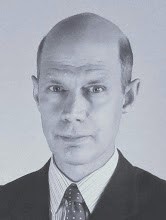
What to make of yesterday's double victory of the Osaka Ishin no Kai in the Osaka gubernatorial and mayoral races? (Link)
Not terribly much. At least not on a national scale.
While the candidates of Hashimoto Toru's and Matsui Ichiro's start up party were able to seize both posts over united establishment rivals, keeping alive Hashimoto's pet project of transforming Osaka into a metropolitan district (the merits of which no one has yet been able to explain to me) the caveats to the victories are many.
First was voter turnout. The gubernatorial and mayoral races attracted 45.4% and 50.5% of the voters, respectively. Both numbers were down from the last Osaka double election, 7.4% down in the prefectural race and a big 10.4% down in the race for the Osaka mayor's office. Both figures were way, way down from the Osaka unification referendum in May where 2/3 of the voters showed up in a contest Hashimoto's forces lost by a whisper. (Link - J)
Second was the ambivalent position of the Abe Administration toward Osaka's political actors. Despite their immense difference in backgrounds, Prime Minister Abe and Hashimoto have long seen each other in a common cause. Hashimoto indeed asked Abe four years ago to leave the Liberal Democratic Party and become leader of his first upstart national party. Abe and Chief Cabinet Secretary Suga Yoshihide have been very solicitous of Hashimoto, making time in their schedules to meet with him and saying nice things about him at every invitation.
The close political cooperative relationship between Abe and Hashimoto has engineered a complete breakdown in coordination and trust between the Osaka chapters of the LDP and the national LDP headquarters. The LDP in Osaka ran its own candidates in the double election, asking for and receiving electoral support from blood rivals the Democratic Party of Japan and the Japan Communist Party. The election also caused a minor split between national allies the LDP and Komeito, with the Osaka Komeito chapter releasing its supporters to vote for whomever they wished.
Third, even with their victories in the executive branch posts, the Osaka Ishin no Kai still lacks enough seats in the prefectural and municipal assemblies to initiate the metro area plan. Osaka Ishin no Kai will still need cooperation from another party, ostensibly the Komeito since they are the enemies of just about everybody else.
Fourth, even with this victory, the Osaka Ishin no Kai is still only the rump of the rump of the national party Hashimoto co-led to an astonishing second-place finish in the proportional vote of the House of Representatives election of 2012. Independents spin-offs of the national party still remain in other parts of the country, some clinging to the Ishin brand name while clinging also to a significant amount of Hashimoto's cash in their bank accounts. Hashimoto is going to be fighting for that money -- to the detriment of his political mission and the forward progress of his regionalist movement.
Tactically, Prime Minister Abe's embrace of Hashimoto seems a disaster. He has made enemies of the LDP establishment in Osaka, Japan's second city.
Strategically, however, Abe's continued encouragement of Hashimoto's efforts hurts the national forces of opposition. As long as Hashimoto and his acolytes are in operation, the Kansai region has its own, home-grown opposition to the LDP. With the Ishin no Kai and the LDP slugging it out, perhaps good-naturedly (if Abe invests the time to bring the two sides to a truce) in the Kansai, the DPJ will have forego making a play for the Kansai's rich harvest of seats, making the path to becoming a worthwhile national challenger to the LDP all the harder.
Later - This morning's NHK news has zero reports on the Osaka elections results. Granted, today is a national holiday, meaning that NHK's newscasts are abbreviated. However, even the commercial networks seem to be downplaying the story -- demonstrating that the post-Koizumi, post-DPJ erosion of the image of politics and politicians continues. While terrible news for governance in Japan, the continued decline of the salience of politics is great news for those infatuated with/dependent upon the façade of stability.
Showing posts with label Suga Yoshihide. Show all posts
Showing posts with label Suga Yoshihide. Show all posts
Monday, November 23, 2015
Sunday, November 01, 2015
That Feeling Of Recursion
How important is resolution of the issue of the move of the functions of the Marine Corps Airbase Futenma to...anywhere but where they are now? On Friday, Prime Minister Abe Shinzo presided over a cabinet meeting. He had to do so because Chief Cabinet Secretary Suga Yoshihide, holder of position in charge of Cabinet meetings, is in Guam reviewing sites and facilities being prepared for the relocation of fraction of the U.S. Marine Corps forces currently based at Futenma. Though it was not much remarked in the reporting on the Suga visit (Link) Friday's meeting marked the first time in 19 years that a PM had to fill in for an absent chief cabinet minister.
When and what was the occasion of the last time a CCS was out of town and the PM had to direct a cabinet meeting? When Chief Cabinet Secretary Kajiyama Seiroku was in Okinawa, negotiating (successfully, as it turned out) Nago City's acceptance of being the host of a Futenma Replacement Facility (FRF). Prime Minister Hashimoto Ryutaro presided over that cabinet meeting, a seeming eon ago (Remember the press conference of Hashimoto, with U.S. Ambassador Walter Mondale standing behind him, announcing the move of the Marines base from Futenma to Nago within five or at most seven years?) (Link -J)
Speaking of the move to Nago, the Ministry of Land, Infrastructure, Transport and Tourism approved a resumption of the groundwork for the FRF, overriding Okinawa Governor Onaga Takeshi's revocation of the initial construction permit (Link). While a logical move, the ministry's action represents further erosion of the guarantees of local autonomy, found in Articles 92, 94 and 95 of the Constitution. (Link)
Since the candidates supported or provided by Liberal Democratic Party of Abe Shinzo lost, in order, the Nago City election, the Okinawa Governor's election and all of Okinawa House of Representatives seats to anti-base construction candidates, Thursday's resumption of construction is a failure of the concept of local, democratic control.
When and what was the occasion of the last time a CCS was out of town and the PM had to direct a cabinet meeting? When Chief Cabinet Secretary Kajiyama Seiroku was in Okinawa, negotiating (successfully, as it turned out) Nago City's acceptance of being the host of a Futenma Replacement Facility (FRF). Prime Minister Hashimoto Ryutaro presided over that cabinet meeting, a seeming eon ago (Remember the press conference of Hashimoto, with U.S. Ambassador Walter Mondale standing behind him, announcing the move of the Marines base from Futenma to Nago within five or at most seven years?) (Link -J)
Speaking of the move to Nago, the Ministry of Land, Infrastructure, Transport and Tourism approved a resumption of the groundwork for the FRF, overriding Okinawa Governor Onaga Takeshi's revocation of the initial construction permit (Link). While a logical move, the ministry's action represents further erosion of the guarantees of local autonomy, found in Articles 92, 94 and 95 of the Constitution. (Link)
Since the candidates supported or provided by Liberal Democratic Party of Abe Shinzo lost, in order, the Nago City election, the Okinawa Governor's election and all of Okinawa House of Representatives seats to anti-base construction candidates, Thursday's resumption of construction is a failure of the concept of local, democratic control.
Tuesday, August 25, 2015
Where We Go After Down

US Dollar versus JPY over the last eleven hours
After a Monday of global stock market instability and collapse the Abe government will be facing questions about what it can do to protect Japan’s economy from damage. The Cabinet will have its regularly scheduled Tuesday meeting. Afterward media organizations will ask Chief Cabinet Minister Suga Yoshihide what if anything the Abe government intends to do to restore confidence in Japanese markets. Prime Minister Abe likely faces as similar fate in the Diet, the opposition homing in on the unfair but entirely reasonable question of what he as prime minister will order his subordinates to do.
The answer Suga and Abe will not own up to is that there is virtually nothing the Abe government can do except watch the screens with dread. This government is tapped out when it comes to either deploying cash or inspiring confidence. Increased fiscal stimulus was already in the cards for this autumn; it is now a virtual certainty. Such fiscal stimulus is designed, however, to cope with the heretofore obstinate refusal of the Japanese economy to respond to the ministrations of the Bank of Japan, not to quell current market turmoil.
Liberal Democratic Party hacks will be tempted to argue that the public need not be worried, that equities markets are wrong and Japan's future is bright because of the yet-to-be realized growth effects of the Third Abenomics or robotics or some other such rigmarole. I am waiting for some peppy puppy (please, please, please let it be Liberal Democratic Party Policy Research Council Chair Inada Tomomi) to say, "Just look at how much the yen strengthened yesterday! It is a sign that global investors appreciate the opportunities and stabilities created by the Abe program!" That the effect any of the major proposals of the Third Arrow would be deflationary, exacerbating the market's fears about growth, will not trouble any part of the soft squishy heads of the Abe True Believers, of course.
Had we a ruthless, determined opposition in this blessed land, television shows this morning would feature street smart and mean-looking (yes, I am thinking of Renho) MPs complaining that the Japanese government would have the capacity to deploy assets to calm markets, making Japan the global leader Abe Shinzo always blabs about, a except of course that Team Abe robbed the national piggy bank to inflate the profits of its zaikai and construction industry friends.
That Japan lacks a serious opposition means of course the country will not be tying itself into knots, each side blaming the other. Of course it also means that the country will generate zero ideas on what it is that the government must do, as members of the parties in power will merely keep repeating the idiot mantra, "Markets go up. Markets go down. The important thing is to not panic. Wait for the government's current policies to bear fruit."
Image courtesy: Yahoo! Finance Japan
Thursday, February 12, 2015
Color Me Cynical - Islamic Terrorist Threat Edition
The Japanese government is supposedly at a heightened state of alert in the aftermath of the killing of hostage Goto Kenji and the threat made to Japan by ISIL.
But only overseas it seems. (Link)
Apparently here in this blessed land (and never, ever has my catchphrase been more apt) the Most Important Man In The Government and possibly The Most Powerful Man In The World's Third Largest Economy can be met walking, accompanied only by a distinctly unarmed and unmuscular young male aide, toward his office in the Prime Minister's Residence using the underground corridor of Tameike Sanno Station at 7:20 in the morning, his identity and person protected by a down jacket (You want to know the color? That's classified) and a surgical mask.
Chief Cabinet Secretary Suga, if you want me to believe that your government is taking the threats of terrorists seriously, you might want to consider pretending you take terrorist threats seriously.
Like having at least ONE security officer walking with you, when you venture out in public.
Or at perhaps wearing a hat.
But thank you for proving to me, quite inadvertently and sweetly, that all the talk of Japan becoming a normal nation is just bombastic performance -- that you, of all persons, would find it expedient, during this time of heightened alert, to walk amongst us, like a modern day Mito Komon -- but a million times better than Mito Komon because you are the central government and you have no team of quasi-Ninja martial arts masters or a magical tobacco container to protect you.
Just a cotton mask.
But only overseas it seems. (Link)
Apparently here in this blessed land (and never, ever has my catchphrase been more apt) the Most Important Man In The Government and possibly The Most Powerful Man In The World's Third Largest Economy can be met walking, accompanied only by a distinctly unarmed and unmuscular young male aide, toward his office in the Prime Minister's Residence using the underground corridor of Tameike Sanno Station at 7:20 in the morning, his identity and person protected by a down jacket (You want to know the color? That's classified) and a surgical mask.
Chief Cabinet Secretary Suga, if you want me to believe that your government is taking the threats of terrorists seriously, you might want to consider pretending you take terrorist threats seriously.
Like having at least ONE security officer walking with you, when you venture out in public.
Or at perhaps wearing a hat.
But thank you for proving to me, quite inadvertently and sweetly, that all the talk of Japan becoming a normal nation is just bombastic performance -- that you, of all persons, would find it expedient, during this time of heightened alert, to walk amongst us, like a modern day Mito Komon -- but a million times better than Mito Komon because you are the central government and you have no team of quasi-Ninja martial arts masters or a magical tobacco container to protect you.
Just a cotton mask.
Tuesday, February 03, 2015
Very Kind Of Her #46
Miyake Kunihiko says that it is. (Link)
I say, "Not according to the opinion polls, it ain't." (Link)
Miyake-san (whom I like a lot, for a good many reasons) has gone overboard in his utterances, carried away by rhetoric and emotion...just like the man who is ever seeking Miyake-san's advice, Prime Minister Abe Shinzo (no exaggeration: Miyake-san is the most important of Abe's private sector security advisors). The PM has been flying off the handle a lot of late, with Chief Cabinet Secretary being forced to step in and reel back expectations.
Many thanks to Elaine Kurtenbach for sending me her questions.
I say, "Not according to the opinion polls, it ain't." (Link)
Miyake-san (whom I like a lot, for a good many reasons) has gone overboard in his utterances, carried away by rhetoric and emotion...just like the man who is ever seeking Miyake-san's advice, Prime Minister Abe Shinzo (no exaggeration: Miyake-san is the most important of Abe's private sector security advisors). The PM has been flying off the handle a lot of late, with Chief Cabinet Secretary being forced to step in and reel back expectations.
Many thanks to Elaine Kurtenbach for sending me her questions.
Tuesday, December 02, 2014
Oh You Have Got To Be Kidding Me

Politics is such a glamorous profession...
Half the people are stoned
And the other half are waiting for the next election.
Half the people are drowned
And the other half are swimming in the wrong direction.
- Paul Simon, for Leonard Bernstein's MASS (1971)
Hey everybody!
Remember way, way back, you know, like a month ago, when folks used to think Prime Minister Abe Shinzo should wait until the December revision of the third quarter GDP figures came out before he made a final decision on whether or not to approve the second rise in the consumption tax? If you cannot remember, this was back before the November 3 Shukan Bunshun article revealed Abe's and Chief Cabinet Secretary Suga Yoshihide's tumescent desires for an election (that's with an "l") and the whole world's going nuts over the November 17 preliminary release showing a 1.3% decline over the previous quarter, making Prime Minister Abe's announcement of a Diet dissolution in the evening on November 18 almost an afterthought.
Well...
Japan's third-quarter recession seen milder than feared as capex growsIf the revised GDP figure for the third quarter turns out to be close to zero, meaning that all this panicked action was for nothing, then there will be hell to pay. If anything is going to tick off Japanese voters it is a Diet dissolution and an election for absolutely no reason.
Reuters
TOKYO - Japan's fall into recession between July-September could turn out to be less severe than feared, with new capital expenditure figures out on Monday suggesting revisions will put the third quarter in a slightly more positive light.
The 5.5 percent year-on-year rise in capital expenditure over the third quarter reported on Monday followed a 3.0 percent annual increase in April-June, which could ease concerns about recovery from a sales tax increase earlier this year.
"The revised data will show a smaller contraction in GDP that could be close to zero," said Hiroaki Muto, senior economist at Sumitomo Mitsui Asset Management Co...
And for folks like the urbane, serious and admirable House of Representatives member Kono Taro (LDP, 6 elections to the Diet) who has been posting hilarious and sad photos of his bedraggled, lonely self campaigning in the cold late autumn rains (the above photo is from yesterday) learning that this was all for nothing will make future relations with Abe and his confidants a bit...testy, shall we say?
Photo image courtesy: Kono Taro's Twitter feed (https://twitter.com/konotarogomame)
Saturday, November 15, 2014
In Case You Were As Confused As I Was Re The Dissolution And The Delay

After a spell in the FCCJ library looking at magazines and newspapers, here are my conclusions:
1) The now certain dissolution of the Diet (Link) and the delay in the raising of the consumption tax are two different initiatives. Prime Minister Abe Shinzo has wanted a dissolution for about three weeks now. Chief Cabinet Secretary Suga, or persons thinking and feeling on his behalf like Yamamoto Kozo, has desired the delay for a bit longer.
2) Abe wants the dissolution because he reshuffled the Cabinet only two months ago and one cannot reshuffle a reshuffle. Dissolution is the only way to rid himself of the cast of clowns who jumped aboard the Abe administration bus in September.
3) Suga and/or folks like him want the delay because the second quarter GDP and retail sales figures seem to have confirmed the warnings of last fall from Honda Etsuro and Hamada Ko’ichi that April's rise in the consumption tax would severely dampen the economy's animal spirits. Big business, bloated non-profit and government establishments (a.k.a., The Establishment) were of the (seemingly mistaken) opinion the economy was strong enough to take the hit. Since fundamentally it is idiotic to run two mutually contradictory economic programs at once, in this case QQE and large fiscal outlays for growth and increases in the consumption tax for fiscal consolidation, going full out for growth seems the better idea, at least in the short term.
4) Rather than fess up to having been fooled not just once but twice, the Abe/Suga duarchy dawdled on the framing of their respective projects, this even after Shukan Bunshun blew the lid off of the duarchy's plans ten days ago (many thanks to Dan Harada for pointing out the article). Not even the Yomiuri Shimbun, the cheerleader for Team Abe, had a plausible set of explanations for a dissolution (check out paragraph 8 of the Yomiuri editorial -- sadly the English translation does not do the original justice) to publish/leak. This left the field open for practitioners of the arts of tactical mendacity (my euphemism for H. G. Frankfurt's third form of communication) to offer explanations of what Abe and Suga were up to -- which news media dutifully published despite none of it making a jot of sense.
So...
a) Is the policy mix now going to be too rich, i.e., are we going to have inflation well in excess of the Bank of Japan's goals?
b) What will the news media and Abe's rivals inside the Liberal Democratic Party concede is an Abe win in a December 14 House of Representatives election?
c) Whatever you criticisms you may want to level at Abe and Suga, "unwilling to quickly cut their losses and move on" ain't one of them.
Oh, by the way, if you are an analyst or a journalist, and you borrow any of the above, acknowledge the source, please.
Photo image credit: MTC
Friday, August 22, 2014
A New Comfort Women Statement? Uh-oh

This is PARC chair Takaichi Sanae at her happiest. Really.
In the realm of bad ideas, the latest one to erupt out of the Liberal Democratic Party's Policy Research Council (PARC) is a doozy: a request to Chief Cabinet Secretary Suga Yoshihide that he provide a revision of the Kono Statement in light of the recent retractions of some articles on the comfort women by The Asahi Shimbun and in time for the 70th anniversary of the end of World War II. (Link - J)
Press reports of the meeting of the Council yesterday read like a festival of provocation and point scoring. "We must summon those connected to The Asahi to testify in the Diet" and "We must disseminate with determination the results of the government's investigation into the composition of the Kono Statement" were among the demands from the floor. (http://www3.nhk.or.jp/news/html/20140821/k10013977241000.htmlLink J - video)
It is unsurprising that the moderately crazies in the LDP, particularly the hardliners in the freshmen classes of 2012 and 2013, would be clamoring for a party response to the Asahi admissions of error. The extreme revisionists contention has been that the comfort women are a fiction concocted by The Asahi Shimbun and anti-Japan non-government organizations in South Korea. The Asahi's long overdue retractions would, in their eyes, require a government response, as a remorseful Statement like Kono's may indeed no longer be necessary.
What is somewhat surprising is how quickly and avidly PARC Chair Takaichi Sanae has taken up the banner of a demand for a new Statement.
Takaichi is considered a shoo-in for a significant Cabinet post in the upcoming Cabinet reshuffle (Link). She has a long record of being a loyal retainer to Prime Minister Abe Shinzo (she was the most junior minister of his first Cabinet in 2006-7; she sat next to him during the LDP party meeting where Abe was elected party president in 2012), is a True Conservative (she is always in front and center of the phalanxes of Diet members of the "Let's Visit Yasukuni Together" league on their shrine visits - see above) and a prominent female member of the LDP at a time the PM wants to make a show of appointing women to the Cabinet (Link). Securing a Cabinet post at this point would seemingly require her to sit tight, make no trouble and have the prize drop in her lap.
So why embrace a movement demanding a change in a fundamental building block of Japan's relationship with South Korea at a time when the prime minister and his advisors are trying to bridge the gap between the two countries? One that furthermore puts an onus on Chief Cabinet Secretary Suga to craft a new Statement when he has way too much on his plate already?
If one wanted to mess up a potential Cabinet appointment, making Suga Yoshihide's life difficult would seem a great way to do it.
One explanation for Takaichi's enthusiasm, and the reason I use the "somewhat" above, is that she is probably tone deaf when it comes to what she believes are matters of Japan's dignity. She has her own small group of lawmakers -- the Association of Creativity and Tradition -- that brings together lawmakers who style themselves innovative iconoclasts with a fantabulist, knee-jerk defensiveness about pre-1945 Japan. The cognitive dissonance of the ideals -- believing at once in the value of disruption and the beauty of traditional order, as is reflected in the group's name -- indicates that in matters pertaining to the constructed concept "Japan" Takaichi-san may not be prone to deep thought.
Another possibility for Takaichi's unshaded embrace may come from a gnawing sense of her having achieved very little in her present position. Despite Takaichi being one of the longest-serving PARC chairs, even close watchers of politics would be hard pressed to think of a single, significant initiative she led during her tenure. Policy making under Abe 2.0 has been almost entirely in the hands of the bewildering forest of commissions, councils and private advisors reporting directly to the prime minister. Movement of legislation through the PARC has been largely a pro forma affair. When political observers think of Takaichi at all, it is for her skirmishes with General Council chair Noda Seiko, diminishing the power and value of both of the institutions they have headed.
In forwarding the PARC's request for a new Chief Cabinet Secretary's Statement to Suga, Takaichi can claim at least one signatory achievement during her tenure, one endearing her to radical, unthinking revisionists -- her only constituency within the party.
Assuming that the PARC's request is forwarded to Suga early next week as scheduled, what happens? As a direct request from the party, Suga cannot reject the request as unhelpful, no matter that it is. He could shelve the request for a while but not indefinitely. The request is for a new Statement in time for the August 15, 2015 anniversary -- which means at some point Suga will have to come out with a clear position on the question of whether he will provide a new Statement or not. The most likely scenario is Suga turning down the request on the grounds that it would detract from the prime minister's new, "forward-looking" Statement on the end of the World War II which the PM hopes will replace the Murayama Statement as the definitive Japanese government view of the war.
Until Suga moves decisively against the PARC's request, his inaction will be read or portrayed by South Koreans as a prelude to a revision of the Kono Statement and thus one more reason to delay the reestablishment of more normal relations between the governments of Japan and the ROK.
Way to go, Takaichi-san.
Wednesday, June 25, 2014
Filling Mr. Abe's New Cabinet

With the record for the longest-lasting lineup in history firmly under its obi, the constipated release of two excruciatingly unsatisfying plans for change (Third Arrow structural economic reforms and reinterpretation of the constitutional ban on collective self-defense) making its days darker, ministers making apologies to the citizens for having voiced inconvenient truths (Link), the first significant death (Link) and languishing poll numbers(Link) Abe Cabinet 2.0 is starting to look stale. Prime Minister Abe delivered what sounded pretty much like a nationally televised hail and farewell speech last night -- sweeping through and over what the current Diet session and the Cabinet have achieved, giving no inkling of what is on the agenda for the autumn Extraordinary Diet Session.
The Yomiuri Shimbun yesterday predicted that the Prime Minister will shuffle his Cabinet in the beginning of September (Link) -- which, based on the PM's press conference, sounds about right. Today the paper has printed an article on the thicket of numbers Abe and his close confidants will have to hack through on the way to that new Cabinet.
First is the faction strength numbers. Now, the factions are not what they were in terms of the grooming of candidates and guides for the approximate number of cabinet seats apportioned from each faction's list of eligible candidates. Still, the Prime Minister has to at least pay some grudging respect to the legacy of the factions -- meaning that each faction will supply at least one member of the Cabinet, with the second place Nukaga Faction, the historical rival of the Prime Minister's Machimura Faction, at least two seats. As for Machimura, he has demanded that the faction honor its most senior underachiever -- a sad sack member with 8 elections to the Diet without ever serving in the Cabinet -- with a cabinet post.
Liberal Democratic Party Factions, number of members
Machimura Faction 92
Nukaga Faction 54
Kishida Faction 44
Aso Faction 38
Nikai Faction 29
Ishihara (Nobuteru) Faction 14
Oshima Faction 13
NO FACTION 127
That last number, 127 members still unaffiliated 18 months after an election, indicates of how far the factions have fallen as institutions. Until the Postal Reform election of 2005, only a handful of Liberal Democratic Party members were independent-minded or obnoxious enough to resist being recruited into a faction. Today, the non-faction faction is far and away the largest faction.
For the Yomiuri, the top candidates for Cabinet posts are party members with at least 5 elections to the House of Representatives (the old standard was 6 elections) or 3 elections to the House of Councillors -- and no previous Cabinet service. Unfortunately for Mr. Abe and his circle of advisers, the interregnum of three Democratic Party of Japan-led cabinets has created a huge backlog in the list of these purportedly worthy candidates. Currently 59 (43 HoR, 16 HoC) Diet members meet the Yomiuri standard -- a major headache for the PM, who wants to keep the number of Cabinet members fixed at 18. With the Chief Cabinet Secretary spot reserved for its current placeholder Suga Yoshihide, the number of Cabinet posts in play is really only 17.
A lot of broken dreams on tap here.
Abe has a few standards of his own he will want to enforce. He will want to have a larger cohort of women in his next Cabinet in order to preserve the appearance of his support for greater women's empowerment. He has raft of heavyweight candidates to chose from: Koike Yuriko, Noda Seiko, Takaichi Sanae are the first to come to mind. Unfortunately all of them have previous Cabinet service -- meaning that appointing them will make no dent in the ranks of the unfledged candidates.
Abe will also want to employ some of his friends and fellow travelers. Takaichi fits the bill in this department. So does of Shisaku favorite Seko Hiroshige -- who has the requisite number of elections to the Diet but heretofore no (Why is this in no way surprising?) Cabinet appointments on his resume.
Abe and his confidants have a long hot summer of thinking ahead of them. The process of selecting a new cabinet will probably involve, if anything, a lot of golf games under a blazing hot sun.
Look for a toasted Abe announcing a new cabinet lineup ahead of the opening of the Extraordinary Session, with a brand new State Minister for Regional Revitalization post enlivening the festivities.
Later - Yomiuri's English-language The Japan News has an article out making many of these points. (Link)
Monday, June 02, 2014
Cramming Collective Security Down Their Throats

Prime Minister Abe Shinzo (from his seat, as Okada Katsuya, who has the floor, is about to change the subject) - “You just don't understand, do you?"
Okada Katsuya - "I don't understand? I think it is you, Mr. Prime Minister who do not understand. You are rude, using that phrase. Saying,'you don’t understand' is rude. When we look over the official record we will clearly see who is the rude one-- who is the one who does not understand. We will take this up some other time. You are the prime minister of the whole country and all its citizens. I wish to offer to you most humbly my thought that when no one is asking you to speak, your shouting out a heckling expression is not something that as a prime minister you ought to be doing."
After weeks of Prime Minister Abe Shinzo and Chief Cabinet Secretary Suga Yoshihide trying to cool apprehensions about the government's plans to force a decision on collective self-defense, with the Dynamic Duo speaking nonchalantly about oh, maybe an agreement sometime in time for the Fall extraordinary Diet session (Link) Liberal Democratic Party Vice President Komura Masahiko came down like a hammer on Sunday, saying he wants a Cabinet Decision on CSD by the end of this Diet session -- i.e., in less than three weeks. (Link -J)
Why the sudden sense of urgency and impatience? Is Komura indicating a change in Abe Cabinet strategy? Or was he just shooting off his mouth -- and knowing the dapper former Foreign Minister Komura's character, this would be unusual -- because he was giving his speech in his and the prime minister's militant homeland of Yamaguchi? (Link)
Possibly.
I would rather think the answer to the question "What's happened?" would be "Wednesday."
Wednesday, May 28, 2014, to be exact.
On that day, last week, in the House of Representatives Budget Committee, Prime Minister Abe tried for the first time to explain or defend his government's plans as regards the recommendations in the "Report of the Advisory Panel on Reconstruction of the Legal Basis for Security," commonly known as the Yanai Commission Report. (Link)
While great for television -- the above exchange being one of the testier and more entertaining moments -- the session was pretty grim for the government and the LDP. "Train wreck," "fiasco" and "flaming heap of parrot droppings" are just some of the phrases that come to mind regarding Abe's and Cabinet Legislation Bureau chief Yokobatake Yusuke's performances.
The editors of the Mainichi were appalled at the Prime Minister's inability to answer questions in a straightforward way (Link). The editors of The Asahi Shimbun were -- this will surprise no one -- incoherent as to what they were expecting (Link). The editors of The Japan Times were in need of editors (Link). The editors of the Sankei Shimbun, interestingly, urged lawmakers to get a move on with ratifying the government's 15 scenarios wherein CSD should be constitutional, this in order for Japan to be more in line with international norms (Link - J)*. The editors of Pravda-by-the-Palace, a.k.a., the Yomiuri Shimbun, warned -- and I am not making this up -- that the debate on the reinterpretation of the Constitution for the purposes of sanctioning the exercise of the right of collective self-defense could lead to the break up of the Democratic Party of Japan. (Link)
Nobody, in other words, was cheering.
If there is a sense of panic inside the LDP, it is merited. As in the case of the Special Secrets Act, the longer the Yanai proposals getted batted about in committee and in the media, the worse the Abe Cabinet's plans look. It would behoove the government to move, as it did with the secrets act, to cut off debate with some farcical claim that speed is of the essence and further examination of the scenarios would leave Japan unprotected at a time of great clashing of wills in East Asia. (Link)
However, moving as Komura says he wants would provoke an unnecessary collision with the New Komeito, ending with the collapse of the ruling coalition. The sudden chaos would overwhelm the government's all important third try, after two damp squibs, to launch a set of Third Arrow structural reforms -- ones in which international investors and the international news organizations can finally place their faith.
Even for a man of action and turmoil from Choshu like Abe Shinzo, Komura's gambit should seem overwrought and unwise.
------------------------
* An instance of what Tobias Harris refers to as "a momentary lapse into reason."
Tuesday, May 27, 2014
In My Reptile Mind

A year ago, in a response to Chief Cabinet Secretary Suga Yoshihide's first submissions to what has become a lengthy list of things the Abe Cabinet is NOT thinking of doing, (e.g., NOT thinking of revising the Murayama Statement, NOT thinking of rescinding the Kono Statement) I posed a question about the nature of the beast doing the talking:
When a snake tells you it is not thinking of biting you, what matters more? That a snake told you, "I'm not thinking of biting you" -- or that it is a snake?Over the first year and half of the second coming of Abe Shinzo and Friends, the answer to my question has been, astonishingly, "The former."
Which has me, a year later, composing another serpentine metaphor as regards militant-nationalist-revisionist-Sinophobe-conservative-right-wing-hawk Abe Shinzo:
In order for a snake to grow larger, it must shed its skin.
----------------
Lest anyone think that my use of snake metaphors is pejorative, be aware that:
1) I love snakes, particularly the big bad aodaisho (Japanese rat snake - Elaphe climacophora - Link)
and
2) I admiringly referred to former Prime Minister Noda Yoshihiko as "The Anaconda" -- at least until he betrayed himself, his party and the electorate with his still unexplained offer to Abe to dissolve the House of Representatives.
Photo: Abe Shinzo arriving at the American Chamber of Commerce in Japan's conference "Women in Business" on 27 May 2014
Photo credit: Jonathan Kushner on Facebook (Link)
Friday, February 28, 2014
We Don't Report The News, We Just Guess What It Might Be

Yamada Hiroshi asking his questions on the comfort women in House of Representatives Budget Committee session on 20 February 2014. Screen capture courtesy Shuugiin TV.
For those of us who are formalists - who tend to believe that Abe Shinzo, Suga Yoshihide and the rest of the Abe Cabinet should be judged on what they say and do, not what we think what their words and actions mean -- last week was a pretty good week. Prime Minister Abe Shinzo Abe and Chief Cabinet Secretary Suga Yoshihide successfully deflected the demands of Japan Restoration Party member Yamada Hiroshi for an immediate investigation and moves toward repudiation of the Kono Statement -- this after Yamada's distasteful badgering of 87 year-old retired Deputy Chief Cabinet Secretary Ishihara Nobuo over how the Kono Statement came to be.
Suga, when pressed by Yamada for some kind of action on the Kono Statement, promised that the government would study whether or not it was appropriate to continue protecting of the identities of the 16 Korean women interviewed as a part of the drafting process of the Kono Statement -- this since the use of these anonymous and thus uncheckable interviews is proof, in revisionist circles, that the Kono Statement is not based in fact.
Later, when Yamada could not get the credit for pushing the government where it did not want to go, Suga also thought out loud about whether or not the government should study an investigation of the interview process.
Considering the pressures Abe and Suga are under from their own rank and file to put some meat on the program of "casting off the postwar regime" (Link) these vague promises seemed to indicate a general Cabinet consensus that hate it though they might there is no alternative to the Kono Statement -- not if Government of Japan wants to have a relationship of any kind with the Government of the Republic of Korea.
Then on Monday, after the end of the day's session in the Budget Committee, Abe Shinzo may have thrown everything into doubt.
Having caught wind of a Fuji Sankei Group public opinion poll showing 59%% of voters desiring a revision of the Kono Statement and 66% wanting at least an investigation of the process that produced it, Abe approached Yamada and said, well...something to Yamada seemingly indicating that he, Abe, personally shared Yamada's desire to get on with the work of dismantling the Kono Statement. (Link)
Unfortunately for anyone wishing to say "Aha! I told you so!" no one seems to know what it was that Abe said to Yamada.
If you ask the newspapers, literally each and every one of them has a different answer.
According to the august Nihon Keizai Shimbun, the PM said to Yamada:
「(一部報道機関の)世論調査で河野談話の(検証への)賛成が6割を超えている。先生の質問のおかげだ」
"From the public opinion polls (of one part of the news media), those in favour (of an investigation) of the Kono Statement exceeded 60%. It is all thanks your questions, Sensei."
To which Yamada replied:
「政府と国会で役割を分担しましょう」
"In the government and the Diet, let us divide up the workload according to our roles."
The Mainichi Shimbun quotes the PM as telling Yamada.
「(一部報道機関の)世論調査で高い支持率を得ているのは、山田さんが質問してくれたおかげだ」
"High levels of public support for this in the public opinion polls (of one part of the news media) are achieved thanks to the questions you, Yamada-san, asked us."
The Mainichi's version of the cooperation pledge is also different:
「政府だけではできないこともあるので協力していきましょう」
"Let us cooperate because there are some things the government cannot do alone."
Akahata ("Red Flag"), the Japan Communist Party's House organ, has Abe saying:
「世論調査で河野談話(見直し)賛成が約6割だった。山田さんのおかげだ」。
"In the public opinion poll, those in favour (of revision) are around 60%. Thanks to you, Yamada-san."
In The Asahi Shimbun the prime minister says:
「(一部メディアの)世論調査で、河野談話の検証に対する賛成が60%を超えた。山田さんのおかげだ」
“In public opinion polls (of one part of the media) agreement has topped 60% regarding the investigation of the Kono Statement. Thanks to you, Yamada-san."
(My underlining in the above - MTC)
As for the Sankei Shimbun, the paper whose public opinion poll (I have seen one journalist refer to the poll as a poll of Sankei Shimbun readers. This is incorrect. The poll was conducted via telephone calls placed to voters through RDD - random digit dialing) started this whole business, its version of the encounter does not have any of the above. Instead, according to Sankei, Abe told Yamada:
「時機を逸せずに、議論を真剣にやる必要がある]
"It is necessary for seriously discuss of this matter, without any dilly-dallying."
Now as far as I have been led to understand, the kisha clubs are a cabal where the news organizations get together and decide as a group what the news is, leaving the framing to the editors of each organization.
If so, why does each outlet report the Abe-Yamada conversation differently?
One answer is, of course, is that the source of the story is Yamada himself, at least according the Sankei Shimbun. This would set the bar of veracity at very low level. Yamada could very likely have given a different version of the conversation to each media company.
I do not know.
What I do know is that on the same day as the Abe-Yamada tête–à–tête, Foreign Minister Kishida Fumio told the Secial Committee on Okinawa and the Northern Territories Issues:
「私としても、政府としても、談話の見直しを一度も申し上げたことはない」
"For myself or for this government, I have never ever said anything about a revision of the Kono Statement."
(Link)
As long as the members of the Cabinet keep denying that a revision is what is being discussed, I will hold my breath -- in hope.
At least until Abe Shinzo personally tells me otherwise.
Later - The main message is, whatever you read, don't panic. Whoever it was who said, "You are entitled to your own opinions but you are not entitled to your own facts," clearly was not a reader of Japanese newspapers.
Friday, February 07, 2014
Trying A Little Machiavelli, Mr. Suga?

The Abe Administration has been hitting a rough patch of late. Abe Shinzo allies have been torching the government's credibility. Attempts at damage control have been eating up the PM's and the Chief Cabinet Secretary Suga Yoshihide's time and attention. I am perhaps not alone in being puzzled at how poorly the Abe Administration has been handling a string of embarrassments, after being almost impervious to scandal during its first year in office.
Most surprising has been the seeming passivity of Suga. As each new nonsensical, indefensible situation has rolled up, he has dismissed it with an airy "oh, so-and-so was just stating a private opinion" or "there is nothing legally wrong with what X-san has done" -- as if he were unaware how his excuses were undermining his reputation as a super-competent manager and spokesman.
When faced with a situation of seeming senselessness, I try to remember Bruce Pandolfini's 13th Commandment of chess:
"If you can't see the point of your opponent's move, assume there isn't any."
However, what has been perplexing in the case of Suga has not been his choice of moves. It has been his lack of movement. In a more orderly and business-like world -- the world of the first year of the Abe Cabinet, let us say -- Momii Katsuto, Hasegawa Michiko and Hyakuta Naoki would all have resigned from their NHK positions by now. Nothing would be allowed to fester and serve as a distraction from the overall, multi-year march toward a more powerful Prime Minister's Residence and a more powerful Japan.
Suga, after a year when he seemed in total command, seems lethargic and reactive, letting the news cycle and scandal swallow up the agenda.
Perhaps the above dictum needs to be turned on its head. Inverted, it reads:
"If you can't see the reason for your opponent's inaction, assume there is one."
So let us assume that Suga Yoshihide is appearing wan and listless on purpose. Why would he want to do this?
1) Punish Abe for Yasukuni
According to the narrative published in the Yomiuri Shimbun late last year, Abe humiliated Suga in December, rejecting Suga's pleas to not go to Yasukuni. In the account of what took place before and on December 26, Suga simply swallowed his pride and set about composing an apologetic statement for Abe to read after the Yasukuni sanpai.
But what if Suga did not simply swallow his pride? What if, in suitable pique, he decided to let just Abe run things for a while, making insincere excuses for Abe's buddies violations of The Prime Directive -- "only Abe Shinzo gets to burn Abe Shinzo's political capital"?
What if Suga were simply just letting the Abe Revolution falter, just to remind a too-big-for-his-britches Abe who the de facto prime minister is?
Or
2) Let the Crazies Run the Asylum For a While Because We Will Make Them Sad Later
Abe today is off for Sochi, Russia, set to have a tête-à-tête with President Vladimir Putin in concert with being one of the few Western Alliance leaders to attend tonight's Winter Olympics opening ceremony. Today is, by unfortunate coincidence, Northern Territories Day -- the day when the government reminds all of us of its failure to heretofore win back the four islands and collection of islets of the Southern Kuriles, lost to the Russians in 1945.
It is well-known that one of Abe's main goals is a peace treaty with Russia, finally ending World War II. It is second in importance only to the revision of the Constitution, on a par with the economic revival of the nation. It is also well-known that not even a judo-loving and nearly untouchable Putin is thinking of conceding the reversion of all of the Southern Kuriles/Northern Territories.
Signing a peace treaty will require Abe to sacrifice, accepting the return of at best Shikotan and the Habomai group -- basically the same deal Japan was offered and which it rejected in 1956.
Letting the revisionist crazies run amok for a while prepares the foundation for a searing betrayal of these same crazies and their principles "for the good of the nation." From a theatrical point of view, it is after the fanatabulists make a hash of things that Abe/Suga can stab them in the back with a "half-a-loaf is better than nothing" solution for the vexing problem of the peace treaty, ignoring rightist demands for every square centimeter of the Southern Kuriles and nothing less.
In other words, Suga, either with or without Abe's consent, is letting Abe's most dangerous and frivolous friends make fools of themselves so that he can bin them when it is time for the adults to sit down and cut a few deals.
So perhaps the deterioration of the Abe Cabinet governance this winter is not a bug. Maybe it is a feature.
Original image courtesy: Reuters
Saturday, December 28, 2013
You Would Not Want To Be One Of His Allies
The Yomiuri Shimbun has published an account of the events leading up Prime Minister Abe Shinzo's visit to Yasukuni Shrine two days ago (Link). If the timeline and the quotations in the story are accurate -- and there is no reason to doubt that they are -- a picture emerges of a ruthless Abe, unbound by courtesy or caution in his dealings with his most prominent political allies.
Here is the snippet on Abe's call to Yamaguchi Natsuo, the leader of the party whose House of Councillors votes Abe relies upon to guarantee the passage of legislation:
As for the Yomiuri's account of how Abe handled his chief cabinet secretary Suga Yoshihide -- the man charged not only with making policies happen but devising the cover stories -- that too is eye-opening. Suga's extraordinarily deft management of the policy agenda and the daily message have left many wondering whether he, Suga, is not indeed the de facto prime minister. The Yomiuri's account clearly puts Suga in a subservient role, left to devise a desperate strategy of damage control after failing to change the prime minister's mind on whether or not to visit Yasukuni. The revelation that the Abe statement on why he visited Yasukuni (Link) was devised by Suga after Abe had made his decision goes a long way to explaining the raging insincerity of Abe's post-visit address.
[An aside: I know that the theory that speakers look up and to the right when they are trying to retrieve concocted versions of events from memory has been tested and found wanting -- but gosh, it sure looked like Abe was doing just that during the NHK live broadcast.]
Running roughshod over the leader of the LDP's ruling coalition partner, the secretary-general of the LDP and his own chief cabinet secretary tells all three men Abe's thinking as to who is in charge and who walks three feet behind in this government. The rock hard treatment of Yamaguchi indicates further that the dinners Abe has had in the last month with the heads of the Your Party and the Japan Restoration Party (the latest being a three hour affair with Osaka City mayor Hashimoto Toru on the Emperor's birthday - Link - J) were not mere social get-togethers. Even after the fission of the Your Party in response to Abe's dinner with party leader Watanabe Yoshimi (Link - J), the number of seats held by the Your Party and the JRP in the House of Councillors are more than enough for Abe to tell Yamaguchi and the New Komeito, "You know, you can be replaced..."
Which is what "I didn't think you would agree with me" means, ultimately.
Here is the snippet on Abe's call to Yamaguchi Natsuo, the leader of the party whose House of Councillors votes Abe relies upon to guarantee the passage of legislation:
"I'll visit the shrine at my own discretion," Abe told Natsuo Yamaguchi, leader of New Komeito, the junior coalition partner of his Liberal Democratic Party, over the phone at about 11 a.m. on Thursday, about 30 minutes before he headed to the shrine.What the Yomiuri narrative fails to clarify is that Yamaguchi and Ishiba already knew Abe was on his way to Yasukuni before the PM made his courtesy calls. Major news outlets began publishing and airing alerts regarding the Abe visit 30 minutes prior to Abe's 11 a.m. call to Yamaguchi (like this story that appeared on the MSN Sankei News site at 10:26 am). Ishiba found out about the visit from the reporters covering him, when they all started shouting at him, "What is your opinion of the prime minister visiting Yasukuni?" An exasperated Ishiba replied, "Why are you all asking me my opinion of a Yasukuni visit?" The reporters shouted back, "Because it has been announced!" Ishiba, trying to appear nonchalant, turned and walked away, repeating the news to himself, "Oh, it's been announced. Hmmmm."
"I cannot support that," Yamaguchi told Abe.
"I didn't think you'd agree with me," Abe said before hanging up the phone.
Abe also informed LDP Secretary General Shigeru Ishiba of his intention to visit the shrine in the same morning.
As for the Yomiuri's account of how Abe handled his chief cabinet secretary Suga Yoshihide -- the man charged not only with making policies happen but devising the cover stories -- that too is eye-opening. Suga's extraordinarily deft management of the policy agenda and the daily message have left many wondering whether he, Suga, is not indeed the de facto prime minister. The Yomiuri's account clearly puts Suga in a subservient role, left to devise a desperate strategy of damage control after failing to change the prime minister's mind on whether or not to visit Yasukuni. The revelation that the Abe statement on why he visited Yasukuni (Link) was devised by Suga after Abe had made his decision goes a long way to explaining the raging insincerity of Abe's post-visit address.
[An aside: I know that the theory that speakers look up and to the right when they are trying to retrieve concocted versions of events from memory has been tested and found wanting -- but gosh, it sure looked like Abe was doing just that during the NHK live broadcast.]
Running roughshod over the leader of the LDP's ruling coalition partner, the secretary-general of the LDP and his own chief cabinet secretary tells all three men Abe's thinking as to who is in charge and who walks three feet behind in this government. The rock hard treatment of Yamaguchi indicates further that the dinners Abe has had in the last month with the heads of the Your Party and the Japan Restoration Party (the latest being a three hour affair with Osaka City mayor Hashimoto Toru on the Emperor's birthday - Link - J) were not mere social get-togethers. Even after the fission of the Your Party in response to Abe's dinner with party leader Watanabe Yoshimi (Link - J), the number of seats held by the Your Party and the JRP in the House of Councillors are more than enough for Abe to tell Yamaguchi and the New Komeito, "You know, you can be replaced..."
Which is what "I didn't think you would agree with me" means, ultimately.
Tuesday, October 29, 2013
Koike Yuriko Sets The House Secrecy Debate On Fire

Former Minister of Defense (briefly), former Chairman of the Liberal Democratic Party General Council and head of the LDP’s Communication Division Koike Yuriko has a reputation as a savvy media manipulator. A former television newscaster, she holds a degree in sociology from Cairo University. Thanks to her Arabic and English skills, she is a fixture in international circles. Publishing in English via Project Syndicate, she has disseminated anti-Democratic Party of Japan and pro-Abe Shinzo propaganda worldwide underneath the radar of the local representatives of the foreign press.
Despite a warm and inviting appearance, Koike holds hardline views on security and is seen as very much a kindred spirit of the prime minister's. Part of her hard defense posture may have developed out of her interaction with and study of the U.S. security community.
Part, however, arises from her political instability. She flitted during the first years of her political career from one political party to another, finally landing in the LDP. Her colleagues have labeled her a wataridori-- i.e., "a migratory bird" -- and were not complimenting her in doing so. She gained prominence under the sponsorship of maverick Prime Minister Koizumi Jun'ichiro, becoming the most visible and valuable of his "assassins." Under his encouragement, she moved from her fairly safe Hyogo district to challenge and eventually defeat postal rebel Kobayashi Koki in his Tokyo fiefdom.
Without roots in her district, her patron departed from active politics, her choosing to lean ever harder into militancy has made eminent sense. Her hardline views on defense, together with her earlier mobility prompted me to label her "the Iron Butterfly."
Yesterday, in Diet session examining the Official Secrets bill, the Iron Butterfly crash landed in spectacular fashion:
"Japan is a country stupefied by peace which has pretty much lost any appreciation of top secrets...Every day the newspapers are without fail printing at what o’clock, how many minutes, who it was that went in to see the prime minister and when they left. Doesn’t this transcend the [Public's] Right To Know?"The Prime Minister's Schedule (Shusho dosei, also called Shusho no ichi nichi) is an institution of Japanese life. Printed unobtrusively in every day's newspaper (page 6 on the bottom of my own daily paper this morning) it details, with extraordinary thoroughness, the prime minister's schedule of the previous day. With most of the machinations of Japanese government enwreathed in bureaucratic fog and shielded by the press clubs, the Prime Minister's Schedule has been one of the few means the public has had of getting even a glimpse of whatever the hell is going on.
(Link - J)
From a security standpoint, Koike's objection to this time-honored practice would make sense if the Prime Minister's Schedule revealed the prime minister's intended movements. However, the Prime Minister's Schedule (I am not going to use an acronym, for obvious reasons) only details whom the PM met the day before. Since Japan has a defense-only military posture, foregoing warfare as a means of solving international political disputes, and the government generally does not engage in nefarious activities, there is little reason for the PM to hide the identities of the person he is meeting.
And the Prime Minister's Schedule already hides the identities of some of the persons the PM is meeting. Very often, only one or two names are listed, followed by a ra) ("and folks like that..."). It is almost certain that the PM's handlers only need to go over to whichever member of the press club is keeping the schedule that day and say, "Look, of those whom you just saw going in, can you keep quiet about Mr. X and Ms. Y? Thanks."
When the head of the LDP's press relations division takes aim at a small but important traditional news media window into the PM's actions, using the loaded terms kimitsu ("top secrets") and heiwa boke ("stupefied by peace") she sets off a red flashing light for a news media already deeply sceptical of if not adamantly opposed (Link) to the Official Secrets bill. If one wanted to create an atmosphere reinforcing the warnings of the critics of the bill, who have been claiming that the reach of the bill is unlimited, then attacking one of the new media's cherished prerogatives is a good way to start.
Chief Cabinet Secretary Suga Yoshihide, in with his usual diffidence, has said that the government has no plans to follow up on Koike's suggestion. "What the various news organizations are making public knowledge regarding the Prime Minister’s movements, these are not within expectations of what would be items of special secrecy under the Special Official Secrets Law."
Suga was trying to tamp down concerns. However, his use of sotei ("expectations"), a term strongly associated in the public mind with the Fukushima Daiichi nuclear disaster (and the cynical question "you say what happened was outside of expectations but it really wasn't, was it? And the worst did happen, didn't it?”) indicates a deteriorating awareness of the press and the public's growing opposition to the Official Secrets bill. (Link - J and Link - J).
The news media has been extremely circumspect or even supportive during these first 10 charmed months of the Abe administration. The quiet, acquiescent press environment has indeed been one of the most striking differences between Abe's first term as prime minister and the current term.
Blunderbuss threats to press freedom -- the submission of the Official Secrets Bill and extraordinarily ideological moves against the management of national broadcaster NHK (Abe wants to appoint who to the management committee? The author who every so often interviews Abe for the revisionist magazine WiLL and the PM's childhood home tutor? Oh, you have to be joking -- Link - J) are testing the ceasefire. It may be that the Abe crowd is feeling its oats, believing that coalition majorities in both Houses of the Diet making it impervious to whatever an independent press thinks anymore.
Later - In addition to the translated Mainichi editorial linked to above, The Japan Times has editorialized against the official secrets bill. (Link)
Later still - The Mainichi Shimbun has published an English-language translation of its take on the story. (Link)
Friday, October 25, 2013
Erratum - Redistricting Cases
In a post yesterday I suggested that newly appointed Supreme Court Justice Yamamoto Tsuneyuki, the target of Chief Cabinet Secretary Suga Yoshihide's criticism a few months ago, will have a chance for revenge against the government in being able to rule on the constitutionality of the December 2012 House of Representatives elections.
This seems to be incorrect. Commenter Philippe has pointed out new reports saying Yamamoto has either been recused or has recused himself from the election cases because of his testimony in the Diet on the constitutionality of the map of electoral districts, done when he was the top official of the Cabinet Legislative Bureau. (Link)
My apologies to all for my mistaken assertion.
Yamamoto's recusal means that only 14 of the Supreme Court's 15 justices will be ruling on the constitutionality of the election, opening up the possibility for a 7-to-7 deadlocked state of indecision.
More complex grows our tale...
This seems to be incorrect. Commenter Philippe has pointed out new reports saying Yamamoto has either been recused or has recused himself from the election cases because of his testimony in the Diet on the constitutionality of the map of electoral districts, done when he was the top official of the Cabinet Legislative Bureau. (Link)
My apologies to all for my mistaken assertion.
Yamamoto's recusal means that only 14 of the Supreme Court's 15 justices will be ruling on the constitutionality of the election, opening up the possibility for a 7-to-7 deadlocked state of indecision.
More complex grows our tale...
Thursday, October 24, 2013
Collision Course On Elections
Yesterday the Supreme Court began hearing arguments in the amalgamated 16 cases brought against the nation's prefectural electoral commissions requesting the nullification of the December 2012 House of Representatives elections on the grounds that the degree of disparity in the electoral districts, which reached 2.43 to 1 in the case of Kochi District #3 versus Chiba District #4, violates the constitutional principle of equality under the law. The Supreme Court is expected to issue its ruling before the year is out. (Link - J)
The potential for constitutional chaos is not insignificant. If the court declares the election unconstitutional and invalid, the existing Diet is illegitimate. However, since the Constitution stipulates that only the Diet has authority over the drawing of electoral district boundaries, the country would be bereft of a legal body empowered to pull everyone from out of an electoral black hole.
As the Nihon Keizai Shimbun points out, twice before, in 1972 and in 1983, the Supreme Court has ruled that an election was unconstitutional. In both cases the court ruled that the elections results were nevertheless valid. (Link - J)
No, the concept "unconstitutional but valid" does not make any sense to me either.
The fillip in the cases currently before the court is that in '72 and '83, the Supreme Court was ruling on election districts found unconstitutionally unbalanced after the fact. In the current cases, the Supreme Court told the Diet three years ago that the electoral map was "in a state of unconstitutionality" and warned legislators to fix it before the next House of Representatives election.
The Diet failed to do so.
Given the Supreme Court's advance warning, narrow indeed is intellectual window open for the Court to issue a pass on the validity of the election that brought Abe Shinzo and his allies to power.
[See updated information here] In terms of personal stories, there the one involving the Court's most junior member, Justice Yamamoto Tsuneyuki. Yamamoto did not keep his peace when Prime Minister Abe Shinzo earlier this year kicked him upstairs from his post as Cabinet Legislative Bureau chief in favor of Komatsu Ichiro, a diplomat seen as a pushover on the changing the CLB's position on the constitutionality of collective security (Link). That Yamamoto will be caucusing his fellow justices and ruling on the constitutionality of the election that brought his nemeses Abe and Chief Cabinet Secretary Suga Yoshihide to power is the most delicious irony.
Suga does not make many mistakes. Counterattacking against Yamamoto, however, might turn out to have been a big one.
The potential for constitutional chaos is not insignificant. If the court declares the election unconstitutional and invalid, the existing Diet is illegitimate. However, since the Constitution stipulates that only the Diet has authority over the drawing of electoral district boundaries, the country would be bereft of a legal body empowered to pull everyone from out of an electoral black hole.
As the Nihon Keizai Shimbun points out, twice before, in 1972 and in 1983, the Supreme Court has ruled that an election was unconstitutional. In both cases the court ruled that the elections results were nevertheless valid. (Link - J)
No, the concept "unconstitutional but valid" does not make any sense to me either.
The fillip in the cases currently before the court is that in '72 and '83, the Supreme Court was ruling on election districts found unconstitutionally unbalanced after the fact. In the current cases, the Supreme Court told the Diet three years ago that the electoral map was "in a state of unconstitutionality" and warned legislators to fix it before the next House of Representatives election.
The Diet failed to do so.
Given the Supreme Court's advance warning, narrow indeed is intellectual window open for the Court to issue a pass on the validity of the election that brought Abe Shinzo and his allies to power.
[See updated information here] In terms of personal stories, there the one involving the Court's most junior member, Justice Yamamoto Tsuneyuki. Yamamoto did not keep his peace when Prime Minister Abe Shinzo earlier this year kicked him upstairs from his post as Cabinet Legislative Bureau chief in favor of Komatsu Ichiro, a diplomat seen as a pushover on the changing the CLB's position on the constitutionality of collective security (Link). That Yamamoto will be caucusing his fellow justices and ruling on the constitutionality of the election that brought his nemeses Abe and Chief Cabinet Secretary Suga Yoshihide to power is the most delicious irony.
Suga does not make many mistakes. Counterattacking against Yamamoto, however, might turn out to have been a big one.
Thursday, October 10, 2013
OSIIOIIDI *
* Oh Sure, It Is OK If I Do It
What the Democratic Party of Japan-led coalition government did was ask the Imperial Household Agency to arrange a brief private chat at the Imperial Palace between His Majesty and then Vice-President of China Xi Jinping. The Agency initially rejected the government's request based upon an internal rule that all requests for Imperial audiences must be made at least 30 days in advance. The Hatoyama government had put in its application 19 days prior to the proposed meeting date. Backed by the DPJ's then Secretary-General and China Best Friend Ozawa Ichiro, the government persisted (or insisted, depending upon your politics). In the face of pressure, the Agency relented, agreeing to arrange an audience.
The government's pushing for a reversal of the Agency's decision unleashed a storm of protest from both the opposition LDP and right wing activists, an uproar abetted by Grand Steward Haketa Shingo's unprecedented public complaints about the government's actions. (Link)
Despite the acrimony, including the ultra-rightists protesting in front of the Palace (Link), the meeting went off without a hitch, with Japan emerging a big symbolic winner.
Fast forward four years. An LDP-led coalition government rules Japan. Ishiba is now Secretary-General of the LDP.
In an agreement signed in May, the Abe government confirmed its readiness to send Japan's now 79 year-old monarch and his equally frail spouse on a state visit to the healthful confines of India (Link) a visit that K. V. Kesavan alerts us, begins on November 30. (Link)
India...kind of far away...maybe kind of arduous...
Last month, Grand Steward Kazaoka Noriyuki questioned the propriety of the government's urging Princess Hisako to travel to Buenos Aires in order to shore up the Tokyo bid for the 2020 Olympics. Chief Cabinet Secretary Suga Yoshihide gave Kazaoka a public tongue lashing for having the gall to try to divine what their Imperial Majesties were thinking about the Princess' trip. (Link)
Princess Hisako's participation led to questions from all quarters regarding the use of the Imperial institution to political ends (Link). In a development that will likely leave some scratching their heads (aren't Japan's right wingers a cabal?) arch-nationalist cartoonist Kobayashi Yoshinori blew his top -- mocking the government's official explanation that the Princess was only attending in order to thank the international community for its contributions to disaster relief and recovery in the Tohoku region. In Kobayashi's view, to see the dispatch of the Princess as anything but use of the Imperial House for political gain would be inane. (Link)
Kobayashi's being a stickler about keeping the Imperial Family above politics comes as something of a surprise. Then again, Kobayashi has been of late marching to the beat of his own drummer.
As it turns out, the decision to have Princess Hisako address the IOC congress was a masterstroke. Unlike the terrifying sing-song and presumably English-language presentations by eye candy like fencer Ota Yuki and gymnast Tanaka Rie, Princess Hisako, a Cambridge graduate and translator before she married Prince Takamado (the Prince, in his charming, off-kilter way, proposed marriage to her in English) marched through the text of her opening speech both in more-than-acceptable French and then The Queen's English.
The political taint of Princess Hisako's dispatch to Buenos Aires pales, of course, besides the government decision to have their Imperial Majesties preside over the first official commemoration of the anniversary of the end of the Allied Occupation. That celebration, fraught from the outset by the slap to the face it delivers to Okinawa (Link) descended into farce when the hopped up hyper-patriot almost exclusively LDP and Japan Restoration Party attendees hooted out a triple “Long live the Emperor!” (Tenno heika banzai!) at the clearly uncomfortable Imperial Couple. (Link)
The hypocrisy of the LDP as regards use of the Imperial House for political ends, as demonstrated by Ishiba’s dudgeon over an afternoon courtesy call at the Palace (so uncool) versus nothing but smiles about a state visit to India (What problem? I do not see any problem) is emblematic of a greater trend. Having the budget under the DPJ government stay the same size but emphasize temporary support for citizens over the permanent laying of concrete ? That's baramaki ("pork barrel politics"). Passing huge supplementary spending bills and reconstituting the funding for the wasteful Construction State? That is setting up the basic conditions for economic expansion. The DPJ's prime minister not visiting Yasukuni? The mark of a squirming, China-coddling, disloyal mindset. Prime Minister Abe's not visiting Yasukuni? The mark of a mature, realistic ethos in the LDP and the Cabinet.
For issue after issue -- expansionist monetary and fiscal policy, ambitious plans for a greater acceptance of women in the workplace, delays in restarting nuclear power plants, tossing the interests of the agriculture sector to the wolves in Trans Pacific Partnership negotiations -- the progressive policies are being promoted and instituted by what is the regressive party, and indeed the most regressive members of that party. Give the DPJ power, and these same policy initiatives would be hacked down from behind by the very persons currently implementing and promoting them.
So the LDP's electoral slogan "Japan, Let's Take It Back" (Nippon o, torimodosu!)? Not really descriptive of the Abe government's and the LDP's current trajectory.
I have a suggestion:
私としては、このような政府の行為は日本国憲法の要請である天皇陛下の政治的利用の禁止に抵触するものであり、断じて容認できないと考え、次期通常国会をはじめとするあらゆる場において、憲法第三条に定められた内閣の責任を追及していく覚悟です。That was Liberal Democratic Party Policy Research Council Chairman Ishiba Shigeru, writing in his blog on December 15, 2009 about what was clearly in his mind a heinous abuse of the constitutional status and royal person of Japan's fragile 75 year-old monarch.
"For me, this kind of government action represents an infringement of the ban upon the political use of the Emperor, as set down in the Constitution. I simply cannot accept it, I am prepared, as a first order of business, to pursue, in the next regular Diet session, the Cabinet's responsibility for this infringement under Article 3 of the Constitution -- and pursue it everywhere else as well!"
What the Democratic Party of Japan-led coalition government did was ask the Imperial Household Agency to arrange a brief private chat at the Imperial Palace between His Majesty and then Vice-President of China Xi Jinping. The Agency initially rejected the government's request based upon an internal rule that all requests for Imperial audiences must be made at least 30 days in advance. The Hatoyama government had put in its application 19 days prior to the proposed meeting date. Backed by the DPJ's then Secretary-General and China Best Friend Ozawa Ichiro, the government persisted (or insisted, depending upon your politics). In the face of pressure, the Agency relented, agreeing to arrange an audience.
The government's pushing for a reversal of the Agency's decision unleashed a storm of protest from both the opposition LDP and right wing activists, an uproar abetted by Grand Steward Haketa Shingo's unprecedented public complaints about the government's actions. (Link)
Despite the acrimony, including the ultra-rightists protesting in front of the Palace (Link), the meeting went off without a hitch, with Japan emerging a big symbolic winner.
Fast forward four years. An LDP-led coalition government rules Japan. Ishiba is now Secretary-General of the LDP.
In an agreement signed in May, the Abe government confirmed its readiness to send Japan's now 79 year-old monarch and his equally frail spouse on a state visit to the healthful confines of India (Link) a visit that K. V. Kesavan alerts us, begins on November 30. (Link)
India...kind of far away...maybe kind of arduous...
Last month, Grand Steward Kazaoka Noriyuki questioned the propriety of the government's urging Princess Hisako to travel to Buenos Aires in order to shore up the Tokyo bid for the 2020 Olympics. Chief Cabinet Secretary Suga Yoshihide gave Kazaoka a public tongue lashing for having the gall to try to divine what their Imperial Majesties were thinking about the Princess' trip. (Link)
Princess Hisako's participation led to questions from all quarters regarding the use of the Imperial institution to political ends (Link). In a development that will likely leave some scratching their heads (aren't Japan's right wingers a cabal?) arch-nationalist cartoonist Kobayashi Yoshinori blew his top -- mocking the government's official explanation that the Princess was only attending in order to thank the international community for its contributions to disaster relief and recovery in the Tohoku region. In Kobayashi's view, to see the dispatch of the Princess as anything but use of the Imperial House for political gain would be inane. (Link)
Kobayashi's being a stickler about keeping the Imperial Family above politics comes as something of a surprise. Then again, Kobayashi has been of late marching to the beat of his own drummer.
As it turns out, the decision to have Princess Hisako address the IOC congress was a masterstroke. Unlike the terrifying sing-song and presumably English-language presentations by eye candy like fencer Ota Yuki and gymnast Tanaka Rie, Princess Hisako, a Cambridge graduate and translator before she married Prince Takamado (the Prince, in his charming, off-kilter way, proposed marriage to her in English) marched through the text of her opening speech both in more-than-acceptable French and then The Queen's English.
The political taint of Princess Hisako's dispatch to Buenos Aires pales, of course, besides the government decision to have their Imperial Majesties preside over the first official commemoration of the anniversary of the end of the Allied Occupation. That celebration, fraught from the outset by the slap to the face it delivers to Okinawa (Link) descended into farce when the hopped up hyper-patriot almost exclusively LDP and Japan Restoration Party attendees hooted out a triple “Long live the Emperor!” (Tenno heika banzai!) at the clearly uncomfortable Imperial Couple. (Link)
The hypocrisy of the LDP as regards use of the Imperial House for political ends, as demonstrated by Ishiba’s dudgeon over an afternoon courtesy call at the Palace (so uncool) versus nothing but smiles about a state visit to India (What problem? I do not see any problem) is emblematic of a greater trend. Having the budget under the DPJ government stay the same size but emphasize temporary support for citizens over the permanent laying of concrete ? That's baramaki ("pork barrel politics"). Passing huge supplementary spending bills and reconstituting the funding for the wasteful Construction State? That is setting up the basic conditions for economic expansion. The DPJ's prime minister not visiting Yasukuni? The mark of a squirming, China-coddling, disloyal mindset. Prime Minister Abe's not visiting Yasukuni? The mark of a mature, realistic ethos in the LDP and the Cabinet.
For issue after issue -- expansionist monetary and fiscal policy, ambitious plans for a greater acceptance of women in the workplace, delays in restarting nuclear power plants, tossing the interests of the agriculture sector to the wolves in Trans Pacific Partnership negotiations -- the progressive policies are being promoted and instituted by what is the regressive party, and indeed the most regressive members of that party. Give the DPJ power, and these same policy initiatives would be hacked down from behind by the very persons currently implementing and promoting them.
So the LDP's electoral slogan "Japan, Let's Take It Back" (Nippon o, torimodosu!)? Not really descriptive of the Abe government's and the LDP's current trajectory.
I have a suggestion:
"Hypocrisy? Just Let Us Get Away With It!"
Thursday, October 03, 2013
Abe Shinzo's Friends Indeed
"It is called the Unbegun Symphony. It used to be called the Pathetic Symphony. Now these names as you may know, like the Jupiter Symphony and the Eroica Symphony...now these names as you may know, they are usually not given by the composer. They are given by friends or the musicians and stuff. This name, the Pathetic Symphony, was given to the piece by some of my old friends.
(Pause)
Well, I have a new set of friends now...and we're calling it the Unbegun Symphony."
- Peter Schickele, "The Unbegun Symphony" (1966) *
Well, he has a new set of friends now...
When I hear Abe Shinzo arguing for a stimulus package (taking cash out of the national treasury and distributing it to politically important constituencies) in order to offset the likely downturn in individual and corporate spending after the consumption tax rise (raised in order to pay for the higher health and pension costs associated with a larger population of retirees) so as to not derail the economic growth associated with Abenomics monetary policy (which, by targeting inflation, will eat away at the spending power of those on fixed incomes and/or living off their savings, i.e., retirees) and fiscal policy (which by accelerating the rate of increase of the national debt, threatens jumps in interest rates demanded by borrowers, which will increase the percentage of the national budget consecrated to debt service, decreasing the amount of money available for everything else, most importantly pensions and healthcare for the elderly) all against the advice of economists Honda Etsuro and Hamada Ko'ichi, the two identified "fathers of Abenomics," whilst simultaneously trying to drum up support globally for an as yet unknown set of structural reforms to be decided on...soon...because the set of reforms his brain trust of supposedly market savvy and creative CEOs produced for the big June announcement were either trivial (Link) or so nakedly self-serving (Rakuten CEO Mikitani Hiroshi going so far as to threaten to quit Abe's industrial competitiveness council if the sales of drugs and medical equipment over the Internet were not in included in the June announcement) as to embarrass the PM -- I blackly remember Professor Schickele's sardonic, "Well, I have a new set of friends now..."
In his return to power a year ago, Abe Shinzo seems to have secretly made a deal with himself and his eminence grise Suga Yoshihide. Abe would nod in the direction of old coterie of supporters and allies, the so-called "Friends of Abe" like Taka'ichi Sanae, Furuya Keiji and Inada Tomomi -- and yes, even the duplicitous and too glib Aso Taro -- relying upon them as the backbone for his challenge to the status quo within the Liberal Democratic Party. The muscle and momentum for the takeover of the party and the government, however, would come from the zaikai, with new style but still establishment business moguls like Mikitani, Takeda Phamaceuticals CEO and Keizai Doyukai head Hasegawa Yasuchika, JR Central Chairman Kasai Yasuyuki, Fuji Film CEO Komori Shigetaka as a set of "New Friends of Shinzo" -- persons whom when you talked to them seemed full of ideas on how to transform Japan into an economic powerhouse, a state capable of paying for the kind of raw politico-military power Abe had seemingly previously thought could only come through the imposition from above of a hair-trigger patriotic, paranoid obedience to authority -- you know, like the mindset the Chinese seem to be fostering.
The New Friends seemed full of the promise of a revived fukukoku kyohei, but a fukoku kyohei for the Facebook Age -- with the New Friends of Shinzo providing the ideas and capital for the fukoku and the Old Friends providing the applause for the Abe/Suga duarchy's tentative tiptoeing toward the kyohei.
As I watch Abe's epic, manic, economic speedballing -- meeting everyone, asking everyone's advice, with resulting announcements of new economic policies off-setting the effects of previous economic policies offsetting the effects of yet earlier policies engaged to counter the consequences of even older policies, with frenetic searches for new statistics demonstrating earlier that the latest policies are indeed working (Link) or that the current policies need yet newer policies to offset them -- I find myself worrying, "Won't the pressures of finding a path through the bewilderingly numerous, numbingly complex and often mutually contradictory plans of the New Friends of Abe cause the man to break down -- just like the unseemly power-grabbing and intransigence of the Old Friends did?"
A disconcerting thought for a sunny day.
Later - It is not a sign of the Apocalypse, but when the Yomiuri Shimbun, which is as a rule sycophantic in its coverage of the policies of the LDP prime ministers, is like me in shaking its head at the PM's mutually negating proposals (Link) then the sum of the parts of the current administration's ideas is clearly less than a whole.
----------
* The album An Hysteric Return: P.D.Q. Bach at Carnegie Hall is available here.
Tuesday, September 10, 2013
SDF Personnel Are Public Officials
English language news outlets are reporting that Chief Cabinet Secretary Suga Yoshihide, in responding to a journalist's prompt, suggested today that the Abe government has the option of considering having "public officials" (komuin) deployed as a continous presence upon the Senkaku Islands. (Link - J)
What the news outlets are not explaining is that soldiers and sailors of the Self Defense Forces are, like the prime minister, judges, the policy secretaries of Diet members and Japanese employees of UNESCO working inside Japan (I have no idea why the last category gets special mention or consideration, but it does), "special employment national-level public officials" (tokubetsu shoku kokka komuin). (Link - J).
I think that that decoding this invitation to casuistry -- where a government spokesman can, in the aftermath of a garrisoning of the Senkakus, say, "But we told you we were considering permanent deployments of public officials to the islands!" -- would really help readers, listeners and viewers comprehend the threat of crisis implicit in Suga's airy and evasive suggestion.
For longtime readers, I am aware that this is not the first time I have shown irritation over the omission of crucial background about the legal status of SDF personnel. Ignosce mihi.
What the news outlets are not explaining is that soldiers and sailors of the Self Defense Forces are, like the prime minister, judges, the policy secretaries of Diet members and Japanese employees of UNESCO working inside Japan (I have no idea why the last category gets special mention or consideration, but it does), "special employment national-level public officials" (tokubetsu shoku kokka komuin). (Link - J).
I think that that decoding this invitation to casuistry -- where a government spokesman can, in the aftermath of a garrisoning of the Senkakus, say, "But we told you we were considering permanent deployments of public officials to the islands!" -- would really help readers, listeners and viewers comprehend the threat of crisis implicit in Suga's airy and evasive suggestion.
For longtime readers, I am aware that this is not the first time I have shown irritation over the omission of crucial background about the legal status of SDF personnel. Ignosce mihi.
Subscribe to:
Posts (Atom)