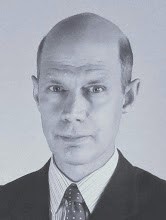
Ben McClannahan of the Financial Times and I talked for a while about the phenomenon and scapegoat Horie Takafumi.
Mr. McClannahan was kind enough to include a quote from out conversation in his article.
(Link)
Showing posts with label financial services. Show all posts
Showing posts with label financial services. Show all posts
Monday, May 19, 2014
Friday, February 01, 2013
Blegging You Please
- I want to listen to speeches at The University of British Columbia symposium of 23 January 2013 on the results of the 16 December 2012 election and the outlook for the Abe Cabinet. However, every time I try to access the site:
http://mediasitemob1.mediagroup.ubc.ca/Mediasite/Play/ce434facbb64415aa8cd5c2ef4a17d2e1d
the video feed crashes about two seconds after start up.
I have contacted the folks at UBC and they find nothing wrong at their end.
Does anyone have a guess as to what could be causing the crashing?
- Listening to Dr. Ed Lincoln's 2011 (?) Temple University Institute of Contemporary Asia Studies (ICAS) talk on Tokyo as an international financial hub (Link) I realized:
a) Though I have heard the "at one time in the late 1980s the assessed value of the land under the Imperial Palace was greater than the assessed value of all the real estate in California" statement dozens of times, I have no idea whether or not it is true.
Does anyone know of the ultimate origins of this anecdote? What organization, if any, did the assessment of the Imperial Palace's land value -- and on what basis?
I am tired of hearing this chestnut without knowing its origin.
b) Dr. Lincoln is fine up until he gets to the "this is why things are the way they are" part of the presentation. Then he hits the rocks.
I dare not listen to his recommendations, as I might try to loft something into low-earth orbit.
Of course, if not for Ed Lincoln's and Clyde Prestowitz's Asian Wall Street Journal op-ed encouraging Koizumi Jun'ichiro to not just resign as prime minister and call elections but to leave the LDP -- published on the 344th of what was to be Koizumi's 1980 days as prime minister -- Shisaku would not exist.
I leave it to the readers to decide whether the annoyance I felt at that op-ed has had a constructive result.
ICAS is the host and sponsor of my 28 February 2013 talk on the Abe Administration. Email icas@tuj.temple.edu for details.
Later - Thank you for all the suggestions regarding viewing the UBC conference. I found it runs on Explorer but freezes up when I use Chrome.
http://mediasitemob1.mediagroup.ubc.ca/Mediasite/Play/ce434facbb64415aa8cd5c2ef4a17d2e1d
the video feed crashes about two seconds after start up.
I have contacted the folks at UBC and they find nothing wrong at their end.
Does anyone have a guess as to what could be causing the crashing?
- Listening to Dr. Ed Lincoln's 2011 (?) Temple University Institute of Contemporary Asia Studies (ICAS) talk on Tokyo as an international financial hub (Link) I realized:
a) Though I have heard the "at one time in the late 1980s the assessed value of the land under the Imperial Palace was greater than the assessed value of all the real estate in California" statement dozens of times, I have no idea whether or not it is true.
Does anyone know of the ultimate origins of this anecdote? What organization, if any, did the assessment of the Imperial Palace's land value -- and on what basis?
I am tired of hearing this chestnut without knowing its origin.
b) Dr. Lincoln is fine up until he gets to the "this is why things are the way they are" part of the presentation. Then he hits the rocks.
I dare not listen to his recommendations, as I might try to loft something into low-earth orbit.
Of course, if not for Ed Lincoln's and Clyde Prestowitz's Asian Wall Street Journal op-ed encouraging Koizumi Jun'ichiro to not just resign as prime minister and call elections but to leave the LDP -- published on the 344th of what was to be Koizumi's 1980 days as prime minister -- Shisaku would not exist.
I leave it to the readers to decide whether the annoyance I felt at that op-ed has had a constructive result.
ICAS is the host and sponsor of my 28 February 2013 talk on the Abe Administration. Email icas@tuj.temple.edu for details.
Later - Thank you for all the suggestions regarding viewing the UBC conference. I found it runs on Explorer but freezes up when I use Chrome.
Thursday, January 17, 2013
From All Sides Now
The negative reviews of Abenomics keep pouring in. So numerous are the voices raised in protest that the objections come now in all kinds of flavors:
- Clyde Prestowitz's MOSS ("More Of the Same Stuff" - Link) highlights one of the most infuriating aspects of Abe Shinzo's economic program. Abe & Co. have a supermajority in the House of Representatives, a four year mandate, a despised and divided opposition...and all they can come up with as plans for pulling Japan out of chronic deflation and low growth are a public works spending-heavy fiscal package and stripping the Bank of Japan of its independence. ARE YOU KIDDING ME?
(How egregious is the assault on the Bank of Japan? No one has raised a peep about Abe smothering the Financial Services Agency by handing the Agency portfolio to Finance Minister Aso Taro. Perhaps new Abe advisor Takenaka Heizo can suggest that a de facto reversal of the bust up of the old Finance Ministry* is a Really Bad Idea.)
- Following up on the suggestion that Dr. Noah Smith made almost three weeks ago -- that Abe Shinzo's real goal in roughing up the BOJ is to drive down the value of the yen (Link) -- Bank Rossii First Deputy Chairman Alexei Ulyukayev has declared the world on the brink of a "currency war." (Link)
It seems than goosing the profits of exporters through currency manipulation, indirect as that manipulation may be, prior to the March 31 end of the fiscal year, upsets folks in other countries.
Consequences...consequences...
- From domestic economists working for the research arms of financial giants, an assessment that the Abe fiscal stimulus package will create far fewer jobs than promised (Link). I am trying to figure out why these staff economists would have a vested interest in denigrating the stimulus. At present I cannot see an ulterior motive.
----------------
* In the kind of precious slip of the tongue that only an old-fashioned pol in full smirk can deliver, Aso Taro, in his first NHK interview after being named Finance Minister, called the Finance Ministry the Okurasho ("Ministry of the Great Storehouse") -- the pompous archaism the MOF abandoned as its official name twelve years ago.
- Clyde Prestowitz's MOSS ("More Of the Same Stuff" - Link) highlights one of the most infuriating aspects of Abe Shinzo's economic program. Abe & Co. have a supermajority in the House of Representatives, a four year mandate, a despised and divided opposition...and all they can come up with as plans for pulling Japan out of chronic deflation and low growth are a public works spending-heavy fiscal package and stripping the Bank of Japan of its independence. ARE YOU KIDDING ME?
(How egregious is the assault on the Bank of Japan? No one has raised a peep about Abe smothering the Financial Services Agency by handing the Agency portfolio to Finance Minister Aso Taro. Perhaps new Abe advisor Takenaka Heizo can suggest that a de facto reversal of the bust up of the old Finance Ministry* is a Really Bad Idea.)
- Following up on the suggestion that Dr. Noah Smith made almost three weeks ago -- that Abe Shinzo's real goal in roughing up the BOJ is to drive down the value of the yen (Link) -- Bank Rossii First Deputy Chairman Alexei Ulyukayev has declared the world on the brink of a "currency war." (Link)
It seems than goosing the profits of exporters through currency manipulation, indirect as that manipulation may be, prior to the March 31 end of the fiscal year, upsets folks in other countries.
Consequences...consequences...
- From domestic economists working for the research arms of financial giants, an assessment that the Abe fiscal stimulus package will create far fewer jobs than promised (Link). I am trying to figure out why these staff economists would have a vested interest in denigrating the stimulus. At present I cannot see an ulterior motive.
----------------
* In the kind of precious slip of the tongue that only an old-fashioned pol in full smirk can deliver, Aso Taro, in his first NHK interview after being named Finance Minister, called the Finance Ministry the Okurasho ("Ministry of the Great Storehouse") -- the pompous archaism the MOF abandoned as its official name twelve years ago.
Labels:
Abe Shinzo,
Aso Taro,
economic malaise,
financial services,
MOF,
popular reforms
Tuesday, September 11, 2012
Japan's Politics Stomps On The Accelerator
In The Pickwick Papers, Charles Dickens entitles one of the chapters "TOO FULL OF ADVENTURE TO BE BRIEFLY DESCRIBED."*
I feel the same way about events in politics these past few days.
-- Liberal Democratic Party president Tanigaki Sadakazu faced reality yesterday, giving up on even running for reelection (E). That he waited so long, forcing his second-in-command Ishihara Nobuteru to forego advance preparation for his own bid for the presidency, either represents faith triumphing over observable fact, or payback for Ishihara's only half-hearted expressions of support for Tanigaki's running for a second term.
Though Ishihara appears to be on course for a victory in the presidential race, and, after the next House of Representatives election, the premiership, it bears noticing that historically his presidential bid is an aberration. Only two secretary-generals have taken over as president since the peaceful, negotiated transition from Nakasone Yasuhiro to Takeshita Noboru in November 1987.
The first was the closed-door, five person negotiated agreement for Secretary-General Mori Yoshiro to take over the premiership from the brain dead but still on life support Obuchi Keizo, three days after Obuchi suffered his fatal stroke.
The other instance of a secretary-general succeeding a party president was Aso Taro taking over for Fukuda Yasuo when Fukuda suddenly resigned on September 1, 2008. Aso had only been in office a month, having been named secretary-general in a leadership shakeup on August 1.
The Aso case points out the main reason why most secretary-generals cannot usually make the direct transition from the party #2 position to the presidency. Under normal circumstances, the secratary-general has been the right-hand man to the president, as much responsible for the daily decisions, right or wrong, as the man in the #1 spot. The secretary-general has also always been seen as bearing ultimate responsibility for the LDP's performance in elections. Many a leadership transition was triggered by the party having a poor showing in an election, mandating that the secretary-general resign and serve a brief stint in limbo.
However, in this instance, the abrasiveness and shallow party roots of Ishihara's main challenger, foreign and security policy specialist Ishiba Shigeru, seem to be showing a green light for Ishihara's election, possibly even in the first round vote of the LDP local chapters.
The other challengers in the LDP race -- former prime minister Abe Shinzo, Machimura Nobutaka and Hayashi Yoshimasa -- seem to be in the race for tactical or public relations reasons.
Hayashi is the Washington think tank candidate -- fluent in English and a familiar face in Washington. He is, however, a member of the House of Councillors -- whose members are seen as not having a personal investment in the party's performance in the House of Representatives. Hayashi is seen as being only technically available to step into the position of prime minister.
Machimura is the faction head candidate, participating so that the list of candidates has at least one faction head in it. Machimura's candidacy presents another hurdle for Machimura faction member Ishihara, as he would normally count on the votes of his faction as the core of his support in the Diet members' round of voting.
Abe is entering the race for purely tactical reasons. He used to be both the ultra-conservative and Washington think tank candidate. His breakdown while in office, unsurprisingly cooled most Washington and national interest. He does remain, however, the most recognizable of the unapologetic, fantastic history-believing nationalists. He is thus probably running in order to play the part of kingmaker in between Ishiba and Ishihara, extracting a promise of accelerated militarization and anti-Chinese and anti-South Korean stances in return for the votes of his supporters.
-- The window for declaring oneself a DPJ leadership candidate closed yesterday. With Hosono Goshi having been talked out of running on Friday last, a field of four candidates-- deridable as "Noda Yoshihiko and the Three Dwarfs" -- now are set for a whirlwind campaign ending on September 21. (E)
As Okumura Jun has noted, the explosion of interest in a Hosono candidacy last week was prima facie evidence that the three remaining Noda challengers -- Haraguchi Kazuhiko, Akamatsu Hirotaka and Kano Michihiko -- do not inspire. In speeches yesterday, each of the candidates, whilst criticizing the prime minister and his policy of accommodation with the LDP-New Komeito alliance, revealed his particular weakness. Haraguchi fulminated about the public's loss of faith in the party due to the abandonment of the promises in the 2009 manifesto. Haraguchi seems unaware that 1) manifesto author Ozawa Ichiro and his most of his acolytes decamped a few months ago, leaving a very small audience, at least among Diet members, for the "we have forgotten our roots" message.
Akamatsu's and Kano's candidacies seem more tactical, given their comparatively advanced ages (Akamatsu is 63; Kano 70). Akamatsu represents the potential votes of the party's under-appreciated socialists, while Kano can offer the votes of his own group and the votes of the members with a visceral hatred/fear of a DPJ commitment to participate in the Trans Pacific Partnership. Kano already has a history of vote trading, his support having been a crucial component of Noda Yoshihiko's victory over the Ozawa-supported Kaieda Banri in the 2011 leadership election.
Both Akamatsu and Kano railed against the three-party agreement that made the passage of the social welfare and pension reform bills possible. Noda defended it, and defended the extension of the three party agreement into the fall extraordinary session. Both sides are just blowing smoke, however. The three party agreement has falls into abeyance with Tanigaki's withdrawal from the LDP presidential race and the automatic evaporation on Spetember 8 of the bond issuance bill and electoral reform bill.
-- Osaka City mayor Hashimoto Toru on Sunday hosted a symposium (E) introducing the ideas that will vault his regional movement into a national political party, the Nihon (or Nippon) Ishin no Kai (the Japan Renewal Party or Japan Restoration Party. By the way, forget about running a search on 日本維新の会 -- what you get is the Facebook page of a Haraguchi Kazuhiko study group of the same name). At the seemingly interminable meeting (five hours in real time) Hashimoto introduced the seven members of the Diet who will today (Tuesday) tender their resignations from their current parties in time for the the JRA's coming out reception on Wednesday. That three of the seven are House of Councillors proportional seat members of the Your Party indicates the prescience of Michael Penn's private circulation article, of August 27, "Yoshimi Watanabe's Your Party in Terminal Crisis."
Of the remaining four defectors, three come from the DPJ and one from the LDP. Matsunami Kenta of the LDP is a proportional seat member of the House of Representatives, and from the Kinki bloc where Osaka is located. That the majority of the JRA's Diet members are proportional seat members indicates the cautious attitude district seat holders are taking with towards to Hashimoto's leap into national politics. That the majority of the defectors are also from the House of Councillors, rather than the more volatile and politically significant House of Representatives, indicates a further lack of certainty among those dissatisfied with the status quo that Hashimoto has coattails.
Also attending and speaking at the meeting were the usual suspects of devolution of power to local governments: former comedian and Miyazaki governor Higashikokubaru Hideo and two of The Three Hiroshis: formerKanagawa Yokohama pretty boy governor mayor Nakata Hiroshi and former revisionist textbook inceptor and Suginami City mayor Yamada Hiroshi, whose Spirit of Japan Party (Nihon soshinto) went nowhere. (J)
That Hashimoto featured these pre-August 2009 election retreads at his talk fest, and indeed wants them to run as Nihon Ishin no Kai candidates, indicates that for all the media interest and public opinion poll enthusiasm for the new party, there is little meat yet on the bones.
-- The deployment of MV-22 Osprey aircraft to the Futenma Marine Corps Air Station in Okinawa received what was ostensibly a significant blow on Sunday from a mass protest (E). Organizers claimed 101,000 persons participated in the rally. Aerial images on television seemed to indicate the size of the crowd was closer to 20,000, though it is possible thousands were, like crowd at the July 16 nuclear protest, hiding under the trees from the blazing sun.
Given that signing off on Osprey operations is electoral poison, it is likely that the final OK will be given by a lame duck Cabinet after after the results of a House of Representatives elections are in. That the U.S. Marine Corps generally gets what it wants means that the effectiveness of the protest is about as doubtful as its crowd numbers.
-- The purported suicide of Financial Services and Postal Reform Minister Matsushita is still the top of the news -- as a such a rare occurrence should be.
I loathe conspiracy theories and theorists but the official narratives so far regarding this case do not hold together. We are supposed to believe that a man found toppled over had hanged himself, or strangled himself with cords of some kind. We are being asked to believe that his security detail did not have a key to his condominium, having to use Minister Matsushita's wife's key to open the condominium front door. We are being asked to believe that he left goodbye messages to his wife, Prime Minister Noda and the Cabinet. We are being asked to believe that the imminent publication of a Shukan Shincho expose of a purported mistress may have pushed Matsushita to take his own life. (J)
As to the last claim, when you are seventy-three, recovering fromprostrate prostate cancer and are revealed to have engaged in extra-marital shenanigans, you are well past the "this will ruin my career" stage.
Next up should be revelations of the content of the purported three goodbye notes.
Do I expect to be seeing the actual texts, ever?
No.
-----------------------------------------------
* Demonstrating that British comic writing has been in the dead-pan, self-referential subversion of the narrative voice business for a very long time.
I feel the same way about events in politics these past few days.
-- Liberal Democratic Party president Tanigaki Sadakazu faced reality yesterday, giving up on even running for reelection (E). That he waited so long, forcing his second-in-command Ishihara Nobuteru to forego advance preparation for his own bid for the presidency, either represents faith triumphing over observable fact, or payback for Ishihara's only half-hearted expressions of support for Tanigaki's running for a second term.
Though Ishihara appears to be on course for a victory in the presidential race, and, after the next House of Representatives election, the premiership, it bears noticing that historically his presidential bid is an aberration. Only two secretary-generals have taken over as president since the peaceful, negotiated transition from Nakasone Yasuhiro to Takeshita Noboru in November 1987.
The first was the closed-door, five person negotiated agreement for Secretary-General Mori Yoshiro to take over the premiership from the brain dead but still on life support Obuchi Keizo, three days after Obuchi suffered his fatal stroke.
The other instance of a secretary-general succeeding a party president was Aso Taro taking over for Fukuda Yasuo when Fukuda suddenly resigned on September 1, 2008. Aso had only been in office a month, having been named secretary-general in a leadership shakeup on August 1.
The Aso case points out the main reason why most secretary-generals cannot usually make the direct transition from the party #2 position to the presidency. Under normal circumstances, the secratary-general has been the right-hand man to the president, as much responsible for the daily decisions, right or wrong, as the man in the #1 spot. The secretary-general has also always been seen as bearing ultimate responsibility for the LDP's performance in elections. Many a leadership transition was triggered by the party having a poor showing in an election, mandating that the secretary-general resign and serve a brief stint in limbo.
However, in this instance, the abrasiveness and shallow party roots of Ishihara's main challenger, foreign and security policy specialist Ishiba Shigeru, seem to be showing a green light for Ishihara's election, possibly even in the first round vote of the LDP local chapters.
The other challengers in the LDP race -- former prime minister Abe Shinzo, Machimura Nobutaka and Hayashi Yoshimasa -- seem to be in the race for tactical or public relations reasons.
Hayashi is the Washington think tank candidate -- fluent in English and a familiar face in Washington. He is, however, a member of the House of Councillors -- whose members are seen as not having a personal investment in the party's performance in the House of Representatives. Hayashi is seen as being only technically available to step into the position of prime minister.
Machimura is the faction head candidate, participating so that the list of candidates has at least one faction head in it. Machimura's candidacy presents another hurdle for Machimura faction member Ishihara, as he would normally count on the votes of his faction as the core of his support in the Diet members' round of voting.
Abe is entering the race for purely tactical reasons. He used to be both the ultra-conservative and Washington think tank candidate. His breakdown while in office, unsurprisingly cooled most Washington and national interest. He does remain, however, the most recognizable of the unapologetic, fantastic history-believing nationalists. He is thus probably running in order to play the part of kingmaker in between Ishiba and Ishihara, extracting a promise of accelerated militarization and anti-Chinese and anti-South Korean stances in return for the votes of his supporters.
-- The window for declaring oneself a DPJ leadership candidate closed yesterday. With Hosono Goshi having been talked out of running on Friday last, a field of four candidates-- deridable as "Noda Yoshihiko and the Three Dwarfs" -- now are set for a whirlwind campaign ending on September 21. (E)
As Okumura Jun has noted, the explosion of interest in a Hosono candidacy last week was prima facie evidence that the three remaining Noda challengers -- Haraguchi Kazuhiko, Akamatsu Hirotaka and Kano Michihiko -- do not inspire. In speeches yesterday, each of the candidates, whilst criticizing the prime minister and his policy of accommodation with the LDP-New Komeito alliance, revealed his particular weakness. Haraguchi fulminated about the public's loss of faith in the party due to the abandonment of the promises in the 2009 manifesto. Haraguchi seems unaware that 1) manifesto author Ozawa Ichiro and his most of his acolytes decamped a few months ago, leaving a very small audience, at least among Diet members, for the "we have forgotten our roots" message.
Akamatsu's and Kano's candidacies seem more tactical, given their comparatively advanced ages (Akamatsu is 63; Kano 70). Akamatsu represents the potential votes of the party's under-appreciated socialists, while Kano can offer the votes of his own group and the votes of the members with a visceral hatred/fear of a DPJ commitment to participate in the Trans Pacific Partnership. Kano already has a history of vote trading, his support having been a crucial component of Noda Yoshihiko's victory over the Ozawa-supported Kaieda Banri in the 2011 leadership election.
Both Akamatsu and Kano railed against the three-party agreement that made the passage of the social welfare and pension reform bills possible. Noda defended it, and defended the extension of the three party agreement into the fall extraordinary session. Both sides are just blowing smoke, however. The three party agreement has falls into abeyance with Tanigaki's withdrawal from the LDP presidential race and the automatic evaporation on Spetember 8 of the bond issuance bill and electoral reform bill.
-- Osaka City mayor Hashimoto Toru on Sunday hosted a symposium (E) introducing the ideas that will vault his regional movement into a national political party, the Nihon (or Nippon) Ishin no Kai (the Japan Renewal Party or Japan Restoration Party. By the way, forget about running a search on 日本維新の会 -- what you get is the Facebook page of a Haraguchi Kazuhiko study group of the same name). At the seemingly interminable meeting (five hours in real time) Hashimoto introduced the seven members of the Diet who will today (Tuesday) tender their resignations from their current parties in time for the the JRA's coming out reception on Wednesday. That three of the seven are House of Councillors proportional seat members of the Your Party indicates the prescience of Michael Penn's private circulation article, of August 27, "Yoshimi Watanabe's Your Party in Terminal Crisis."
Of the remaining four defectors, three come from the DPJ and one from the LDP. Matsunami Kenta of the LDP is a proportional seat member of the House of Representatives, and from the Kinki bloc where Osaka is located. That the majority of the JRA's Diet members are proportional seat members indicates the cautious attitude district seat holders are taking with towards to Hashimoto's leap into national politics. That the majority of the defectors are also from the House of Councillors, rather than the more volatile and politically significant House of Representatives, indicates a further lack of certainty among those dissatisfied with the status quo that Hashimoto has coattails.
Also attending and speaking at the meeting were the usual suspects of devolution of power to local governments: former comedian and Miyazaki governor Higashikokubaru Hideo and two of The Three Hiroshis: former
That Hashimoto featured these pre-August 2009 election retreads at his talk fest, and indeed wants them to run as Nihon Ishin no Kai candidates, indicates that for all the media interest and public opinion poll enthusiasm for the new party, there is little meat yet on the bones.
-- The deployment of MV-22 Osprey aircraft to the Futenma Marine Corps Air Station in Okinawa received what was ostensibly a significant blow on Sunday from a mass protest (E). Organizers claimed 101,000 persons participated in the rally. Aerial images on television seemed to indicate the size of the crowd was closer to 20,000, though it is possible thousands were, like crowd at the July 16 nuclear protest, hiding under the trees from the blazing sun.
Given that signing off on Osprey operations is electoral poison, it is likely that the final OK will be given by a lame duck Cabinet after after the results of a House of Representatives elections are in. That the U.S. Marine Corps generally gets what it wants means that the effectiveness of the protest is about as doubtful as its crowd numbers.
-- The purported suicide of Financial Services and Postal Reform Minister Matsushita is still the top of the news -- as a such a rare occurrence should be.
I loathe conspiracy theories and theorists but the official narratives so far regarding this case do not hold together. We are supposed to believe that a man found toppled over had hanged himself, or strangled himself with cords of some kind. We are being asked to believe that his security detail did not have a key to his condominium, having to use Minister Matsushita's wife's key to open the condominium front door. We are being asked to believe that he left goodbye messages to his wife, Prime Minister Noda and the Cabinet. We are being asked to believe that the imminent publication of a Shukan Shincho expose of a purported mistress may have pushed Matsushita to take his own life. (J)
As to the last claim, when you are seventy-three, recovering from
Next up should be revelations of the content of the purported three goodbye notes.
Do I expect to be seeing the actual texts, ever?
No.
-----------------------------------------------
* Demonstrating that British comic writing has been in the dead-pan, self-referential subversion of the narrative voice business for a very long time.
Monday, September 10, 2012
A Minister Dies A Mysterious Death
Minister for Postal Reform and State Minister for Financial Services and People's New Party member Matsushita Tadahiro is dead. Police responding to an emergency call from his Tokyo home at about 4:45 p.m. found him "fallen down" (taorete iru). With disturbing speed, the news media complex is reporting that the police are investigating the death of the 73 year-old Matsushita as being a likely suicide. (J)
Now there may be good reasons to suspect the minister's having taken his own life. However, to see a report of an older, sickly man's death reported as a likely/possible suicide on NHK's prime time evening newscast only 2 hours and 15 minutes after the police were first called is damn peculiar. Recall this is the cast of clowns who could never come clean about the exact cause of death of Nakagawa Sho'ichi, when 1) his father had committed suicide, 2) he was an alcoholic, 3) he had suffered months earlier humiliation on a global scale (You Tube) which ended his political career and 4) he was found, lying down, at his Tokyo home, unresponsive.
If Matsushita did take his own life, he would be only the second Cabinet Minister to do so while in office since the promulgation of the present Constitution, the first having been the scandal-beset Matsuoka Toshikatsu in May 2007.
Requiescat in pacem.
What this death will mean for the implementation of the postal counter-reformation Ozawa Ichiro and Kamei Shizuka foisted upon us in order to please the hereditary postmaster's association and the postal unions, is probably not much. Speculation on this subject is also better left to institutions such as The Wall Street Journal, Reuters and Bloomberg, which tend to frame world events in terms of their effects on investment portfolios.
Now there may be good reasons to suspect the minister's having taken his own life. However, to see a report of an older, sickly man's death reported as a likely/possible suicide on NHK's prime time evening newscast only 2 hours and 15 minutes after the police were first called is damn peculiar. Recall this is the cast of clowns who could never come clean about the exact cause of death of Nakagawa Sho'ichi, when 1) his father had committed suicide, 2) he was an alcoholic, 3) he had suffered months earlier humiliation on a global scale (You Tube) which ended his political career and 4) he was found, lying down, at his Tokyo home, unresponsive.
If Matsushita did take his own life, he would be only the second Cabinet Minister to do so while in office since the promulgation of the present Constitution, the first having been the scandal-beset Matsuoka Toshikatsu in May 2007.
Requiescat in pacem.
What this death will mean for the implementation of the postal counter-reformation Ozawa Ichiro and Kamei Shizuka foisted upon us in order to please the hereditary postmaster's association and the postal unions, is probably not much. Speculation on this subject is also better left to institutions such as The Wall Street Journal, Reuters and Bloomberg, which tend to frame world events in terms of their effects on investment portfolios.
Saturday, February 25, 2012
AIJ Is Not A Lousy Investment Company...
...it is a truly excellent Ponzi scheme. (E)
The Bernard Madoff scandal barely made the news here in Japan. So it is not surprising that an investment company reporting steady returns for over a decade, even as the globe was rocked by the greatest financial meltdown since the Great Depression, was not flagged by regulators or corporate pension fund managers as suspect. Now, according to The Asahi Shimbun, many of the 120 corporate pension funds that invested in AIJ are on line to writing off half of their asset base, meaning they will not be paying out their corporate retirement benefits (kigyo nenkin) or even the full amount of their employees pension (kosei nenkin). (J)
Greed makes simpletons of us all. If something sounds too good to be true, it probably isn't. A fool and his money are soon parted.
Yes, the clichéd admonitions could just go on and on.
The Bernard Madoff scandal barely made the news here in Japan. So it is not surprising that an investment company reporting steady returns for over a decade, even as the globe was rocked by the greatest financial meltdown since the Great Depression, was not flagged by regulators or corporate pension fund managers as suspect. Now, according to The Asahi Shimbun, many of the 120 corporate pension funds that invested in AIJ are on line to writing off half of their asset base, meaning they will not be paying out their corporate retirement benefits (kigyo nenkin) or even the full amount of their employees pension (kosei nenkin). (J)
Greed makes simpletons of us all. If something sounds too good to be true, it probably isn't. A fool and his money are soon parted.
Yes, the clichéd admonitions could just go on and on.
Saturday, June 12, 2010
No Thank You Mr. Postman
Oh yes, wait a minute Mr. PostmanOn May the 23rd a contented Kamei Shizuka, Minister for Financial Services and leader of the People's New Party, was seated next to a beaming Ozawa Ichiro, Secretary-General of the Democratic Party of Japan, on the dais at the National Postmasters Association (Zentoku) convention. Both men promised the assembled that they would push the Diet to pass legislation rolling back the reforms. They then asked for the association's support in the upcoming House of Councillors election. Associate president Tsuge Yoshifumi, welcoming the pledge, responded that in order to realize the goals of the legislation, members of his organization would have to do their best to promote the election of candidates identified with Zentoku -- after the bill's passage of course.
Wait...Mr. Postman- The Marvelettes (1961)
Three weeks later, Ozawa Ichiro has resigned from the position of DPJ Secretary-General. The new Prime Minister of Japan, Kan Naoto, has decided to delay the passage of the bill, currently in the House of Councillors, to a fall extraordinary session of the Diet -- effectively killing the bill in its present form. In response, Kamei Shizuka has resigned as Financial Services Minister, only three days after the inauguration of the Kan Cabinet. A member of Kamei's party has taken his place as minister and the PNP is still nominally in the Cabinet, but the relationship between the two parties is broken in spirit.
The reversal of fortunes of the postmasters and its unionized workforce, from courted darlings to abandoned has-beens, in such a short span of time reflects the tactical and strategic shifts the DPJ has undergone since the resignation of former Prime Minister Hatoyama Yukio and Ozawa Ichiro.
On a tactical level, the huge surge in popularity of the Cabinet and the DPJ after the resignations of Hatoyama and Ozawa and the selection of Kan as the new party leader wiped out the electoral significance of Zentoku and postal union vote. For a ruling party with support levels hovering around 20%, every vote counts, particularly in thinly-populated rural single-seat prefectures. In rural areas the post office is the predominant banking, insurance and package delivery institution, often the only one. The fear of losing a community's sole financial services institution is reason enough to vote for the party Zentoku supports. Having such support can mean the difference in between victory and defeat in prefectures where a move of even 10,000 votes one way or the other makes a huge difference.
The trade off was, of course, the loss of the party proportional support for the DPJ among non-aligned voters. Pandering to the postmasters, while not a crucial issue for most, contributed to the extremely negative image of the Ozawa-dominated DPJ as the party that was willing to grovel for every organizational vote pf the pre-Koizumi era Liberal Democratic Party electoral machine.
On a strategic level, the new Kan government has made it clear that it is abandoning efforts to stimulate economic growth through loosened lending standards -- policies strongly associated with Kamei. Reversal of postal reform was a part of this general reversal of the strictures imposed during the Koizumi era. Reversal of postal reform of course infuriated the nation's private financial institutions, which have quite rightly see the post office as a favored behemoth sucking trillions of yen out of the world's financial system. This in turn earned the DPJ the hostility of the financial press, which, for good or ill, is the primary opinion-shaping information source for much of the world's population.
Postal reform might have been saved if the PNP actually brought something of substance to the DPJ. However, in poll after poll, support for the PNP nevers hits even 1% of those polled. It is the party of zero, of nothing and nowhere. It is indeed such a weak entity that it cannot stomp off in huff, like the Social Democratic Party could do after the sacking of Fukushima Mizuho over the Futenma reversal. Instead, the PNP must cling to the skirts of the DPJ in the hopes of surviving as an official political party.
As for the once powerful Zentoku, it must contend with the consequences of having backed the wrong horses in the race for power in the nation's capital. Kan clearly takes his talking points on the economy and finance from Ministry of Finance bureaucrats and the banking industry -- the enemies of the post office. Zentoku could try to boost the fortunes of the PNP by a full court press to have its members vote for the party in the proportion vote -- but that would result in perhaps one or maybe two more seats for the micro-coalition, which has been, thanks to Kamei's overreaching and interference on many fronts, more of a hindrance than a help to the DPJ. More likely, however, it will free its members to vote as they wish, giving the organization political cover in the likely anti-post office mood that will prevail after the July House of Councillors elections.
Subscribe to:
Posts (Atom)