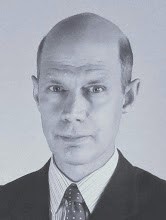
Showing posts with label Yamaguchi Natsuo. Show all posts

Saturday, December 28, 2013

You Would Not Want To Be One Of His Allies

The Yomiuri Shimbun has published an account of the events leading up Prime Minister Abe Shinzo's visit to Yasukuni Shrine two days ago (Link). If the timeline and the quotations in the story are accurate -- and there is no reason to doubt that they are -- a picture emerges of a ruthless Abe, unbound by courtesy or caution in his dealings with his most prominent political allies.

Here is the snippet on Abe's call to Yamaguchi Natsuo, the leader of the party whose House of Councillors votes Abe relies upon to guarantee the passage of legislation:
"I'll visit the shrine at my own discretion," Abe told Natsuo Yamaguchi, leader of New Komeito, the junior coalition partner of his Liberal Democratic Party, over the phone at about 11 a.m. on Thursday, about 30 minutes before he headed to the shrine.

"I cannot support that," Yamaguchi told Abe.

"I didn't think you'd agree with me," Abe said before hanging up the phone.

Abe also informed LDP Secretary General Shigeru Ishiba of his intention to visit the shrine in the same morning.
What the Yomiuri narrative fails to clarify is that Yamaguchi and Ishiba already knew Abe was on his way to Yasukuni before the PM made his courtesy calls. Major news outlets began publishing and airing alerts regarding the Abe visit 30 minutes prior to Abe's 11 a.m. call to Yamaguchi (like this story that appeared on the MSN Sankei News site at 10:26 am). Ishiba found out about the visit from the reporters covering him, when they all started shouting at him, "What is your opinion of the prime minister visiting Yasukuni?" An exasperated Ishiba replied, "Why are you all asking me my opinion of a Yasukuni visit?" The reporters shouted back, "Because it has been announced!" Ishiba, trying to appear nonchalant, turned and walked away, repeating the news to himself, "Oh, it's been announced. Hmmmm."

As for the Yomiuri's account of how Abe handled his chief cabinet secretary Suga Yoshihide -- the man charged not only with making policies happen but devising the cover stories -- that too is eye-opening. Suga's extraordinarily deft management of the policy agenda and the daily message have left many wondering whether he, Suga, is not indeed the de facto prime minister. The Yomiuri's account clearly puts Suga in a subservient role, left to devise a desperate strategy of damage control after failing to change the prime minister's mind on whether or not to visit Yasukuni. The revelation that the Abe statement on why he visited Yasukuni (Link) was devised by Suga after Abe had made his decision goes a long way to explaining the raging insincerity of Abe's post-visit address.

[An aside: I know that the theory that speakers look up and to the right when they are trying to retrieve concocted versions of events from memory has been tested and found wanting -- but gosh, it sure looked like Abe was doing just that during the NHK live broadcast.]

Running roughshod over the leader of the LDP's ruling coalition partner, the secretary-general of the LDP and his own chief cabinet secretary tells all three men Abe's thinking as to who is in charge and who walks three feet behind in this government. The rock hard treatment of Yamaguchi indicates further that the dinners Abe has had in the last month with the heads of the Your Party and the Japan Restoration Party (the latest being a three hour affair with Osaka City mayor Hashimoto Toru on the Emperor's birthday - Link - J) were not mere social get-togethers. Even after the fission of the Your Party in response to Abe's dinner with party leader Watanabe Yoshimi (Link - J), the number of seats held by the Your Party and the JRP in the House of Councillors are more than enough for Abe to tell Yamaguchi and the New Komeito, "You know, you can be replaced..."

Which is what "I didn't think you would agree with me" means, ultimately.

Friday, April 19, 2013

Bound Hand And Foot


In my most recent post on Abe Shinzo's soft and lazy tyranny, I referred to the New Komeito as a "restraint" upon Abe and the Liberal Democratic Party. Yesterday, in party leader's debate, Japan Restoration Party co-leader Ishihara Shintaro used a far more colorful term to describe the role the New Komeito will play in Abe & Company efforts to revise the Constitution:

"The New Komeito will without question become bindings on your hands and feet."

The term Ishihara used -- ashide matoi (足手まとい) -- is a pejorative, usually referring to clingy, needful persons rather than actual physical bindings.

Hecklers (The New Komeito has hecklers? Who knew?) immediately cried out, "Rude! Rude!" Ishihara, ever the self-assured provocateur, responded:

"What I am saying is the truth."

(Link - J)

So, a sign of the apocalypse: Ishihara Shintaro and MTC in agreement -- with the caveat that the Blinking One and I may not be copping the same attitude.

The great unfulfilled dream of the LDP is the revision of Article 9 of the Constitution. If the LDP joins forces with the JRA after the House of Councillors elections, the two parties could, with help from conservative independents and the DINOs inside the Democratic Party of Japan, get within striking distance of the 2/3rds majorities in both Houses of the Diet necessary for putting revisions of the Constitution to a national referendum.

One of the explanations for the pacifist New Komeito's continuing alliance with the LDP, an alliance that has persisted through thick and thin, with the New Komeito seeing its entire leadership go down to defeat in 2009, has been that the tie up keeps the LDP's commitment toward revision of Article 9 on an aspirational level.

With a seeming entente between the LDP and the JRA on lowering the 2/3rds threshold in Article 96, transforming constitutional revision into a cakewalk, New Komeito leader Yamaguchi Natsuo has issued a warning -- that no national consensus exists on a revision of Article 96. (Link - J)

The warning is something of a non sequitur. There is, as far as anyone knows, no national consensus on the LDP and the New Komeito controlling the government. However, because the two parties did well in the December 2012 elections, they do.

As for constitutional revision, the same principle should apply: if you have the votes, everything's on the table. Consensus is nice but nowhere in the rules. Only a believer in essentialist myths about a Japanese way would insist upon consensus being a prerequisite for action.

Despite Ishihara's labeling the New Komeito a shackle upon Abe Shinzo's and the LDP's ambitions, a JRA-New Komeito war is not preordained. Osaka City mayor and JRA co-leader has appealed to the Osaka New Komeito for its help in passing his municipal/prefectural reorganization plans, offering to cooperate with the New Komeito in national elections. The New Komeito also remained neutral in the gubernatorial and mayoral campaign last year, helping Hashimoto and his deputy Matsui Ichiro win both spots. (Link)

Furthermore, the JRA, which received an astonishing 12 million proportional seat votes in the December election and which is largely on course to pick up whatever seats the LDP and the New Komeito do not win in this summer's election, failed to win what should have been walkover municipal elections on April 14, revealing a precipitous deceleration in the forward momentum of the Hashimoto juggernaut. (Link - J)

We might be seeing Hashimoto paying a rare courtesy call on New Komeito members, asking them to quietly ignore the Sick Old Man and his "truths."

As for Article 9, the Cabinet has in its usual unanimous way (meaning with the New Komeito going along) just issued a Cabinet Decision approving a bill making it possible for members of the Ground Self Defense Forces to deploy for the purpose of facilitating the evacuation of Japanese citizens from foreign war zones or disaster areas. Until now, the law on Self Defense Forces overseas rescue dispatches only permitted the dispatch of Air Self Defense Forces planes and Maritime Self Defense Forces ships, with the transports and their crews confined to airport or port areas of the foreign country. (Link - J)

If the language of Article 9 can be construed as not impeding an armed and ready GSDF from driving around hither and yon in faraway conflict zones looking for folks to rescue, the imperative for revision of the article seems rather weak.

Later - For an English language report on the Cabinet Decision from Kyodo News via The Japan Times, click here.

Image courtesy: NHK

Thursday, April 18, 2013

Care To Try Governing For A Little While, Mr. Abe?


The Yomiuri Shimbun scored an interview with the prime minister. According to the PM, a revision of Article 96 of the Constitution is his number one priority going into the House of Councillors election. (Link)

What? Revision of Article 96, lowering the threshold for constitutional amendment below the current 2/3rds of both houses of the Diet standard? Opening the door for a gusher of revisions, including ones with the sole purpose of extending LDP rule non erit finis?

Abe enjoys a supermajority in the House of Representatives, meaning that right now he and his party can pass any legislation that the New Komeito can be stiff-armed into accepting. Come August, even this restraint will be removed, as barring an unimaginable catastrophe, the LDP will have robust majorities in both the House of Representatives and House of Councillors. Abe can look Yamaguchi Natsuo in the eye and say, "If you do not like my policies, then vaya con Dios, mi amigo." The New Komeito for its part will likely not leave the ruling coalition, partly because breaking with the LDP would open up the possibility the government looking into the activities of NK's mother ship, the Soka Gakkai.

Whether or not the New Komeito stays or goes (and Abe & Company will be smart enough to make sure that a break up looks like the New Komeito jumping rather than getting pushed) Abe and the LDP will have no effective constitutional or coalition partner brakes upon their legislative agenda.

With essentially total control in his grasp and the only threat on the horizon the remote one of the Supreme Court invalidating the 2012 House of Representatives election (Link) Abe sees his primary duty to be…constitutional revision?

Why?

Well, of course we know “why” in the sense of a legacy or mission, as both the LDP and Abe have pledged since the beginnings of their respective existences to rid the country of this constitution drafted by New Deal idealism-inspired staff members of the Occupation.

However, what should be on everyone's lips – most importantly the lips of Democratic Party of Japan leader Kaieda Banri and Your Party president Watanabe Yoshimi – is:

"Why do you need to fiddle around with the Constitution, when you have tyrannical legislative and executive powers? Why not use your constitutional powers and your current popularity to govern the country, seeing as how you do not have to pay the least bit of attention to us at all? The Constitution is not blocking you from running the country as you see fit – only your own timidity and sloth are."

It is a mark of the intellectual and ethical vacuity of the LDP that when it possesses the ability to do anything except mess with the constitution, it wastes its energy on trying to mess with the constitution.

The reason for this pointless obsession with constitutional revision? Oh, Abe & Company (and the Hallelujah Choruses inside Japan’s news media universe and the Washington DC nomenklatura) will give you a list of reasons a kilometer long.

The actual reason, though? Governing a country is work…and who wants to do work when agitation and propaganda opportunities beckon?


Image courtesy: The Yomiuri Shimbun


Sunday, December 09, 2012

A Time For Puppets

山高皇帝遠
Shan gao huang-di yuan.
The mountains are high; the emperor is far away.

was the aphorism that came to mind in response to the joke. It is the same sentiment—that those who would disapprove are not around to stop us from doing what we want—that had the Beatles singing, “No one will be watching us/Why don't we do it in the road?”

Looking up the origins of the above proverb, I learn that it has a bleaker twin: "Heaven is high; the emperor is far away" – i.e., the sources of moral order are nowhere near, so you are at the mercy of the local authority.

* * *

The Bunraku puppet theater of Osaka is in residence in Tokyo until December 16, performing at the National Theater. The program is one of education, introducing the art form to adults. It starts with a kyogen adaptation, followed by a pair of brief explanatory lectures by representatives of three principal classes of performers, and then a long (one hour) tragedy.

Although the bunraku is one of the treasures of Japanese art and culture, the it has fallen on hard times. Audiences and private patronage are dwindling. Its stars, being less than one and a half meters tall and made of wood, have a hard time moonlighting in modern theater, television and cinema, as kabuki performers are able to do.

Part of the reason behind the decline is that the bunraku is based in Osaka. Once a rival center of influence and affluence to Edo/Tokyo (the country's major news media groups have their origins in Osaka, for example), Osaka is now a decidedly second tier city, beloved of its citizens but otherwise seen as scruffy, unattractive and in chronic economic decline.

For any classical art form to survive in Osaka would be difficult. For one as labor intensive as the bunraku, survival depends on the government subsidies.

Enter Hashimoto Toru, the boisterous and impatient mayor of Osaka and true leader of the Japan Restoration Association (Link). A crusader against waste and featherbedding in his hometown, Hashimoto has taken the axe to expenditures and Osaka-style governance to the cheers of an exhausted Osaka citizenry.

Among the targets of his axe have been Osaka City subsidies of the bunraku. Hashimoto has argued that the citizens of the city should not be forced to provide financial support an activity enjoyed by only a few. He has, under duress, seen the bunraku twice, hating it both times, finding the art form and the association that controls it hide-bound, fusty and inappropriate for the times.

For background on the Hashimoto-bunraku war, consult this and this
and this and this and this.

While Hashimoto strikes a populist pose, his views are not widely shared. The bunraku's tour in Tokyo is indeed supported by:

The Tokyo Metropolitan District
Chiba Prefecture
The Kanagawa Prefecture Board of Education
The Saitama Prefecture Board of Education
The All Japan Federation of Boards of Education
JTB
Kintetsu
The Nippon Keidanren
The Keizai Doyukai
The Tokyo Chamber of Commerce

Business organizations, professional organizations and corporations have bought blocks of seats for the cultural advancement of their members and employees.

The performers have worked in a little bit on their struggles with Osaka's mayor into the explanatory lecture in between the two plays. It has the tayu, the chanter of the joruri text, trying to give a modern equivalent for one rough and tumble character in a story:

"He's a sort of an Antonio Inoki* figure."

At which point the shamisen player derisively butts in:

"Oh, come on. How can you use such an old example? If you use that kind of relic as your illustration, you will make Hashimoto-san upset."

The audience cracks up. The tayu, smirking to the audience, replies:

"It is not an old-fashioned example...and who is this Hashimoto of whom you are speaking, anyway?

To which the shamisen player, his face also in a smirk, chirps:

"Why...Hashimoto Shinya**, of course."

At which the audience roars in approval.

It is unlikely that the bunraku, begging as it is at Hashimoto Toru's doorstep, would dare include this bit of cheek in a performance in Osaka. But the puppets and their masters are in Tokyo, where no one (except, of course, the occasional decidedly odd Japan politics blogger) will make a big deal out of a brief stab at Osaka's uncouth and self-adoring leader***.

Hence my reflexive thought of the Chinese proverb at the head of this post.

* * *

Hashimoto Toru's war with the bunraku and the theater's bit of fun illuminates some darker facets of this election.

Taking aim at an art form, one which puts Osaka on the map of world culture, shows Hashimoto's populism to be unfocused. Indeed, it is not populism at all. It is philistinism—a proud, even arrogant ignorance of culture and aesthetics.

Such ignorance would be acceptable if it were not coupled with a will to power—a will that Hashimoto has in spades.

The mating of the two elements results in Hashimoto's lashing out at everything he does not understand, no matter the actual significance of a particular item,. In action unbecoming, he uses the power of his tongue and office to crush whatever it is that has earned his ire on a particular day (tattoos on public workers, teachers who are not patriotic, public employees unions).

Hashimoto's inability to sort enemies from annoyances—and react to each according to its rank of importance—marks him as unworthy of higher office. The great populist Koizumi Jun'ichiro, whose family origins are almost as rough as Hashimoto's, made sure to take on powerful entrenched interests. Hashimoto's tendency to go after butterflies with sledgehammers should disturb those who might otherwise be lulled into inattention by his mastery of the quip, the riposte and details of policy.

* * *

That Hashimoto is a philistine is unremarkable. He is, after all, a self-made man of rough circumstances. He may ask, "What does traditional high culture have to do with me?" without transgression. One could go over with him the humble, outcast origins of great artistic traditions like the No theater...but one would first have to find a way around his defensiveness about his origins.

What is remarkable in this campaign is that the main party leaders, with the bold exception of Ishihara Shintaro, all seem to be philistines. Ishihara has literature, Koizumi had Elvis Presley (and XJapan). However, for the majority of the political leaders currently clogging our airways and textual news, one would be hard-pressed to identify a single art either practiced or enjoyed by any them. The only art that interests them seems to be the art of politics, which either paradoxically or inevitably, considering their fastidious concentration on it, not one of them practices with any finesse.

Expanding upon the paradox Okumura Jun noted in his exegesis on my post about the calligraphy of the leaders of the parties—that among those who profess to want to lead Japan back to its traditions are persons who are ignorant of them (Link)—the current crop of party leaders seem to want to be leaders of the Japanese people without taking joy in either being Japanese or people.

It is possible that it is not so much Noda Yoshihiko's duplicity, Abe Shinzo's radical reactionary beliefs, Kada Yukiko's willingness to hold Ozawa Ichiro's hand, Fukushima Mizuho's girlishness, Yamaguchi Natsuo's Gumby hair, Watanabe Yoshimi's accepting of public money only to use it to support his habit of yelling of insults from the sidelines, Shii Kazuo's aggressive anti-fashion or the sheer preposterousness of the micro-party leaders that is driving the voters away. It is the absorption of the political leaders into the job of being political leaders, where earnestness masquerades as determination, which makes it so hard for the public to take a shine to any of the leaders or their parties. Hobbies and interests alone cannot save one, as Aso Taro's and Tanigaki Sadakazu's stints as Liberal Democratic Party president demonstrated. However, a lack of identifiable trivial pursuits shows a disrespect for the human—an unnatural woodenness, as it were.

And no, Noda's noted fondness for alcohol does make the grade.

-----------------------------
* Born in 1943.
** Born in 1965
*** That Osaka is seen as an uncultured pit of a city, particularly by Tokyo denizens, is another reason the joke can be inserted into the Tokyo performances.

Saturday, December 01, 2012

Eleven Party Leaders: By This My Hand Revealed

If the current public opinion polls hold up, and the Democratic Party of Japan suffers losses commensurate with its betrayal of the high hopes the voters had had for the party when they voted it into power in 2009, leaving the Liberal Democratic Party and the Japan Restoration Association as the top vote winners, then we are all in big trouble.

How do we know this?

Calligraphy.

The leaders of the eleven parties held a joint press conference yesterday at the National Press Club. The hosts had the party leaders write down, with felt-tip pens on giant stiff paper flip cards, the main theme(s) of their campaigns.

For those not familiar with this business of writing down slogans or mottoes, the request would probably seem a tad odd. The practice is quite common, however. A major sports figure can hardly get out of a one-on-one, sit down interview without being handed a white square of stiff paper and a felt tip pen.

Given the place of this little ritual in public life, the variation in the performance of the eleven was stunning. The majority of the leaders proved incapable of writing down a few legible characters in a white rectangle.

In so doing, the eleven revealed more about their personalities through their hands than they could ever hope to conceal with their speech.

The most beautiful and flowing calligraphy belongs, unsurprisingly, to octogenarian author and JRA leader Ishihara Shintaro. Of the eleven he was also the only one who chose to write in traditional columns, right to left -- the others all writing in magazine style, in lines, left to right.

Out of either vanity or habit or both, Ishihara finished by putting his signature on the card.

(Fished from out of the snark tank: "So this is one of your signed works, is it?" and "Do you have to leave your signature on everything?")

Ishihara’s calligraphy was not the most vain. That honor belongs to convicted felon (his case is on appeal) Suzuki Muneo of Nippon Daichi. His curlicues and hooks bring only one adjective to mind: affected.

Masuzoe Yoichi (the former Mr. Katayama Satsuki) of Japan Renaissance has pleasant enough calligraphy, if a bit uneven. Too bad that his party is just a figment of his imagination.

After the trio of self-important gentlemen, standards start sliding fast.

Shozaburo Jimi of the People's New Party wins the creativity prize for writing in two different calligraphic styles. He unfortunately also wins the stuffy pretension prize for his selection of the massive rashinban instead of the English loan word kompasu (compass).

New Komeito's Yamaguchi Natsuo's calligraphy is so formulaic and straight-laced it hurts to just look at it. The excessive angularity is matched only by the vapidity of the slogan: "Reconstruct Japan." Uh, Yamaguchi-sensei, what about reform and change?

Fukushima Mizuho of the Social Democratic Party certainly made the best use of the available space. The result unfortunately looks like a handwritten sign on a chair outside a salon listing the hair care services available inside.

Democratic Party of Japan leader and prime minister Noda Yoshihiko's style is that of a diligent student: simple, clear, considered and dull. He gets the structural design award for the neat, one-space offset of the two rhetorical questions "Do we go forward? Or do we turn around and go back?"*

The Communist Party's Ishii Shii Kazuo's calligraphy resembles my own. He has my sympathy. His slogan -- "Offer and Enact" -- encapsulates the hopeless of the Communist dream. The Communists keep offering, but since they never compromise, what they offer never gets enacted.

It is hard to classify Watanabe Yoshimi's calligraphy. Does the weird bowing of the word "fighting" (tatakau) crush the word "reform" (kaikaku) through design -- or did Watatabe just run out of space? Abstractly, is he being coy or is he just incompetent?

Now to the rock bottom.

Kada Yukiko of the Party of the Future uses the first line as a testing ground for various ways of holding the pen. It seems she has spent a life in academia and local government without ever once using a white board. Trying to read the first line, "Politics is the power to build the future" (Seiji wa mirai o tsukuru chikara) is exhausting and annoying. After making the effort and finding one has so little to show for it, one takes a glance at the succeeding to lines, sees all the splotches (How can there be ink splotches? It's a felt-tip pen!) and gives up.

LDP president Abe Shinzo's calligraphy is atrocious. No, that is not right. Nobel Prize winning author Oe Kenzaburo's calligraphy is atrocious**. Abe's calligraphy is...demented. The gigantic, spindly ma followed by the minuscule tsu. The ugly, embarrassing collision of the characters sei and ji, as if the writer had never put the two together before -- which is unfortunate as seiji is "politics."

No one writes this badly. Even if one were trying to, one could not do it.

The irony of course is the slogan itself: Matto na seiji -- "right and proper politics."

For those more expert in the art, a photo collage of the leaders and their work.

No, your eyes are not deceiving you. Fukushima Mizuho is giving us a peace sign with her left hand.

Image courtesy: Jiji Press

-----------------
* Prime Minister Noda has been merciless in his mockery of the LDP's cringe-worthy campaign slogan, "Lets Take Japan Back!" (Nippon o torimodosu). His speeches are peppered with varying disparagements of "going back," "being taken back" or "heading back."

** I once viewed an exhibition of the personal effects and mementos of Donald Keene, organized by Columbia University on the advent of his retirement. Among the items displayed was a letter from Oe Kenzaburo in his fourth-grader scrawl. The kicker was Oe's plea in the letter, "Please do not show this letter to anyone. My calligraphy is abominable!"

Wednesday, November 14, 2012

Oh Well, So Much For All That

The Democratic Party of Japan is dead. (Link - J)

It is all up to the Emperor now. He can either follow precedent and accept Noda's request for a dissolution. Or he can summon Noda, Liberal Democratic Party president Abe Shinzo and New Komeito leader Yamaguchi Natsuo up to the Imperial Palace and tell them how disappointed he is in them.

To unload this steaming, constitutionally suspect action in the Emperor's lap is not the mark of A Good Citizen.

Monday, October 22, 2012

These Stars Collide

A Manic Monday for the Noda Cabinet and the Democratic Party of Japan

- The "Let's Demoralize The Embassy Staffs By Sending A Handful Of Old White Boys To Talk Turkey (shichimencho) With Those Quarelling Asiatics" roadshow (Link) rolls into the Prime Minister's Residence for a meeting with the Anaconda himself. I shudder to think who else the Washington Quartet will be meeting today -- though shadowing them the whole day would provide a resourceful journalist with a list of the influence peddlers and weak points inside the Japanese establishment. Knowing the group leader, the quartet are starting out their morning with a sushi breakfast in Tsukiji.

- The ripples of Maehara Seiji's tossing his expectation of a Diet dissolution by the year's end into the pond of Diet politics will spread out everywhere. Already, Democratic Party of Japan's Acting Secretary Azumi Jun has had to, on a Sunday when the Diet is not in session, tell reporters that Maehara's private views are not those of the party (Link - J). Liberal Democratic President Abe Shinzo, probably thinking his visit to Yasukuni (Link) is being rewarded earlier than even he could have imagined, pounded away last night on the theme that when a minister of Maehara's standing says that the prime minister has no choice but dissolve the Diet by year's end, it places a huge burden of expectations on the PM. (Link - J)

Does it ever.

- The heat from the staggering drops in the Cabinet popularity and party popularity figures recorded in the weekend's public opinion poll results could evaporate the DPJ-People New Party's slim majority in the House of Representatives.

The Asahi Shimbun

Cabinet support

Support 18% (-5%)
Do Not Support 59% (+3%)

Which party will you vote for in the party list section of the next House of Representatives election?

DPJ 13% (-4%)
LDP 36% (+6%)

(Link -J)

Fuji News Network

Which party will you vote for in the party list section of the next House of Representatives election?

DPJ 11.6% (-5.2%)
LDP 32.4% (+0.3%)

(Latest figures -J and previous figures - J)

- The pusillanimous and scandal-tarred Minister of Law Tanaka Keishu (Link), still hiding out in his hospital, refuses to resign. (Link - J)

What a way to start a week, eh, Prime Minister Noda?

Maehara Blows Up The Plan

In the 1994 movie Speed, antagonist and bomb maker Howard Payne (Dennis Hopper) shouts over the phone to bomb squad officer Jack Traven (Keanu Reeves) to forget about trying to outsmart him:

"Jack, nothing tricky now. You know I'm on top of you! DO NOT attempt to grow a brain!"

After what Minister for National Policy Maehara Seiji said to reporters today, I can imagine the normally imperturbable prime minister Noda Yoshihiko screaming into a phone to Maehara:

"At what point, since you graduated from pre-school, did you think you had GROWN A BRAIN?"

Maehara is, like the prime minister, a graduate of the Matsushita Institute of Government and Management. He should ostensibly be of somewhat better than average intelligence and education.

Nevertheless he manages to get into scrapes that leave one wondering, "What was he thinking?" -- which one then immediately repunctuates, "What? Was he thinking?" or even "What? Was he...thinking?"

Prime Minister and Democratic Party of Japan leader Noda Yoshihiko was coming off a very successful Friday meeting with Liberal Democratic Party President Abe Shinzo and New Komeito leader Yamaguchi Natsuo -- successful in that despite the warnings put to DPJ Secretary-General Koshi'ishi Azuma throughout the week by his counterparts in the LDP and New Komeito that if Noda did not offer a date for a House of Representatives election in line with the promise the PM made to former LDP president Tanigaki Sadakazu to have an election "soon" (chikai uchi ni) the Friday meeting would be pointless -- the PM, when pressed by Abe and Yamaguchi, told them, "Sorry, can't say when the election will be."

Asked about his promise to Tanigaki, Noda explained, "I have been focusing on taking responsibility for the weight of the words 'Putting matters to the voters soon.' However, for me to make that decision requires preparations of the environment in various ways. I have no intention to extend the life of this administration through dilly-dallying." (Link - J)

That dilly-dallying, stalling, procrastinating, whatever you many want to call it is exactly what the prime minister and the DPJ have been doing (Link) and want to continue doing is, of course, the whole point.

Abe and Yamaguchi stormed out of the meeting, furious at the PM for having the gall to desire a forestalling his own and his party's execution at the hands of the voters...

[A bit of anachronism, but this weekend's polls, partly due to the deeply embarrassing Tanaka Keishu Affair, have been an across-the-board disaster for the Cabinet and the DPJ. The Asahi Shinmbun poll shows Cabinet support diving to 18% and the LDP slaughtering the DPJ in the "Which party will you vote for in the party list half of the ballot?" question (Link - J)]

Harrumphed Abe and Yamaguchi, "We heard nothing from the PM about 'soon'!"

To which any jaded political observer would say, "Yes. Your point being...?"

All of the prime minister's carefully choreographed insouciance as regards the personal appeals of the leaders LDP and the New Komeito is in tatters, however, after Maehara's truly bizarre swerving off of the script on Sunday. In a discussion of the semantics of "soon" on a morning talking show, then an even clumsier attempt to make up for the earlier blunder by attempting to polish the prime minister's reputation, he detonated a landmine under the PM and the DPJ.

On Fuji Television's morning talk show, Maehara said, regarding the concept "soon":

"If I am to relate my own feelings, if the Diet is dissolved after the beginning of the New Year, that is not 'soon.'"

(Link -J)

Ay Caramba, you maniac! Have you looked at calendar recently? Do you know what the date is today? Are you aware that under the election laws there have to be 12 days between the presentation of the list of the names of the candidates and the holding of an election? Have you forgotten also that the current electoral district boundaries are unconstitutional and that no real DPJ plan to rectify the unconstitutionality has yet seen the light of day? And that the DIET IS NOT IN SESSION YET?

But did Maehara stop there? No, he had to dig deeper. Way, way deeper.

Speaking to a reporters' gaggle after his startling Fuji Television performance, he said:

"One cannot say that having a dissolution of the Diet after New Years is 'soon' -right? I for one believe that the prime minister is the kind of person who keeps the faith taking responsibility for his own words."

(Link - J)

Hold it right there. Let me see if I have this straight. If there is no dissolution of the Diet by the end of the year, the prime minister, in your opinion, Mr. Maehara, is not "the kind of person who keeps the faith taking responsibility for his own words"?

Holy moly, one would hardly have thought it possible when this weekend began, but Maehara may be out of the Cabinet earlier than Tanaka Keishu.

In one of the most delicious of ironies, if one plugs Maehara's phrase for "keeps the faith" (shingi o mamoru) into Eijiro, the best regarded of the free online dictionaries, out pops the following quote from Chapter XVIII of Machiavelli's The Prince:

"Therefore a wise lord cannot, nor ought he to, keep faith when such observance may be turned against him, and when the reasons that caused him to pledge it exist no longer."

Read your damn Machiavelli, Maehara-san, whether or not you are still around a few hours from now. If you are not, then you will have plenty of free time to study of this the most basic text on political survival.

Keep the faith, brother you jackass.

Friday, October 19, 2012

Pawn Sacrifice

Cut your losses. If you must lose material, lose as little as possible.

- Bruce Pandolfini, "The 64 Commandments of Chess"

The time has come for us to say, "Sayonara"...

- Freddy Morgan and Yoshida Hasegawa*, "The Japanese Farewell Song"
Yesterday, Chairman of the House of Councillors Oversight Committee (kessan iinkai) Yamamoto Junzo summoned Minister of Law** Tanaka Keishu to appear in his chamber to answer questions from the Liberal Democratic Party's Kumagaya Yutaka.

Tanaka asked to be excused, citing official duties -- which included unidentified "events pertaining to the courts" and a meeting with the German Ambassador.

"Fine," said Yamamoto, "we will postpone your answering Kumagaya's questions to the evening."

Which Yamamoto did.

Tanaka never showed up.

Tanaka Keishu has been a political vagabond, successfully serving three consecutive terms in the Kanagawa Prefectural Assembly before diving into national politics. His Diet career proceeded in fits and starts, in for a while only to be ousted again, running under the banner of four different parties along the way. He landed in the DPJ in 1998 when his Democratic Socialist Party (Minshato) accepted absorption into the larger party. In the 2005 election debacle for the DPJ, Tanaka lost his district seat, one to be revived as a zombie from the party list.

In 29 years in national politics, Tanaka has managed to eke out six elections to the Diet, the basic minimum standard for mediocre politicians to receive a ministerial posting. Since he is is 74 years of age and a repeated electoral loser, he looks to have been the obligatory pity appointee in the October 1 Cabinet reshuffle.

What a mistake that has turned out to be.

It is not as if Tanaka's ethics problems are anything new: his career has been dogged by scandal. He was one of the Diet members alleged to have profited from stock sales in the Recruit Scandal, rumors which led to his losing his seat in the 1990. Immediately after being appointed, it discovered that his political support group had received donations from a Taiwanese restaurateur. Tanaka was criticized for not resigning his ministerial post as the ultra-slick and ambitious Maehara Seiji had in March 2011 after he was discovered to have received a very minor amount in donations from a foreign national friend.

The revelations in the scandal weeklies that blew everyone's mind were that Tanaka 30 years ago served as the official go-between in a yakuza wedding and havd given a speech at a yakuza function around the same time.

Considering the political hay the opposition would make of such revelations, which Tanaka has confirmed as being true, should have meant the end of his career as the nation's highest ranking administrator of the law.

However, mysteriously, he neither resigned not did the prime minister ask for his resignation. He has lingered on, an open sore in the Cabinet, going through the motions of Law Minister.

If yesterday's mysterious defiance of a committee summons is not the result of illness or a fluke of scheduling, Tanaka's removal from office is imminent. Prime Minister Noda Yoshihiko will be meeting with LDP president Abe Shinzo and New Komeito leader Yamaguchi Natsuo today in the first private get-together of the major party heads since Abe's, Noda's and Yamaguchi's reelections. The two meetings this week between secretaries-general of the three parties have been acrimonious, with the LDP and the New Komeito demanding a fixed date for a House of Representative election and the DPJ dodging the issue. (For my discussion of the impossibility the DPJ to honor the LDP's and New Komeito's demands, click here.

Nothing would help set an intial mood of conviviality at today's meeting than Tanaka's head on a platter.

Will Tanaka go quietly or will Noda have to fire him? Today is Friday, the day of the second of the Cabinet's bi-weekly meetings. The PM may let Tanaka sit in on the meeting, for appearance's sake. He will likely also be patient, allowing Tanaka the time to do the decent and smart thing and resign, then call a press conference to announce his resignation. However, if Tanaka refuses to resign -- a not unlikely outcome given his lack of a sense of decency so far in his political life -- Noda will be forced to fire him, with Noda giving the press conference before the trilateral meeting.

We shall see how this all this plays out.

--------------------------------------------
* One person? Two? Imaginary? No one knows.

** The Japanese name is Homusho. If the Ministry is in anyway interested in administering justice rather than the law, one has to ask, "Since when?"

Friday, October 12, 2012

The DPJ Goes To The Four Corners

Yesterday, Prime Minister Noda Yoshihiko had a first face-to-face good-fellow-well-met confab between himself and the recently elected Liberal Democratic Party President Abe Shinzo.

By "recently elected" I mean 16 days ago.

Accompanying both men were the main members of their new party secretariats.

By "new" I mean appointed 14 days ago.

The delay in getting the two party leaderships together is understandable. Noda had to reshuffle the Cabinet: that happened on October 1st. Then the new Cabinet ministers had to get comfortable in their new chairs. Then there was the Sports Day three day weekend...

OK, so the scheduling may not have been done with any degree of expeditiousness.

However, yesterday, the two lineups of men (and yes, it was all men...sigh...is this really an advanced post-industrial society?) got together over a table and got down to work.

And, after an eventful and likely exhausting five minutes, they ended their meeting.

Prime Minister Noda, with a dramatic flourish, told Abe that the two of them really have to together soon with Yamaguchi Natsuo, the leader of the New Komeito, to discuss the extraordinary Diet session. (J)

Meanwhile, in another part of the Diet Building, six members of the Administrative Oversight Subcommittee of the House of Representatives Committee on Audit and Administrative Oversight sat twiddling their thumbs.

The six members of the subcommittee -- four from the Liberal Democratic Party, one from Ozawa Ichiro's People's Life Party and one from the New Komeito, had responded to a call from the subcommittee's chairman, a member of the LDP*, to an emergency, extra-Diet Session meeting to examine dereliction of duty in the disbursal of the funds from the supplementary budget for the recovery and reconstruction in the disaster zones of the Tohoku and Fukushima Prefecture.

The reason the six members of the subcommittee were hard at work developing their thumb muscles was that none of the eight Democratic Party of Japan members of the subcommittee showed up to the emergency meeting. Had even a single member of the DPJ showed, the committee would have had a quorum, and could set to work investigating the allegations of fraud and mismanagement. (J)

Or at least they might have tried to do so, only to be stymied by the DPJ-led government's having told the summoned relevant ministry officials not to leave their offices to appear at a meeting that was not going to happen.

The DPJ had an explanation for not responding to the chairman's call. The lengthy process of winnowing through the appointments of new senior vice ministers/state ministers and parliamentary vice-ministers after a Cabinet reshuffle had turned out to be just that, lengthy, and the DPJ secretariat had not had the time to select a new Ranking Member for the subcommittee. Without a Ranking Member how could any of the other members show up?

You know how it is...

Tick, tick, tick...

Funny thing that Abe and Yamaguchi are learning about Noda. If, following your election, or in Yamaguchi's case reelection, to the position leader of your party the first thing you promise to your followers is that you will bring them the head of the current government on a platter, that head is not terribly inclined to facilitate your delivering on that promise. Indeed, however he might not want to embarrass you in front of your peers, he has an incentive to stall, delay, prevaricate, stonewall -- all to keep his head right where it is.

Noda Yoshihiko promised the hapless former LDP president Tanigaki Sadakazu in a private one-on-one meeting that in return for cooperation on the package of social welfare reforms bills including the consumption tax bill, the bond issuance bill and a bill reforming the electoral districts, he, Noda, would dissolve the Diet "soon" (chikai uchi ni).

Both Houses of the Diet passed the package of bills on social welfare reform, including the consumption tax bill.

However, when it became clear that Noda and the DPJ were stalling on the submission of the two additional bills, this in order that the two bills would fail to wend their way through the relevant Diet committees and plenary sessions before the September 8 end of the regular Diet session, Tanigaki lost his nerve. He tried, ex post facto, to get Noda to commit to a date certain for the Diet dissolution. He failed to bullrush the stolid Noda. At which point all hell broke loose: a fumbled no-confidence motion; the DPJ's ramming through the House of Representatives its versions of the two bills; the LDP voting in the House of Councillors for a motion of censure condemning its own actions; and the crashing to a halt of the House of Councillors session well before the deadline, leading to the death on the doorstep of the House of Councillors of the bond issuance and electoral reform bills.

Quite an interesting summer.

Anyway, with the two bills dead and Tanigaki gone as LDP president, the seemingly imperturbable Noda is now looking to Abe and Yamaguchi to forget all about that silly "soon" business.

As for Azumi Jun, the former minister of finance, who went about the halls of the Diet sweating and writhing throughout the month of August, it seems possible he may have lied exaggerated about the extent to which Japan faces fiscal disaster should the bond issuance bill fail to be passed this month.

Oh, the duplicitous knave -- I mean, DPJ Acting Secretary-General!

Certainly no one is doing now the panic dance he was doing just two months ago.

So what's bottom line? When will the Noda and DPJ stop their delaying tactics and start playing ball?

Oh, how Abe and Yamaguchi would love to know the answer to that question.

Perhaps they will find out when the two of them have their têtes-à-tête with the prime minister.

Sometime soon, just like he said.

-----------------------------
* While the committee chairs in the House of Representatives are all held by members of the ruling coalition, subcommittee chairmanships are distributed to members of the opposition out of courtesy.

Tuesday, October 02, 2012

One Stupid Move

Be aggressive, but play soundly. Don't take unnecessary chances.

- Bruce Pandolfini, "The 64 Commandments of Chess"
Yesterday, Prime Minister Noda Yoshihiko unveiled his reshuffled Cabinet (E). This follows on the heels of Friday's announcement of an extremely youthful but nevertheless competent line up of Democratic Party of Japan executives (E). Smirking critics could indeed call the newly appointed party secretariat the Attack of the Kiddie Korps, or perhaps for the more SF inclined "DPJ: The Next Generation." Aside from the reappointed secretary-general Koshi'ishi Azuma, the party secretariat is composed of what are in historical terms striplings, with Diet Affairs Chairman Yamanoi Kazunori the graybeard at 50 years of age.

Continuing on the SF theme, opposition party leaders and spokesmen are deriding the reshuffled cabinet as being nothing so much as the "So Long, And Thanks For All The Fish" Cabinet. (J)

There is a grain of truth in the disparagement. Noda rotated in en masse the former party secretariat -- minus, it should be noted, the egregious Sengoku Yoshito.

The granting of all of the Second Generation of DPJ leaders a cabinet post hints that it is Dandy Don Meredith Time for the DPJ. The former American football player and announcer would croon, "Turn out the lights/The party's over" when the score and the time remaining in a game left no doubt as to which side was going to win.

That not a single one of the candidates who ran against Noda in the party leadership election received a post indicates that Noda does not give a fig about either Kano Michihiko's or Haraguchi Kazuhiro's supporters bolting from the party, triggering a political crisis as the DPJ falls into minority status in the House of Representatives.

That Noda would seeminly abandon his pledge to be a "no sides" leader of the party, meaning that all voices would be respected, only two weeks after winning reelection, indicates a certain fatalistic reckelessness has crept into his calculations.

Public opinion poll results after the Liberal Democratic Party presidential elections would certainly be grounds for Noda taking chances. Rather than sink upon the LDP Diet members' selection of an unstable and controversial Abe Shinzo as party president, support for the LDP soared, from 25% to 37% in a flash Nihon Keizai Shimbun poll (J); from 19% to 25% in a Mainichi Shimbun poll (J) and from 23% to 33% in a Yomiuri Shimbun poll (J).

The rise in the LDP's popularity over the last week is especially galling because

1) All three polls showed rises in the support levels for the Noda Cabinet

2) Abe Shinzo hardly lights the public's fire.

Q: Do you have positive expectations of Abe Shinzo?

Nikkei
Yes 38
No 49

Mainichi
Yes 40%
No 55%

3) Despite majorities polled feeling that the reelection of Noda as leader of the DPJ was a good thing, support for the DPJ declined:

Nikkei
August 21%
Sept 26-27 19%

Mainichi
Sept 15-16 13%
Sept 29-30 11%

Yomiuri
Aug 17-19 20%
Sept 28-30 18%

Worse news still in the most recent round of polls was the decline in interest in Osaka City mayor Hashimoto Toru's Japan Restoration Association. The official start of the national party on Friday was a low-key or no-key affair. There was no grand party at a major hotel, no shots of an office overflowing with a snow bank of congratulatory white orchids. The biggest news regarding JRA was Takenaka Heizo, the academic economist and former Koizumi banking and postal reform point man, accepting the invitation to be chairman of the committee selecting the JRA's candidates. (J)

With its support jumping, and the support of the DPJ sliding and support for the JRA plummeting, the incentive for the LDP in the upcoming Diet session is to be non-cooperative to the point of bringing Diet proceedings to a standstill, endangering the passage of a bond issuance bill funding the government's activities through the rest of the fiscal year. Abe and New Komeito leader Yamaguchi Natsuo are indeed making loud noises about holding Noda to the promise he made to former LDP president Tanigaki Sakakazu to call a House of Representatives election "soon" (chikai uchi ni).

Noda's and the DPJ's ace in the hole, however, remains the reform of electoral district boundaries. Unless some bill is passed bringing down the level of disparity in the voting strengths of the nation's largest and smallest House of Representative districts to less than 2 to 1, an election would be unconstitutional. If worse comes to worst, the game plan for the DPJ has been to lay out a draft electoral reform bill unacceptable to either the LDP or the New Komeito, and let them rail away until they are forced to vote in favor of the bond issuance bill.

Which is why one of the choices Noda has made for his new Cabinet looks like a huge mistake. As Eurasia Group Advisor Okumura Jun has noted, the new minister of Health, Welfare and Labour Minister Mitsui Wakio is the founder and owner of a pharmaceutical company and chairman of a private corporation running 3 hospitals and 2 retirement homes in Hokkaido (Link) -- a concantenation of conflicts of interest so naked that an unforgiving, persistent, frustrated and irresponsible opposition could tie up hours and hours of Diet Budget Committee time discussing them.

Now where could anyone find such an opposition?

When the obvious strategy for the new Noda Cabinet was to sit tight and let the opposition vent, why oh why give them a set of reasonable topics to vent about?

Saturday, April 21, 2012

Yoshihiko, Takeshi, Naoki, Azuma, Sadakazu, Natsuo, Yoshimi, Yo'ichi, Hirohisa, Jun'ichiro and Ichiro


It's been a bad day (Please don't take my picture!)
It's been a bad day (Pleeeaaze!)

- REM "Bad Day"(2003)
As scheduled, the House of Councillors censured Defense Minister Tanaka Naoki and Minister of Land, Infrastructure, Transport and Tourism Maeda Takeshi. Their business done, members of the House from the Liberal Democratic Party promptly stood up and strode out of the chamber, making a spectacle of their party leaders' threats to boycott all Diet business until Tanaka and Maeda are either fired or resign.

Prime Minister Noda Yoshihiko has sworn he will not force the ministers to resign -- which we can assume is code begging the two to resign. DPJ Secretary-General Koshi'ishi Azuma, who is looking older and older these days, as if that were physically possible, continues to hold to an improbable line that there are no reasons for the two ministers in question to resign.

Technically, Koshi'ishi is correct: the censure motion is a symbolic measure with no legal consequences. However, with the LDP and the New Komeito refusing to consider any legislation pending in the House of Councillors, indeed boycotting committee meetings, the ostensibly sanction-free measure has teeth. Fujii Hirohisa, the equally venerable but not so sepuchral-looking as Koshi'ishi head of the DPJ's tax committee (whose resignation from the Hatoyama Cabinet for health reasons looks more and more suspect every day) has asked the prime minister to bow to the inevitable and fire Tanaka and Maeda if he wants to save the consumption tax rise legislation, the supposed cornerstone of his political program (J).

To make the survival of Maeda and Tanaka even less likely, the Tokyo Prosecutors Office Special Investigations Branch (cue Star Wars Imperial March music) on Friday accepted documents accusing Maeda and others with violations of the public elections law. Maeda's use of his office's stature and materials in order to influence the Gero City mayoral election is indisputable. The prosecutors' failing to transform the charges into an indictment would shock the conscience. (J)

So Maeda must go, and with the undertow he generates, Tanaka must be swept out with him. Having pledged in his victory speech in last fall's DPJ leader election to be a "no-sides" party leader, meaning that he will choose his cabinet and fellow party leaders based not upon ability but on fair representation of all the different groups within the party, Noda harvests the rotten fruit of his ill-considered magnanimity.

Former Prime Minister Koizumi Jun'ichiro, wherever he is hanging out right now, must be thinking, "Noda-san, when I was prime minister, were you not taking notes? Even Ozawa Ichiro, who accepts no one as his equal, saw that my way of tossing into the trash the candidate lists from the faction leaders, appointing the competent and firing even the popular when they caused trouble was the only way to run this blessed land."

Image: Maeda Takeshi (L) and Tanaka Naoki (R) leaving the Cabinet meeting room on April 17, 2012.

Image courtesy: Mainichi Shimbun

Friday, February 19, 2010

Hatoyama Ali


It is becoming a pattern.

The media and opposition parties, realizing that despite the latest round of political hysteria, the Democratic Party of Japan did not magically lose its 300+ seat majority in the House of Representatives nor its coalition majority in the House of Councillors, begin raising expectations for a coming confrontation that will this time, assuredly, bring the downfall of the Prime Minister Hatoyama Yukio, DPJ Secretary-General Ozawa Ichiro, the Cabinet, DPJ unity or possibly all four together. The media predicts a showdown; the LDP, an exposure of the true shallow evil of the DPJ and its ruling duarchy.

And then the big day dawns. The cameras are in place, the announcers and LDP stalwarts predict a startling show...and then...poof, the spectacle collapses into an inconclusive fog of evasions, apologies and repetitions of "we'll get back to you on that."

The latest iteration of recurring nightmare took place on Wednesday when Hatoyama faced Question Time from LDP President Tanigaki Sadakazu and New Komeito leader Yamaguchi Natsuo. Here at last, going one-on-one with the sharp-tongued leaders of the opposition, the PM would be held to account for his party's purported revolution's purportedly running off the rails.

Maybe.

The affair lasted 48 minutes. Some 36 of those minutes, according to the calculations of the Nihon Keizai Shimbun, were spent on the Prime Minister's and Ozawa's fishy political fund organization accounts. About 10 minutes were spent on fiscal deficit and tax issues. A whopping 2 minutes were spent on the relationship with the United States.

No bombshells were dropped. No knockout blows were delivered. Editorials in the Mainichi Shimbun and the Nikkei both complained that Tanigaki and Yamaguchi brought nothing new to the table, that the talking points were recycled from earlier question-and-answer sessions of the Budget Committee. The Ehime Shimbun went so far as to characterize the contest of wits as the most mediocre theater, a huge letdown after the thrilling Japan-U.S. women's preliminary qualification round curling match that had immediately preceded the Hatoyama-Tanigaki-Yamaguchi debate.

The Asahi Shimbun in its editorial criticized the debate's lacking substance. However, the paper admitted that is was natural for opposition parties to want to dent the image of the ruling party by dwelling upon shady political donations.

It was, as the Nikkei Shimbun pointed out, also traditional. The very first question asked Prime Minister Obuchi Keizo in the very first Question Time session in February of 2000? "Why were the NTT DoCoMo-related shares belonging to a dead man assigned to the secretary described as your right-hand man?" The person asking the question: the then DPJ leader Hatoyama Yukio.

Yes, Virginia, there is irony here.

Each and every editorial decried Question Time's having deviated from its true purpose of debating the policy issues of greatest concern to the nation. That the media has played a crucial role in turning everyone's attention away from policy issues and toward the scandals real and imagined did not, of course, merit examination or comment.

The Prime Minister apologized the distress he and Ozawa have caused the people. He apologized for being so unaware of the goings on inside his own political funding organization. He apologized for not being able to guarantee that either Ozawa or his former secretary Ishikawa Tomohiro would testify in the Diet about the accounting problems at the Rikuzankai. "But if there were a reason for Ozawa to testify," the PM countered, "I would certain be in my rights to broach the topic with him, I think."

The PM was one sorry dude.

However, it seems clear that the Hatoyama's recondite behavior, his evasions about what he intends to do about Ozawa and his on-again, off-again awareness of what is going on around him are not just personal failings. They also constitute a strategy, luring the media and the opposition parties into returning again and again to the funding organization scandals until the public's patience reaches a breaking point--whilst off to the side, out of the spotlight, the DPJ-led coalition pushes its agenda through the Diet with nary a peep to the contrary.

The Hatoyama Cabinet has suffered serious declines in its popularity due to the political funds scandals. The DPJ has suffered somewhat less dramatic but still serious declines. However, it is a long, long time until July when the House of Councillors election will have to be held, or even until mid-May, when the government faces a deadline on an alternative plan for the replacement for the Futenma Marine Corps Air Station. Until then Hatoyama, Ozawa, the Cabinet and DPJ will can afford to lean back and let the media and the LDP exhaust themselves or exhaust the nation's patience with their continuous but ineffectual pounding away at Hatoyama's and Ozawa "politics and money" (seiji to kane) shortcomings.

It's the Rope-A-Dope strategy.

And as long as it appears as though the DPJ and its current allies might fail to protect the majority they hold in the House of Councillors, the leaders of the New Komeito will remain convinced it is in their interest to pull their punches, on the chance that if they play nice, come August the New Komeito will be back in the government as the DPJ's essential coalition ally.