Showing posts with label tourism. Show all posts

Saturday, May 04, 2013

Chichibu - April 2013

Valley of the Yokoze River, Yokoze Township, Saitama Prefecture.

Sakura performer, Chichibu City, Saitama Prefecture.

Shiba zakura, Hitsujiyama Park, Chichibu City, Saitama Prefecture.

Shishi dancer, Chichibu City, Saitama Prefecture.

Shishi dancers, Chichibu City, Saitama Prefecture.

Mt. Bukko, Yokoze Township, Saitama Prefecture

After the discovery of nylon doomed the silk industry, Chichibu's core industry became cement production. Materials companies blasted Bukko, the limestone massif overlooking the city, to powder (one resident said one of her earliest memories was traveling to another town and finding out that not everyone had white roofs). The resulting product was shipped off to armor the coastlines and line the rivers (and play a role in better-considered construction as well, of course).

The blasting has ceased, leaving behind a peculiar half-mountain as Chichibu's scenic backdrop.

Chichibu is trying to reinvent itself as a center for tourism: a role for which it is eminently qualified. The city faces limits, unfortunately, in its poor transportation links. There is no major no airport and no nearby Shinkansen line. The valleys leading into the city from the south are only wide enough to accommodate two lane roads, and access from the north takes a lengthy looping route via Yorii -- a sleepy burg whose own fortunes are set to skyrocket when the new super-efficient Honda assembly plant opens.

The already poor transportation situation could become dire if the Seibu Group wins permission to close down rail service on the Seibu Chichibu Line. Seibu managers seem to have wanted for some time to unload the Chichibu line as well as four other minor lines. They have cleverly used a bid for board seats by U.S. based Cerberus Capital as an opportunity to make public their desire to dump their least profitable rail operations. (Link)

To be fair, Seibu has tried to promote travel along the Seibu Chichibu line, publishing, for example, a library of trail maps for hikers. Two of the trails, the one up to Kanhatsushumiharashidai and the one from Ne no Gongen to Takedera (Hachioji) are classic beginner-level day trips.


All photos: MTC

Monday, January 21, 2013

Toward Hinohara

On Saturday the editors of The Japan Times -- a peculiar fraternity on the best of days -- published what can only be considered a transcendental editorial on rural depopulation.

Transcendental, that is, in terms of its stupidity, none of the facts revealed being particularly surprising and none of the remedies suggested being reasonable.

Nevertheless, the editorial (Link) is instructive in its replication of the fanciful domestic discussion on rural depopulation. Rather than accept the emptying of the countryside as a natural process, the editors find all kinds of external or structural weaknesses, including government action/inaction, to blame. Some of the cause-and-effect relations found are truly peculiar (The 2008 Lehman Shock closed factories in rural Japan?).

The unspoken faith (The Great Lie told? - Ed.) is that if residents of rural areas face their problems squarely, solutions can be found to rural decline.

Poppycock. What needs to be face squarely is that almost nothing can be done to reverse the emptying out of the countryside.

For not even the Tokyo Metropolitan District can get rural life right.

It is generally known that the gateway and window into Japan, the Tokyo Metropolitan District, is the great outlier among Japanese prefectures. All but a handful are depopulating due to increased morbidity and emigration. Tokyo, however, just keeps on growing. After dipping below 11.59 million persons in 1996, Tokyo has found a way to accommodate 1.64 million new residents, its population, according to Tokyo Metropolitan Government statistics, standing at 13,228,912 on December 1. (Link)

Whereas the population of the TMD is getting older, like everywhere else in Japan, the population of children is at least stable. The number of children in 0~14 years-of-age cohort did collapse from 2,155,242 in 1985 to only 1,427,229 in 2001. Ever since, however, the number of children has been growing, if only slightly, keeping the schools open and day care center builders employed.

Despite the big rise in the population and stability in the numbers of children, the TMD is undergoing rural depopulation. The 1.6 million new TMD residents have not been absorbed primarily by the suburbs. Instead, population growth has occurred in the TMD's core. In 1996, the population of the inner 23 wards was 7,846,487. In December 2012 it was 9,007,407. In raw numbers, 75% of the growth in the TMD population has been accommodated in the already most densely populated third of the District (the purple area in this map). More people live in the 23 wards than at time in Edo/Tokyo's crowded history.

Despite the significant population increase of the TMD as a whole, a well-funded and responsive local government and highly developed public transportation, highway and high-speed telecommunications networks that would ostensibly would allow anyone access to all the amenities of contemporary life, the population of the TMD's exurbs is shrinking. The extreme western, mountainous county (郡) part of the TMD has seen its population fall from 61,297 in 1996 to 58,232 at the end of last year -- a small decrease, to be sure, but still counter to the general population trend.

Moreover, the least populated areas of the least populated region are losing population the fastest.

The loneliest place in Tokyo is Hinohara Village (檜原村) -- the orange area in the below map:


Hinohara covers 5% of the TMD's total land area. It is, however, home to only 2,526 persons (1,262 men; 1,264 women) -- 0.02% of the TMD's total. While the average density in the TMD is 6,044 persons per square kilometer (Toshima Ward tops the list of municipalities at 22,161 persons per square kilometer) the number of Hinohara residents per square kilometer is fewer than 25.

In 1985, Hinohara's population stood at 3,914:

681 children (0~14 years of age)
2471 working age adults (15~64 years of age)
762 seniors (65 years and older)

In early 2012, Hinohara had 2,597 residents:

172 children (less than 7% of the total)
1,313 working age adults
1,1112 seniors (43% of the total)

Yes, you read the above correctly: the population pyramid in the TMD's not unpretty (the touted Sengen Trail is a disappointment but the hike up Makiyoseyama is one of the Kanto's best day trips) hinterland is more skewed toward the gray than those of Japan's famously dying rural prefectures. And yes, the town lost 71 residents last year -- a 2.7% drop. Since 1985, the town's population has shrunk by more than a third.

It is not as if Hinohara Village were the end of the world. By local bus and trains, Hinohara's town hall is little more than an hour and half out of Shinjuku. By private car the trip might take about the same amount of time.

Yet despite being not just connected to the metropole but in the metropole, Hinohara, the community, is evaporating. Without immigration, its population will halve over the next 20 years.

Stabilize the population of Akita? Stabilize Saga? Stabilize Hokkaido?

Tell me how to stabilize Hinohara Village first.

The Hossawa waterfall, frozen
Hinohara Village, Tokyo Metropolitan District
January 20, 2013
Image credit: MTC

Monday, February 13, 2012

Sometimes An Idea...

...is so bad you cannot imagine anyone ever thinking it.
Japan enlists foreign bloggers to revive tourism in quake-hit areas
Kyodo

TOKYO -- Japan's Foreign Ministry is inviting prominent overseas bloggers and twitterers to visit areas devastated by the March 2011 earthquake and tsunami.

The ministry has launched the initiative to revive the tourist industry in quake-hit northeastern Japan. It wants foreign guests to write about the progress made in rebuilding disaster-ravaged communities and let the world know that the area still remains an appealing holiday destination.

At the ministry's invitation, Spanish blogger Roger Ortuno Flamerich came to Japan in December, followed by Louisa Liu Chu, 45, a food blogger from Chicago and Khaled Hamza, 48, editor-in-chief of the official website of the Muslim Brotherhood from Egypt, who arrived here on Jan. 31.

Hamza's group is a well-known Islamist movement that played a pivotal role in bringing down the autocratic government of former Egyptian President Hosni Mubarak.

Hamza made a daytrip to Ishinomaki, Miyagi, the prefecture closest to the epicenter of the March 2011 temblor, to inspect reconstruction sites. Chu spent three days visiting fish markets and sake brewers in Kesennuma and Sendai, two other Miyagi cities.

Deciding to mobilize the immense communicative power of blogs and Twitter, the Foreign Ministry earmarked some 21.5 million yen for the project for the current fiscal year through March.


This month, two influential twitterers -- a Chilean university professor and a Chinese children's storywriter -- will come to visit... (Link)
I know what you are thinking: please tell me this is all just a weird dream.

Will someone please explain to me, in simple terms, so that I might understand, exactly how this program is going to seriously alter conditions set by the rock hard yen, the international fears of radiation and the country's poor tourism planning and development?

Please?

My thanks to The Tokyo Times for unearthing this gem of bureaucratic out-of-box-out-of-mind thinking.

Wednesday, April 30, 2008

Manazuru Again

Yeddo Hawthorn
Sharinbai - Rhaphiolepsis umbellata
Manazuru Township, Kanagawa Prefecture
April 29, 2008

Feather duster worm
Keyarimushi - Sabellastarte japonica
Manazuru Township, Kanagawa Prefecture
April 29, 2008

Autumn Olive
Akigumi - Eleagnus umbellata
Manazuru Township, Kanagawa Prefecture
April 29, 2008

Pacific Reef Heron
Kurosagi - Egretta sacra
Manazuru Township, Kanagawa Prefecture
April 29, 2008

Umeboshi plum anemones
Umeboshi isoginchaku - Actinia equina
Manazuru Township, Kanagawa Prefecture
April 29, 2008

Toward Nebukawa
Manazuru Township, Kanagawa Prefecture
April 29, 2008

Dwarf Solomon's Seal
Narukoyuri - Polygonatum falcatum
Manazuru Township, Kanagawa Prefecture
April 29, 2008


Kanagawa District #17

Representative: Kōno Yōhei
Speaker of the House of Representatives
LDP, Kōno Group
(party and faction memberships in suspension during term in office)
71 years old
14 elections to the Diet

One has to admit it, Kōno Sensei has an incredibly attractive district.

Monday, April 28, 2008

Landscape Worship

Goodness me, this individual manages to capture glorious images from the highest points of this blessed land.

Saturday, April 26, 2008

Tsukuba-san

View from the Nyotai Summit
Tsukuba City, Ibaraki Prefecture
April 26, 2008

Katakuri - Erythronium japonicum
Tsukuba City, Ibaraki Prefecture
April 26, 2008

Nirinsō - Anenome flaccida
Tsukuba City, Ibaraki Prefecture
April 26, 2008

Eizan sumire - Viola eizanensis
Tsukuba City, Ibaraki Prefecture
April 26, 2008

Hime miyama sumire - Viola sieboldi ssp. Boissieuana
Tsukuba City, Ibaraki Prefecture
April 26, 2008

Trail to Nyotai Summit
Tsukuba City, Ibaraki Prefecture
April 26, 2008

Monday, April 14, 2008

To Ogose

Somei Yoshino and the Hill above Yamazaki Village
Hannō City, Saitama Prefecture
April 12, 2008

Chert and Water below Tengu no Taki
Ogose City, Saitama Prefecture
April 12, 2008

The Oppegawa flowing through Kuroyama Village
Ogose City, Saitama Prefecture
April 12, 2008

Courtyard of the Katsuragi Kannondō
Ogose City, Saitama Prefecture
April 12, 2008

Summit of Kanhatsushumiharashidai
from the summit of Ōtakatoriyama
Ogose City, Saitama Prefecture
April 12, 2008


From Nishi Agano Station to Ogose Station over Kanhatsushumiharashidai (770 m) and Ōtakatoriyama (376m) via Hanatatematsu no Tōge, Kuroyama Santaki and Katsuragi
15 kilometers (give or take a few)

Saitama District 9
Representative: Ōno Matsushige, LDP, 4 elections to the Diet, 72 years of age
Seiwa Seisaku Kenkyūkai (Machimura faction)

Saturday, April 05, 2008

Hiwadasan

In Black & White


and in Color


Hiwadasan walk - all abilities, 8.2 kilometers, 267 meters of vertical gain
Access from Koma (高麗) Station
52 minutes out of Ikebukuro on the Seibu Chichibu Line

Hidaka City, Saitama Prefecture
Saitama District 9
Representative: Ōno Matsushige, LDP, 4 elections to the Diet, 72 years of age

All images from April 5, 2008
Image courtesy: MTC

Sunday, March 30, 2008

It happens to be a certain time of year again


Sakura - Prunus yedoensis
Variety: Somei Yoshino
Along the Kandagawa from Yodobashi to Otakibashi
Shinjuku and Nakano Wards, Tokyo Metropolitan District
March 29, 2008
All images: MTC

Thursday, March 27, 2008

Great Smoggy Mountain

At a meeting of the Chemical Society of Japan yesterday, researchers from Waseda University announced a surprising discovery - the level of photochemical smog precursors in the air atop Mount Fuji is higher than that found in the center of Tokyo. Indeed, in the case of toluene the levels in the air at the summit were 3 times higher than in city air.

So much for standing on the mountaintop, taking in a bracing lungful of fresh, clean air.

The Waseda result may help explain the disconcerting red haze over the summit of Mt. Fuji in this image that I took when halfway up Mt. Ono last year (click on image for larger view).


View of Mt. Fuji from Yaga
Ashigarakami-gun, Kanagawa Prefecture
April 29, 2007


Unsurprisingly, researchers suspect that the source of the high-altitude pollution is China somewhere outside Japan's borders, though they do not have the evidence supporting this contention yet.

Our beloved 99 Yen Store products come with an increasingly visible second price tag, it seems...

Monday, March 17, 2008

Before the Spring Migration

On the JIC trips Dr. RD teases me, "MTC, where are the birds?"

I should reply, "At the manmade marshes and beaches of Kasai Rinkai Kōen, my good doctor."

At this time of year, at least.

Suzugamo - Aythia marila

Not even trying very hard at Kasai Rinkai Kōen on March 16, 2008 from 15:45 to 17:45

The Ducks
SuzugamoAythia marila
Hoshihajiro - Aythia ferina
Kinkurohajiro - Aythia fulicula
Onagagamo - Anas acuta
Karugamo - Anas poecilorhyncha
HoshibirogamoAnas clypetea
KogamoAnas crecca
OkayoshigamoAnas streptera
HidorigamoAnas penelope

HoshibirogamoAnas clypetea
KogamoAnas crecca and
KaitsuburiTachibaptus ruficollis


The Grebes
KaitsuburiTachibaptus ruficollis
HajirokaitsuburiPodiceps nigricollis
KanmurikaitsuburiPodiceps cristatus
MimikaitsuburiPodiceps auritus

The Gulls
KamomeLarus canus
YurikamomeLarus rufibundus

The Herons
AosagiArdea cinerea

The Raptors
Chōhi Chūhi- Circus spilonotus

The Thrushes
TsugumiTurdus naumanni

The Cormorants
KawauPhallocrocorax carbo

The Wagtails
HakusekireiMotacilla alba

The most surprising time to visit the park is in late summer, when armies of toads and crabs turn the bitumen paths into their playground. Above them, the bats gang up on the moths and beetles drawn to the light of the tree-trunk-shaped streetlamps (the lampposts are made of concrete).

It makes you realize that in Tokugawa times the city was home to a million souls...yet still teemed with creeping, crawling, scurrying and whirlygigging creatures.

Not so much, now.

Ferris wheel at Kasai Rinkai Kōen
Edogawa Ward, Tokyo Metropolitan District
March 16, 2008

Images courtesy: MTC

Wednesday, February 27, 2008

Haru Ichiban

Fukujusō - Adonis ramosa and hoverfly
Yorii City, Saitama Prefecture
February 11, 2008

Tuesday, February 12, 2008

The Greatest Goddamned Country on God's Goddamned Earth

Sunset at Morito Beach
Hayama Township, Kanagawa Prefecture
February 10, 2008


Yes, I am the cynical one.

Monday, September 03, 2007

Die Götterdämmerung

Tomiyama has two peaks.

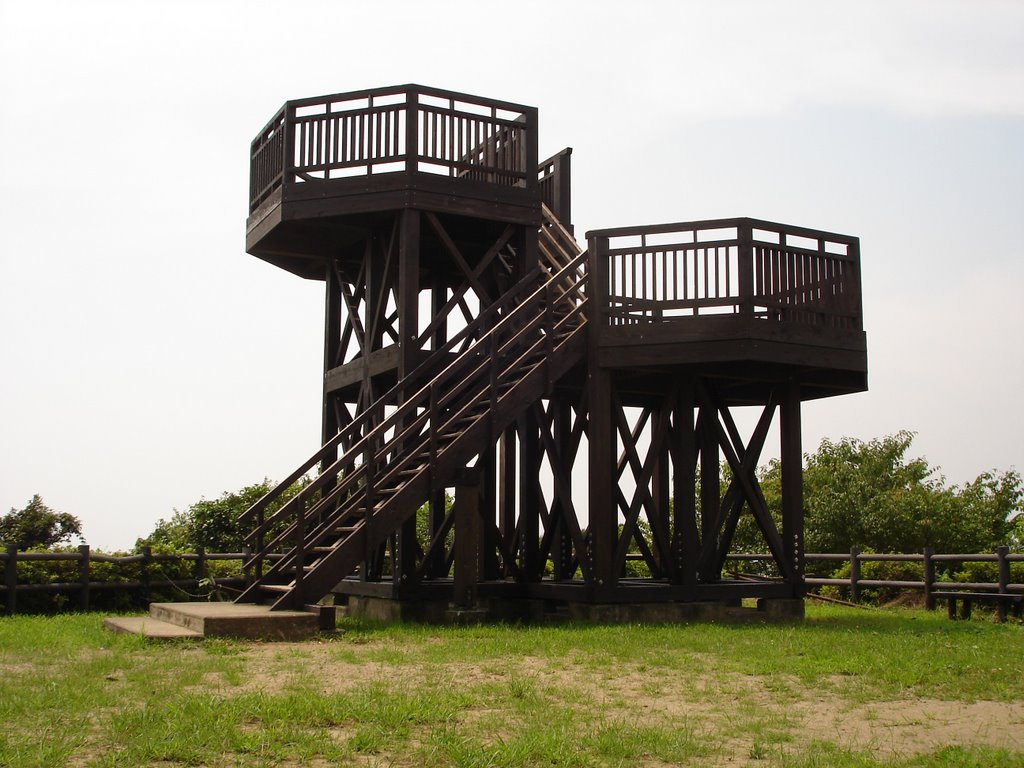
On the west peak is a viewing platform built for a visit by Crown Prince Naruhito and Crown Princesss Masako, back in the days when they used to ostentatiously climb mountains surrounded by phalanxes of bodyguards, local officials and members of the press.


Beside the viewing platform is a stone monument commemorating the Crown Prince and Princess' visit. Beside the monument is a metal sign repeating the inscription carved into stone and--honest to Amaterasu--a map showing where one can find the monument.


Atop the east peak, the scene is a bit different.

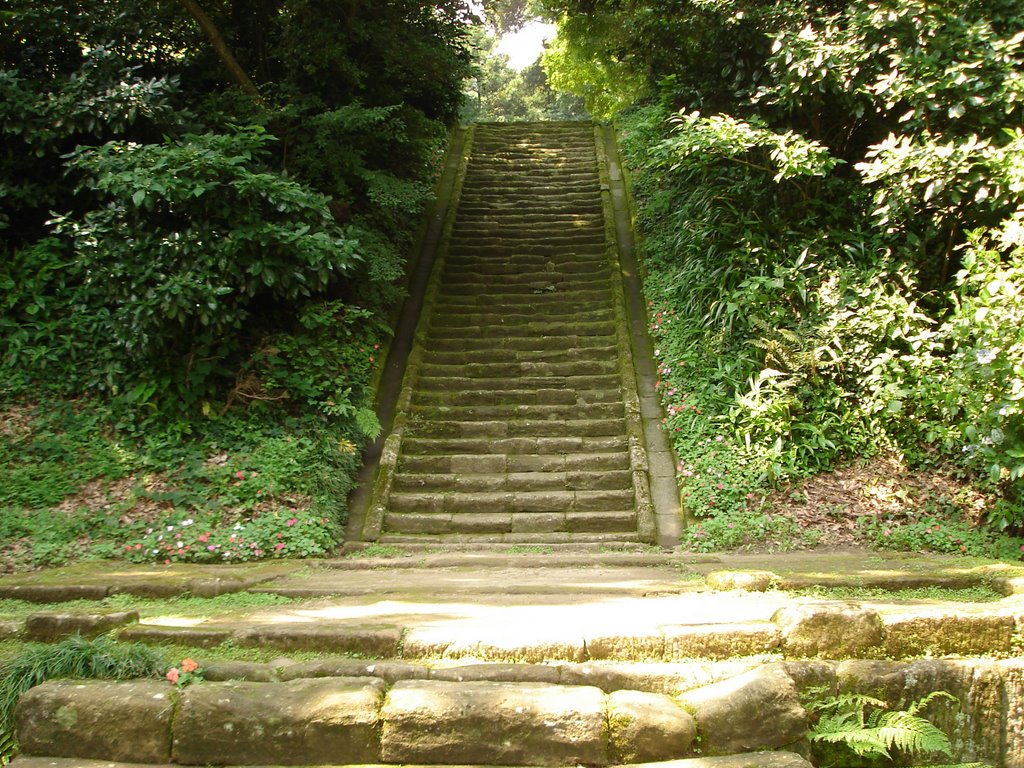
A pitted and tilting sandstone staircase (not paying enough attention, I fell on the way back down) leads to a gateway...where no gate stands. Plinth stones give testimony to the temple entrance that had once stood there.


Entering the overgrown courtyard, inhabited only by giant dancing flitting black swallowtail butterflies, one's progress impeded by waist-high undergrowth.

One reaches the decrepit remains of the main hall. Through the open and decaying doors, one sees an empty altar. On the floor are a black and white line drawing of Kannon (Avalokiteshvara), leaves and blown-in dirt.


Nothing stirs.

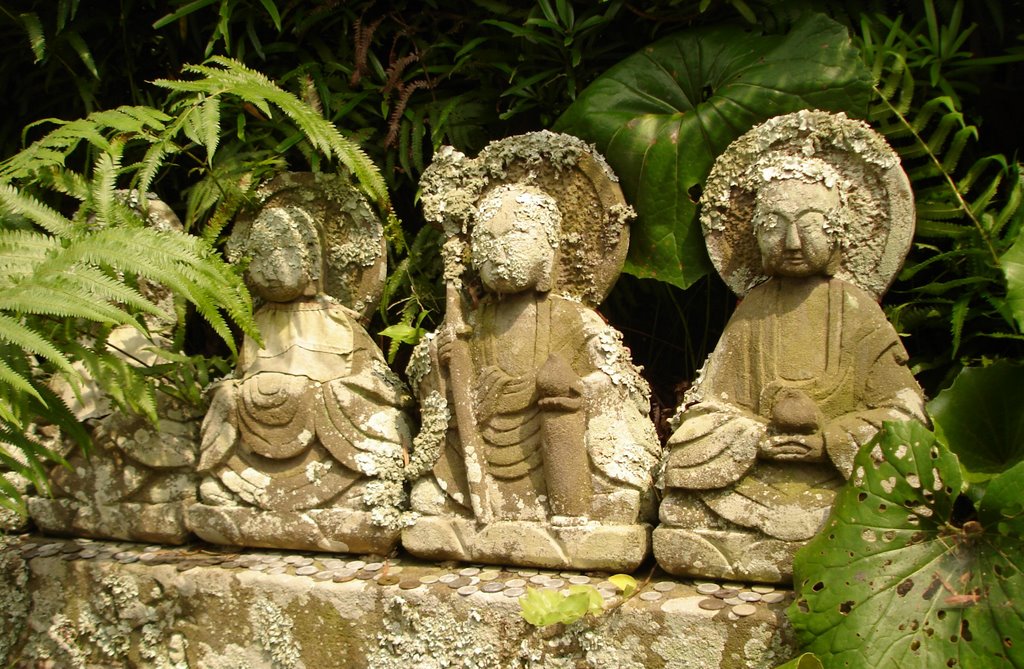
The deities are gone.

* * *

You cannot miss them.

Once you leave the core urban areas you find them.

Terraced paddy fields choked with weeds;

crumpling houses;

trucks left in place so long their tires have dissolved;

restaurants that never open;

padlocked storefronts with kicked-in shutters, their interiors awash with seas of bottles and cans.

Not the mark of poverty is this. It is the mark of death.

Great areas of the land are dying, emptying out, rotting out like uncared for teeth, even in the prosperous Kantō plain.

And beyond the confines of the Kantō, the Nagoya Plain, and the Kansai corridor and the Fukuoka-Kokura industrial zone—Amaterasu help us.

* * *

I will have to dig around for the quote--but a few years ago a politician said something on the order of:

“It's so sad. Out in the countryside with the shuttered commercials districts (shattā gai)...and when it's festival time, there is nobody around, there is no festival spirit. It just gives of a feeling of lonesomeness.”

Yes, that is it. With the collapse of the business districts and the departure of the people come the end of the mandates and rituals of the kami. The twilight of the gods.

* * *

Long, long ago, the responsibility to protect every single square centimeter of Japan was parceled out to three classes of protectors. Two corporeal; one spiritual.

Over the long years these beings have jealous guarded the frontiers of their territories --while in benevolence laboring to bring prosperity to the residents within.

The names of these guardians?

Seijika, kōmuin, kami/hotokesama.

The Politicians, the Civil Servants and the Spirits.

Exalted they were. Respected. Spoken to in reverential, formal language.

The Politicians and the Civil Servants brought the roads and tunnels and bridges and tetrapods. They brought the subsidies and the regulatory mazes. The Greenpia and the third sector projects.

All to protect the residents and their livelihoods from change. To keep the world at bay. To protect their sacred precincts and prerogatives.

But change happened anyway.

The roads and bridges and tunnels made it easier for residents to drive to the formerly distant hypermarkets. No more was it necessary to patronize the little shops along the road leading out of the train stations.

By their budget allocations and zaitō investments, the myriad contracts to grateful construction firms, the Politicians made the countryside ugly. By their rules, requirements and regulations, the Civil Servants made it uniformly ugly.

With their subsidies and fiscal follies, they created a class of clients, persons incapable of creating value, engaging in activities that had no meaning.

They kept people living where people should not be...and wounded the land in the process.

So great was the damage done that at long last all that remained were the clients, the cavernous and empty great projects and the constipated fields, plantations and harbors. Most of the living had moved to the cities, leaving behind rituals and gestures, the pantomime of politics and bureaucratic budget slicing competitions.

* * *

I would love to hear the complaints of the kami, to hear them whine about decline in donations at festival time, the shorter and shorter lists of names hammered onto the signboard, the declining number of visitors throughout the year, the increasing age of the parishioners...

I wonder if the kami would at last declaim to me:

"It's because of the Western ways...the blasphemous worship of the deities from across the sea...the ancient harmony is ruined."

The kami have an excuse: they cannot move. They are bound to protect the same piece of land--their sacred territory with its invisible boundaries--even as the generations go by. Even as their shrines fall into ruin and the shoulders carrying the mikoshi grow fewer and more stooped.

Protectors of arbitrary and artificial divisions...to the end.

Redistricting...such a small thing to get wrong.

Photos of Tomiyama taken on July 15, 2006. All photos by MTC.