Among the many interesting figures highlighted in the April 15 population statistics release of the Ministry of Internal Affairs and Communications (MIC) is a landmark in the Tokyo Metropolitan District's march to national dominance.
As of October 1 last year the TMD's population had risen to 10% (with a little rounding help) of Japan's total population.
The concentration has historical antecedents. According to the linked pdf document, Tokyo's proportion of the total population rose to 11.1% in the period 1965 to 1969, then began to decline. It fell below a statistical 10.0% twenty-eight years ago, as the great mai homu and manshon boom of the Seventies and Eighties and then the skyrocketing of urban land prices under the late 1980's property bubble drove population out of Tokyo into the surrounding Kanagawa, Saitama and Chiba Prefectures. The failure of the financial system to cleanse itself and the grinding down of property values perpetuated the fall in the TMD's relative standing. Little new housing was built as land owners awaited the real estate rebound that never came. Fewer came to try their fortune in Tokyo. Births dropped as couples chose to have fewer children.
The TMD's proportion of the total bottomed out at 9.4% in 1998--the year of the Takushoku Bank and Yamaichi Securities failures and the "Japan Premium" in the debt markets, when the national mood was at its nadir.
During the past decade of economic recovery population has been swirling back population into the TMD. In addition, within the 23 central wards of the TMD natural population growth--i.e., births outnumbering deaths--continues to significantly contribute to population growth as well (these figures not in yesterday's MIC report but in the TMD government's own population report, introduced here). On the aggregate within the TMD, the natural rate of population growth is only just a shade above zero at 0.07% (Easy-going Okinawa remains the land of the breeders, with a 0.54% natural growth rate).
The concentration of the population into a very small number of megacities continues apace. According to the MIC figures, the total population of the Tokyo metro area ( 東京圏 -- i.e., the TMD and the three prefectures surrounding) was 34,827,000--a thumping 27.3% of Japan's total population. The proportion of Japanese living in the top five prefectures by population--the TMD, Kanagawa, Osaka, Aichi and Saitama--is 35.1%, while the proportion of those living in the top 3 urban concentrations--the Tokyo, Aichi and Osaka greater metro areas--is a wild 50.6% of the total national population.
So where are you going to site your retail business? Or invest, if you need workers? Or live, if you want to assure yourself of services as you grow old and as the total national population declines? *
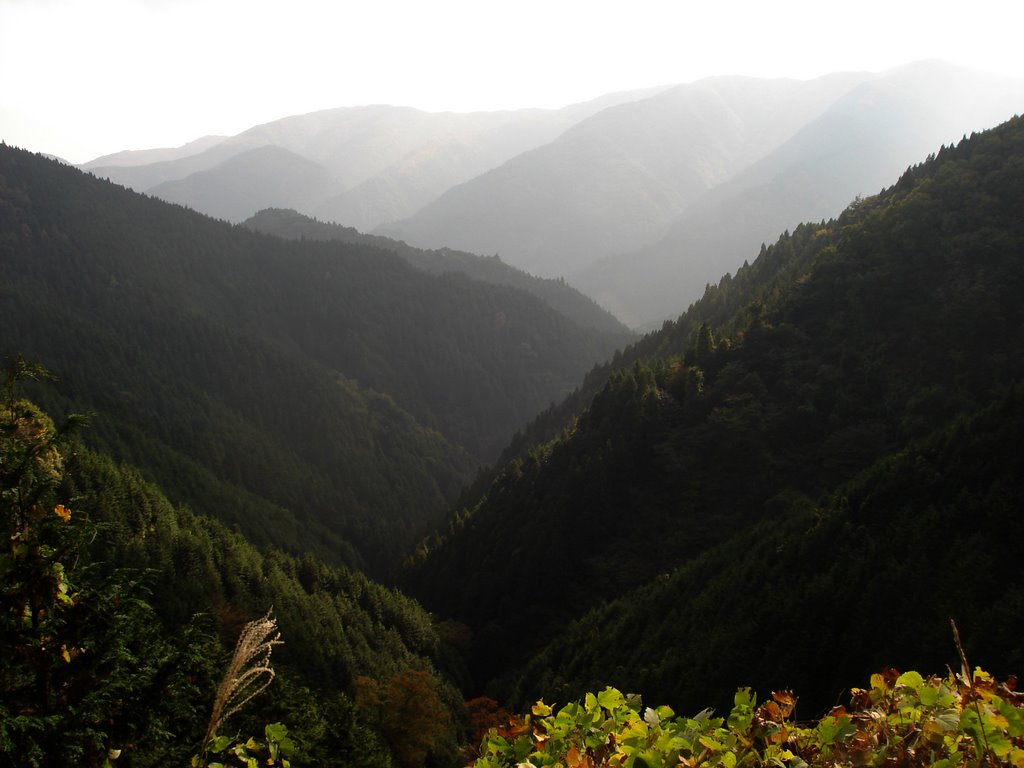
And despite the ingestion of 99,000 new residents from October 2006 to October 2007, in addition to the 12,659,000 that were already there, you still can, if you need to, get away from them all--without ever leaving the TMD.
--------------------------
* Janne Morén will be pleased, I'm sure, by this string of rhetorical questions.
Showing posts with label population concentration. Show all posts
Wednesday, April 16, 2008
Friday, March 28, 2008
Tokyo Still Rising
The rise of the metropole continues...
According to the General Affairs Bureau of the Tokyo Metropolitan Goverment, the population of the Tokyo Metropolitan District was 0.89 % higher on January 1st of this year than a year earlier. This marks the 12th straight year of increase and the move of a million persons into the TMD over the last decade.
Furthermore, the rate of increase grew greater the closer one drew to the center of the TMD. In the core 23 wards, where 2/3 of the population lives, the rate of population growth was 1%. In the central Minato and Chuō wards the annual rates of population growth were a stunning 5.33% and 2.94%, respectively.
The Tokyo Shimbun report on the TMD population increase can be found here.
I do not know about you, but upon reading this report, my first instinct was to immediately demand more road construction in the countryside.
-------------------
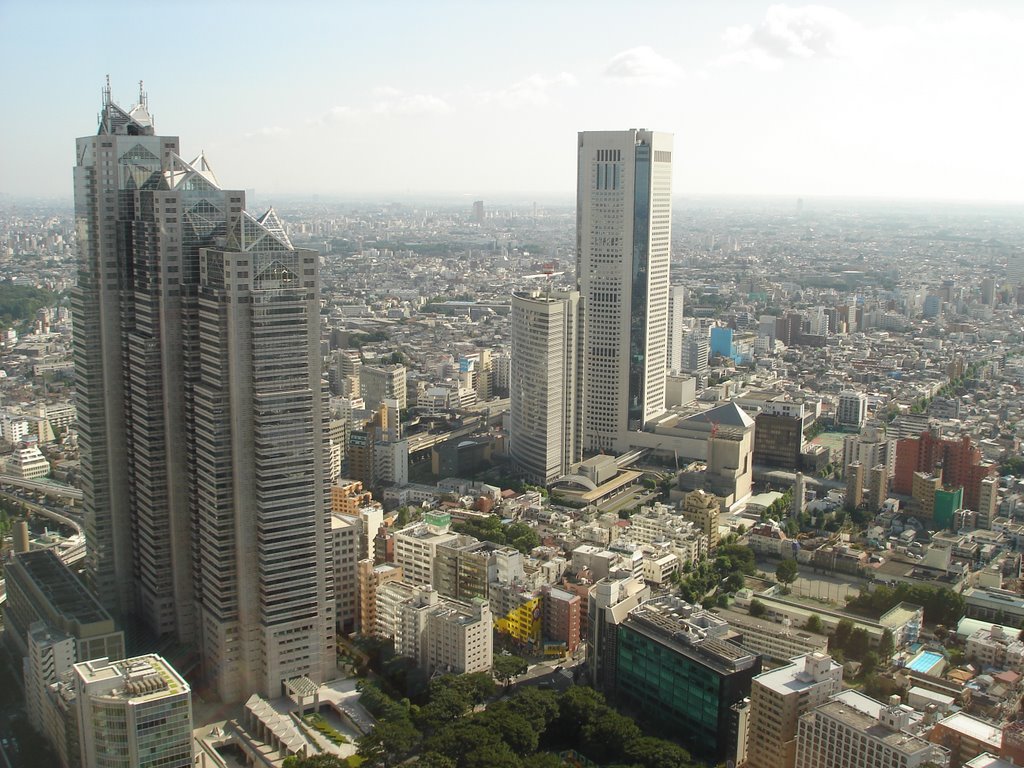
Looking southwest from Tokyo Metropolitan Government Building
Shinjuku Ward, Tokyo Metropolitan District
August 19, 2006
Photo courtesy: MTC
According to the General Affairs Bureau of the Tokyo Metropolitan Goverment, the population of the Tokyo Metropolitan District was 0.89 % higher on January 1st of this year than a year earlier. This marks the 12th straight year of increase and the move of a million persons into the TMD over the last decade.Furthermore, the rate of increase grew greater the closer one drew to the center of the TMD. In the core 23 wards, where 2/3 of the population lives, the rate of population growth was 1%. In the central Minato and Chuō wards the annual rates of population growth were a stunning 5.33% and 2.94%, respectively.
The Tokyo Shimbun report on the TMD population increase can be found here.
I do not know about you, but upon reading this report, my first instinct was to immediately demand more road construction in the countryside.
-------------------
Looking southwest from Tokyo Metropolitan Government Building
Shinjuku Ward, Tokyo Metropolitan District
August 19, 2006
Photo courtesy: MTC
Monday, September 03, 2007
Die Götterdämmerung
Tomiyama has two peaks.
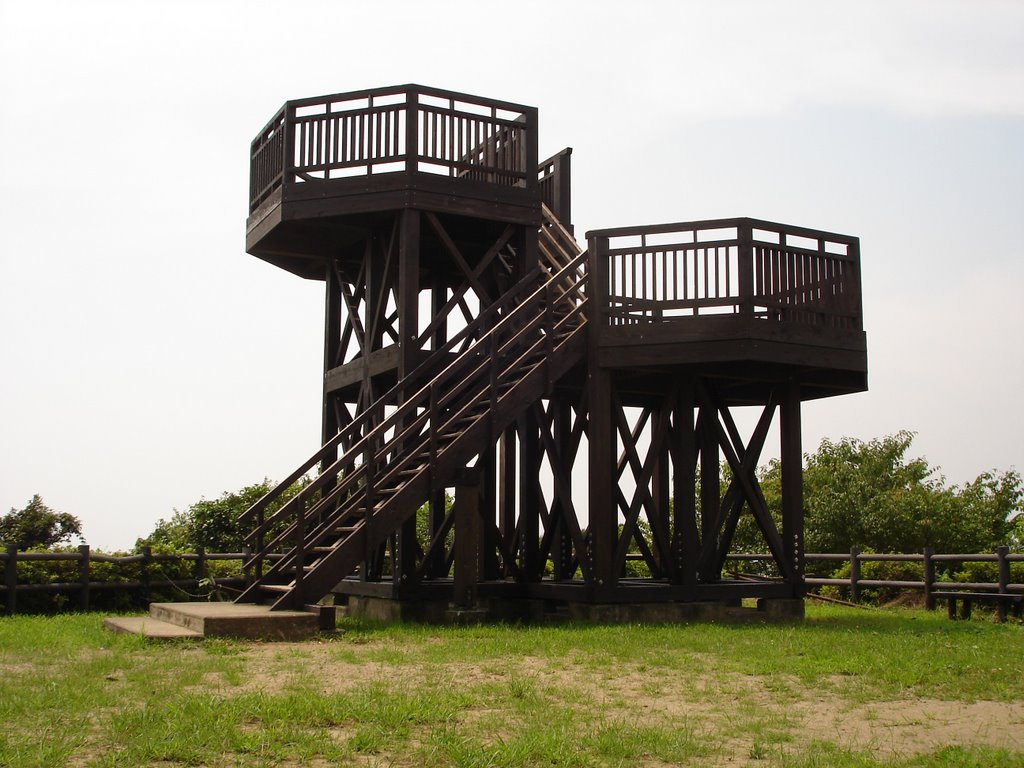
On the west peak is a viewing platform built for a visit by Crown Prince Naruhito and Crown Princesss Masako, back in the days when they used to ostentatiously climb mountains surrounded by phalanxes of bodyguards, local officials and members of the press.

Beside the viewing platform is a stone monument commemorating the Crown Prince and Princess' visit. Beside the monument is a metal sign repeating the inscription carved into stone and--honest to Amaterasu--a map showing where one can find the monument.

Atop the east peak, the scene is a bit different.
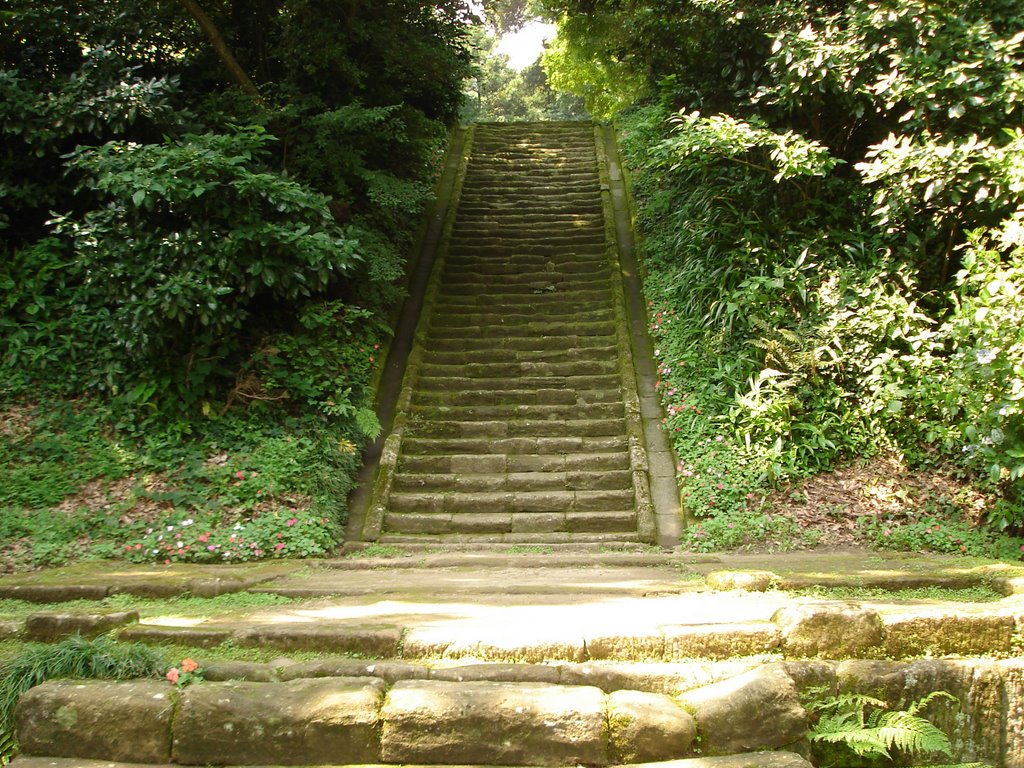
A pitted and tilting sandstone staircase (not paying enough attention, I fell on the way back down) leads to a gateway...where no gate stands. Plinth stones give testimony to the temple entrance that had once stood there.

Entering the overgrown courtyard, inhabited only by giant dancing flitting black swallowtail butterflies, one's progress impeded by waist-high undergrowth.
One reaches the decrepit remains of the main hall. Through the open and decaying doors, one sees an empty altar. On the floor are a black and white line drawing of Kannon (Avalokiteshvara), leaves and blown-in dirt.

Nothing stirs.
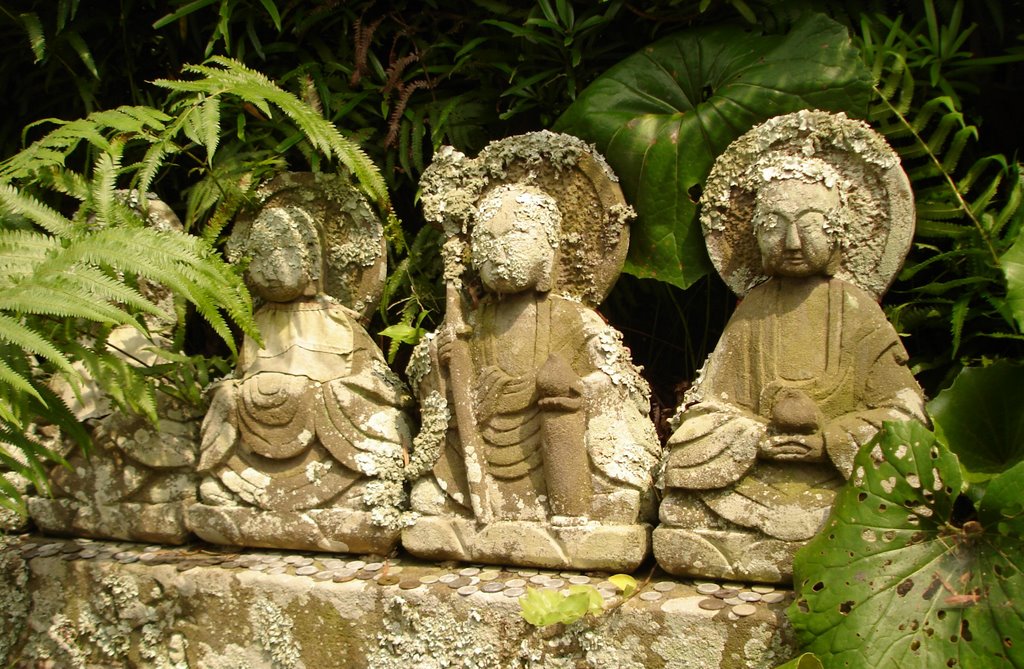
The deities are gone.
* * *
You cannot miss them.
Once you leave the core urban areas you find them.
Terraced paddy fields choked with weeds;
crumpling houses;
trucks left in place so long their tires have dissolved;
restaurants that never open;
padlocked storefronts with kicked-in shutters, their interiors awash with seas of bottles and cans.
Not the mark of poverty is this. It is the mark of death.
Great areas of the land are dying, emptying out, rotting out like uncared for teeth, even in the prosperous Kantō plain.
And beyond the confines of the Kantō, the Nagoya Plain, and the Kansai corridor and the Fukuoka-Kokura industrial zone—Amaterasu help us.
* * *
I will have to dig around for the quote--but a few years ago a politician said something on the order of:
“It's so sad. Out in the countryside with the shuttered commercials districts (shattā gai)...and when it's festival time, there is nobody around, there is no festival spirit. It just gives of a feeling of lonesomeness.”
Yes, that is it. With the collapse of the business districts and the departure of the people come the end of the mandates and rituals of the kami. The twilight of the gods.
* * *
Long, long ago, the responsibility to protect every single square centimeter of Japan was parceled out to three classes of protectors. Two corporeal; one spiritual.
Over the long years these beings have jealous guarded the frontiers of their territories --while in benevolence laboring to bring prosperity to the residents within.
The names of these guardians?
Seijika, kōmuin, kami/hotokesama.
The Politicians, the Civil Servants and the Spirits.
Exalted they were. Respected. Spoken to in reverential, formal language.
The Politicians and the Civil Servants brought the roads and tunnels and bridges and tetrapods. They brought the subsidies and the regulatory mazes. The Greenpia and the third sector projects.
All to protect the residents and their livelihoods from change. To keep the world at bay. To protect their sacred precincts and prerogatives.
But change happened anyway.
The roads and bridges and tunnels made it easier for residents to drive to the formerly distant hypermarkets. No more was it necessary to patronize the little shops along the road leading out of the train stations.
By their budget allocations and zaitō investments, the myriad contracts to grateful construction firms, the Politicians made the countryside ugly. By their rules, requirements and regulations, the Civil Servants made it uniformly ugly.
With their subsidies and fiscal follies, they created a class of clients, persons incapable of creating value, engaging in activities that had no meaning.
They kept people living where people should not be...and wounded the land in the process.
So great was the damage done that at long last all that remained were the clients, the cavernous and empty great projects and the constipated fields, plantations and harbors. Most of the living had moved to the cities, leaving behind rituals and gestures, the pantomime of politics and bureaucratic budget slicing competitions.
* * *
I would love to hear the complaints of the kami, to hear them whine about decline in donations at festival time, the shorter and shorter lists of names hammered onto the signboard, the declining number of visitors throughout the year, the increasing age of the parishioners...
I wonder if the kami would at last declaim to me:
"It's because of the Western ways...the blasphemous worship of the deities from across the sea...the ancient harmony is ruined."
The kami have an excuse: they cannot move. They are bound to protect the same piece of land--their sacred territory with its invisible boundaries--even as the generations go by. Even as their shrines fall into ruin and the shoulders carrying the mikoshi grow fewer and more stooped.
Protectors of arbitrary and artificial divisions...to the end.
Redistricting...such a small thing to get wrong.
On the west peak is a viewing platform built for a visit by Crown Prince Naruhito and Crown Princesss Masako, back in the days when they used to ostentatiously climb mountains surrounded by phalanxes of bodyguards, local officials and members of the press.

Beside the viewing platform is a stone monument commemorating the Crown Prince and Princess' visit. Beside the monument is a metal sign repeating the inscription carved into stone and--honest to Amaterasu--a map showing where one can find the monument.

Atop the east peak, the scene is a bit different.
A pitted and tilting sandstone staircase (not paying enough attention, I fell on the way back down) leads to a gateway...where no gate stands. Plinth stones give testimony to the temple entrance that had once stood there.

Entering the overgrown courtyard, inhabited only by giant dancing flitting black swallowtail butterflies, one's progress impeded by waist-high undergrowth.
One reaches the decrepit remains of the main hall. Through the open and decaying doors, one sees an empty altar. On the floor are a black and white line drawing of Kannon (Avalokiteshvara), leaves and blown-in dirt.

Nothing stirs.
The deities are gone.
* * *
You cannot miss them.
Once you leave the core urban areas you find them.
Terraced paddy fields choked with weeds;
crumpling houses;
trucks left in place so long their tires have dissolved;
restaurants that never open;
padlocked storefronts with kicked-in shutters, their interiors awash with seas of bottles and cans.
Not the mark of poverty is this. It is the mark of death.
Great areas of the land are dying, emptying out, rotting out like uncared for teeth, even in the prosperous Kantō plain.
And beyond the confines of the Kantō, the Nagoya Plain, and the Kansai corridor and the Fukuoka-Kokura industrial zone—Amaterasu help us.
* * *
I will have to dig around for the quote--but a few years ago a politician said something on the order of:
“It's so sad. Out in the countryside with the shuttered commercials districts (shattā gai)...and when it's festival time, there is nobody around, there is no festival spirit. It just gives of a feeling of lonesomeness.”
Yes, that is it. With the collapse of the business districts and the departure of the people come the end of the mandates and rituals of the kami. The twilight of the gods.
* * *
Long, long ago, the responsibility to protect every single square centimeter of Japan was parceled out to three classes of protectors. Two corporeal; one spiritual.
Over the long years these beings have jealous guarded the frontiers of their territories --while in benevolence laboring to bring prosperity to the residents within.
The names of these guardians?
Seijika, kōmuin, kami/hotokesama.
The Politicians, the Civil Servants and the Spirits.
Exalted they were. Respected. Spoken to in reverential, formal language.
The Politicians and the Civil Servants brought the roads and tunnels and bridges and tetrapods. They brought the subsidies and the regulatory mazes. The Greenpia and the third sector projects.
All to protect the residents and their livelihoods from change. To keep the world at bay. To protect their sacred precincts and prerogatives.
But change happened anyway.
The roads and bridges and tunnels made it easier for residents to drive to the formerly distant hypermarkets. No more was it necessary to patronize the little shops along the road leading out of the train stations.
By their budget allocations and zaitō investments, the myriad contracts to grateful construction firms, the Politicians made the countryside ugly. By their rules, requirements and regulations, the Civil Servants made it uniformly ugly.
With their subsidies and fiscal follies, they created a class of clients, persons incapable of creating value, engaging in activities that had no meaning.
They kept people living where people should not be...and wounded the land in the process.
So great was the damage done that at long last all that remained were the clients, the cavernous and empty great projects and the constipated fields, plantations and harbors. Most of the living had moved to the cities, leaving behind rituals and gestures, the pantomime of politics and bureaucratic budget slicing competitions.
* * *
I would love to hear the complaints of the kami, to hear them whine about decline in donations at festival time, the shorter and shorter lists of names hammered onto the signboard, the declining number of visitors throughout the year, the increasing age of the parishioners...
I wonder if the kami would at last declaim to me:
"It's because of the Western ways...the blasphemous worship of the deities from across the sea...the ancient harmony is ruined."
The kami have an excuse: they cannot move. They are bound to protect the same piece of land--their sacred territory with its invisible boundaries--even as the generations go by. Even as their shrines fall into ruin and the shoulders carrying the mikoshi grow fewer and more stooped.
Protectors of arbitrary and artificial divisions...to the end.
Redistricting...such a small thing to get wrong.
Labels:
Chiba,
kami,
population concentration,
rural depopulation,
tourism
Subscribe to:
Posts (Atom)