Watching newly appointed Council On Industrial Competitiveness member and Koizumi revolutionaire Takenaka Heizo get batted around by the panel on this morning's Asa Zuba! program, after a long segment on Shimane Prefecture (#1 in public works spending per capita of all of Japan's prefectures) construction company executives exulting at the Abe government's proposed economic stimulus package -- a report played absolutely straight so as to infuriate viewers in the Tokyo Metropolitan District, Kanagawa, Saitama, Chiba, Aichi, Kyoto and Osaka -- one had to wonder whether or not the fix was in from the beginning: that the news mediaverse treated the Liberal Democratic Party with kid gloves and piled scorn upon Democratic Party of Japan-governments because it missed having a party in power so transparently stupid and self-serving in its ways that the stories just write themselves.
As for the articles skeptical of Abenomics, they keep arriving over the Intertube. (Link and Link and Link)
Meanwhile, its favorite party back in charge of the Prime Minister's Residence, Pravda-by-the-Palace has resumed its abject sycophancy, portraying the impossible (or at least highly improbable) as likely. (Link)
Showing posts with label Chiba. Show all posts
Showing posts with label Chiba. Show all posts
Thursday, January 10, 2013
Thursday, December 06, 2012
Japan's Anti-Missile Defenses -- Where They Are
To intercept an off course DPRK rocket-that-is-actually-a-long-range-ballistic-missile™ (roketto jijitsujo no chokyori dando misairu) or the an off-course jettisoned first stage of said rocket-that-is-actually-a-long-range-ballistic-missile™:
Patriot PAC-3 Missile Batteries
Protecting the Capital Area = 3
1) Ichigaya, Tokyo Metropolitan District
Grounds of the Ministry of Defense
2) Asaka City, Saitama Prefecture
GSDF Camp Asaka
3 Narashino City, Chiba Prefecture
GSDF Camp Narashino
Protecting the Nansei Islands and Okinawa = 4
1 and 2) Okinawa, Okinawa Prefecture
3) Miyakojima, Okinawa Prefecture
4) Ishigakijima, Okinawa Prefecture
Aegis Destroyers Equipped with SM-3 Missiles
Sea of Japan = 1
1) MSDF Myoko (DDG 175)
Left Maizuru Port on December 6, 2012
East China Sea = 2
2) MSDF Kongo (DDG 173)
Left Sasebo Port on December 6, 2012
3) MSDF Chokai (DDG 176)
Left Sasebo Port on December 6, 2012
Deploying three SM-3 equipped Aegis destroyers is a wee bit of overkill. For a comparative, three SM-3 equipped Aegis destroyers would be sufficient to protect all of Europe. But a) you can never be too sure and b) it is election season.
Later - The above will, of course, be supplemented by U.S. Navy anti-missile missile-bearing ships (Link).
Suffice it to say that Japan and South Korea will be over-protected from a rocket (or pieces of thereof) attempting to lift a satellite or a dummy payload weighing as much as a nuclear device.
Sources:
Fuji Terebi
http://www.fnn-news.com/news/headlines/articles/CONN00236607.html
The Asahi Shimbun
http://www.asahi.com/politics/update/1206/TKY201212060449.html
Mainichi Shimbun
http://mainichi.jp/select/news/20121206k0000m040091000c.html
Patriot PAC-3 Missile Batteries
Protecting the Capital Area = 3
1) Ichigaya, Tokyo Metropolitan District
Grounds of the Ministry of Defense
2) Asaka City, Saitama Prefecture
GSDF Camp Asaka
3 Narashino City, Chiba Prefecture
GSDF Camp Narashino
Protecting the Nansei Islands and Okinawa = 4
1 and 2) Okinawa, Okinawa Prefecture
3) Miyakojima, Okinawa Prefecture
4) Ishigakijima, Okinawa Prefecture
Aegis Destroyers Equipped with SM-3 Missiles
Sea of Japan = 1
1) MSDF Myoko (DDG 175)
Left Maizuru Port on December 6, 2012
East China Sea = 2
2) MSDF Kongo (DDG 173)
Left Sasebo Port on December 6, 2012
3) MSDF Chokai (DDG 176)
Left Sasebo Port on December 6, 2012
Deploying three SM-3 equipped Aegis destroyers is a wee bit of overkill. For a comparative, three SM-3 equipped Aegis destroyers would be sufficient to protect all of Europe. But a) you can never be too sure and b) it is election season.
Later - The above will, of course, be supplemented by U.S. Navy anti-missile missile-bearing ships (Link).
Suffice it to say that Japan and South Korea will be over-protected from a rocket (or pieces of thereof) attempting to lift a satellite or a dummy payload weighing as much as a nuclear device.
Sources:
Fuji Terebi
http://www.fnn-news.com/news/headlines/articles/CONN00236607.html
The Asahi Shimbun
http://www.asahi.com/politics/update/1206/TKY201212060449.html
Mainichi Shimbun
http://mainichi.jp/select/news/20121206k0000m040091000c.html
Monday, May 14, 2012
In Lotus Land
Thank goodness for The Tokyo Diplomat. Without it I would never have been alerted to Tokyo Metropolitan District Governor Ishihara Shintaro's spectacularly weird suggestion that nuclear power plants be built on Nokogiriyama in Chiba Prefecture ("There's a lot of empty land up there," the governor claims), under the reasoning that if the Greater Tokyo Area is the consumer of the power produced by nuclear power plants, it should host a few. (J)
Guys, and Kannon-sama, Ishihara-chiji thinks you need some big time engineering company.

Black-tailed gulls (Umineko - Larus crassirostris) over Nokogiriyama.

Kannon of the Nippon-ji.
Nokogiriyama, Chiba Prefecture.

Jigoku nozoki ("The Glimpse Into Hell").
Nokogiriyama, Chiba Prefecture.

One of the 1,500 Rakkan.
Nokogiriyama, Chiba Prefecture.

The Great Buddha of the Nippon-ji
(carved 1783-6 and until 1984 the largest Buddha figure in Japan).
Nokogiriyama, Chiba Prefecture.

Face of the Great Buddha of the Nippon-ji.
Nokogiriyama, Chiba Prefecture.
All photos: MTC
Guys, and Kannon-sama, Ishihara-chiji thinks you need some big time engineering company.

Black-tailed gulls (Umineko - Larus crassirostris) over Nokogiriyama.

Kannon of the Nippon-ji.
Nokogiriyama, Chiba Prefecture.

Jigoku nozoki ("The Glimpse Into Hell").
Nokogiriyama, Chiba Prefecture.

One of the 1,500 Rakkan.
Nokogiriyama, Chiba Prefecture.

The Great Buddha of the Nippon-ji
(carved 1783-6 and until 1984 the largest Buddha figure in Japan).
Nokogiriyama, Chiba Prefecture.

Face of the Great Buddha of the Nippon-ji.
Nokogiriyama, Chiba Prefecture.
All photos: MTC
Wednesday, November 16, 2011
Where You Stand Is Where You Sit?
In parsing out the internal dynamics of the domestic fight over the Trans-Pacific Partnership, it is perhaps worthwhile to look at how the sides in the battle line up against the nation's electoral map.
On the 26th of last month, the Ministry of General Affairs and Telecommunications released its revised preliminary population figures from the 2010 national census. As usual, the boys and girls of the news media immediate set to work with their spreadsheets, comparing populations within the nation's 300 electoral districts, looking for the greatest levels of disparity within the country.
The highest level of disparity found was 2.52, meaning that a person voting in the least populous district had 2.52 votes for a legislator as compared to a voter in the most populous district.
The winner in this contest? Kochi District #3, a rural outpost whose largest urban center is the city of Shimon (pop. 40,000 and shrinking). It is represented by Yamamoto Yuji of the Liberal Democratic Party. Liberal Democrats also represent Kochi District #1 and #2, for those who are keeping score.
Who gets stiffed the worst? It is Chiba District #4, comprised entirely of the core of the city of Funabashi (pop. 600,000 and growing). Chiba District #4 is represented by a member of the Democratic Party of Japan, namely (drumroll please) Prime Minister Noda Yoshihiko.
There are 97 districts with populations greater than double Kochi's District #3, which are thus unconstitutional under the ruling handed down by the Supreme Court in March of this year. This is whopping jump in the number of unconstitutional districts, as there were only 48 such districts based on the 2005 census figures.
Now what about Yamada Masahiko, the leader of the fight against Japan's participation in the TPP within the DPJ? He represents Nagasaki District #3, the second smallest district in terms of population after Kochi District #3.
Need I say more.
Just for completeness' sake, in the House of Councillors the greatest disparity can be found in between Tottori and Kanagawa Prefectures. A vote in Tottori is worth 5.124 times a vote in Kanagawa. Tottori is primarily rural prefecture, with the city of Tottori (pop. 197,000) as its largest urban center. Kanagawa is almost entirely urban and suburban (pax the Hakone Area and the Tanzawa Range) with the city of Yokohama (3.7 million) as its largest urban center.
On the 26th of last month, the Ministry of General Affairs and Telecommunications released its revised preliminary population figures from the 2010 national census. As usual, the boys and girls of the news media immediate set to work with their spreadsheets, comparing populations within the nation's 300 electoral districts, looking for the greatest levels of disparity within the country.
The highest level of disparity found was 2.52, meaning that a person voting in the least populous district had 2.52 votes for a legislator as compared to a voter in the most populous district.
The winner in this contest? Kochi District #3, a rural outpost whose largest urban center is the city of Shimon (pop. 40,000 and shrinking). It is represented by Yamamoto Yuji of the Liberal Democratic Party. Liberal Democrats also represent Kochi District #1 and #2, for those who are keeping score.
Who gets stiffed the worst? It is Chiba District #4, comprised entirely of the core of the city of Funabashi (pop. 600,000 and growing). Chiba District #4 is represented by a member of the Democratic Party of Japan, namely (drumroll please) Prime Minister Noda Yoshihiko.
There are 97 districts with populations greater than double Kochi's District #3, which are thus unconstitutional under the ruling handed down by the Supreme Court in March of this year. This is whopping jump in the number of unconstitutional districts, as there were only 48 such districts based on the 2005 census figures.
Now what about Yamada Masahiko, the leader of the fight against Japan's participation in the TPP within the DPJ? He represents Nagasaki District #3, the second smallest district in terms of population after Kochi District #3.
Need I say more.
Just for completeness' sake, in the House of Councillors the greatest disparity can be found in between Tottori and Kanagawa Prefectures. A vote in Tottori is worth 5.124 times a vote in Kanagawa. Tottori is primarily rural prefecture, with the city of Tottori (pop. 197,000) as its largest urban center. Kanagawa is almost entirely urban and suburban (pax the Hakone Area and the Tanzawa Range) with the city of Yokohama (3.7 million) as its largest urban center.
Friday, September 30, 2011
Hiking - Japan's New Extreme Sport
The Tokyo Shimbun has begun printing a series of helicopter surveys of concentrations of Cesium 134 and Cesium 137 in the prefectures of the Kanto Plain. Unsurprisingly, they have shown for the most part that the highest readings are found along the spines of the mountains, where the earth touches the upper atmosphere and where rainfall was the heaviest in the days following the explosions of the Fukushima Daiichi reactors.
Gunma Prefecture

Chiba Prefecture
 Saitama Prefecture

They have not printed the images for Kanagawa, Tochigi, Ibaraki and Tokyo. I expect them to appear over the next few days.
The dark, almost burgundy spot in the Oku Musashi corner of Saitama Prefecture adjoining the tip of the Tokyo Metropolitan District pretty much guarantees that like my longtime dream of climbing Kumotoriyama, the highest mountain (2017 meters) of the TMD, will be a much hotter trip than it would have been before.
I cannot wait for boot decontaminators to hit the electronics stores or to see signs posted at train stations, "Hikers! Please thoroughly wash your boots before entering the train cars!"
Images courtesy: Tokyo Shimbun
Gunma Prefecture

Chiba Prefecture
 Saitama Prefecture
They have not printed the images for Kanagawa, Tochigi, Ibaraki and Tokyo. I expect them to appear over the next few days.
The dark, almost burgundy spot in the Oku Musashi corner of Saitama Prefecture adjoining the tip of the Tokyo Metropolitan District pretty much guarantees that like my longtime dream of climbing Kumotoriyama, the highest mountain (2017 meters) of the TMD, will be a much hotter trip than it would have been before.
I cannot wait for boot decontaminators to hit the electronics stores or to see signs posted at train stations, "Hikers! Please thoroughly wash your boots before entering the train cars!"
Images courtesy: Tokyo Shimbun
Monday, September 03, 2007
Die Götterdämmerung
Tomiyama has two peaks.
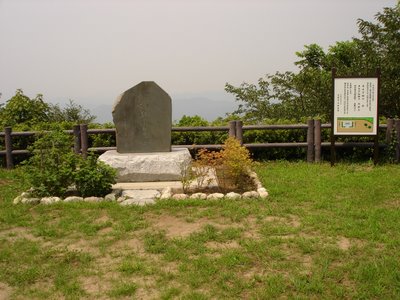
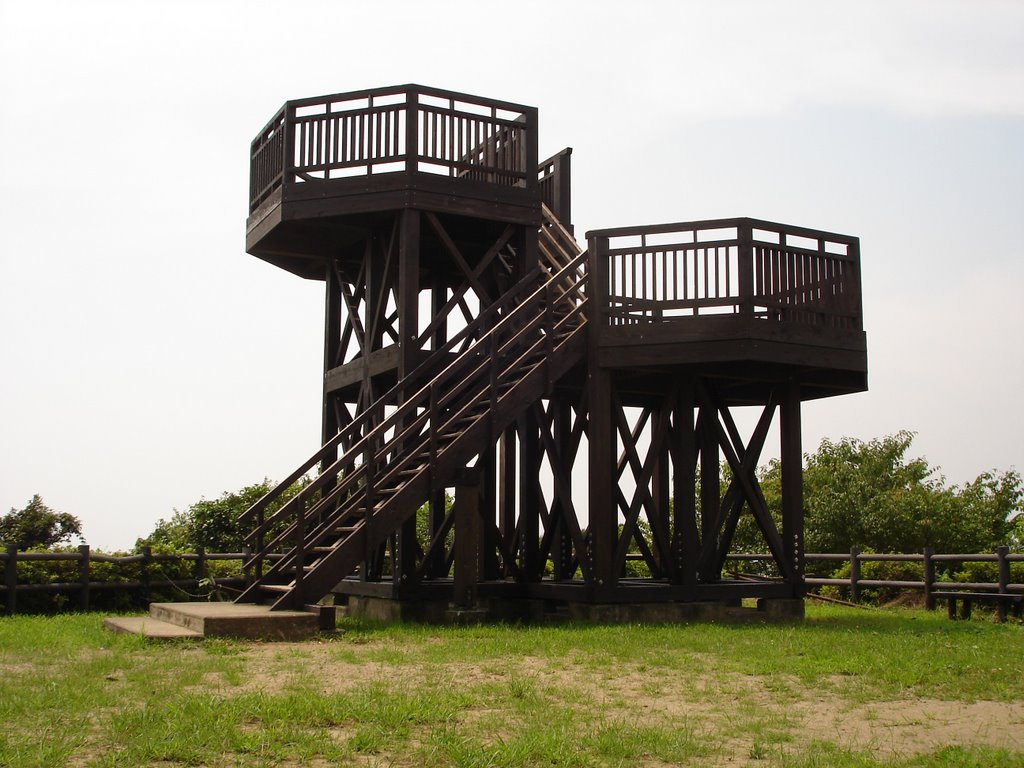
On the west peak is a viewing platform built for a visit by Crown Prince Naruhito and Crown Princesss Masako, back in the days when they used to ostentatiously climb mountains surrounded by phalanxes of bodyguards, local officials and members of the press.

Beside the viewing platform is a stone monument commemorating the Crown Prince and Princess' visit. Beside the monument is a metal sign repeating the inscription carved into stone and--honest to Amaterasu--a map showing where one can find the monument.
Atop the east peak, the scene is a bit different.
A pitted and tilting sandstone staircase (not paying enough attention, I fell on the way back down) leads to a gateway...where no gate stands. Plinth stones give testimony to the temple entrance that had once stood there.

Entering the overgrown courtyard, inhabited only by giant dancing flitting black swallowtail butterflies, one's progress impeded by waist-high undergrowth.
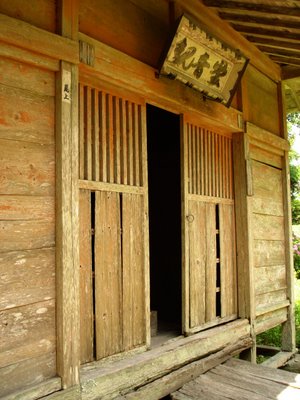
One reaches the decrepit remains of the main hall. Through the open and decaying doors, one sees an empty altar. On the floor are a black and white line drawing of Kannon (Avalokiteshvara), leaves and blown-in dirt.
Nothing stirs.
The deities are gone.
* * *
You cannot miss them.
Once you leave the core urban areas you find them.
Terraced paddy fields choked with weeds;
crumpling houses;
trucks left in place so long their tires have dissolved;
restaurants that never open;
padlocked storefronts with kicked-in shutters, their interiors awash with seas of bottles and cans.
Not the mark of poverty is this. It is the mark of death.
Great areas of the land are dying, emptying out, rotting out like uncared for teeth, even in the prosperous Kantō plain.
And beyond the confines of the Kantō, the Nagoya Plain, and the Kansai corridor and the Fukuoka-Kokura industrial zone—Amaterasu help us.
* * *
I will have to dig around for the quote--but a few years ago a politician said something on the order of:
“It's so sad. Out in the countryside with the shuttered commercials districts (shattā gai)...and when it's festival time, there is nobody around, there is no festival spirit. It just gives of a feeling of lonesomeness.”
Yes, that is it. With the collapse of the business districts and the departure of the people come the end of the mandates and rituals of the kami. The twilight of the gods.
* * *
Long, long ago, the responsibility to protect every single square centimeter of Japan was parceled out to three classes of protectors. Two corporeal; one spiritual.
Over the long years these beings have jealous guarded the frontiers of their territories --while in benevolence laboring to bring prosperity to the residents within.
The names of these guardians?
Seijika, kōmuin, kami/hotokesama.
The Politicians, the Civil Servants and the Spirits.
Exalted they were. Respected. Spoken to in reverential, formal language.
The Politicians and the Civil Servants brought the roads and tunnels and bridges and tetrapods. They brought the subsidies and the regulatory mazes. The Greenpia and the third sector projects.
All to protect the residents and their livelihoods from change. To keep the world at bay. To protect their sacred precincts and prerogatives.
But change happened anyway.
The roads and bridges and tunnels made it easier for residents to drive to the formerly distant hypermarkets. No more was it necessary to patronize the little shops along the road leading out of the train stations.
By their budget allocations and zaitō investments, the myriad contracts to grateful construction firms, the Politicians made the countryside ugly. By their rules, requirements and regulations, the Civil Servants made it uniformly ugly.
With their subsidies and fiscal follies, they created a class of clients, persons incapable of creating value, engaging in activities that had no meaning.
They kept people living where people should not be...and wounded the land in the process.
So great was the damage done that at long last all that remained were the clients, the cavernous and empty great projects and the constipated fields, plantations and harbors. Most of the living had moved to the cities, leaving behind rituals and gestures, the pantomime of politics and bureaucratic budget slicing competitions.
* * *
I would love to hear the complaints of the kami, to hear them whine about decline in donations at festival time, the shorter and shorter lists of names hammered onto the signboard, the declining number of visitors throughout the year, the increasing age of the parishioners...
I wonder if the kami would at last declaim to me:
"It's because of the Western ways...the blasphemous worship of the deities from across the sea...the ancient harmony is ruined."
The kami have an excuse: they cannot move. They are bound to protect the same piece of land--their sacred territory with its invisible boundaries--even as the generations go by. Even as their shrines fall into ruin and the shoulders carrying the mikoshi grow fewer and more stooped.
Protectors of arbitrary and artificial divisions...to the end.
Redistricting...such a small thing to get wrong.
 Photos of Tomiyama taken on July 15, 2006. All photos by MTC.
On the west peak is a viewing platform built for a visit by Crown Prince Naruhito and Crown Princesss Masako, back in the days when they used to ostentatiously climb mountains surrounded by phalanxes of bodyguards, local officials and members of the press.
Beside the viewing platform is a stone monument commemorating the Crown Prince and Princess' visit. Beside the monument is a metal sign repeating the inscription carved into stone and--honest to Amaterasu--a map showing where one can find the monument.

Atop the east peak, the scene is a bit different.
A pitted and tilting sandstone staircase (not paying enough attention, I fell on the way back down) leads to a gateway...where no gate stands. Plinth stones give testimony to the temple entrance that had once stood there.
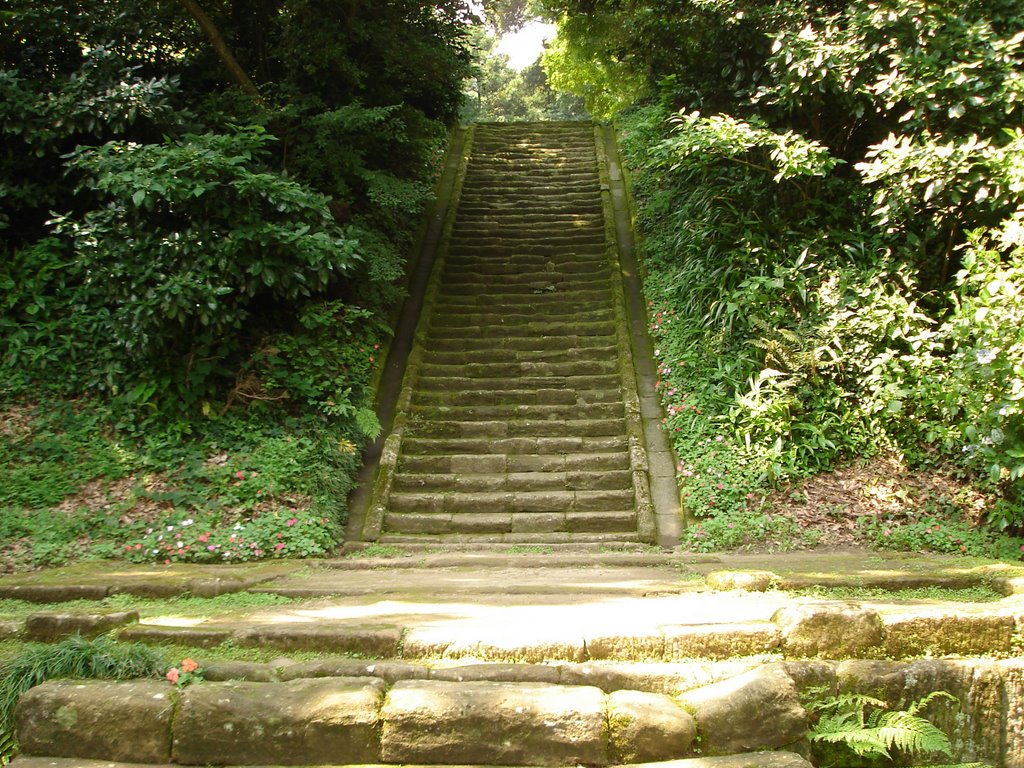
Entering the overgrown courtyard, inhabited only by giant dancing flitting black swallowtail butterflies, one's progress impeded by waist-high undergrowth.
One reaches the decrepit remains of the main hall. Through the open and decaying doors, one sees an empty altar. On the floor are a black and white line drawing of Kannon (Avalokiteshvara), leaves and blown-in dirt.

Nothing stirs.
The deities are gone.
* * *
You cannot miss them.
Once you leave the core urban areas you find them.
Terraced paddy fields choked with weeds;
crumpling houses;
trucks left in place so long their tires have dissolved;
restaurants that never open;
padlocked storefronts with kicked-in shutters, their interiors awash with seas of bottles and cans.
Not the mark of poverty is this. It is the mark of death.
Great areas of the land are dying, emptying out, rotting out like uncared for teeth, even in the prosperous Kantō plain.
And beyond the confines of the Kantō, the Nagoya Plain, and the Kansai corridor and the Fukuoka-Kokura industrial zone—Amaterasu help us.
* * *
I will have to dig around for the quote--but a few years ago a politician said something on the order of:
“It's so sad. Out in the countryside with the shuttered commercials districts (shattā gai)...and when it's festival time, there is nobody around, there is no festival spirit. It just gives of a feeling of lonesomeness.”
Yes, that is it. With the collapse of the business districts and the departure of the people come the end of the mandates and rituals of the kami. The twilight of the gods.
* * *
Long, long ago, the responsibility to protect every single square centimeter of Japan was parceled out to three classes of protectors. Two corporeal; one spiritual.
Over the long years these beings have jealous guarded the frontiers of their territories --while in benevolence laboring to bring prosperity to the residents within.
The names of these guardians?
Seijika, kōmuin, kami/hotokesama.
The Politicians, the Civil Servants and the Spirits.
Exalted they were. Respected. Spoken to in reverential, formal language.
The Politicians and the Civil Servants brought the roads and tunnels and bridges and tetrapods. They brought the subsidies and the regulatory mazes. The Greenpia and the third sector projects.
All to protect the residents and their livelihoods from change. To keep the world at bay. To protect their sacred precincts and prerogatives.
But change happened anyway.
The roads and bridges and tunnels made it easier for residents to drive to the formerly distant hypermarkets. No more was it necessary to patronize the little shops along the road leading out of the train stations.
By their budget allocations and zaitō investments, the myriad contracts to grateful construction firms, the Politicians made the countryside ugly. By their rules, requirements and regulations, the Civil Servants made it uniformly ugly.
With their subsidies and fiscal follies, they created a class of clients, persons incapable of creating value, engaging in activities that had no meaning.
They kept people living where people should not be...and wounded the land in the process.
So great was the damage done that at long last all that remained were the clients, the cavernous and empty great projects and the constipated fields, plantations and harbors. Most of the living had moved to the cities, leaving behind rituals and gestures, the pantomime of politics and bureaucratic budget slicing competitions.
* * *
I would love to hear the complaints of the kami, to hear them whine about decline in donations at festival time, the shorter and shorter lists of names hammered onto the signboard, the declining number of visitors throughout the year, the increasing age of the parishioners...
I wonder if the kami would at last declaim to me:
"It's because of the Western ways...the blasphemous worship of the deities from across the sea...the ancient harmony is ruined."
The kami have an excuse: they cannot move. They are bound to protect the same piece of land--their sacred territory with its invisible boundaries--even as the generations go by. Even as their shrines fall into ruin and the shoulders carrying the mikoshi grow fewer and more stooped.
Protectors of arbitrary and artificial divisions...to the end.
Redistricting...such a small thing to get wrong.
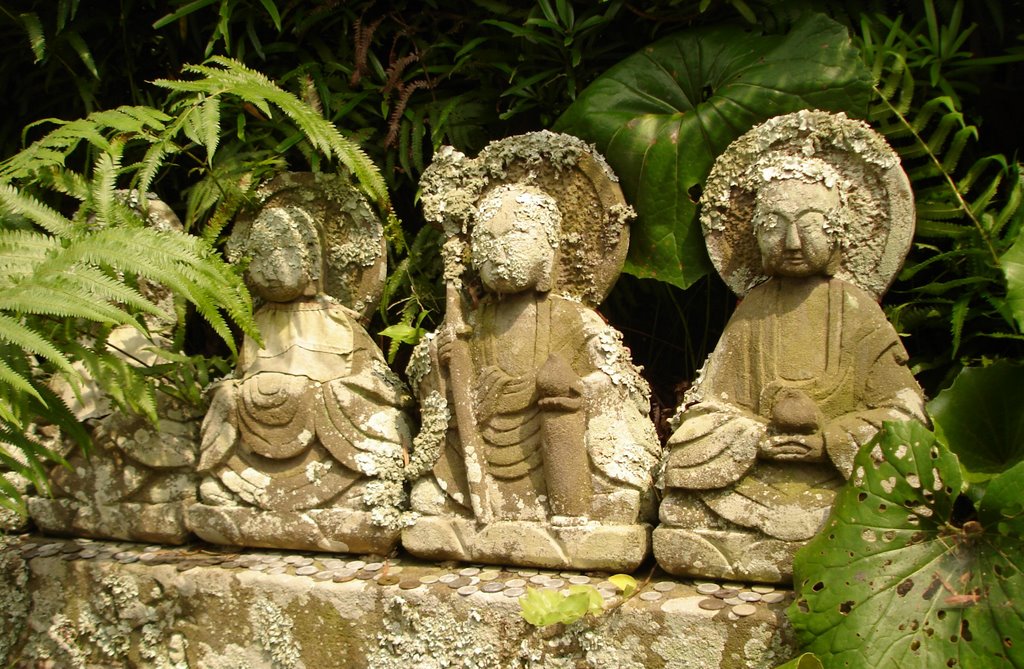 Photos of Tomiyama taken on July 15, 2006. All photos by MTC.
Subscribe to:
Posts (Atom)