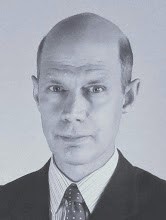
How important is resolution of the issue of the move of the functions of the Marine Corps Airbase Futenma to...anywhere but where they are now? On Friday, Prime Minister Abe Shinzo presided over a cabinet meeting. He had to do so because Chief Cabinet Secretary Suga Yoshihide, holder of position in charge of Cabinet meetings, is in Guam reviewing sites and facilities being prepared for the relocation of fraction of the U.S. Marine Corps forces currently based at Futenma. Though it was not much remarked in the reporting on the Suga visit (Link) Friday's meeting marked the first time in 19 years that a PM had to fill in for an absent chief cabinet minister.
When and what was the occasion of the last time a CCS was out of town and the PM had to direct a cabinet meeting? When Chief Cabinet Secretary Kajiyama Seiroku was in Okinawa, negotiating (successfully, as it turned out) Nago City's acceptance of being the host of a Futenma Replacement Facility (FRF). Prime Minister Hashimoto Ryutaro presided over that cabinet meeting, a seeming eon ago (Remember the press conference of Hashimoto, with U.S. Ambassador Walter Mondale standing behind him, announcing the move of the Marines base from Futenma to Nago within five or at most seven years?) (Link -J)
Speaking of the move to Nago, the Ministry of Land, Infrastructure, Transport and Tourism approved a resumption of the groundwork for the FRF, overriding Okinawa Governor Onaga Takeshi's revocation of the initial construction permit (Link). While a logical move, the ministry's action represents further erosion of the guarantees of local autonomy, found in Articles 92, 94 and 95 of the Constitution. (Link)
Since the candidates supported or provided by Liberal Democratic Party of Abe Shinzo lost, in order, the Nago City election, the Okinawa Governor's election and all of Okinawa House of Representatives seats to anti-base construction candidates, Thursday's resumption of construction is a failure of the concept of local, democratic control.
Showing posts with label Henoko. Show all posts
Showing posts with label Henoko. Show all posts
Sunday, November 01, 2015
Saturday, August 15, 2015
Will Abe Take A Trip Down Yasukuni Lane This Day?

Yasukuni Shrine seen from Hosei University. 25 July 2015.
Will Abe Shinzo make the short trip to Yasukuni today? The smart money says, "No."
However, given
- that yesterday's Cabinet Statement contained all the magic words the international community wanted to hear, if without the tone or sense of agency the international community wanted,
- that the security legislation and the Tokyo 2020 Olympics have become embarrassments
- that Xi Jinping is not in a position to be open to chummy photo opportunities with Abe thanks to the tanking the Chinese markets and insecurity among the cadres engendered by the spreading anti-corruption campaign, meaning the loss or gain of a summit is not in play,
- that the construction plans for a Henoko replacement facility for USMC Air Base Futenma have come undone
- that Abe himself faces an LDP party leadership election next month,
I am willing to entertain the notion that the barriers preventing Abe from paying a surprise visit today are a lot lower than most analysts are willing to admit.
True, the chances of such a visit setting off serious anti-Japanese rioting in South Korea and China are not zero. Japanese companies, especially the big names, would likely suffer significant property damage and business losses. Given that Abe's second run for the presidency of the Liberal Democratic Party and second turn in the premiership are largely seen as having been framed as a quid pro quo with with the barons of Big Business, the chances for a provocative Yasukuni visit would seem slim.
And he said on August 12 that he won't go (Link - J).
Then again, despite many warnings not to, Abe paid his visit on December 26, 2013...

Yasukuni Shrine, 15 August 2014.
Saturday, January 17, 2015
A Month Away
Been away...doing things...and not doing things too.
Much has happened in the interim...and in at the same time, not much, aside from world spot oil prices (huge shifts there) has changed.
Two items of note:
1) Abe Shinzo did not go to Yasukuni Shrine in the 2014 calendar year.
He may have done so in secret. Prime Minister Miyazawa Kiichi supposedly paid a secret visit in 1992. Current Education Minister Shimomura Hakubun supposedly paid a secret visit sometime in 2013, proving that the trick can still be pulled off.
By not publicly paying his respects at Yasukuni, Abe has betrayed the revisionists and the mawkish sentimentalists, those who have been the rungs on the ladder he has climbed to prominence within the Liberal Democratic Party and ultimately into the premiership. It is fitting: what one does with rungs is step on them.
In not visiting Yasukuni, Abe has also shown he is playing a very long game indeed in terms of being a mover and shaker in East Asian politics, sacrificing immediate political and psychological advantages for a bigger political payoff later.
2) Anti-government conservative forces triumphed in the Saga gubernatorial election.
A Japan Agriculture (JA)-supported candidate defeating the LDP-Komeito supported candidate. Most analysis focuses on the supposed black eye suffered by the Abe administration, a third embarrassment after last year's humiliations in Shiga and Okinawa -- and on the supposed red flag the victory portends for the Abe Administration's hopes to reorganize Japan's agricultural sector -- both for growth and to facilitate the completion of Trans Pacific Partnership negotiations.
What is less talked about is the implications of the victory of a non-LDP supported conservative for the basing of U.S. forces in Japan. Since his victory, the new governor of Saga has been desperately trying to reverse the agreement the prefecture has with the national government to host Self Defense Forces V-22 Ospreys at Saga Airport. As a special Socialist Party project team noted in 2009, Saga Airport boasts a very, very long runway, is not very, very far from Sasebo and its U.S. Navy homeported amphibious strike group, and is surrounded on three side by hectares of hectares of rice paddies, with narry a dwelling in sight -- the perfect place, really, for a Futenma replacement facility (FRF). The already agree-upon SDF deployment, with the ancillary development of the infrastructure to host Ospreys, is an open door to deployment of U.S. Marines Ospreys at the same dedicated facility.
How Pyrrhic a victory JA's triumph over the Abe government will appear in retrospect -- and how clever the administration -- if Saga Airport becomes a supplement to, a second, or in the extreme a replacement for the fraught Henoko FRF.
Much has happened in the interim...and in at the same time, not much, aside from world spot oil prices (huge shifts there) has changed.
Two items of note:
1) Abe Shinzo did not go to Yasukuni Shrine in the 2014 calendar year.
He may have done so in secret. Prime Minister Miyazawa Kiichi supposedly paid a secret visit in 1992. Current Education Minister Shimomura Hakubun supposedly paid a secret visit sometime in 2013, proving that the trick can still be pulled off.
By not publicly paying his respects at Yasukuni, Abe has betrayed the revisionists and the mawkish sentimentalists, those who have been the rungs on the ladder he has climbed to prominence within the Liberal Democratic Party and ultimately into the premiership. It is fitting: what one does with rungs is step on them.
In not visiting Yasukuni, Abe has also shown he is playing a very long game indeed in terms of being a mover and shaker in East Asian politics, sacrificing immediate political and psychological advantages for a bigger political payoff later.
2) Anti-government conservative forces triumphed in the Saga gubernatorial election.
A Japan Agriculture (JA)-supported candidate defeating the LDP-Komeito supported candidate. Most analysis focuses on the supposed black eye suffered by the Abe administration, a third embarrassment after last year's humiliations in Shiga and Okinawa -- and on the supposed red flag the victory portends for the Abe Administration's hopes to reorganize Japan's agricultural sector -- both for growth and to facilitate the completion of Trans Pacific Partnership negotiations.
What is less talked about is the implications of the victory of a non-LDP supported conservative for the basing of U.S. forces in Japan. Since his victory, the new governor of Saga has been desperately trying to reverse the agreement the prefecture has with the national government to host Self Defense Forces V-22 Ospreys at Saga Airport. As a special Socialist Party project team noted in 2009, Saga Airport boasts a very, very long runway, is not very, very far from Sasebo and its U.S. Navy homeported amphibious strike group, and is surrounded on three side by hectares of hectares of rice paddies, with narry a dwelling in sight -- the perfect place, really, for a Futenma replacement facility (FRF). The already agree-upon SDF deployment, with the ancillary development of the infrastructure to host Ospreys, is an open door to deployment of U.S. Marines Ospreys at the same dedicated facility.
How Pyrrhic a victory JA's triumph over the Abe government will appear in retrospect -- and how clever the administration -- if Saga Airport becomes a supplement to, a second, or in the extreme a replacement for the fraught Henoko FRF.
Thursday, December 11, 2014
Very Kind Of Them #36
Michael Penn kindly quotes me regarding the government's likely attitude toward the incoming Onaga Takeshi Administration in Okinawa Prefecture. (Link)
The treatment received by the Okinawa Prefectural government is likely to be all the more ferrous and chilly if all four Liberal Democratic Party candidates go down to defeat in Sunday's House of Representatives election. (Link - J)
The treatment received by the Okinawa Prefectural government is likely to be all the more ferrous and chilly if all four Liberal Democratic Party candidates go down to defeat in Sunday's House of Representatives election. (Link - J)
Monday, April 28, 2014
Yeah, It Is A Golden Week, For Him

"You know, for some reason, I just feel this belongs around my neck."
Last week, Abe Shinzo got U.S. President Barack Obama to say the magic words: the Japan-U.S. Security Arrangements cover the defense of the Senkakus. (Link)
He hosted the president (OK, His Majesty was the nominal host, it being a state visit and all) in a visit without a hint of public acrimony and even a little warmth in between the two leaders. (Link)
His negotiators went nose-to-nose with their American counterparts in Trans Pacific Partnership talks...and when those negotiators did not see on the table a deal they wanted, they asked for a break, leaving the Americans at once flabbergasted and unable to express their frustration in public. (Link - J)
When President Obama made a strong statement in South Korea criticizing the treatment of the comfort women, Abe found it in himself to express his own, heartfelt sorrow (No coughing back there! You hear me? I mean it, no coughing!) at the suffering of the women. (Link - J)
The Liberal Democratic Party and New Komeito-backed candidate won the Kagoshima District #2 by-election, completing what seems to be the LDP's and the Abe Cabinet's Immaculate Extrication from the Tokuda family's systematic and flagrant violations of election laws. (Link)
And to top off the weekend, the pro-Henoko base LDP-New Komeito-Democratic Party of Japan-backed candidate in the Okinawa City election defeated his anti-Henoko rival, demonstrating that not even the humiliation of the local LDP chapter over the Henoko base and/or the pressure put on ailing Okinawa governor Nakaima Hirokazu could defeat the ruling coalition's punching power. (Link - J)
If the equities markets do not go into free-fall this morning over the delay in any sort of deal on TPP -- which they probably will not, given that no one wants to mess up his or her Golden Week holiday plans -- the PM is likely to be in an insufferable state of smug satisfaction all the way to May 7.
-----------
Photo image courtesy: Abe Shinzo official Facebook page.
Tuesday, January 21, 2014
About The Nago Election
Peter Ennis and I rarely agree on anything. Most of the time he is right and I am wrong.
He has been inordinately kind in not reminding me of this.
Nevertheless, I will test fate once again and say that his most recent Japan Dispatch post on the results of the Nago City mayoral election overstates the significance of the reelection of Nago City mayor Inamine Susumu.(Link)
Ennis is right in insisting that Mayor Inamine can throw roadblocks in the way of the construction of the Futenma Replacement Facility (FRF) at Henoko. However, he underestimates the misery the national government can and will inflict upon Nago City in retaliation. A hopped up Abe Shinzo and Company (to see how hopped up Abe and his Liberal Democratic Party are, check out the video reports from this weekend's LDP party Congress, like this one), having failed in their charm offensive toward Nago voters, no longer have to play nice.
A steady, dull, thudding march toward the on-schedule opening of the new U.S. Marines air station at Henoko is crucial to Abe's dual programs as regards the Japan-U.S. alliance:
1) rely on the U.S. to provide crucial military capabilities to fill in for current voids in Japan's capacity to defend itself and its interests (the Self Defense Forces being unable to even do the minimum: defend Japan's territories)
2) drive the U.S. policy makers and the Japan-U.S. relationship managers to tears with his single-minded provocations of South Korea, China, the non-Yomiuri Shimbun news media (Abe appoints Watanabe Tsuneo the chairman of the advisory commission on the special secrets law?!? -- Link), the anti-nuclear movement, the education establishment and, in one way or another, just about everybody else.
Prime Minister Abe will demand consistent, demonstrable progress on the FRF. As long as the bulldozers, dredges and cranes are in motion at Henoko, the U.S. Marines and the Pentagon will continue to provide Abe with military and political cover. If the machines slow down or halt, Abe will be stuck with strict limits on his freedom to be Abe -- and there is nothing Abe wants to be more than himself.
So Inamine-san and Nago City voters, enjoy the victory party. Cherish it as a fond, wistful memory to tide you through the storm that is about to hit you.
He has been inordinately kind in not reminding me of this.
Nevertheless, I will test fate once again and say that his most recent Japan Dispatch post on the results of the Nago City mayoral election overstates the significance of the reelection of Nago City mayor Inamine Susumu.(Link)
Ennis is right in insisting that Mayor Inamine can throw roadblocks in the way of the construction of the Futenma Replacement Facility (FRF) at Henoko. However, he underestimates the misery the national government can and will inflict upon Nago City in retaliation. A hopped up Abe Shinzo and Company (to see how hopped up Abe and his Liberal Democratic Party are, check out the video reports from this weekend's LDP party Congress, like this one), having failed in their charm offensive toward Nago voters, no longer have to play nice.
A steady, dull, thudding march toward the on-schedule opening of the new U.S. Marines air station at Henoko is crucial to Abe's dual programs as regards the Japan-U.S. alliance:
1) rely on the U.S. to provide crucial military capabilities to fill in for current voids in Japan's capacity to defend itself and its interests (the Self Defense Forces being unable to even do the minimum: defend Japan's territories)
2) drive the U.S. policy makers and the Japan-U.S. relationship managers to tears with his single-minded provocations of South Korea, China, the non-Yomiuri Shimbun news media (Abe appoints Watanabe Tsuneo the chairman of the advisory commission on the special secrets law?!? -- Link), the anti-nuclear movement, the education establishment and, in one way or another, just about everybody else.
Prime Minister Abe will demand consistent, demonstrable progress on the FRF. As long as the bulldozers, dredges and cranes are in motion at Henoko, the U.S. Marines and the Pentagon will continue to provide Abe with military and political cover. If the machines slow down or halt, Abe will be stuck with strict limits on his freedom to be Abe -- and there is nothing Abe wants to be more than himself.
So Inamine-san and Nago City voters, enjoy the victory party. Cherish it as a fond, wistful memory to tide you through the storm that is about to hit you.
Friday, December 20, 2013
What I Want For Christmas Is A Train Set, Among Other Things
The Okinawa Prefectural Government (OPG), in what is looking like an end game move in the longstanding battle over approval of the plan to begin destroying habitat for the critically endangered dugong landfill at the Futenma Replacement Facility (FRF) site at Henoko, released a wish list on Tuesday of the projects and programs it would want the central government to pay for prior to Governor Nakaima Hirokazu's authorization of the landfill permit.
The list of requests is long and presumptuous:
The Okinawa list does not include a casino license, despite the rumors that such a license is high on the prefectural list of economic development priorities. Since such a license does not yet exist, seeing as how casino gambling is still illegal, the prefectural government can hardly demand one from the national government.
According to the Yomiuri Shimbun, the U.S. government responded to the Nakaima requests by declaring it will not acquiesce to any changes in the SOFA (Link) -- demonstrating that when it comes to Okinawan face, there is just no stopping the USG's trampling upon it.
Governot Nakaima and his advisors know that Okinawa's options are much more limited now than they were when Nakaima won reelection in 2010. Chinese activities in the Senkakus, which are in the OPG's jurisidiction, have skyrocketed. Prime Minister Abe Shinzo's ruling coalition owns whopping majorities in both House of Diet. If Nakaima does not sign the permits by the end of the year -- his time limit on a decision regarding the first phase of construction for the Henoko FRF -- then the Abe government will simply submit a bill to the Diet authorizing the work, bypassing the prefecture's objections. If A Diet vote takes place, Nakaima's capacity to request compensatory action and budget allocations for the presence of U.S. bases on Okinawa will evaporate.
The pressure on the hospitalized Nakaima (the atmospherics of the hospitalization are great: Nakaima is in Tokyo but the prime minister and the chief cabinet secretary can only visit him at his convenience, not theirs) and the OPG is immense. Asking for the construction of a train line (Uh, where are the rights-of-way for a railroad going to come from on an island with such severe land use constraints that the FRF has to be built out over the ocean?) shows that the Okinawans, for all their happy-go-lucky, let's dance libidinous reputations, remain up to the mainland challenge.
The list of requests is long and presumptuous:
1) Termination of operations and swift return of Marine Corps Air Station Futenma within 5 years;Demanding sweeping changes, including swift alternations to the Status Of Forces Agreement (Oh, you do so not want to go there!) could be Governor Nakaima's way fending off Abe goverment pressure to OK the necessary permits. More likely though Nakaima is simply following the rule of thumb of negotiating where if you are only going to get 70% of what you ask for, you should ask for 140% of what you want.
2) Total return of Camp Kinser within 7 years;
3) Revision of the Status Of Forces Agreement between the US and Japan including
- On-site investigations from the viewpoints of environment and excavating cultural assets by Okinawa, inside the military facilities three years before their returns,4) Deploying about a dozen of the Ospreys currently deployed in Okinawa out of the prefecture
- On-site investigations by experts in the Okinawa Prefectural Government inside both existing and new facilities, in cases where environmental pollution is suspected,
- Application of tighter environmental regulations, those of either the U.S. or Japan, to the US military facilities;
- Relocating of the majority of Osprey training exercises
- Removal of Ospreys from Okinawa after the termination of operations of MCAS Futenma.
In addition:
1) a budget allocation for FY 2014 of about 340.8 billion yen to be used for enhancing the Okinawa Institute of Science and Technology (OIST) [the fast developing technology center where the honorable Janne of Janne in Osaka hangs his hat], etc.;)
2) 300 billion yen by 2021 for the second runway of Naha airport, etc.;
3) funding for the a railway system and for the recovery for commercial use of the land returned land from the US military bases;
4) the implement tax reform (preferential tax treatments for investments in Okinawa) in FY 2014.
Source: Okinawa Prefectural Government
The Okinawa list does not include a casino license, despite the rumors that such a license is high on the prefectural list of economic development priorities. Since such a license does not yet exist, seeing as how casino gambling is still illegal, the prefectural government can hardly demand one from the national government.
According to the Yomiuri Shimbun, the U.S. government responded to the Nakaima requests by declaring it will not acquiesce to any changes in the SOFA (Link) -- demonstrating that when it comes to Okinawan face, there is just no stopping the USG's trampling upon it.
Governot Nakaima and his advisors know that Okinawa's options are much more limited now than they were when Nakaima won reelection in 2010. Chinese activities in the Senkakus, which are in the OPG's jurisidiction, have skyrocketed. Prime Minister Abe Shinzo's ruling coalition owns whopping majorities in both House of Diet. If Nakaima does not sign the permits by the end of the year -- his time limit on a decision regarding the first phase of construction for the Henoko FRF -- then the Abe government will simply submit a bill to the Diet authorizing the work, bypassing the prefecture's objections. If A Diet vote takes place, Nakaima's capacity to request compensatory action and budget allocations for the presence of U.S. bases on Okinawa will evaporate.
The pressure on the hospitalized Nakaima (the atmospherics of the hospitalization are great: Nakaima is in Tokyo but the prime minister and the chief cabinet secretary can only visit him at his convenience, not theirs) and the OPG is immense. Asking for the construction of a train line (Uh, where are the rights-of-way for a railroad going to come from on an island with such severe land use constraints that the FRF has to be built out over the ocean?) shows that the Okinawans, for all their happy-go-lucky, let's dance libidinous reputations, remain up to the mainland challenge.
Monday, December 09, 2013
OK, I'm Game
Readers have taken exception to my recent post on the chances for the bill legalizing casino gambling passing the Diet. Many have pointed out that the forces in favor of the legislation, including nominally Prime Minister Abe Shinzo, did manage to submit the legislation to the House of Representatives on what would have been the second-to-last-day of the extraordinary session, after what was an incredibly brief review of the bill by the Liberal Democratic Party's Policy Research Council. (Link)
Despite these developments, my basic view remains unchanged: any bill attempting to legalize casinos would run up against furious opposition from the domestic gambling industries. The pachinko industry would lose its marbles, having spent fortunes to avoid the prohibition against gambling, the physical manifestations of which are small kiosks around the corner from parlors where patrons to redeem their phoney prizes for cash. To have upfront legal gambling establishments would tick pachinko owners off. It would also bring howls of protest from the organizations running the various racing formats and the national lottery, all of whom stay in the good graces of national and local government by paying through the nose on social welfare and public conveniences.
To whit, whatever money and political support politicians could extort from a few mega resorts, located near either Osaka or Tokyo, or from a smattering of smaller casinos plunked in depressed resort towns like Atami, this would be small potatoes beside the lost donations and votes resulting from a stiffing of the domestic gambling sector.
Scuttlebutt now, however, links the passage of the casino legislation with the move of the assets of Marine Corps Airbase Futenma to Henoko, Okinawa. In return for accepting the much-hated move of the base to a new location within the prefecture, Okinawans get one or perhaps the only license for an integrated resort, with the emptied Futenma airbase site as the major candidate for the new casino-recreation complex. (Link - J)
If that is the deal, which kills a flock of birds (pleasing the U.S. Pentagon + buying off the Okinawans for accepting an unfair base burden + fostering Okinawa economic development + bringing Asia's gamblers in but keeping them at arm's length) with one stone, then I can see daylight for the legalization.
Whether or not this cutting of what has been a Gordian knot for Japanese domestic politics and Japan-U.S. relations is attractive to international gambling conglomerates -- that is another question.
Despite these developments, my basic view remains unchanged: any bill attempting to legalize casinos would run up against furious opposition from the domestic gambling industries. The pachinko industry would lose its marbles, having spent fortunes to avoid the prohibition against gambling, the physical manifestations of which are small kiosks around the corner from parlors where patrons to redeem their phoney prizes for cash. To have upfront legal gambling establishments would tick pachinko owners off. It would also bring howls of protest from the organizations running the various racing formats and the national lottery, all of whom stay in the good graces of national and local government by paying through the nose on social welfare and public conveniences.
To whit, whatever money and political support politicians could extort from a few mega resorts, located near either Osaka or Tokyo, or from a smattering of smaller casinos plunked in depressed resort towns like Atami, this would be small potatoes beside the lost donations and votes resulting from a stiffing of the domestic gambling sector.
Scuttlebutt now, however, links the passage of the casino legislation with the move of the assets of Marine Corps Airbase Futenma to Henoko, Okinawa. In return for accepting the much-hated move of the base to a new location within the prefecture, Okinawans get one or perhaps the only license for an integrated resort, with the emptied Futenma airbase site as the major candidate for the new casino-recreation complex. (Link - J)
If that is the deal, which kills a flock of birds (pleasing the U.S. Pentagon + buying off the Okinawans for accepting an unfair base burden + fostering Okinawa economic development + bringing Asia's gamblers in but keeping them at arm's length) with one stone, then I can see daylight for the legalization.
Whether or not this cutting of what has been a Gordian knot for Japanese domestic politics and Japan-U.S. relations is attractive to international gambling conglomerates -- that is another question.
Thursday, May 10, 2012
Extended And Revised Thoughts On The Decision To Retry Ozawa Ichiro
Yesterday, the three lawyers appointed by the court to prosecute Ichiro Ozawa under Japan's Committee for the Inquest of the Prosecution system announced they would be appealing the not guilty verdict the Tokyo District Court handed down on April 26. The decision to appeal comes less than 24 hours after the DPJ's Standing Officers Council voted to end the suspension of Ozawa's party privileges and 24 hours before the deadline for the three lawyers had to file an appeal.
Given that the lawyers had two weeks to make this decision, their choice to do so within the same news cycle as the DPJ executive's having made its move on reinstating Ozawa indicates that it is politics, not the law, that is driving this case.
Three major cases come to mind of countries with democratic elections where the courts have been used to prevent a challenger of the system from seizing upon his chance to take power: Anwar Ibrahim in Malaysia, Mikhail Khodorkovsky in Russia and Ichiro Ozawa in Japan.
Elevating Ozawa to the level of the other two may seem perverse. After all, he has never spent a day in jail while the other two have languished in prison for years.
However, the cases are comparable in the use of pliant prosecutors and flimsy charges to effectively short-circuit the democratic process, to the benefit of politicians and corporate managements grown fat and lazy on crony, state-assisted capitalism and patronage.
While the cases of Anwar and Khodhorkovsky have served as reminders of just what kind of states Malaysia and Russia were and are, the judicial houndings of Ozawa and his aides have raised few warning bells worldwide. Indeed, the persecution of Ozawa has some in Washington dancing in the aisles. The 2009 arrest of Okubo Takanori, the beginning of the process that has led to yesterday's decision to retry, not only prevented the installation of a prime minister wishing to redefine the Japan-U.S. relationship as a more equal partnership but one seeking to meet the challenge of a rising China with an extended open hand rather than a closed fist.
The continued court cases against Ozawa and his subordinates also eat away at the support for the DPJ, which many in Washington see as a party too spiky and independent for the smooth operation of the Japan-U.S. military alliance.
However, those craving to see the return to power of a seemingly more U.S.-friendly and purportedly more competent LDP are either ignorant of history or in the pay of the wrong sorts of people. The LDP, as an illegitimate ruling party – which means its continued hold on power was dependent upon the suppression of votes – was a terrible interlocutor for the United States and the world. It was the party of delay, always whining about its inability to make good on its promises until “after the next election” – a plaint that tested the listener’s capacity to reason out, “But wait, after the next election, there will be another election, and after that, yet another…” Given their electoral lock on the country, LDP governments cared little that policy makers, journalists and scholars saw through this “wait until after the next election" canard – and that under its thrall Japan would always underperform and punch below its weight. Under the"serious" and "seasoned" LDP, trade and IPR talks would drag out for decades, the Futenma-to-Henoko move went nowhere and the Self Defense Forces remained marginalized and internationally insignificant.
Some might argue that there are immediate benefits to this decision to retry Ozawa, that hobbling him will smooth the passage of important legislation tackling the national debt emboldening the Noda government to be more aggressive in pushing Japan into negotiations on joining the TPP. Unfortunately, opposition to the government's plans to raise the consumption tax, cut spending and join the TPP negotiations runs across the political spectrum. It is not just Ozawa.
There is the further problem that turmoil in Tokyo has promoted the rise of regional challengers to the main national triumvirate of the DPJ, the LDP and the New Komeito. The most successful and obvious of these is the Ishin no kai of Osaka Mayor Toru Hashimoto. These new regional movements are the wild cards now in Japan’s national politics. The old boys and the rare old girls of the bureaucracy and the non-profit foundations probably assuring their counterparts in the world's capitals that these new political forces can be tutored in the ways of behaving themselves on the international stage. However, there are no guarantees of that Hashimoto, Mayor Takashi Kawamura of Nagoya or other regionalists will listen to what their tutors tell them.
The legal persecution of Ozawa has had a corrosive effect on the development of a two-party system, where two legitimate, centrist, responsible parties with largely equal access to national office slug it out over differences in policy. Those who wave off what is happening with a dismissive “Ah, this is just the law finally catching up a grubby old time party hack, nothing new” have agendas of their own, obsfucating the truth being one of them.
Given that the lawyers had two weeks to make this decision, their choice to do so within the same news cycle as the DPJ executive's having made its move on reinstating Ozawa indicates that it is politics, not the law, that is driving this case.
Three major cases come to mind of countries with democratic elections where the courts have been used to prevent a challenger of the system from seizing upon his chance to take power: Anwar Ibrahim in Malaysia, Mikhail Khodorkovsky in Russia and Ichiro Ozawa in Japan.
Elevating Ozawa to the level of the other two may seem perverse. After all, he has never spent a day in jail while the other two have languished in prison for years.
However, the cases are comparable in the use of pliant prosecutors and flimsy charges to effectively short-circuit the democratic process, to the benefit of politicians and corporate managements grown fat and lazy on crony, state-assisted capitalism and patronage.
While the cases of Anwar and Khodhorkovsky have served as reminders of just what kind of states Malaysia and Russia were and are, the judicial houndings of Ozawa and his aides have raised few warning bells worldwide. Indeed, the persecution of Ozawa has some in Washington dancing in the aisles. The 2009 arrest of Okubo Takanori, the beginning of the process that has led to yesterday's decision to retry, not only prevented the installation of a prime minister wishing to redefine the Japan-U.S. relationship as a more equal partnership but one seeking to meet the challenge of a rising China with an extended open hand rather than a closed fist.
The continued court cases against Ozawa and his subordinates also eat away at the support for the DPJ, which many in Washington see as a party too spiky and independent for the smooth operation of the Japan-U.S. military alliance.
However, those craving to see the return to power of a seemingly more U.S.-friendly and purportedly more competent LDP are either ignorant of history or in the pay of the wrong sorts of people. The LDP, as an illegitimate ruling party – which means its continued hold on power was dependent upon the suppression of votes – was a terrible interlocutor for the United States and the world. It was the party of delay, always whining about its inability to make good on its promises until “after the next election” – a plaint that tested the listener’s capacity to reason out, “But wait, after the next election, there will be another election, and after that, yet another…” Given their electoral lock on the country, LDP governments cared little that policy makers, journalists and scholars saw through this “wait until after the next election" canard – and that under its thrall Japan would always underperform and punch below its weight. Under the"serious" and "seasoned" LDP, trade and IPR talks would drag out for decades, the Futenma-to-Henoko move went nowhere and the Self Defense Forces remained marginalized and internationally insignificant.
Some might argue that there are immediate benefits to this decision to retry Ozawa, that hobbling him will smooth the passage of important legislation tackling the national debt emboldening the Noda government to be more aggressive in pushing Japan into negotiations on joining the TPP. Unfortunately, opposition to the government's plans to raise the consumption tax, cut spending and join the TPP negotiations runs across the political spectrum. It is not just Ozawa.
There is the further problem that turmoil in Tokyo has promoted the rise of regional challengers to the main national triumvirate of the DPJ, the LDP and the New Komeito. The most successful and obvious of these is the Ishin no kai of Osaka Mayor Toru Hashimoto. These new regional movements are the wild cards now in Japan’s national politics. The old boys and the rare old girls of the bureaucracy and the non-profit foundations probably assuring their counterparts in the world's capitals that these new political forces can be tutored in the ways of behaving themselves on the international stage. However, there are no guarantees of that Hashimoto, Mayor Takashi Kawamura of Nagoya or other regionalists will listen to what their tutors tell them.
The legal persecution of Ozawa has had a corrosive effect on the development of a two-party system, where two legitimate, centrist, responsible parties with largely equal access to national office slug it out over differences in policy. Those who wave off what is happening with a dismissive “Ah, this is just the law finally catching up a grubby old time party hack, nothing new” have agendas of their own, obsfucating the truth being one of them.
Wednesday, March 07, 2012
Politics And Society In Comic Verse – Senryu of March 3, 2012
Haiku has a bastard cousin, senryu. If haiku takes a moment and seeks to make it poignant and timeless, senryu takes a subject, comments on it in the present time, then gleefully evaporates into nothingness.
Relentlessly topical, senryu have a lifespan of about two weeks, or sometimes even less. There are no schools or traditions to follow. Authors, invariably non-professionals with a gift for word play and a brazen willingness to tell bad jokes in public, take the basic 17 syllable verse unit – with some leeway as to how one defines 17 syllables — and run with it. Punning, rhyming, assonance and slipping parentheses are applauded, as are references to popular culture and most importantly, politics.
You can probably guess which poetry form I prefer.
Here is a selection of senryu from the Tokyo Shimbun of Saturday, March 3.
日本丸「八策」よりも「金策」急
Nihonmaru
hassaku yori mo
kinsaku kyu
The Japanese ship of state
Rather than the "Eight Proposals from the Ship"
Has to hurry up with "the scramble for cash"
Here the apposition is between the policy program of Hashimoto Toru's Ishin no kai which the proto-party has pompously called the “Eight Proposals from the Ship” (hassaku) in reference to Sakamoto Ryoma’s reform proposals of the same name — and the grubby search for revenues, including seizing dormant bank accounts, currently gripping the government (kinsaku). Both hassaku and kinsaku have the same second Chinese character. "Nihonmaru" is here used both as a common metaphor for Japan and specifically as a ship reference, as Sakamoto composed his eight proposals while onboard a vessel.
お馬鹿キャラクイズに弱い防衛相
Obakakyara
kuizu ni yowai
boeiso
Our idiot role-player Minister of Defense
Who is weak at quizzes
or
Our Minister of Defense who is weak
At even quiz shows for idiots
Minister of Defense Tanaka Naoki has been an absolute disaster in parliamentary committee meetings. He has been constantly providing laughable interpretations of law, misunderstanding questions, pathetically stalling for time and coming back from gaffe after gaffe with apologies for either providing false information or no information. In this he is like an obakakyara, an archaismic version of the obakatarento, the “idiot celebrity,” the likes of whom have been infesting the airwaves en masse since five years ago. These are individuals, usually pretty young women, who have absolutely nothing in between their ears. Their abject stupidity is their charm. They are popular guests on certain quiz shows, or at least get booked on them, precisely because the answers they concoct are so idiotic.
再建に記憶絞れよエルピーダ
Saiketsun ni
Kioku shibore yo
Erupida
In restructuring
Let's extract some memory, shall we?
Elpida
The word play is in the phrase "extracting memory" (kioku shibore) since Elpida, which filed for bankruptcy last week, is a memory chip maker. The writer is hoping that Japan's powers that be learn something from the experience of trying to cobble together and prop up a national champion manufacturer in an industry where Japan has no clear national competitive edge.
言うだけの番長やがて腰くだけ
Iu dake no
bancho yagate
koshi kudake
The gang leader who just talks tough (iu dake no bancho)
Has at last had to take a fall
On the 23rd of last month, Maehara Seiji, the Democratic Party of Japan's policy research chairman, took the extraordinary step of banning from his press conferences the right-wing national Sankei Shimbun. The Sankei had it coming, as it is, to be polite, a "fact-challenged" newspaper. The Sankei raged, the other newspapers tut-tutted, but Maehara stood firm. Prime Minister Noda Yoshihiko, when asked what he thought of the brouhaha, did not say that he supported the action. He did say, however, that he would leave the matter up to Maehara. After five days, Maehara let the Sankei back in. When the Sankei reporter asked his first question — "Why did you ban us?" – Maehara shot back, "You wrote things not based on facts. As the questions and answers you had in your text never took place, I refused you entry." (J)
What is interesting here is the author takes the Sankei's view of the incident – which is all the more interesting as the Tokyo Shimbun is a card-carrying lefty paper. He (and it is a he, as the names of the authors along with the towns they live in are listed alongside the verses) says that Maehara had to bend at the hips and fall (koshi kudake) which, given the broadside Maehara shot off at the Sankei reporter (which all the other papers dutifully and merrily reproduced) is a very idiosyncratic interpretation of the outcome. He also uses a slightly modified version of the Sankei's personal epithet for Maehara, the "gang-leader who just talks" (iudake bancho) which is itself a near homophone of a famous manga series Yuyake bancho (You Tube video). The first four syllables of the poem (iu dake) also rhyme with the last three syllables (kudake).
Here is one for the Japan-U.S. alliance fans, one which is also blessedly straightforward:
普天間と辺野古動かぬ千日手
Futenma to
Henoko ugokanu
sen'nichite
Futenma and Henoko
The endless series of non-moves
Sen'nichite, according to my dictionary, is a term from shogi describing "a potentially endless repetition of moves leading to a draw." Which, 15 years into the process, is a damn accurate description of the Futenma mess.
If you have persevered this far, time for some serious play.
ハシズムもいつかはシズム時がある
Hashizumu mo
itsu ka wa shizumu
toki ga aru
Hashism
Will also have its time when
It will sink
or
Hashism will also have its time
Those skeptical of or antagonistic toward Osaka City mayor Hashimoto Toru’s blend of enforced patriotism, browbeating opponents and lacerating bureaucrats deride his political program as hashizumu (“Hashism”) a play on fascism (fuashizumu).
The joke in this poem is in the way shizumu, “to sink” is written in katakana, rather than in kanji and/or hiragana,. It follows the topic marker wa, written as it should be with ha of hiragana. Together, the wa and the shizumu together become hashizumu, repeating the first word.
Then there are the senryu that, try as I might, I am at a loss to understand.
原発は嫌とムンク「叫び」たり
Genpatsu wa
Iya to Munku
"Sakebi" tari
Ok, we have the reference to Edward Munch's "The Scream." We have folks screaming that they hate nuclear power plants. How it all fits together, seeing as how there are only six syllables in the middle line, defeats my meager powers of interpretation.
Anyone willing to have a go at it?
Relentlessly topical, senryu have a lifespan of about two weeks, or sometimes even less. There are no schools or traditions to follow. Authors, invariably non-professionals with a gift for word play and a brazen willingness to tell bad jokes in public, take the basic 17 syllable verse unit – with some leeway as to how one defines 17 syllables — and run with it. Punning, rhyming, assonance and slipping parentheses are applauded, as are references to popular culture and most importantly, politics.
You can probably guess which poetry form I prefer.
Here is a selection of senryu from the Tokyo Shimbun of Saturday, March 3.
日本丸「八策」よりも「金策」急
Nihonmaru
hassaku yori mo
kinsaku kyu
The Japanese ship of state
Rather than the "Eight Proposals from the Ship"
Has to hurry up with "the scramble for cash"
Here the apposition is between the policy program of Hashimoto Toru's Ishin no kai which the proto-party has pompously called the “Eight Proposals from the Ship” (hassaku) in reference to Sakamoto Ryoma’s reform proposals of the same name — and the grubby search for revenues, including seizing dormant bank accounts, currently gripping the government (kinsaku). Both hassaku and kinsaku have the same second Chinese character. "Nihonmaru" is here used both as a common metaphor for Japan and specifically as a ship reference, as Sakamoto composed his eight proposals while onboard a vessel.
お馬鹿キャラクイズに弱い防衛相
Obakakyara
kuizu ni yowai
boeiso
Our idiot role-player Minister of Defense
Who is weak at quizzes
or
Our Minister of Defense who is weak
At even quiz shows for idiots
Minister of Defense Tanaka Naoki has been an absolute disaster in parliamentary committee meetings. He has been constantly providing laughable interpretations of law, misunderstanding questions, pathetically stalling for time and coming back from gaffe after gaffe with apologies for either providing false information or no information. In this he is like an obakakyara, an archaismic version of the obakatarento, the “idiot celebrity,” the likes of whom have been infesting the airwaves en masse since five years ago. These are individuals, usually pretty young women, who have absolutely nothing in between their ears. Their abject stupidity is their charm. They are popular guests on certain quiz shows, or at least get booked on them, precisely because the answers they concoct are so idiotic.
再建に記憶絞れよエルピーダ
Saike
Kioku shibore yo
Erupida
In restructuring
Let's extract some memory, shall we?
Elpida
The word play is in the phrase "extracting memory" (kioku shibore) since Elpida, which filed for bankruptcy last week, is a memory chip maker. The writer is hoping that Japan's powers that be learn something from the experience of trying to cobble together and prop up a national champion manufacturer in an industry where Japan has no clear national competitive edge.
言うだけの番長やがて腰くだけ
Iu dake no
bancho yagate
koshi kudake
The gang leader who just talks tough (iu dake no bancho)
Has at last had to take a fall
On the 23rd of last month, Maehara Seiji, the Democratic Party of Japan's policy research chairman, took the extraordinary step of banning from his press conferences the right-wing national Sankei Shimbun. The Sankei had it coming, as it is, to be polite, a "fact-challenged" newspaper. The Sankei raged, the other newspapers tut-tutted, but Maehara stood firm. Prime Minister Noda Yoshihiko, when asked what he thought of the brouhaha, did not say that he supported the action. He did say, however, that he would leave the matter up to Maehara. After five days, Maehara let the Sankei back in. When the Sankei reporter asked his first question — "Why did you ban us?" – Maehara shot back, "You wrote things not based on facts. As the questions and answers you had in your text never took place, I refused you entry." (J)
What is interesting here is the author takes the Sankei's view of the incident – which is all the more interesting as the Tokyo Shimbun is a card-carrying lefty paper. He (and it is a he, as the names of the authors along with the towns they live in are listed alongside the verses) says that Maehara had to bend at the hips and fall (koshi kudake) which, given the broadside Maehara shot off at the Sankei reporter (which all the other papers dutifully and merrily reproduced) is a very idiosyncratic interpretation of the outcome. He also uses a slightly modified version of the Sankei's personal epithet for Maehara, the "gang-leader who just talks" (iudake bancho) which is itself a near homophone of a famous manga series Yuyake bancho (You Tube video). The first four syllables of the poem (iu dake) also rhyme with the last three syllables (kudake).
Here is one for the Japan-U.S. alliance fans, one which is also blessedly straightforward:
普天間と辺野古動かぬ千日手
Futenma to
Henoko ugokanu
sen'nichite
Futenma and Henoko
The endless series of non-moves
Sen'nichite, according to my dictionary, is a term from shogi describing "a potentially endless repetition of moves leading to a draw." Which, 15 years into the process, is a damn accurate description of the Futenma mess.
If you have persevered this far, time for some serious play.
ハシズムもいつかはシズム時がある
Hashizumu mo
itsu ka wa shizumu
toki ga aru
Hashism
Will also have its time when
It will sink
or
Hashism will also have its time
Those skeptical of or antagonistic toward Osaka City mayor Hashimoto Toru’s blend of enforced patriotism, browbeating opponents and lacerating bureaucrats deride his political program as hashizumu (“Hashism”) a play on fascism (fuashizumu).
The joke in this poem is in the way shizumu, “to sink” is written in katakana, rather than in kanji and/or hiragana,. It follows the topic marker wa, written as it should be with ha of hiragana. Together, the wa and the shizumu together become hashizumu, repeating the first word.
Then there are the senryu that, try as I might, I am at a loss to understand.
原発は嫌とムンク「叫び」たり
Genpatsu wa
Iya to Munku
"Sakebi" tari
Ok, we have the reference to Edward Munch's "The Scream." We have folks screaming that they hate nuclear power plants. How it all fits together, seeing as how there are only six syllables in the middle line, defeats my meager powers of interpretation.
Anyone willing to have a go at it?
Tuesday, February 28, 2012
Why One Can Admire This Man
Prime Minister Noda Yoshihiko has finished his two-day visit to Okinawa. He paid the obligatory visit to the Himeyuri Monument and also the War Dead memorial. He, however, had a private, informal dinner with the governor at the governor's residence, the sort of respectful yet warm and egalitarian gesture that escaped the grasp of his predecessors. In the formal meeting at the prefectural government offices the next day, the PM apologized profusely for the conduct of various officials and his party, putting the governor in the position of the superior. The governor reciprocated as good manners demanded, by saying a magnanimous, "No, no, no need to apologize."
It is both encouraging and sad to see Prime Minister Noda trying to make amends for the supercilious attitudes of his many predecessors. He had a tough message to transmit: that the move of Marine Corps elements from Futenma Airbase to a new base to be built at Henoko was the only possible solution to the danger posed by Futenma's continued operation. It is a deeply unpopular message, even on the mainland -- the Mainichi Shimbun (J) and Asazuba! newscast this morning castigating the PM for calling the move to Henoko the only effective solution (Henoko isetsu ga yu'itsu, koka na hoho). However, he delivered the message with such humility and reason that in a less enervated time, he might have pulled the Henoko rabbit out of his hat. As the atmosphere on the island is irrevocably poisoned -- that the PM must abnegate himself for a plan that the rival Liberal Democratic Party agreed to but never carried out -- is deflating.
Noda perseveres, putting his shoulder to wheel on issues like pension reform, raising of the consumption tax, closing down Futenma and building the Henoko Replacement Facility, watching his public popularity plummet despite his bringing responsibility and dignity to the office in which serves. That many of his efforts look Sysiphian, or destined to collapse into failure -- especially now that the near certain exoneration of Ozawa Ichiro and the now undeniable unconstitutionality of dissolving the Diet exposes him to a revolt from within this spring, elicits a sigh of pained resignation. Were it that Noda or his like in charge of the country a decade ago, these these many gestures, courtesies and displays of spine would have made a huge difference.
Now...so much is exhausted, broken and hobbled with cynicism.
It is both encouraging and sad to see Prime Minister Noda trying to make amends for the supercilious attitudes of his many predecessors. He had a tough message to transmit: that the move of Marine Corps elements from Futenma Airbase to a new base to be built at Henoko was the only possible solution to the danger posed by Futenma's continued operation. It is a deeply unpopular message, even on the mainland -- the Mainichi Shimbun (J) and Asazuba! newscast this morning castigating the PM for calling the move to Henoko the only effective solution (Henoko isetsu ga yu'itsu, koka na hoho). However, he delivered the message with such humility and reason that in a less enervated time, he might have pulled the Henoko rabbit out of his hat. As the atmosphere on the island is irrevocably poisoned -- that the PM must abnegate himself for a plan that the rival Liberal Democratic Party agreed to but never carried out -- is deflating.
Noda perseveres, putting his shoulder to wheel on issues like pension reform, raising of the consumption tax, closing down Futenma and building the Henoko Replacement Facility, watching his public popularity plummet despite his bringing responsibility and dignity to the office in which serves. That many of his efforts look Sysiphian, or destined to collapse into failure -- especially now that the near certain exoneration of Ozawa Ichiro and the now undeniable unconstitutionality of dissolving the Diet exposes him to a revolt from within this spring, elicits a sigh of pained resignation. Were it that Noda or his like in charge of the country a decade ago, these these many gestures, courtesies and displays of spine would have made a huge difference.
Now...so much is exhausted, broken and hobbled with cynicism.
Friday, February 17, 2012
Enough About Hashimoto Toru Already!
Why this sudden focus on Hashimoto Toru? Why not write about some other important topic, one with greater interest to the international relations crowd? What about the stunning package deal on the movement of U.S. Marines announced a week ago?
OK, yes it was remarkable that the United States relented on having the return of five facilities in southern Okinawa (including Naha Port!) being conditional on the building of a Futenma Replacement Facility at Henoko. Yes, it was historic that the plan to move 8,000 Marines and their dependents to Guam was downsized to sending only 4,700 Marines to Guam, with the remainder of those slated for redeployment scattered about the Asia-Pacific. (Link)
Nevertheless, one has to wonder who the genius was -- whether it was someone in the U.S. Pentagon or, in a brilliant reverse strike against the congenitally anti-bureaucrat Democratic Party of Japan, a bureaucrat in the Ministry of Foreign Affairs and/or the Ministry of Defense -- who had the brilliant idea of proposing to send 1,500 of the Futenma Marines to Iwakuni, in Yamaguchi Prefecture. (Link)
For it is not often that just days after signing off on what is purported to be a big win for Japanese diplomacy (Link - E) that the government of Japan has to send two cabinet ministers to visit a prefectural governor and a mayor and assure them with their heads bowed that under no circumstances is the government of Japan considering to send more Marines their way (Link) -- especially as the threat of such a move led to the mayor of Iwakuni City to cancel a land sale necessary for the provision of housing to the U.S. Navy service members and their dependents already being moved out of the Atsugi Airbase. (Link)
Technically, the 1,500 Marines to Iwakuni proposal is a snafu, the result of not thinking something through -- and thinking things through is sort of what government officials are paid to do.
So somebody -- or a lot of somebodies -- did not do his/her/their job(s).
Now, as to Hashimoto Toru, the latest stunning revelation -- and it is a doozy -- is that upon discovering that Osaka City employees last November carried out anti-Hashimoto campaign activities using Osaka City property (Link - J) the man-in-a-awful-hurry ordered all of Osaka City's 35,000 employees to fill out a questionnaire detailing their political and union activities, requiring them to return it by the 16th (yesterday - Link - J).
The local teacher's union told Hashimoto to go take a hike (Link - J). Japan's Communist Party is in a complete, slavering snit (Link - J). Japan's national bar association has told Hashimoto he was out of his mind (Link - J).
Something about the mayor's order being a violation of the Constitution, something about Article 14, Article 15, Article 19...Article 21...Article 28...
Why did Hashimoto bother to do this? He won the election, running away. Furthermore, what Osaka City employee in his or her right mind would fill out the questionnaire truthfully?
The incident just adds another brick to the wall of what is being derisively referred to as Hashimoto's "Hashism."
OK, yes it was remarkable that the United States relented on having the return of five facilities in southern Okinawa (including Naha Port!) being conditional on the building of a Futenma Replacement Facility at Henoko. Yes, it was historic that the plan to move 8,000 Marines and their dependents to Guam was downsized to sending only 4,700 Marines to Guam, with the remainder of those slated for redeployment scattered about the Asia-Pacific. (Link)
Nevertheless, one has to wonder who the genius was -- whether it was someone in the U.S. Pentagon or, in a brilliant reverse strike against the congenitally anti-bureaucrat Democratic Party of Japan, a bureaucrat in the Ministry of Foreign Affairs and/or the Ministry of Defense -- who had the brilliant idea of proposing to send 1,500 of the Futenma Marines to Iwakuni, in Yamaguchi Prefecture. (Link)
For it is not often that just days after signing off on what is purported to be a big win for Japanese diplomacy (Link - E) that the government of Japan has to send two cabinet ministers to visit a prefectural governor and a mayor and assure them with their heads bowed that under no circumstances is the government of Japan considering to send more Marines their way (Link) -- especially as the threat of such a move led to the mayor of Iwakuni City to cancel a land sale necessary for the provision of housing to the U.S. Navy service members and their dependents already being moved out of the Atsugi Airbase. (Link)
Technically, the 1,500 Marines to Iwakuni proposal is a snafu, the result of not thinking something through -- and thinking things through is sort of what government officials are paid to do.
So somebody -- or a lot of somebodies -- did not do his/her/their job(s).
Now, as to Hashimoto Toru, the latest stunning revelation -- and it is a doozy -- is that upon discovering that Osaka City employees last November carried out anti-Hashimoto campaign activities using Osaka City property (Link - J) the man-in-a-awful-hurry ordered all of Osaka City's 35,000 employees to fill out a questionnaire detailing their political and union activities, requiring them to return it by the 16th (yesterday - Link - J).
The local teacher's union told Hashimoto to go take a hike (Link - J). Japan's Communist Party is in a complete, slavering snit (Link - J). Japan's national bar association has told Hashimoto he was out of his mind (Link - J).
Something about the mayor's order being a violation of the Constitution, something about Article 14, Article 15, Article 19...Article 21...Article 28...
Why did Hashimoto bother to do this? He won the election, running away. Furthermore, what Osaka City employee in his or her right mind would fill out the questionnaire truthfully?
The incident just adds another brick to the wall of what is being derisively referred to as Hashimoto's "Hashism."
Wednesday, February 01, 2012
Hi, My Name Is Tanaka Naoki And I Do Not Know Anything
It was cruel. It was theater.
On the one side was Koike Yuriko, the Iron Butterfly, attack dog of the Liberal Democratic Party in the non-Japanese media.
On the other was Tanaka Naoki, the Minister of Defense, about whom not much of substance can be said.
What was he thinking? The "he" in this case being Prime Minister Noda Yoshihiko, who plucked Tanaka out from well-deserved obscurity to take over for the disastrous Ichikawa Yasuo, he of the "I am an amateur in defense matters...but this is the very essence of civilian control [of the military]" fame. The guy who did not know about the 1995 child rape case that set off the frantic rounds of Japan-U.S. discussions resulting in the plan to move Marine Corps Air Station Futenma to Henoko. The guy who was censured by the House of Councillors for his embarrassing lack of knowledge of defense matters.
Noda should have known the knives would be out for his next minister of defense. He should have known he would have to pick a sharpie to meet the onslaught from the opposition.
So what does the PM do? He picks his new minister of defense based on the number of times the man in question has been elected to the House of Councillors...because the cabinet needs to have a balance of members from the House of Representatives and from the House of Councillors.
It has been a raining snafus ever since.
- The promise to "begin construction at the Henoko site by the end of the year." Huh? Anyone tell the governor of Okinawa about this? (E)
- Confusing the weapons usage restrictions placed on Self Defense Forces members when they are assigned to peace-keeping operations with Japan's three principles on arms exports. (E)
- Upon visiting the city of Ginowan, where the operations of helicopters in and out of the Futenma base are viewed as a threat, particularly since one fell on a nearby university in 2004, Tanaka remarked to his aide, "There don't seem to be so many [helicopters flying about]." (E)
- When asked what country's forces will be cooperating with SDF personnel in a PKO in South Sudan, Tanaka responds, "That has not been decided yet." His senior vice minister pipes up, "The request has been put to a Bangladeshi construction battalion." Tanaka is forced to apologize. (E)
- Leaving the committee room from the same questioning session without informing the chair, Tanaka brings the session to a halt. When he returns 15 minutes later to cries of "Where have you been?" he apologizes for disappearing, saying that since his nose had been running uncontrollably he had gone to his office to get some cold medicine. (J)
- So frustrating the LDP's Sato Masahisa with his answers that the former SDF colonel and commander of Japan's forces in Iraq blurts out, "Gibberish! Trying to debate policy with an unqualified individual like you just drives one out of one's mind!" (J)
In an essay published by the East Asian Forum last week, I described Defense Minister Tanaka Naoki as a defense naïf. In my first draft, I had used the phrase "defense ignoramus." On the advice of friends, I softened my remark.
Possibly a bad instance of self-censorship.
The irony in all this? Prime Minister Noda's father was a career SDF man...a fact not lost on former colonel Sato:
"Prime Minister Noda's father was an SDF soldier. In his heart, the PM must be thinking, 'I would hate to have had my father working under this man.'" (ibid - J)
On the one side was Koike Yuriko, the Iron Butterfly, attack dog of the Liberal Democratic Party in the non-Japanese media.
On the other was Tanaka Naoki, the Minister of Defense, about whom not much of substance can be said.
Koike - "What is the strategic goal of 'AirSea Battle'"?(Link - J)
Tanaka - "We welcome the new strategy of the United States...but as far as what has been said so far, I don't really understand it."
Koike - " Uhhh...I am at a loss for words...but seriously, in the ABCs of defense, this is 'A'."
***
What was he thinking? The "he" in this case being Prime Minister Noda Yoshihiko, who plucked Tanaka out from well-deserved obscurity to take over for the disastrous Ichikawa Yasuo, he of the "I am an amateur in defense matters...but this is the very essence of civilian control [of the military]" fame. The guy who did not know about the 1995 child rape case that set off the frantic rounds of Japan-U.S. discussions resulting in the plan to move Marine Corps Air Station Futenma to Henoko. The guy who was censured by the House of Councillors for his embarrassing lack of knowledge of defense matters.
Noda should have known the knives would be out for his next minister of defense. He should have known he would have to pick a sharpie to meet the onslaught from the opposition.
So what does the PM do? He picks his new minister of defense based on the number of times the man in question has been elected to the House of Councillors...because the cabinet needs to have a balance of members from the House of Representatives and from the House of Councillors.
It has been a raining snafus ever since.
- The promise to "begin construction at the Henoko site by the end of the year." Huh? Anyone tell the governor of Okinawa about this? (E)
- Confusing the weapons usage restrictions placed on Self Defense Forces members when they are assigned to peace-keeping operations with Japan's three principles on arms exports. (E)
- Upon visiting the city of Ginowan, where the operations of helicopters in and out of the Futenma base are viewed as a threat, particularly since one fell on a nearby university in 2004, Tanaka remarked to his aide, "There don't seem to be so many [helicopters flying about]." (E)
- When asked what country's forces will be cooperating with SDF personnel in a PKO in South Sudan, Tanaka responds, "That has not been decided yet." His senior vice minister pipes up, "The request has been put to a Bangladeshi construction battalion." Tanaka is forced to apologize. (E)
- Leaving the committee room from the same questioning session without informing the chair, Tanaka brings the session to a halt. When he returns 15 minutes later to cries of "Where have you been?" he apologizes for disappearing, saying that since his nose had been running uncontrollably he had gone to his office to get some cold medicine. (J)
- So frustrating the LDP's Sato Masahisa with his answers that the former SDF colonel and commander of Japan's forces in Iraq blurts out, "Gibberish! Trying to debate policy with an unqualified individual like you just drives one out of one's mind!" (J)
In an essay published by the East Asian Forum last week, I described Defense Minister Tanaka Naoki as a defense naïf. In my first draft, I had used the phrase "defense ignoramus." On the advice of friends, I softened my remark.
Possibly a bad instance of self-censorship.
The irony in all this? Prime Minister Noda's father was a career SDF man...a fact not lost on former colonel Sato:
"Prime Minister Noda's father was an SDF soldier. In his heart, the PM must be thinking, 'I would hate to have had my father working under this man.'" (ibid - J)
Saturday, January 21, 2012
The Socialist Party Slides Toward Extinction
Though it hardly seems worthwhile to report on the political decline of a micro-party, the political news of the day is Social Democratic Party leader Fukushima Mizuho's certain reelection as the head of her party. Certain as in she is running unopposed and there will, as a consequence, be no vote for party leader at the party's congress on February 24.
Fukushima's victory comes as a result of both party rules and the SDP's continuing failure at the polls. Party rules state that a candidate for party leader must have the nominations of at least 4 Diet members. With only 10 Diet members in total, the SDP has only just enough members for two competing candidates, if every single Diet member plays along. Fukushima nailed down her fourth nominee on the 20th. Party policy chief Abe Tomoko, who had wanted to challenge Fukushima, managed to win the support of three of her colleagues but failed to win the endorsement of the last remaining Diet member before the nomination deadline today.
With her failure to gain enough support to challenge Fukushima, with whom she has clashed in terms of the SDP's unwillingness to work with other parties, Abe is left with a rather unpalatable choice: either stick around with Fukushima glaring daggers at her all the time or leave the party. "As a politician I have a decision to make and when I make it I will hold a press conference," was Abe's comment to the press (J). Unfortunately for Abe, she is a proportional seat member, meaning that she can only serve as independent, since those elected on a party list who defect from their party can only found a new one, not join an existing one. Abe cannot make the journey from relevance to irrelevance to relevance again trod by district seat holder Tsujimoto Kiyomi who lost her sub-cabinet post when the DSP left the ruling coalition over the Futenma relocation dispute. In revenge, Tsujimoto left the DSP, sat as an independent for a while to cool off, then joined the Democratic Party of Japan.
If Abe leaves, the full Diet membership of the DSP will drop down to nine seats, putting it at a par with the brand new and already much-loathed Kizuna party. If her three supporters in the leadership fight decide to leave with her, the party will be left with three House of Representatives members and three House of Councillors members, leaving it perilously close to the five Diet member limit for political organizations that wish to be identified as parties.
Even without this nasty split over party leadership, the Socialists and indeed all the micro-parties were already in peril. The ruling Democratic Party of Japan has said it will submit a bill in the next session eliminating 80 of the 180 proportional seats in the Diet, ostensibly as a cost-cutting measure but really as a sop to its own rank-and-file, who are ticked off at the party leadership for not making the least effort to carry out the proposals listed in the DPJ's 2009 manifesto and indeed backtracking on almost all of them. The measure has very little chance of passing, despite its attractiveness to the main opposition party the Liberal Democratic Party, since the new bill would decimate the numbers of the LDP's ally, the New Komeito Party. Any reduction of the number of proportional seats, however, would imperil the continued existence of the SDP in the House of Representatives. Simulations show that if the 80 seat reduction were to be carried out, all of the Socialist Party proportional seats, including the one Abe sits in, would vanish.
The disappearance of the Socialists would, of course, end a grand chapter in the history of Japanese politics, one with the cautionary lesson of never giving up one's ideals and policies for the brass ring of power. Once the number two party in the Diet, locked in a seemingly eternal love-hate relationship with the dominant LDP, institutionalized in what became known as "the 1955 system," the Socialists were already in alarming decline after the establishment of center-left alternatives to the LDP in the 1993 election. Real rot and rebellion did not set in, however, until after the Socialists made what they were to find out was really the deal of a lifetime: an alliance with the LDP that had a clueless Murayama Tomiichi become the first Socialist PM since the unifications of the two main parties in 1955. In order to win this prize, the Socialists shed virtually all of their major points of difference with the LDP's left-leaning members. Bereft of the mantle of the party of persons of conscience (because clearly the Socialists did not have one), the party rapidly lost its voting base to the rising DPJ.
The passing of the Socialists into history would not be of much consequence save that in its brief time as the coalition partner of the ruling DPJ-- and its departure from the ruling coalition over policy -- the SDP had regained some of the luster of being the party of conscience. It was its members, not the members of the DPJ, who really tried to find a workable alternative to the move of Futenma to Henoko promised by DPJ party leader and prime minister Hatoyama Yukio. When the coalition voted to backtrack on Hatoyama's promise to find an alternate site to Henoko, the SDP pulled itself out of the coalition (E).
Sic transit gloria Showa mundi...
Fukushima's victory comes as a result of both party rules and the SDP's continuing failure at the polls. Party rules state that a candidate for party leader must have the nominations of at least 4 Diet members. With only 10 Diet members in total, the SDP has only just enough members for two competing candidates, if every single Diet member plays along. Fukushima nailed down her fourth nominee on the 20th. Party policy chief Abe Tomoko, who had wanted to challenge Fukushima, managed to win the support of three of her colleagues but failed to win the endorsement of the last remaining Diet member before the nomination deadline today.
With her failure to gain enough support to challenge Fukushima, with whom she has clashed in terms of the SDP's unwillingness to work with other parties, Abe is left with a rather unpalatable choice: either stick around with Fukushima glaring daggers at her all the time or leave the party. "As a politician I have a decision to make and when I make it I will hold a press conference," was Abe's comment to the press (J). Unfortunately for Abe, she is a proportional seat member, meaning that she can only serve as independent, since those elected on a party list who defect from their party can only found a new one, not join an existing one. Abe cannot make the journey from relevance to irrelevance to relevance again trod by district seat holder Tsujimoto Kiyomi who lost her sub-cabinet post when the DSP left the ruling coalition over the Futenma relocation dispute. In revenge, Tsujimoto left the DSP, sat as an independent for a while to cool off, then joined the Democratic Party of Japan.
If Abe leaves, the full Diet membership of the DSP will drop down to nine seats, putting it at a par with the brand new and already much-loathed Kizuna party. If her three supporters in the leadership fight decide to leave with her, the party will be left with three House of Representatives members and three House of Councillors members, leaving it perilously close to the five Diet member limit for political organizations that wish to be identified as parties.
Even without this nasty split over party leadership, the Socialists and indeed all the micro-parties were already in peril. The ruling Democratic Party of Japan has said it will submit a bill in the next session eliminating 80 of the 180 proportional seats in the Diet, ostensibly as a cost-cutting measure but really as a sop to its own rank-and-file, who are ticked off at the party leadership for not making the least effort to carry out the proposals listed in the DPJ's 2009 manifesto and indeed backtracking on almost all of them. The measure has very little chance of passing, despite its attractiveness to the main opposition party the Liberal Democratic Party, since the new bill would decimate the numbers of the LDP's ally, the New Komeito Party. Any reduction of the number of proportional seats, however, would imperil the continued existence of the SDP in the House of Representatives. Simulations show that if the 80 seat reduction were to be carried out, all of the Socialist Party proportional seats, including the one Abe sits in, would vanish.
The disappearance of the Socialists would, of course, end a grand chapter in the history of Japanese politics, one with the cautionary lesson of never giving up one's ideals and policies for the brass ring of power. Once the number two party in the Diet, locked in a seemingly eternal love-hate relationship with the dominant LDP, institutionalized in what became known as "the 1955 system," the Socialists were already in alarming decline after the establishment of center-left alternatives to the LDP in the 1993 election. Real rot and rebellion did not set in, however, until after the Socialists made what they were to find out was really the deal of a lifetime: an alliance with the LDP that had a clueless Murayama Tomiichi become the first Socialist PM since the unifications of the two main parties in 1955. In order to win this prize, the Socialists shed virtually all of their major points of difference with the LDP's left-leaning members. Bereft of the mantle of the party of persons of conscience (because clearly the Socialists did not have one), the party rapidly lost its voting base to the rising DPJ.
The passing of the Socialists into history would not be of much consequence save that in its brief time as the coalition partner of the ruling DPJ-- and its departure from the ruling coalition over policy -- the SDP had regained some of the luster of being the party of conscience. It was its members, not the members of the DPJ, who really tried to find a workable alternative to the move of Futenma to Henoko promised by DPJ party leader and prime minister Hatoyama Yukio. When the coalition voted to backtrack on Hatoyama's promise to find an alternate site to Henoko, the SDP pulled itself out of the coalition (E).
Sic transit gloria Showa mundi...
Monday, December 26, 2011
Unwinding
T'is the season of reviews and of looking to the future.
Sheila Smith of the Council of Foreign Relations in New York has a published her impressions of 2011 (Link). The piece is geared to an American foreign policy audience and hits most of the major points. I would have included a bit more on the virtual collapse of the chances for the construction of a Futenma Replacement Facility at Henoko among the foreign policy issues of note -- but then again, Dr. Smith has been writing about the hopelessness of the move of the Futenma U.S. Marines assets to northern Okinawa for years. She may be afraid of sounding like a broken record.
(English speakers have just got to concoct a more contemporary metaphor for this condition. Then again, the Japanese equivalent is "sounding like a broken tape recorder.")
Just one question, though: what how does the Nadeshiko Japan victory in the World Cup demonstrate the effectiveness of civil society in absorbing the trauma of 3/11? Is it not the opposite, that the country needed the victory to shake itself of a post-3/11 national depression?
Television and radio journalist Lucy Craft has put together a report for NPR (Link) that is going to get her into hot water with the knee-jerk Japan defenders. While it is true that she does not give equal time to any kind of scientific assessment of the dangers of longterm exposure to low-level radiation (one should perhaps, for example, note that Europeans living in houses made of stone, particularly granite, expose themselves to significant annual doses of radiation, while radon in basements is a worldwide radiation hazard), she does expose what we all have been doing, to a greater or lesser extent: avoiding products from near the Fukushima plants and wondering when the next shoe will drop.
And there are so many shoes to drop, like where all the incinerators and water treatment plants, whose standard operating procedures transform large quantities of waste into small amounts of waste now have to deal with the reality of that they are taking massive quantities of material with low levels of radiation and transforming them into concentrated high-level radioactive muck that has to be buried somewhere.
More to come on this score, I am sure.
Sheila Smith of the Council of Foreign Relations in New York has a published her impressions of 2011 (Link). The piece is geared to an American foreign policy audience and hits most of the major points. I would have included a bit more on the virtual collapse of the chances for the construction of a Futenma Replacement Facility at Henoko among the foreign policy issues of note -- but then again, Dr. Smith has been writing about the hopelessness of the move of the Futenma U.S. Marines assets to northern Okinawa for years. She may be afraid of sounding like a broken record.
(English speakers have just got to concoct a more contemporary metaphor for this condition. Then again, the Japanese equivalent is "sounding like a broken tape recorder.")
Just one question, though: what how does the Nadeshiko Japan victory in the World Cup demonstrate the effectiveness of civil society in absorbing the trauma of 3/11? Is it not the opposite, that the country needed the victory to shake itself of a post-3/11 national depression?
Television and radio journalist Lucy Craft has put together a report for NPR (Link) that is going to get her into hot water with the knee-jerk Japan defenders. While it is true that she does not give equal time to any kind of scientific assessment of the dangers of longterm exposure to low-level radiation (one should perhaps, for example, note that Europeans living in houses made of stone, particularly granite, expose themselves to significant annual doses of radiation, while radon in basements is a worldwide radiation hazard), she does expose what we all have been doing, to a greater or lesser extent: avoiding products from near the Fukushima plants and wondering when the next shoe will drop.
And there are so many shoes to drop, like where all the incinerators and water treatment plants, whose standard operating procedures transform large quantities of waste into small amounts of waste now have to deal with the reality of that they are taking massive quantities of material with low levels of radiation and transforming them into concentrated high-level radioactive muck that has to be buried somewhere.
More to come on this score, I am sure.
Wednesday, November 30, 2011
Tanaka Satoshi: The Aftermath
As expected, from the way that the Japanese media interpreted Defense Ministry Okinawa Tanaka Satoshi's off-the-record gross comment (the Mainichi Shimbun's English version euphemistically refers to it as "indiscreet" (E)) Defense Minister Ichikawa Yasuo had no choice but to relieve Tanaka of his duties (E). Tanaka now claims that he cannot remember using the loaded term "okasu" in offering an explanation why there has been no announcement of the date of the release of the environmental impact report on the building of a Futenma Replacement Facility at Henoko (J).
As for the tenuous entente the Noda government was trying to establish with Okinawa Governor Nakaima Hirokazu (E) over the move of elements of Marine Corps Air Station Futenma to Henoko, it is now in tatters. "Moving Futenma is now impossible, isn't it?" the Mainichi Shimbun has a senior Ministry of Defense official saying (J).
Over in Washington, DC, the Japan Desks at the State Department and the Defense Department must be, shall we say, "perturbed" over the events of the last two days.
As for the tenuous entente the Noda government was trying to establish with Okinawa Governor Nakaima Hirokazu (E) over the move of elements of Marine Corps Air Station Futenma to Henoko, it is now in tatters. "Moving Futenma is now impossible, isn't it?" the Mainichi Shimbun has a senior Ministry of Defense official saying (J).
Over in Washington, DC, the Japan Desks at the State Department and the Defense Department must be, shall we say, "perturbed" over the events of the last two days.
Tuesday, November 29, 2011
Wow, That's One Way To Not Make Your Boss Happy
Tanaka Satoshi is the head of the Defense Ministry's Okinawa Bureau, a position of great responsibility and sensitivity.
Hence the not terribly thrilled response within the halls of government at the report that Tanaka, when asked why there is no release date for the environmental impact report on the Futenma Replacement Facility at Henoko, replied in a private meeting with reporters:
Yeahhh, probably not...as it offends just about everybody...and makes difficult the government's job to present the Futenma-to-Henoko move in a positive light.
Hence the not terribly thrilled response within the halls of government at the report that Tanaka, when asked why there is no release date for the environmental impact report on the Futenma Replacement Facility at Henoko, replied in a private meeting with reporters:
「犯す前に犯しますよと言いますか」which, in context, means:
"When you are planning to rape someone, do you say, 'I am going to rape you' ahead of time?"Chief Cabinet Secretary Fujimura Osamu in his morning's press conference said, "If this is true [that Tanaka said such a thing], this is something we cannot just let slide." (J).
Yeahhh, probably not...as it offends just about everybody...and makes difficult the government's job to present the Futenma-to-Henoko move in a positive light.
Sunday, November 20, 2011
Getting to "No"
Oh for a screen capture of that map!
Bugger NHK for putting up online only the intro and the signoff of their flagship 7 o'clock news program, rather than the whole program -- even if it would be only for one day!
As it is I only could watch the ominous intro of the flag of the People's Republic of China blending into images of China's most threatening new military hardware, including the reconstructed Varyag aircraft carrier...

...in a report on President Barack Obama's visit to Australia and the announcement of a rotating deployment of up to 2,500 Marines to Darwin.
After the report from Australia on the summit meeting, the speech before the parliament and the visit to Darwin, announcer Takeda Shin'ichi walked over to the big wall of screens for the analysis portion of the segment. "So why Darwin, Australia?" he began.
On the big screen was an image of East Asia, with ripples spreading out from the contours of China. "Here is a map," he continued, "of the ranges of Chinese missiles. As you can see inside the limits is most of Japan, including Okinawa. Guam is also inside the range of the missiles."
"But here," he interjected, pointing at northern Australia, "is still outside the range of China's missiles. And here is Darwin," he said, pointing to the city.
Now there is nothing particularly new in the information NHK provided. However, it was the first time in memory that the 7 o'clock evening newscast, Japan's most watched news program, explicitly sought to undermine the 2006 Japan-U.S. Roadmap for Realignment of U.S. Marines forces. Though the thought was unstated, the clear inference from the presentation was that the fraught move of some of the Marines currently based on Okinawa to Guam and the construction of a replacement facility for Futenma in the town of Henoko were vain endeavors, since the redeployed forces would still be in Chinese missile range. While U.S. military planners may deny that the Darwin deployment is specifically tied to Chinese missile capabilities, that mattered little to the NHK producers.
Now, the Japanese public is about as far from stupid as one can get. If NHK puts up a map with Okinawa and Guam inside the range of Chinese missiles, and hears about the U.S. semi-basing Marines outside the range of the missiles, the public will ask, "Then what the heck are we doing knocking heads with the Okinawans over the construction of the Henoko base and what-is-more paying through the nose for a partial move of Marines to Guam, when the strategic vulnerability of these forces remains the same?"
One could be cautioned that one should not read too much into a single news broadcast. Still, when NHK's News 7 uses a sledgehammer to present a particular viewpoint on the deployment of U.S. Marines to Australia, it indicates a change is in the offing over the seemingly neverending merry-go-round over Futenma-to-Henoko -- that it is not just that the redeployment of forces is damned unfair to the Okinawans but that the redeployment might also be pointless.
A pivotal first step in the public sphere in the direction of "let us put an end to this farce."
Bugger NHK for putting up online only the intro and the signoff of their flagship 7 o'clock news program, rather than the whole program -- even if it would be only for one day!
As it is I only could watch the ominous intro of the flag of the People's Republic of China blending into images of China's most threatening new military hardware, including the reconstructed Varyag aircraft carrier...

...in a report on President Barack Obama's visit to Australia and the announcement of a rotating deployment of up to 2,500 Marines to Darwin.
After the report from Australia on the summit meeting, the speech before the parliament and the visit to Darwin, announcer Takeda Shin'ichi walked over to the big wall of screens for the analysis portion of the segment. "So why Darwin, Australia?" he began.
On the big screen was an image of East Asia, with ripples spreading out from the contours of China. "Here is a map," he continued, "of the ranges of Chinese missiles. As you can see inside the limits is most of Japan, including Okinawa. Guam is also inside the range of the missiles."
"But here," he interjected, pointing at northern Australia, "is still outside the range of China's missiles. And here is Darwin," he said, pointing to the city.
Now there is nothing particularly new in the information NHK provided. However, it was the first time in memory that the 7 o'clock evening newscast, Japan's most watched news program, explicitly sought to undermine the 2006 Japan-U.S. Roadmap for Realignment of U.S. Marines forces. Though the thought was unstated, the clear inference from the presentation was that the fraught move of some of the Marines currently based on Okinawa to Guam and the construction of a replacement facility for Futenma in the town of Henoko were vain endeavors, since the redeployed forces would still be in Chinese missile range. While U.S. military planners may deny that the Darwin deployment is specifically tied to Chinese missile capabilities, that mattered little to the NHK producers.
Now, the Japanese public is about as far from stupid as one can get. If NHK puts up a map with Okinawa and Guam inside the range of Chinese missiles, and hears about the U.S. semi-basing Marines outside the range of the missiles, the public will ask, "Then what the heck are we doing knocking heads with the Okinawans over the construction of the Henoko base and what-is-more paying through the nose for a partial move of Marines to Guam, when the strategic vulnerability of these forces remains the same?"
One could be cautioned that one should not read too much into a single news broadcast. Still, when NHK's News 7 uses a sledgehammer to present a particular viewpoint on the deployment of U.S. Marines to Australia, it indicates a change is in the offing over the seemingly neverending merry-go-round over Futenma-to-Henoko -- that it is not just that the redeployment of forces is damned unfair to the Okinawans but that the redeployment might also be pointless.
A pivotal first step in the public sphere in the direction of "let us put an end to this farce."
Sunday, November 06, 2011
Two Michaels Mikes on Futenma
Over at CNN's Global Public Square, two of the Michaels Mikes -- Professor Mike Mochizuki of George Washington University and Michael O'Hanlon of the Brookings Institute -- present the most cogent alternative I have yet seen to the Futenma-to-Henoko transfer of U.S. Marines assets (Link).
They do not make the point in their article but the current positioning of U.S. Marines forces on Okinawa, while marginally contributing to regional stability, makes the island a guaranteed magnet for Chinese intermediate range missile forces, likely pinning the Marines down and certainly putting Okinawan civilians at risk. If Chinese expansionism (if that is what the Chinese military build up represents) is to be deterred, then it has to be in a manner that is hard to attack.
Besides, what did the Okinawans/Ryukyuans ever do to end up at the receiving end of all this, aside from living on an archipelago positioned in between China and the Japan main islands?
Then again, that is the question everyone has been asking since, oh, around tail end of the 1970s.
Later - I have it on impeccable authority that Professor Mike Mochizuki is just Mike, not Michael. I suppose a major edit is in order.
Later still - While I am on the subject, Professor Mike Green of CSIS is supposedly in town...and Michael Penn's Shingetsu News has a stunning news report on the Foreign Ministry's program to ship Fukushima agricultural products out as foreign aid (Link).
They do not make the point in their article but the current positioning of U.S. Marines forces on Okinawa, while marginally contributing to regional stability, makes the island a guaranteed magnet for Chinese intermediate range missile forces, likely pinning the Marines down and certainly putting Okinawan civilians at risk. If Chinese expansionism (if that is what the Chinese military build up represents) is to be deterred, then it has to be in a manner that is hard to attack.
Besides, what did the Okinawans/Ryukyuans ever do to end up at the receiving end of all this, aside from living on an archipelago positioned in between China and the Japan main islands?
Then again, that is the question everyone has been asking since, oh, around tail end of the 1970s.
Later - I have it on impeccable authority that Professor Mike Mochizuki is just Mike, not Michael. I suppose a major edit is in order.
Later still - While I am on the subject, Professor Mike Green of CSIS is supposedly in town...and Michael Penn's Shingetsu News has a stunning news report on the Foreign Ministry's program to ship Fukushima agricultural products out as foreign aid (Link).
Monday, October 03, 2011
Worth Reading
Gavan McCormack and Norimatsu Satoko have produced a very readable and sobering view of the current state of the Japan-U.S. plan to move the forces at the U.S. Marines Corps Airbase Futenma to a new base to be constructed in the town of Henoko.
"Discordant Visitors: Japanese and Okinawan Messages to the US"
As for myself, place me among the reluctant "unrealists" described in the report, if only for my belief that everyone has a price at which he/she can be bought.
"Discordant Visitors: Japanese and Okinawan Messages to the US"
As for myself, place me among the reluctant "unrealists" described in the report, if only for my belief that everyone has a price at which he/she can be bought.
Subscribe to:
Posts (Atom)