Something for the "you have got to be kidding me" file.
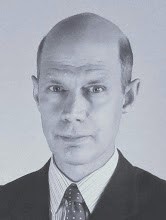
On the morning of 12 September 2011 Nakajima Naotoshi, the president of JR Hokkaido, went missing. He had been under a great deal of stress and media pressure as a result of the May 2011 Sekisho Line accident where an express train derailed and caught fire, part of a spate of accidents and incidents involving JR Hokkaido railway trains. Later investigations of the company found systemic delays and cancellations of basic line maintenance and poor labor management -- inconceivable breaches of the public trust and a violation of the cultivated image of Japan's railways as avatars of a national obsession with high quality service.
Nakajima left behind a pile of letters of apologies and final farewells, leading police and family members to fear he would be trying to take his own life. His private automobile was found that afternoon, parked, empty, in the port area of Ishikari City.
On 18 September, a fisherman in a boat of Otaru, across the bay, found the corpse of a man floating in the water. It was Nakajima. Officers examining the body ruled the death a suicide. (Link -J)
On 15 January 2014, early in the morning, Sakamoto Shin'ichi, the former president (1996-03) and chairman (2003-07) of JR Hokkaido, went missing. His private automobile was found at the seawall of Yoichi Township, just to the west of Otaru City.
At around 08:20, Maritime Self Defense Forces personnel found a corpse of a man floating in the waters of Yoichi's harbor. The Japan Coast Guard retrieved the body. It was Sakamoto. Finding no signs of struggle upon the body, the police are classifying Sakamoto's death a suicide. (Link - J)
When the second and fourth presidents of one of Japan's emblematic but admittedly struggling companies are both found, as the Sicilians, "sleeping with the fishes," within three years of one another, disappearing under nearly identical circumstances (Sakamoto left behind no notes, as far as anyone can tell) with the bodies being found basically the same condition in largely the same area, one should not feel ashamed if Oscar Wilde's admonition on losing one's parents (Link - J) bubbles up.
Comments on these deaths, Dr. Duignan or Mr. Adelstein?
Showing posts with label suicide. Show all posts
Showing posts with label suicide. Show all posts
Friday, January 17, 2014
Wednesday, January 09, 2013
For The Love Of Fukushima
On the 7th, representatives of the Tokyo Olympics committee submitted the Tokyo Metropolitan District's bid for the 2020 Olympics. (Link)
One of the claims made in the bid is that the games will be a celebration of and a contribution to the recovery of the Tohoku from the effects of the March 2011 earthquake, tsunami and nuclear meltdowns. Considering that the Tokyo Olympics 2.0 would be held eight years from now and almost entirely within a small area inside the TMD, the association with the recovery effort seems a stretch. The proposal has two or perhaps three of the preliminary soccer matches played in Sendai, but otherwise the link between the Olympics and the Tohoku disasters will be tenuous to the point of stimulating nervous laughter.
I had a chance to hear Inose Naoki, now officially the governor of the TMD, offer some more concrete examples of how the TMD was contributing to the Tohoku recovery effort. The TMD has dispatch hundreds of TMD bureaucrats on short stays to help administer the recovering areas (many prefectures are doing this, most prominently Aichi Prefecture) and is training and housing applicants for school teaching positions in the Tohoku.
One of the programs Inose described sounded trivial but was in fact important. The TMD has issued coupons offering discounts on day trips or overnight stays in the Aizu-Wakamatsu area of Fukushima Prefecture. Whilst several towns the coast region of Fukushima are uninhabitable due to the Fukushima Dai'ichi nuclear power station disaster, and vast areas of coastal and central Fukushima are contaminated with nuclear fallout, the interior area around the city of Aizu-Wakamatsu is relatively contamination-free. However, as the region is inside Fukushima Prefecture, the largest of Japan's prefectures, it has seen its tourist visits fall through the floor. Since Aizu-Wakamatsu area was dependent on tourism, the false association with Fukushima Dai'ichi has sledgehammered the local economy.
In the wake of the TMD's efforts to promote a return to the area (for a of slideshow from my one visit to Aizu-Wakamatsu, in 2009, click Here) the national broadcast network NHK has a new Taiga Dorama series, Yae no Sakura, set in Aizu-Wakamatsu. Like most Taiga dramas, the current series, airing every Sunday night for the rest of this year, is strongly tied to local, prefectural and NHK-led national efforts to promote tourism to the locales in which the story takes place.
Learning the lesson brought home by last year's calamitous series on Taira no Kiyomori (one senryu of autumn last year had Prime Minister Noda Yoshihiko musing, "No matter how bad my popularity ratings are, they are still better than those for that Taiga Drama series on Taira no Kiyomori...") the main character, like the protagonists of the recent smash hits Atsuhime and Gon...Himetachi no Sengoku is a plucky young female historical figure.
For some reason watching young women fight disdain, prejudice and adversity is more fun than watching middle-aged men sitting around shouting at one another.
Of course, Yae no Sakura takes "plucky" to a whole new level, as the heroine is Yamamoto Yae, the bakumatsu badass with a Spencerrifle carbine who served as a commander in the defense of Aizu-Wakamatsu's castle against the forces of the Meiji government (Link), fighting alongside her estranged first husband. She survives the war, moves to Kyoto and marries Iijima Jo (Joseph Hardy Neesima), the founder of Doshisha University. (Link)
In the NHK depiction, the decidedly nonconformist Yae mutters the Aizu-Wakamatsu motto naranu koto wa naranu mono desu ("that which must not be shall not be") with contemptuous irony.
Not so salutory was private broadcast network TBS' attempt at a costume drama contribution to Aizu-Wakamatsu tourism, Byakkotai. If Yamamoto Yae's story is one to remember, the story of the Byakkotai (White Tiger Company) is a story one wishes everyone would forget. The teenagers of the White Tiger Company managed to make nothing of their brief lives, winning fame only for committing suicide upon the belief, mistaken as it turned, that Aizu-Wakamatsu's castle had fallen to the armies of the Meiji Emperor.
Just to make the already horrid (visiting the reconstructed Aizu-Wakamatsu castle and seeing the large portraits each of the young men under moody lighting makes one ill) story more wretched, TBS made no attempts to hide selfish goal of producing yet another does-the-country-with-its-high-suicide-rate-really-need-yet-another-glorification-of-suicide-as-beautiful-and-brave drama: the promotion of the latest generation of precious jimusho boys and boy band wannabees. (Link)
For the love of Fukushima, give me the girl with the gun!
One of the claims made in the bid is that the games will be a celebration of and a contribution to the recovery of the Tohoku from the effects of the March 2011 earthquake, tsunami and nuclear meltdowns. Considering that the Tokyo Olympics 2.0 would be held eight years from now and almost entirely within a small area inside the TMD, the association with the recovery effort seems a stretch. The proposal has two or perhaps three of the preliminary soccer matches played in Sendai, but otherwise the link between the Olympics and the Tohoku disasters will be tenuous to the point of stimulating nervous laughter.
I had a chance to hear Inose Naoki, now officially the governor of the TMD, offer some more concrete examples of how the TMD was contributing to the Tohoku recovery effort. The TMD has dispatch hundreds of TMD bureaucrats on short stays to help administer the recovering areas (many prefectures are doing this, most prominently Aichi Prefecture) and is training and housing applicants for school teaching positions in the Tohoku.
One of the programs Inose described sounded trivial but was in fact important. The TMD has issued coupons offering discounts on day trips or overnight stays in the Aizu-Wakamatsu area of Fukushima Prefecture. Whilst several towns the coast region of Fukushima are uninhabitable due to the Fukushima Dai'ichi nuclear power station disaster, and vast areas of coastal and central Fukushima are contaminated with nuclear fallout, the interior area around the city of Aizu-Wakamatsu is relatively contamination-free. However, as the region is inside Fukushima Prefecture, the largest of Japan's prefectures, it has seen its tourist visits fall through the floor. Since Aizu-Wakamatsu area was dependent on tourism, the false association with Fukushima Dai'ichi has sledgehammered the local economy.
In the wake of the TMD's efforts to promote a return to the area (for a of slideshow from my one visit to Aizu-Wakamatsu, in 2009, click Here) the national broadcast network NHK has a new Taiga Dorama series, Yae no Sakura, set in Aizu-Wakamatsu. Like most Taiga dramas, the current series, airing every Sunday night for the rest of this year, is strongly tied to local, prefectural and NHK-led national efforts to promote tourism to the locales in which the story takes place.
Learning the lesson brought home by last year's calamitous series on Taira no Kiyomori (one senryu of autumn last year had Prime Minister Noda Yoshihiko musing, "No matter how bad my popularity ratings are, they are still better than those for that Taiga Drama series on Taira no Kiyomori...") the main character, like the protagonists of the recent smash hits Atsuhime and Gon...Himetachi no Sengoku is a plucky young female historical figure.
For some reason watching young women fight disdain, prejudice and adversity is more fun than watching middle-aged men sitting around shouting at one another.
Of course, Yae no Sakura takes "plucky" to a whole new level, as the heroine is Yamamoto Yae, the bakumatsu badass with a Spencer
In the NHK depiction, the decidedly nonconformist Yae mutters the Aizu-Wakamatsu motto naranu koto wa naranu mono desu ("that which must not be shall not be") with contemptuous irony.
Not so salutory was private broadcast network TBS' attempt at a costume drama contribution to Aizu-Wakamatsu tourism, Byakkotai. If Yamamoto Yae's story is one to remember, the story of the Byakkotai (White Tiger Company) is a story one wishes everyone would forget. The teenagers of the White Tiger Company managed to make nothing of their brief lives, winning fame only for committing suicide upon the belief, mistaken as it turned, that Aizu-Wakamatsu's castle had fallen to the armies of the Meiji Emperor.
Just to make the already horrid (visiting the reconstructed Aizu-Wakamatsu castle and seeing the large portraits each of the young men under moody lighting makes one ill) story more wretched, TBS made no attempts to hide selfish goal of producing yet another does-the-country-with-its-high-suicide-rate-really-need-yet-another-glorification-of-suicide-as-beautiful-and-brave drama: the promotion of the latest generation of precious jimusho boys and boy band wannabees. (Link)
For the love of Fukushima, give me the girl with the gun!
Tuesday, September 11, 2012
Japan's Politics Stomps On The Accelerator
In The Pickwick Papers, Charles Dickens entitles one of the chapters "TOO FULL OF ADVENTURE TO BE BRIEFLY DESCRIBED."*
I feel the same way about events in politics these past few days.
-- Liberal Democratic Party president Tanigaki Sadakazu faced reality yesterday, giving up on even running for reelection (E). That he waited so long, forcing his second-in-command Ishihara Nobuteru to forego advance preparation for his own bid for the presidency, either represents faith triumphing over observable fact, or payback for Ishihara's only half-hearted expressions of support for Tanigaki's running for a second term.
Though Ishihara appears to be on course for a victory in the presidential race, and, after the next House of Representatives election, the premiership, it bears noticing that historically his presidential bid is an aberration. Only two secretary-generals have taken over as president since the peaceful, negotiated transition from Nakasone Yasuhiro to Takeshita Noboru in November 1987.
The first was the closed-door, five person negotiated agreement for Secretary-General Mori Yoshiro to take over the premiership from the brain dead but still on life support Obuchi Keizo, three days after Obuchi suffered his fatal stroke.
The other instance of a secretary-general succeeding a party president was Aso Taro taking over for Fukuda Yasuo when Fukuda suddenly resigned on September 1, 2008. Aso had only been in office a month, having been named secretary-general in a leadership shakeup on August 1.
The Aso case points out the main reason why most secretary-generals cannot usually make the direct transition from the party #2 position to the presidency. Under normal circumstances, the secratary-general has been the right-hand man to the president, as much responsible for the daily decisions, right or wrong, as the man in the #1 spot. The secretary-general has also always been seen as bearing ultimate responsibility for the LDP's performance in elections. Many a leadership transition was triggered by the party having a poor showing in an election, mandating that the secretary-general resign and serve a brief stint in limbo.
However, in this instance, the abrasiveness and shallow party roots of Ishihara's main challenger, foreign and security policy specialist Ishiba Shigeru, seem to be showing a green light for Ishihara's election, possibly even in the first round vote of the LDP local chapters.
The other challengers in the LDP race -- former prime minister Abe Shinzo, Machimura Nobutaka and Hayashi Yoshimasa -- seem to be in the race for tactical or public relations reasons.
Hayashi is the Washington think tank candidate -- fluent in English and a familiar face in Washington. He is, however, a member of the House of Councillors -- whose members are seen as not having a personal investment in the party's performance in the House of Representatives. Hayashi is seen as being only technically available to step into the position of prime minister.
Machimura is the faction head candidate, participating so that the list of candidates has at least one faction head in it. Machimura's candidacy presents another hurdle for Machimura faction member Ishihara, as he would normally count on the votes of his faction as the core of his support in the Diet members' round of voting.
Abe is entering the race for purely tactical reasons. He used to be both the ultra-conservative and Washington think tank candidate. His breakdown while in office, unsurprisingly cooled most Washington and national interest. He does remain, however, the most recognizable of the unapologetic, fantastic history-believing nationalists. He is thus probably running in order to play the part of kingmaker in between Ishiba and Ishihara, extracting a promise of accelerated militarization and anti-Chinese and anti-South Korean stances in return for the votes of his supporters.
-- The window for declaring oneself a DPJ leadership candidate closed yesterday. With Hosono Goshi having been talked out of running on Friday last, a field of four candidates-- deridable as "Noda Yoshihiko and the Three Dwarfs" -- now are set for a whirlwind campaign ending on September 21. (E)
As Okumura Jun has noted, the explosion of interest in a Hosono candidacy last week was prima facie evidence that the three remaining Noda challengers -- Haraguchi Kazuhiko, Akamatsu Hirotaka and Kano Michihiko -- do not inspire. In speeches yesterday, each of the candidates, whilst criticizing the prime minister and his policy of accommodation with the LDP-New Komeito alliance, revealed his particular weakness. Haraguchi fulminated about the public's loss of faith in the party due to the abandonment of the promises in the 2009 manifesto. Haraguchi seems unaware that 1) manifesto author Ozawa Ichiro and his most of his acolytes decamped a few months ago, leaving a very small audience, at least among Diet members, for the "we have forgotten our roots" message.
Akamatsu's and Kano's candidacies seem more tactical, given their comparatively advanced ages (Akamatsu is 63; Kano 70). Akamatsu represents the potential votes of the party's under-appreciated socialists, while Kano can offer the votes of his own group and the votes of the members with a visceral hatred/fear of a DPJ commitment to participate in the Trans Pacific Partnership. Kano already has a history of vote trading, his support having been a crucial component of Noda Yoshihiko's victory over the Ozawa-supported Kaieda Banri in the 2011 leadership election.
Both Akamatsu and Kano railed against the three-party agreement that made the passage of the social welfare and pension reform bills possible. Noda defended it, and defended the extension of the three party agreement into the fall extraordinary session. Both sides are just blowing smoke, however. The three party agreement has falls into abeyance with Tanigaki's withdrawal from the LDP presidential race and the automatic evaporation on Spetember 8 of the bond issuance bill and electoral reform bill.
-- Osaka City mayor Hashimoto Toru on Sunday hosted a symposium (E) introducing the ideas that will vault his regional movement into a national political party, the Nihon (or Nippon) Ishin no Kai (the Japan Renewal Party or Japan Restoration Party. By the way, forget about running a search on 日本維新の会 -- what you get is the Facebook page of a Haraguchi Kazuhiko study group of the same name). At the seemingly interminable meeting (five hours in real time) Hashimoto introduced the seven members of the Diet who will today (Tuesday) tender their resignations from their current parties in time for the the JRA's coming out reception on Wednesday. That three of the seven are House of Councillors proportional seat members of the Your Party indicates the prescience of Michael Penn's private circulation article, of August 27, "Yoshimi Watanabe's Your Party in Terminal Crisis."
Of the remaining four defectors, three come from the DPJ and one from the LDP. Matsunami Kenta of the LDP is a proportional seat member of the House of Representatives, and from the Kinki bloc where Osaka is located. That the majority of the JRA's Diet members are proportional seat members indicates the cautious attitude district seat holders are taking with towards to Hashimoto's leap into national politics. That the majority of the defectors are also from the House of Councillors, rather than the more volatile and politically significant House of Representatives, indicates a further lack of certainty among those dissatisfied with the status quo that Hashimoto has coattails.
Also attending and speaking at the meeting were the usual suspects of devolution of power to local governments: former comedian and Miyazaki governor Higashikokubaru Hideo and two of The Three Hiroshis: formerKanagawa Yokohama pretty boy governor mayor Nakata Hiroshi and former revisionist textbook inceptor and Suginami City mayor Yamada Hiroshi, whose Spirit of Japan Party (Nihon soshinto) went nowhere. (J)
That Hashimoto featured these pre-August 2009 election retreads at his talk fest, and indeed wants them to run as Nihon Ishin no Kai candidates, indicates that for all the media interest and public opinion poll enthusiasm for the new party, there is little meat yet on the bones.
-- The deployment of MV-22 Osprey aircraft to the Futenma Marine Corps Air Station in Okinawa received what was ostensibly a significant blow on Sunday from a mass protest (E). Organizers claimed 101,000 persons participated in the rally. Aerial images on television seemed to indicate the size of the crowd was closer to 20,000, though it is possible thousands were, like crowd at the July 16 nuclear protest, hiding under the trees from the blazing sun.
Given that signing off on Osprey operations is electoral poison, it is likely that the final OK will be given by a lame duck Cabinet after after the results of a House of Representatives elections are in. That the U.S. Marine Corps generally gets what it wants means that the effectiveness of the protest is about as doubtful as its crowd numbers.
-- The purported suicide of Financial Services and Postal Reform Minister Matsushita is still the top of the news -- as a such a rare occurrence should be.
I loathe conspiracy theories and theorists but the official narratives so far regarding this case do not hold together. We are supposed to believe that a man found toppled over had hanged himself, or strangled himself with cords of some kind. We are being asked to believe that his security detail did not have a key to his condominium, having to use Minister Matsushita's wife's key to open the condominium front door. We are being asked to believe that he left goodbye messages to his wife, Prime Minister Noda and the Cabinet. We are being asked to believe that the imminent publication of a Shukan Shincho expose of a purported mistress may have pushed Matsushita to take his own life. (J)
As to the last claim, when you are seventy-three, recovering fromprostrate prostate cancer and are revealed to have engaged in extra-marital shenanigans, you are well past the "this will ruin my career" stage.
Next up should be revelations of the content of the purported three goodbye notes.
Do I expect to be seeing the actual texts, ever?
No.
-----------------------------------------------
* Demonstrating that British comic writing has been in the dead-pan, self-referential subversion of the narrative voice business for a very long time.
I feel the same way about events in politics these past few days.
-- Liberal Democratic Party president Tanigaki Sadakazu faced reality yesterday, giving up on even running for reelection (E). That he waited so long, forcing his second-in-command Ishihara Nobuteru to forego advance preparation for his own bid for the presidency, either represents faith triumphing over observable fact, or payback for Ishihara's only half-hearted expressions of support for Tanigaki's running for a second term.
Though Ishihara appears to be on course for a victory in the presidential race, and, after the next House of Representatives election, the premiership, it bears noticing that historically his presidential bid is an aberration. Only two secretary-generals have taken over as president since the peaceful, negotiated transition from Nakasone Yasuhiro to Takeshita Noboru in November 1987.
The first was the closed-door, five person negotiated agreement for Secretary-General Mori Yoshiro to take over the premiership from the brain dead but still on life support Obuchi Keizo, three days after Obuchi suffered his fatal stroke.
The other instance of a secretary-general succeeding a party president was Aso Taro taking over for Fukuda Yasuo when Fukuda suddenly resigned on September 1, 2008. Aso had only been in office a month, having been named secretary-general in a leadership shakeup on August 1.
The Aso case points out the main reason why most secretary-generals cannot usually make the direct transition from the party #2 position to the presidency. Under normal circumstances, the secratary-general has been the right-hand man to the president, as much responsible for the daily decisions, right or wrong, as the man in the #1 spot. The secretary-general has also always been seen as bearing ultimate responsibility for the LDP's performance in elections. Many a leadership transition was triggered by the party having a poor showing in an election, mandating that the secretary-general resign and serve a brief stint in limbo.
However, in this instance, the abrasiveness and shallow party roots of Ishihara's main challenger, foreign and security policy specialist Ishiba Shigeru, seem to be showing a green light for Ishihara's election, possibly even in the first round vote of the LDP local chapters.
The other challengers in the LDP race -- former prime minister Abe Shinzo, Machimura Nobutaka and Hayashi Yoshimasa -- seem to be in the race for tactical or public relations reasons.
Hayashi is the Washington think tank candidate -- fluent in English and a familiar face in Washington. He is, however, a member of the House of Councillors -- whose members are seen as not having a personal investment in the party's performance in the House of Representatives. Hayashi is seen as being only technically available to step into the position of prime minister.
Machimura is the faction head candidate, participating so that the list of candidates has at least one faction head in it. Machimura's candidacy presents another hurdle for Machimura faction member Ishihara, as he would normally count on the votes of his faction as the core of his support in the Diet members' round of voting.
Abe is entering the race for purely tactical reasons. He used to be both the ultra-conservative and Washington think tank candidate. His breakdown while in office, unsurprisingly cooled most Washington and national interest. He does remain, however, the most recognizable of the unapologetic, fantastic history-believing nationalists. He is thus probably running in order to play the part of kingmaker in between Ishiba and Ishihara, extracting a promise of accelerated militarization and anti-Chinese and anti-South Korean stances in return for the votes of his supporters.
-- The window for declaring oneself a DPJ leadership candidate closed yesterday. With Hosono Goshi having been talked out of running on Friday last, a field of four candidates-- deridable as "Noda Yoshihiko and the Three Dwarfs" -- now are set for a whirlwind campaign ending on September 21. (E)
As Okumura Jun has noted, the explosion of interest in a Hosono candidacy last week was prima facie evidence that the three remaining Noda challengers -- Haraguchi Kazuhiko, Akamatsu Hirotaka and Kano Michihiko -- do not inspire. In speeches yesterday, each of the candidates, whilst criticizing the prime minister and his policy of accommodation with the LDP-New Komeito alliance, revealed his particular weakness. Haraguchi fulminated about the public's loss of faith in the party due to the abandonment of the promises in the 2009 manifesto. Haraguchi seems unaware that 1) manifesto author Ozawa Ichiro and his most of his acolytes decamped a few months ago, leaving a very small audience, at least among Diet members, for the "we have forgotten our roots" message.
Akamatsu's and Kano's candidacies seem more tactical, given their comparatively advanced ages (Akamatsu is 63; Kano 70). Akamatsu represents the potential votes of the party's under-appreciated socialists, while Kano can offer the votes of his own group and the votes of the members with a visceral hatred/fear of a DPJ commitment to participate in the Trans Pacific Partnership. Kano already has a history of vote trading, his support having been a crucial component of Noda Yoshihiko's victory over the Ozawa-supported Kaieda Banri in the 2011 leadership election.
Both Akamatsu and Kano railed against the three-party agreement that made the passage of the social welfare and pension reform bills possible. Noda defended it, and defended the extension of the three party agreement into the fall extraordinary session. Both sides are just blowing smoke, however. The three party agreement has falls into abeyance with Tanigaki's withdrawal from the LDP presidential race and the automatic evaporation on Spetember 8 of the bond issuance bill and electoral reform bill.
-- Osaka City mayor Hashimoto Toru on Sunday hosted a symposium (E) introducing the ideas that will vault his regional movement into a national political party, the Nihon (or Nippon) Ishin no Kai (the Japan Renewal Party or Japan Restoration Party. By the way, forget about running a search on 日本維新の会 -- what you get is the Facebook page of a Haraguchi Kazuhiko study group of the same name). At the seemingly interminable meeting (five hours in real time) Hashimoto introduced the seven members of the Diet who will today (Tuesday) tender their resignations from their current parties in time for the the JRA's coming out reception on Wednesday. That three of the seven are House of Councillors proportional seat members of the Your Party indicates the prescience of Michael Penn's private circulation article, of August 27, "Yoshimi Watanabe's Your Party in Terminal Crisis."
Of the remaining four defectors, three come from the DPJ and one from the LDP. Matsunami Kenta of the LDP is a proportional seat member of the House of Representatives, and from the Kinki bloc where Osaka is located. That the majority of the JRA's Diet members are proportional seat members indicates the cautious attitude district seat holders are taking with towards to Hashimoto's leap into national politics. That the majority of the defectors are also from the House of Councillors, rather than the more volatile and politically significant House of Representatives, indicates a further lack of certainty among those dissatisfied with the status quo that Hashimoto has coattails.
Also attending and speaking at the meeting were the usual suspects of devolution of power to local governments: former comedian and Miyazaki governor Higashikokubaru Hideo and two of The Three Hiroshis: former
That Hashimoto featured these pre-August 2009 election retreads at his talk fest, and indeed wants them to run as Nihon Ishin no Kai candidates, indicates that for all the media interest and public opinion poll enthusiasm for the new party, there is little meat yet on the bones.
-- The deployment of MV-22 Osprey aircraft to the Futenma Marine Corps Air Station in Okinawa received what was ostensibly a significant blow on Sunday from a mass protest (E). Organizers claimed 101,000 persons participated in the rally. Aerial images on television seemed to indicate the size of the crowd was closer to 20,000, though it is possible thousands were, like crowd at the July 16 nuclear protest, hiding under the trees from the blazing sun.
Given that signing off on Osprey operations is electoral poison, it is likely that the final OK will be given by a lame duck Cabinet after after the results of a House of Representatives elections are in. That the U.S. Marine Corps generally gets what it wants means that the effectiveness of the protest is about as doubtful as its crowd numbers.
-- The purported suicide of Financial Services and Postal Reform Minister Matsushita is still the top of the news -- as a such a rare occurrence should be.
I loathe conspiracy theories and theorists but the official narratives so far regarding this case do not hold together. We are supposed to believe that a man found toppled over had hanged himself, or strangled himself with cords of some kind. We are being asked to believe that his security detail did not have a key to his condominium, having to use Minister Matsushita's wife's key to open the condominium front door. We are being asked to believe that he left goodbye messages to his wife, Prime Minister Noda and the Cabinet. We are being asked to believe that the imminent publication of a Shukan Shincho expose of a purported mistress may have pushed Matsushita to take his own life. (J)
As to the last claim, when you are seventy-three, recovering from
Next up should be revelations of the content of the purported three goodbye notes.
Do I expect to be seeing the actual texts, ever?
No.
-----------------------------------------------
* Demonstrating that British comic writing has been in the dead-pan, self-referential subversion of the narrative voice business for a very long time.
Monday, September 10, 2012
A Minister Dies A Mysterious Death
Minister for Postal Reform and State Minister for Financial Services and People's New Party member Matsushita Tadahiro is dead. Police responding to an emergency call from his Tokyo home at about 4:45 p.m. found him "fallen down" (taorete iru). With disturbing speed, the news media complex is reporting that the police are investigating the death of the 73 year-old Matsushita as being a likely suicide. (J)
Now there may be good reasons to suspect the minister's having taken his own life. However, to see a report of an older, sickly man's death reported as a likely/possible suicide on NHK's prime time evening newscast only 2 hours and 15 minutes after the police were first called is damn peculiar. Recall this is the cast of clowns who could never come clean about the exact cause of death of Nakagawa Sho'ichi, when 1) his father had committed suicide, 2) he was an alcoholic, 3) he had suffered months earlier humiliation on a global scale (You Tube) which ended his political career and 4) he was found, lying down, at his Tokyo home, unresponsive.
If Matsushita did take his own life, he would be only the second Cabinet Minister to do so while in office since the promulgation of the present Constitution, the first having been the scandal-beset Matsuoka Toshikatsu in May 2007.
Requiescat in pacem.
What this death will mean for the implementation of the postal counter-reformation Ozawa Ichiro and Kamei Shizuka foisted upon us in order to please the hereditary postmaster's association and the postal unions, is probably not much. Speculation on this subject is also better left to institutions such as The Wall Street Journal, Reuters and Bloomberg, which tend to frame world events in terms of their effects on investment portfolios.
Now there may be good reasons to suspect the minister's having taken his own life. However, to see a report of an older, sickly man's death reported as a likely/possible suicide on NHK's prime time evening newscast only 2 hours and 15 minutes after the police were first called is damn peculiar. Recall this is the cast of clowns who could never come clean about the exact cause of death of Nakagawa Sho'ichi, when 1) his father had committed suicide, 2) he was an alcoholic, 3) he had suffered months earlier humiliation on a global scale (You Tube) which ended his political career and 4) he was found, lying down, at his Tokyo home, unresponsive.
If Matsushita did take his own life, he would be only the second Cabinet Minister to do so while in office since the promulgation of the present Constitution, the first having been the scandal-beset Matsuoka Toshikatsu in May 2007.
Requiescat in pacem.
What this death will mean for the implementation of the postal counter-reformation Ozawa Ichiro and Kamei Shizuka foisted upon us in order to please the hereditary postmaster's association and the postal unions, is probably not much. Speculation on this subject is also better left to institutions such as The Wall Street Journal, Reuters and Bloomberg, which tend to frame world events in terms of their effects on investment portfolios.
Wednesday, September 05, 2012
Re Dr. Nakano's Sadness
Nakano Ko'ichi is a rarity in Japanese academia: a scholar with a brilliant command of the literature of his field, a disarmingly frank and reassuring manner, an ability to examine Japan's contemporary problems in the context of broader flows of world history and fluency both in his mother tongue and English.
And a man, without shading or hedging, of the Left.
He has published a stark and lucid essay on a potential harsh turn in Japan's economic and foreign policy at CNN's Global Public Square:
"Japan: Get ready for a rightward shift"
As is known, I reject the thesis that the "ditching most of its main campaign manifesto pledges and letting the country’s bureaucrats redefine the policy agenda" was the primary reason for the collapse in the popularity of the Democratic Party of Japan as reflected in public opinion polling. Instead, I lay most of the blame at the feet of Ozawa Ichiro and his inability to accept or understand the concept of "party over person" as inextricable to the process of running a party government. Collaboration with the bureaucrats on policy was forced upon the DPJ by the need to fight against the Liberal Democratic Party and its 50 year legacy of misrule. Ozawa Ichiro tried to fight both the LDP and the bureaucrats at once, with the inevitable result of allowing both to make up the huge losses of power and legitimacy they suffered in the elections of 2009.
The DPJ's current leadership had been much, much smarter in dealing with bureaucrats, ceding on some matters of policy, while inflicting deep cuts in salaries and recruitment.
These serious woundings of the bureaucracy have been insufficiently publicized because the DPJ still needs the bureaucrats in their corner. "Look at how we have roughed up the bureaucrats!" is hardly the message you want to be shouting unless you want the bureaucrats to undermine your every move.
As for Dr. Nakano's take on the relations between nationalism, deregulation and unraveling of the social fabric, I am still not convinced of the direct responsibility of government policy in a worsening of social inequality and social disfunction, or, conversely, the capacity of government to remedy the situation.
Take, for example, Dr. Nakano's citation of Japan's stunning suicide rate (which, if you consider it the murder of oneself, makes Japan one of the most dangerous places to live on Earth). The number of suicides soared in 1998, the year the financial system finally lost government support, leading to the spectacular failures of banks and Yamaichi Securities. The levels have stayed high ever since.
It is that "ever since" that has me skeptical. Certainly if unsteadiness of the economy was the trigger for rises in the suicide rate, improvements in the economy should lead to lower levels of suicide -- especially since the post-2008 rise has been almost entirely due to increases in suicides of men, women committing suicide at the same basically the same rate over the last 35 years.
Something else is going on...and the lead probably needs to be taken by non-profit organizations rather than the government.
As for income equality, I have greater faith in the ingenuity of the people of this blessed land than either Nakano or Finance Ministry bureaucrats seem willing to admit. In the absence of a tax registration number system -- the likelihood of the death of a bill establishing such a system, there is still a great deal of leeway for transfers of wealth across the generations, with the asset-rich older generations supplementing the income of their children and grandchildren, with the government's draconian estate taxes as all the incentive older citizens will ever need to hand down their wealth to their descendants.
I also think that international statistics on levels of Japanese poverty vastly underestimate the differences in price levels in between the urban and rural areas, skewing the estimates of rural poverty higher than actual purchasing power should reflect. I may be wrong on this point, however.
As for Hashimoto Toru's programs, Abe Shinzo's programs and Prime Minister Noda Yoshihiko's programs, lumping them together under the rubric of the exploitation of nationalism, you insults Noda's and Hashimoto's intelligence...and ascribes to Abe an intelligence he simply does not possess. As for the accusation that Prime Minister Noda is contributing to the escalation of territorial disputes with Japan's neighbors, that is simply untrue. He made a fairly admirable effot to calm the waters -- sending the Hong Kong activists home without charging them with anything, forbidding the landing of Ishihara Shintaro's land survey team upon the Senkakus -- while reiterating what are the existing policy positions of the government of Japan.
And a man, without shading or hedging, of the Left.
He has published a stark and lucid essay on a potential harsh turn in Japan's economic and foreign policy at CNN's Global Public Square:
"Japan: Get ready for a rightward shift"
As is known, I reject the thesis that the "ditching most of its main campaign manifesto pledges and letting the country’s bureaucrats redefine the policy agenda" was the primary reason for the collapse in the popularity of the Democratic Party of Japan as reflected in public opinion polling. Instead, I lay most of the blame at the feet of Ozawa Ichiro and his inability to accept or understand the concept of "party over person" as inextricable to the process of running a party government. Collaboration with the bureaucrats on policy was forced upon the DPJ by the need to fight against the Liberal Democratic Party and its 50 year legacy of misrule. Ozawa Ichiro tried to fight both the LDP and the bureaucrats at once, with the inevitable result of allowing both to make up the huge losses of power and legitimacy they suffered in the elections of 2009.
The DPJ's current leadership had been much, much smarter in dealing with bureaucrats, ceding on some matters of policy, while inflicting deep cuts in salaries and recruitment.
These serious woundings of the bureaucracy have been insufficiently publicized because the DPJ still needs the bureaucrats in their corner. "Look at how we have roughed up the bureaucrats!" is hardly the message you want to be shouting unless you want the bureaucrats to undermine your every move.
As for Dr. Nakano's take on the relations between nationalism, deregulation and unraveling of the social fabric, I am still not convinced of the direct responsibility of government policy in a worsening of social inequality and social disfunction, or, conversely, the capacity of government to remedy the situation.
Take, for example, Dr. Nakano's citation of Japan's stunning suicide rate (which, if you consider it the murder of oneself, makes Japan one of the most dangerous places to live on Earth). The number of suicides soared in 1998, the year the financial system finally lost government support, leading to the spectacular failures of banks and Yamaichi Securities. The levels have stayed high ever since.
It is that "ever since" that has me skeptical. Certainly if unsteadiness of the economy was the trigger for rises in the suicide rate, improvements in the economy should lead to lower levels of suicide -- especially since the post-2008 rise has been almost entirely due to increases in suicides of men, women committing suicide at the same basically the same rate over the last 35 years.
Something else is going on...and the lead probably needs to be taken by non-profit organizations rather than the government.
As for income equality, I have greater faith in the ingenuity of the people of this blessed land than either Nakano or Finance Ministry bureaucrats seem willing to admit. In the absence of a tax registration number system -- the likelihood of the death of a bill establishing such a system, there is still a great deal of leeway for transfers of wealth across the generations, with the asset-rich older generations supplementing the income of their children and grandchildren, with the government's draconian estate taxes as all the incentive older citizens will ever need to hand down their wealth to their descendants.
I also think that international statistics on levels of Japanese poverty vastly underestimate the differences in price levels in between the urban and rural areas, skewing the estimates of rural poverty higher than actual purchasing power should reflect. I may be wrong on this point, however.
As for Hashimoto Toru's programs, Abe Shinzo's programs and Prime Minister Noda Yoshihiko's programs, lumping them together under the rubric of the exploitation of nationalism, you insults Noda's and Hashimoto's intelligence...and ascribes to Abe an intelligence he simply does not possess. As for the accusation that Prime Minister Noda is contributing to the escalation of territorial disputes with Japan's neighbors, that is simply untrue. He made a fairly admirable effot to calm the waters -- sending the Hong Kong activists home without charging them with anything, forbidding the landing of Ishihara Shintaro's land survey team upon the Senkakus -- while reiterating what are the existing policy positions of the government of Japan.
Tuesday, October 06, 2009
Improper Thoughts on the Death of Nakagawa Shōichi
I was packing for an afternoon hike on the Ne no Gongen-Takedera route, listening to the economics experts slanging away about the new government's economic policies on Nichiyō Tōron.
A leisurely, happy morning.
Suddenly, with about 5 minutes remaining before the hour, the program was interrupted by the news flash: former Finance Minister Nakagawa Shōichi had been found dead in his Setagaya home.
The participants were a bit taken aback. However, with the prodding of the announcer, they got back to their discussion, and in the final seconds, were even laughing at a witticism.
It was a sorry, sad failure of propriety...but what could the guests do? Since they were talking about the economy, they would have to bring up the point that Nakagawa was the former finance minister...and the last thing anyone wanted to remind viewers (or in my case, listeners) of his great humiliation.
And then, with Nakagawa only 56 years of age, an alcoholic and the son of suicide, the inevitable first thought was that he had died at his own hand.
What could they do, in the circumstances? What would I do?
I hesitated to turn on the laptop, to type out some message or brief blog post. The day was already getting late, however...and I really did not have much to say more than what I had said in Reflections on these Men Broken.
So I too just let it go.
A man has died, one became at one point the butt of jokes around the world. He worked his way up to the position of Finance Minister despite being seriously ill for much of his adult life. In terms of his inner world, he likely suffered greatly, his personality not suited for the responsibilities thrust upon him.
We should be careful to not go overboard in self laceration or attributions of possible merit, however. While it is right to feel sympathy for the sick man and his family members, we should not lose sight of the twisted system in which Nakagawa Shōichi operated and which he did too little to change.
Like so many of the LDP leaders in its years of precipitous decline, Nakagawa was born, as they say in the United States, "on third base, thinking he had just hit a triple." He was the son of a powerful LDP politician who, in meeting his end at the age of 57, gave Shōichi an early start on his climb up the political ladder. Keizō Obuchi's and Ryutarō Hashimoto's fathers also died prematurely – making it possible for these two men to amass sufficient seniority to become prime ministers at the ages of 58 and 61, respectively. Obuchi's Keizō death in office in turn opened the door for his daughter Yūko to become the youngest minister in history.
Nakagawa and his fellow hereditary politicians had an immense head start on their countrymen.
In terms of his politics, Nakagawa may have just happened to be at the right place at the right time. A staunch, dogmatic nationalist, he would have been anti-mainstream in the late 60s, the 70s and the 80s. However, after the march of Japan's economic prowess had come to a shuddering halt, leaving many citizens groping for answers on how to better their lives, he and his fellow hardliners found themselves aboard an escalator to high office.
(I must credit Tobias Harris for suggesting that the relationship between the economic slump and the rise of the nationalist right was serendipitous, not determined. The bursting of the Bubble did not compel a rise of nationalist feelings among the citizens. It merely blew open a hole in the national narrative into which fantabulist nationalism could insinuate itself.)
As Okumura Jun has noted on numerous occasions, Nakagawa was a sight better than his most of peers in the brains department. Yes, but then his peers....well...
We can recognize that Nakagawa Shōichi rose to the highest positions in political life. We can also be candid and admit that he did so within an institutionalized, hereditary, exclusive, seniority-based, hierarchical structure that, because it was charged with the rule of a democratic country, also had to be corrupt.
Was he a prisoner of heredity and social expectations? No doubt.
Had he been wiser or perhaps luckier in his choices of friends and mentors, though, he might have liberated himself.
Resquiescat in Pacem.
A leisurely, happy morning.
Suddenly, with about 5 minutes remaining before the hour, the program was interrupted by the news flash: former Finance Minister Nakagawa Shōichi had been found dead in his Setagaya home.
The participants were a bit taken aback. However, with the prodding of the announcer, they got back to their discussion, and in the final seconds, were even laughing at a witticism.
It was a sorry, sad failure of propriety...but what could the guests do? Since they were talking about the economy, they would have to bring up the point that Nakagawa was the former finance minister...and the last thing anyone wanted to remind viewers (or in my case, listeners) of his great humiliation.
And then, with Nakagawa only 56 years of age, an alcoholic and the son of suicide, the inevitable first thought was that he had died at his own hand.
What could they do, in the circumstances? What would I do?
I hesitated to turn on the laptop, to type out some message or brief blog post. The day was already getting late, however...and I really did not have much to say more than what I had said in Reflections on these Men Broken.
So I too just let it go.
* * *
A man has died, one became at one point the butt of jokes around the world. He worked his way up to the position of Finance Minister despite being seriously ill for much of his adult life. In terms of his inner world, he likely suffered greatly, his personality not suited for the responsibilities thrust upon him.
We should be careful to not go overboard in self laceration or attributions of possible merit, however. While it is right to feel sympathy for the sick man and his family members, we should not lose sight of the twisted system in which Nakagawa Shōichi operated and which he did too little to change.
Like so many of the LDP leaders in its years of precipitous decline, Nakagawa was born, as they say in the United States, "on third base, thinking he had just hit a triple." He was the son of a powerful LDP politician who, in meeting his end at the age of 57, gave Shōichi an early start on his climb up the political ladder. Keizō Obuchi's and Ryutarō Hashimoto's fathers also died prematurely – making it possible for these two men to amass sufficient seniority to become prime ministers at the ages of 58 and 61, respectively. Obuchi's Keizō death in office in turn opened the door for his daughter Yūko to become the youngest minister in history.
Nakagawa and his fellow hereditary politicians had an immense head start on their countrymen.
In terms of his politics, Nakagawa may have just happened to be at the right place at the right time. A staunch, dogmatic nationalist, he would have been anti-mainstream in the late 60s, the 70s and the 80s. However, after the march of Japan's economic prowess had come to a shuddering halt, leaving many citizens groping for answers on how to better their lives, he and his fellow hardliners found themselves aboard an escalator to high office.
(I must credit Tobias Harris for suggesting that the relationship between the economic slump and the rise of the nationalist right was serendipitous, not determined. The bursting of the Bubble did not compel a rise of nationalist feelings among the citizens. It merely blew open a hole in the national narrative into which fantabulist nationalism could insinuate itself.)
As Okumura Jun has noted on numerous occasions, Nakagawa was a sight better than his most of peers in the brains department. Yes, but then his peers....well...
We can recognize that Nakagawa Shōichi rose to the highest positions in political life. We can also be candid and admit that he did so within an institutionalized, hereditary, exclusive, seniority-based, hierarchical structure that, because it was charged with the rule of a democratic country, also had to be corrupt.
Was he a prisoner of heredity and social expectations? No doubt.
Had he been wiser or perhaps luckier in his choices of friends and mentors, though, he might have liberated himself.
Resquiescat in Pacem.
Tuesday, July 07, 2009
Violent Intentions
My love she speaks like silence,
Without ideals or violence,
She doesn't have to say she's faithful,
Yet she's true, like ice, like fire.
(...)
The wind howls like a hammer,
The night blows cold and rainy,
My love she's like some raven
At my window with a broken wing.
Without ideals or violence,
She doesn't have to say she's faithful,
Yet she's true, like ice, like fire.
(...)
The wind howls like a hammer,
The night blows cold and rainy,
My love she's like some raven
At my window with a broken wing.
- Robert Allen Zimmerman
"Love Minus Zero/No Limit" (1965)
"Love Minus Zero/No Limit" (1965)
Multiple choice quiz, on a serious subject.
In which country are you most at risk of being intentionally killed, in a given year?
a) Japan
b) the United States
c) Italy
d) the United Kingdom
e) Mexico
The answer is, of course, a) Japan.
You are 38% more likely to be killed in Japan as in the United States. You are three times more likely to die a violent death at a human hand in Japan than in Italy or the United Kingdom. The rate of intentional killings in Japan is one and half times the rate in drug-war wracked Mexico.
Of course, the catch is the term "intentional killing"...and by whom:
Annually, per 100,000 persons

We have public service announcements posted on our keijiban, warning of masked attackers lurking in dark alleyways and lanes. However, by far the most dangerous person any of us will ever meet is the one staring back at us in the mirror.
- A post for The Lawyer, who opened up a little used email account last week and found a message that a good friend had taken her life.
----------------------------------------------------
Sources of statistics: Cabinet Office, CDC, Eurostat, WHO
The original version of this post had the suicide and homicide numbers for Italy and the United Kingdom flipped. - MTC
Sunday, April 27, 2008
Do You Wanna Be Startin' Somethin' ?
And they say there is a dearth of innovation in this country.
For the good of my own conscience, I am not going to go into my thinking in any more detail than that.
Japan sees wave of suicides using detergent-produced gasIt is such a good thing that religious zealots, individuals with grudges, the mentally ill--or some combination thereof--are all illiterate.
Associated Press
By MARI YAMAGUCHI – TOKYO — At least four people killed themselves Friday by inhaling fumes from a detergent mixed with other chemicals amid a wave of similar suicides that has reportedly claimed about 50 lives this month in Japan.
Authorities are alarmed by the sudden rise in such incidents — an average of two a day were reported in April — because the chemicals are easy to get and the fumes could spread to affect bystanders or rescuers.
A 47-year-old man killed himself Friday in a Tokyo luxury hotel, said Fire Department official Toshiyuki Miyake.
Officials said emergency workers also found a 29-year-old man dead in his Tokyo apartment; a man in his 50s at a public gymnasium in northern Tokyo; and a man in his 30s in an apartment in nearby Yokohama. All died after inhaling hydrogen sulfide gas, produced by mixing detergent and a bath lotion...
For the good of my own conscience, I am not going to go into my thinking in any more detail than that.
Subscribe to:
Posts (Atom)