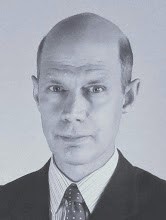
It is easy to swallow the constant parade of shaded truths and evasions uttered by the government's main spokesman, Chief Cabinet Secretary Fujimura Osamu, as he fumbles through his daily press briefing. With his "let me look at my notes here" and soft delivery one gets the impression, that not particularly deep down, he does not believe what he is saying.
Contrast this with the martial verbal stomping of Ministry of Foreign Affairs for the People's Republic of China Hong Lei. His jut-jawed aura of certitude, on display most recently in the response to the rubber bullet killing of Chinese fisherman by the South Korean coast guard, where the crew of the fishing boat fought with "knives, saws, spears, shovels and axes" to repulse a boarding of their vessel (Link) was nearly parodic, demanding that Sought Korea take preventive measures against violent law enforcement behavior.
Why can Hong not say, "These men may have been fishing illegally and used deadly force in resisting a boarding of their vessel. The PRC government has no formal comment on the situation, as the investigation of the incident is still in its initial stages," like any normal spokesperson?
Were I a correspondent of a news media organization, assigned to Beijing, I would likely burn that organization's work visa in a moment. Attending a Foreign Ministry briefing, I would not be able to restrain myself from getting up from out of my seat and declaiming, "Please, Mr. Hong, I beg you. Please tell me one more impossible thing."
Showing posts with label Fujimura Osamu. Show all posts
Showing posts with label Fujimura Osamu. Show all posts
Thursday, October 18, 2012
Friday, August 31, 2012
The Yomiuri Shimbun Goes On The Prowl
The text has not yet received the attention it deserves, but the Yomiuri Shimbun's August 29 editorial "The Kono Statement: It is natural to revise this 'historical stain'" (Kono danwa: "Fu no isan" no minaoshi wa tozen da) marks a turning point in Japan's political history (Link -J). It is stunning not just for its despicable and stupid call for a revision of the 1993 Kono Statement on the sex slaves of the Japan Imperial Forces comfort stations* but for its desperate batting of eyelashes at Hashimoto Toru ("Stop tweeting for a second and come and sit down next to me...") now that the Yomiuri's long time steady, the Liberal Democratic Party, has hopelessly soiled itself.
Like all floozies, the editors at the Yomiuri have a sharp and seemingly prescient sense of When It Is Time To Move On.
As for the call for a revision or indeed repudiation of the Kono Statement -- a dormant volcano brought violently to life on Monday by People's Life First Party member Toyama Itsuki in his questions put to the Cabinet in the House of Councillors Budget Committee session -- it is based upon the most idiotic of premises imaginable: that the Statement is false because the Government of Japan, in its 1991-93 investigation of the claims of the sex slaves, could not find any documentary evidence linking the coercive or duplicitous recruitment of the sex slaves and actions taken by government officials, be they civilian or military.
How stupid is this?
This stupid:
As for the appeal to Hashimoto, it is no mere love call in the middle of the night. It a suitcase-in-each-hand-appearing-at-the-front-door-at-6 a.m. request of "May I come in?"
The Yomiuri has produced its own translation of the editorial ( Link - E). Unfortunately, the translators have taken so many liberties that the result sounds even more callous and mendacious than the original.
Someone will have to produce a better translation, possibly me. If I do it, I post will my draft and have expert commentators offer their suggestions.
For those who want to see the video of the Toyama questions and the answers of Foreign Minister Gemba Ko'ichiro, Chief Cabinet Secretarty Fujimura Osamu, National Safety Commision Chair Matsubara Jin and Prime Minister Noda Yoshihiko, the House of Councillors video library website is:
http://www.webtv.sangiin.go.jp/webtv/index.php
Go to the calendar and click on August 27. When the list of committee meetings appears, click on the tiny icon of a human face on the far right on the line for the budget committee (予算委員会). This will open a drop-down list of the questioners and their question session. Click on Toyama Itsuki (外山斎). The playback will begin moments later, in a separate, small window.
---------------------------------------
* The term "comfort women" has always been a misnomer, as comfort station procurers took boys as well as women from the internment camps in Indonesia.
Like all floozies, the editors at the Yomiuri have a sharp and seemingly prescient sense of When It Is Time To Move On.
As for the call for a revision or indeed repudiation of the Kono Statement -- a dormant volcano brought violently to life on Monday by People's Life First Party member Toyama Itsuki in his questions put to the Cabinet in the House of Councillors Budget Committee session -- it is based upon the most idiotic of premises imaginable: that the Statement is false because the Government of Japan, in its 1991-93 investigation of the claims of the sex slaves, could not find any documentary evidence linking the coercive or duplicitous recruitment of the sex slaves and actions taken by government officials, be they civilian or military.
How stupid is this?
This stupid:
"Mr. Capone. You have been accused of being the head of Chicago's crime syndicates. What do your own investigations into these matters find?"As if a single entity could be entrusted to play the roles of defendant, prosecutor and judge all at the same time.
"Well, let me see here. Uh, here's my card. Nope, nope. It says here that my occupation is 'secondhand furniture dealer.' It don't say nothin' about no crime syndicates."
"Well, there you have it folks -- another ugly accusation proven untrue. Mr. Capone, our apologies for having troubled you."
As for the appeal to Hashimoto, it is no mere love call in the middle of the night. It a suitcase-in-each-hand-appearing-at-the-front-door-at-6 a.m. request of "May I come in?"
The Yomiuri has produced its own translation of the editorial ( Link - E). Unfortunately, the translators have taken so many liberties that the result sounds even more callous and mendacious than the original.
Someone will have to produce a better translation, possibly me. If I do it, I post will my draft and have expert commentators offer their suggestions.
For those who want to see the video of the Toyama questions and the answers of Foreign Minister Gemba Ko'ichiro, Chief Cabinet Secretarty Fujimura Osamu, National Safety Commision Chair Matsubara Jin and Prime Minister Noda Yoshihiko, the House of Councillors video library website is:
http://www.webtv.sangiin.go.jp/webtv/index.php
Go to the calendar and click on August 27. When the list of committee meetings appears, click on the tiny icon of a human face on the far right on the line for the budget committee (予算委員会). This will open a drop-down list of the questioners and their question session. Click on Toyama Itsuki (外山斎). The playback will begin moments later, in a separate, small window.
---------------------------------------
* The term "comfort women" has always been a misnomer, as comfort station procurers took boys as well as women from the internment camps in Indonesia.
Tuesday, April 17, 2012
About That Other Failure
Last Friday, the DPRK launched a rocket in commemoration of 100th birthday of the country's founder Kim Il-sung. U.S. thermal imaging satellites immediately detecting the ignition of the rocket's engines. Under information-sharing agreements worked out long ago between Japan and the United States, the launch detection warning .was relayed to the government of Japan. The U.S. information was immediately shared with Japan's Self Defense Forces, which were on high alert to detect, track and, if necessary, shoot down the rocket-- oops, I'm sorry, missile.
The service personnel on board three Aegis-class destroyers equipped with SM-3 missiles and the personnel at the ground based radar stations on Shimokoshikijima (E), Fukuejima and numerous other sites in Kyushu, northern Chugoku and Okinawa stared at their screens, waiting for the confirmation of the rocket's rise.
And they waited.
And they waited.
And they waited.
Funny thing about the Earth: it's curved. If some object blows up before it rises above your horizon, you are going to be waiting forever.
Both the Aegis destroyers in the East China Sea were cruising far to the south (having two in the Sea was a public relations stunt: in terms of missile defense and radar coverage, one was more than sufficient). The choice of positioning did provide greater protection to the Okinawa Islands but also did not upset the Chinese. It would have made more sense from an intelligence gathering standpoint to position one of the two destroyers in the north, closer to the launch site. Unfortunately, China tends to consider the northern part of the East China Sea and all of the Yellow Sea as a no-go area for all but the most intrepid of foreign naval powers.
So following Friday morning's launch, Japan was blind to a no-longer-existing-possible-threat. Which, when you think about it, is no big shakes.
Chief Cabinet Secretary Fujimura Osamu, the government spokesman and concurrently the government's COO, did not come out of the Security Council -- which he is a part of, meaning that he is somehow responsible for reporting to the public on a meeting he supposed to be attending -- until an hour after the launch to admit the fascinating but tentative possibility that a launch may have taken place.
All of which looks terribly bad and stupid, considering that U.S. and South Korean officials were making announcements of a launch having taken place within minutes of the launch's having taken place.
Predictably, the main opposition parties have gone to town on the "failure" of the government to keep the public informed in a timely manner about what was going on. The national official security threat system called J-Alert was never engaged. Government email communications even 50 minutes after the launch were saying that a launch had not been confirmed. In a bit of humorous bad luck resulting from the width of the computer screens of the government's official communications systems and the peculiarities of Japanese sentence structure, the message from the government read what is is the equivalent of:
"As for the launch of a missile, the current status is that a missile launch confirmation has
not happened."
Whatever hyperventilations about the Japanese government's lack of preparedness or bad execution emerge, three points:
1) With the rocket doing itself in, nobody was ever in a position to get hurt.
2) The SDF and the government followed prudent protocols, showing they had learned from the false positive report in 2009 that led to an unnecessary warning being passed on to local officials.
3) The ridiculousness of Fujimura's having had to have been in two places at once may fan into flame the ever-smouldering debate over the Cabinet's need for a dedicated spokesman.
Burning one of the five Special Advisor to the Prime Minister (shusho hosakan) positions in order to appoint an individual charged solely with providing information to the public was one of the few good ideas former Prime Minister Abe Shinzo brought with him when took over as prime minister. That the decision blew up in his face was due to his having chosen the shameless self-promoter Seko Hiroshige as his Special Advisor for public communications.
Ever since the Seko fiasco, no PM has been willing to repeat the experiment -- which is too bad, as the present arrangement has never been to the public's benefit in terms of providing comprehensive and comprehensible information. It has also in some cases become something of a power trip for the man (yes, only men so far) chosen to simultaneously wear two very important government hats, turning the Chief Cabinet Secretary into something of a Chief Cabinet Jerk.
The service personnel on board three Aegis-class destroyers equipped with SM-3 missiles and the personnel at the ground based radar stations on Shimokoshikijima (E), Fukuejima and numerous other sites in Kyushu, northern Chugoku and Okinawa stared at their screens, waiting for the confirmation of the rocket's rise.
And they waited.
And they waited.
And they waited.
Funny thing about the Earth: it's curved. If some object blows up before it rises above your horizon, you are going to be waiting forever.
Both the Aegis destroyers in the East China Sea were cruising far to the south (having two in the Sea was a public relations stunt: in terms of missile defense and radar coverage, one was more than sufficient). The choice of positioning did provide greater protection to the Okinawa Islands but also did not upset the Chinese. It would have made more sense from an intelligence gathering standpoint to position one of the two destroyers in the north, closer to the launch site. Unfortunately, China tends to consider the northern part of the East China Sea and all of the Yellow Sea as a no-go area for all but the most intrepid of foreign naval powers.
So following Friday morning's launch, Japan was blind to a no-longer-existing-possible-threat. Which, when you think about it, is no big shakes.
Chief Cabinet Secretary Fujimura Osamu, the government spokesman and concurrently the government's COO, did not come out of the Security Council -- which he is a part of, meaning that he is somehow responsible for reporting to the public on a meeting he supposed to be attending -- until an hour after the launch to admit the fascinating but tentative possibility that a launch may have taken place.
All of which looks terribly bad and stupid, considering that U.S. and South Korean officials were making announcements of a launch having taken place within minutes of the launch's having taken place.
Predictably, the main opposition parties have gone to town on the "failure" of the government to keep the public informed in a timely manner about what was going on. The national official security threat system called J-Alert was never engaged. Government email communications even 50 minutes after the launch were saying that a launch had not been confirmed. In a bit of humorous bad luck resulting from the width of the computer screens of the government's official communications systems and the peculiarities of Japanese sentence structure, the message from the government read what is is the equivalent of:
"As for the launch of a missile, the current status is that a missile launch confirmation has
not happened."
Whatever hyperventilations about the Japanese government's lack of preparedness or bad execution emerge, three points:
1) With the rocket doing itself in, nobody was ever in a position to get hurt.
2) The SDF and the government followed prudent protocols, showing they had learned from the false positive report in 2009 that led to an unnecessary warning being passed on to local officials.
3) The ridiculousness of Fujimura's having had to have been in two places at once may fan into flame the ever-smouldering debate over the Cabinet's need for a dedicated spokesman.
Burning one of the five Special Advisor to the Prime Minister (shusho hosakan) positions in order to appoint an individual charged solely with providing information to the public was one of the few good ideas former Prime Minister Abe Shinzo brought with him when took over as prime minister. That the decision blew up in his face was due to his having chosen the shameless self-promoter Seko Hiroshige as his Special Advisor for public communications.
Ever since the Seko fiasco, no PM has been willing to repeat the experiment -- which is too bad, as the present arrangement has never been to the public's benefit in terms of providing comprehensive and comprehensible information. It has also in some cases become something of a power trip for the man (yes, only men so far) chosen to simultaneously wear two very important government hats, turning the Chief Cabinet Secretary into something of a Chief Cabinet Jerk.
Friday, April 13, 2012
Why Is This Man Still A Minister?
Do you know me?
 Chances are, you don't.
I am the minister who has made an utmost effort to kneecap my own party, signing off on the dream budgets of bureaucrats under me with such craven disregard for the Democratic Party of Japan's welfare I have split the party's core leadership over my shenanigans, when it already has enough trouble dealing with the looming shadow of Ozawa Ichiro.
Now I have gone and done something so stupid, so incredibly wrong that I finally may get the ax I have so richly deserved. Imagine me, the Minister of Land, Infrastructure, Transport and Tourism, taking time out of my day to write a letter to construction companies of Gero, a city of 38,000 persons in Gifu Prefecture, asking for the support of these companies for a former DPJ legislator now running for mayor of that city.
I wrote the letters, signed them, then sent them to the construction companies in Ministry of Land, Infrastructure, Transport and Tourism envelopes!
My excuse for this egregious abuse of my office for political purposes? None. But believe me, I am vewy, vewy sowwy I did this.
Chief Cabinet Secretary Fujimura Osamu has said that he will investigate my actions. What is there to investigate? I did it. I have confessed to the press that I did it.
DPJ Secretary-General Koshi'ishi Azuma says I did not break the law on public officials interfering in politics (J). If I somehow did not manage to break the law, then that law is not worth a damn.
The Liberal Democratic Party and the New Komeito are demanding my resignation. Considering what I have done for and to my own party, it is a miracle DPJ legislators have already not bound me up, gagged me and dumped in the trunk of a government car.
My name? Maeda Takeshi. I was a page 2 story two days ago. Thanks to the DPRK's expensive fireworks display today, I will be a page 2 story tomorrow.
 Chances are, you don't.
I am the minister who has made an utmost effort to kneecap my own party, signing off on the dream budgets of bureaucrats under me with such craven disregard for the Democratic Party of Japan's welfare I have split the party's core leadership over my shenanigans, when it already has enough trouble dealing with the looming shadow of Ozawa Ichiro.
Now I have gone and done something so stupid, so incredibly wrong that I finally may get the ax I have so richly deserved. Imagine me, the Minister of Land, Infrastructure, Transport and Tourism, taking time out of my day to write a letter to construction companies of Gero, a city of 38,000 persons in Gifu Prefecture, asking for the support of these companies for a former DPJ legislator now running for mayor of that city.
I wrote the letters, signed them, then sent them to the construction companies in Ministry of Land, Infrastructure, Transport and Tourism envelopes!
My excuse for this egregious abuse of my office for political purposes? None. But believe me, I am vewy, vewy sowwy I did this.
Chief Cabinet Secretary Fujimura Osamu has said that he will investigate my actions. What is there to investigate? I did it. I have confessed to the press that I did it.
DPJ Secretary-General Koshi'ishi Azuma says I did not break the law on public officials interfering in politics (J). If I somehow did not manage to break the law, then that law is not worth a damn.
The Liberal Democratic Party and the New Komeito are demanding my resignation. Considering what I have done for and to my own party, it is a miracle DPJ legislators have already not bound me up, gagged me and dumped in the trunk of a government car.
My name? Maeda Takeshi. I was a page 2 story two days ago. Thanks to the DPRK's expensive fireworks display today, I will be a page 2 story tomorrow.
Tuesday, April 03, 2012
Still In The News
In vindication of my supposition of yesterday (Why not take a victory lap? The opportunity comes so infrequently...) Democratic Party of Japan Acting Secretary General and Ozawa Ichiro ally Suzuki Katsumasa tried to drop off the resignation letters of 21 members of the Ozawa Group from their party posts, bringing the total number of Ozawa allies who have resigned their party posts to 29 (J). One has so say "tried to" because secretary-general Koshi'ishi Azuma has so far refused to accept any of the letters.
Suzuki's fruitless but well-covered document drop-off means that Ozawa's opposition to the Cabinet's Friday decision to approve the bill raising the consumption tax to 10% is at the top of the news yet again. The resignations of four sub-cabinet level government officials was the takeaway on Friday night and Saturday; the resignation of Kiuchi Takatane from the DPJ was the headliner on Sunday and Monday morning.
What will the Ozawa group spring upon us today -- if the incoming storm (E) does not interrupt their plans?
Speaking of fruitless, yesterday Chief Cabinet Secretary Fujimura Osamu telephoned the four DPJ members who resigned their government posts to try to convince them to reconsider their actions. I know he is supposed to be in charge of the machinery of government. However, could the party/government not find someone more suited to the task, someone who is either intimidating or charming or better yet both?
Suzuki's fruitless but well-covered document drop-off means that Ozawa's opposition to the Cabinet's Friday decision to approve the bill raising the consumption tax to 10% is at the top of the news yet again. The resignations of four sub-cabinet level government officials was the takeaway on Friday night and Saturday; the resignation of Kiuchi Takatane from the DPJ was the headliner on Sunday and Monday morning.
What will the Ozawa group spring upon us today -- if the incoming storm (E) does not interrupt their plans?
Speaking of fruitless, yesterday Chief Cabinet Secretary Fujimura Osamu telephoned the four DPJ members who resigned their government posts to try to convince them to reconsider their actions. I know he is supposed to be in charge of the machinery of government. However, could the party/government not find someone more suited to the task, someone who is either intimidating or charming or better yet both?
Friday, March 02, 2012
Just What The Heck Did They Think They Were Doing?
Yesterday, a leak of huge proportions sailed through the halls of Nagata-cho, the home of Japan's national legislature and the various offices attached to the prime minister: PM Noda Yoshihiko and head of the opposition, Liberal Democratic Party President Tanigaki Sadakazu, had had a secret one-on-one meeting in a Tokyo hotel on February 25. (E)
Both men inexplicably denied that the meeting had taken place. While certainly both of them face very difficult reelection campaigns in the fall -- ones where they will be challenged by forces within their parties extremely unhappy with the way each has been handling party and Diet affairs -- and the news of a secret meeting would only inflame the passions of those opposed to their respective party leaderships --denying what everyone knew to be true seems, at this point, the height of folly.
Just what the two could have been discussing in secret is the subject of wild speculation. The most common supposition is that the two were discussing a quid pro quo: passage of the bill raising the consumption tax in return for an early dissolution of the Diet. This "discussion dissolution" (hanashiai kaisan) has been a favorite proposal of LDP party elders and conservative members of the commentariat in recent weeks. That the LDP had been chattering about it so much was unsurprising, given that the period of time during which the prime minister could dissolve the Diet and call and election without provoking a constitutional crisis was rapidly closing.
Unfortunately for this theory, the timing of the meeting does not neatly match up with the schedule of the constitutional problem with a House of Representatives election. The meeting was held in the evening on February 25. This was also the last day that the House of Representatives could be dissolved without an unchallengeable unconstitutionality of the current electoral map. Basically, the two would have to agree with a three-step process: the passage of a bill fixing the unconstitutionality of the electoral map, then bring together elements of each of their two parties together to vote for the tax increase, followed by a Noda's exercising his right to unilaterally dissolve the Diet. Seeing as neither Noda nor Tanigaki has enough support within his party to drag their colleagues into this scheme -- the DPJ's proposed reform of the House of Representatives cutting far too many of the House of Representatives' proportional seats for the LDP's ally the New Komeito to swallow -- made the entire subject moot.
If the two were not talking about a hanashiai kaisan over the consumption tax, what could they have been talking about? Another line of speculation is that Noda was testing Tanigaki's willingness to fashion a broad, even if only a loose, coalition government of fiscal conservatives to oppose the internal challenge Noda faces from Ozawa Ichiro. With the tossing out of the most damning piece of evidence in Ozawa's accounting irregularities trial on February 17, Ozawa has been on a tear to reestablish himself as the most important power broker within the DPJ. In his most stunning step outside the boundaries of his comfort zone, he agreed to a long interview with The Asahi Shimbun, outlining his opposition to nearly everything the Noda government is trying to achieve. Since Ozawa agrees to mainstream media interviews less frequently than Japan changes prime ministers, this was a sign that he feels himself now nearly bulletproof in intra-party infighting, even as his membership in the DPJ remains formally under suspension. Given his propensity to take his followers out of a party when he feels slighted, and that so many of the DPJ's first-termers and even middle-ranking members are terrified that a rise in the consumption tax condemns them to electoral annihilation, the number of folks Ozawa could take with him has swelled from the estimates of 50 or so prevalent a few months ago. He could conceivably take half the DPJ with him, given the results of the September 2010 leadership election between Ozawa and Kan Naoto. (J)
Whatever the two may have been discussing, that they should meet should not be such a big deal. Leaders meet in secret all the time, feeling out where the other really wants go out, away from the extremism that the camera lights bring out in every politician. This is particularly the case for Tanigaki, who has been forced to cling to a hopeless strategy of saying "No" to everything the DPJ has proposed, a stance which has exasperated certain of the clearer thinking members of the LDP. True, meeting in secret just four days before the two were heading into a clash of the titans Question Time session looks like match-fixing. However, given the way that Prime Minister Noda pummeled Tanigaki in the February 29 session, it seems hardly likely the pair had agreed to treat each other with kid gloves.
So why the denials regarding the meeting? Credibility is a far more precious currency than consistency. So you went behind your colleagues' back to find out what the other side is willing to give up -- so what? Lying in public -- that is fatal.
There was in a time when if the Chief Cabinet Secretary, the government's main spokesman, would say something is true or not true, that was the end of the discussion. Secret agreements on the return of Okinawa to Japanese sovereignty? They do not exist. But there are copies in the U.S. National Archives! That is irrelevant, they do not exist.
We do not live in such a time anymore. Indeed, under the DPJ-led coalition government, the heretofore non-existent Okinawa agreements were shown to have existed. That something was secret cannot be denied when the secret gets out.
So for the increasingly pathetic and irrelevant Fujimura Osamu to insist that the meeting never took place is the pretty much same as a confimation that it did.
Both men inexplicably denied that the meeting had taken place. While certainly both of them face very difficult reelection campaigns in the fall -- ones where they will be challenged by forces within their parties extremely unhappy with the way each has been handling party and Diet affairs -- and the news of a secret meeting would only inflame the passions of those opposed to their respective party leaderships --denying what everyone knew to be true seems, at this point, the height of folly.
Just what the two could have been discussing in secret is the subject of wild speculation. The most common supposition is that the two were discussing a quid pro quo: passage of the bill raising the consumption tax in return for an early dissolution of the Diet. This "discussion dissolution" (hanashiai kaisan) has been a favorite proposal of LDP party elders and conservative members of the commentariat in recent weeks. That the LDP had been chattering about it so much was unsurprising, given that the period of time during which the prime minister could dissolve the Diet and call and election without provoking a constitutional crisis was rapidly closing.
Unfortunately for this theory, the timing of the meeting does not neatly match up with the schedule of the constitutional problem with a House of Representatives election. The meeting was held in the evening on February 25. This was also the last day that the House of Representatives could be dissolved without an unchallengeable unconstitutionality of the current electoral map. Basically, the two would have to agree with a three-step process: the passage of a bill fixing the unconstitutionality of the electoral map, then bring together elements of each of their two parties together to vote for the tax increase, followed by a Noda's exercising his right to unilaterally dissolve the Diet. Seeing as neither Noda nor Tanigaki has enough support within his party to drag their colleagues into this scheme -- the DPJ's proposed reform of the House of Representatives cutting far too many of the House of Representatives' proportional seats for the LDP's ally the New Komeito to swallow -- made the entire subject moot.
If the two were not talking about a hanashiai kaisan over the consumption tax, what could they have been talking about? Another line of speculation is that Noda was testing Tanigaki's willingness to fashion a broad, even if only a loose, coalition government of fiscal conservatives to oppose the internal challenge Noda faces from Ozawa Ichiro. With the tossing out of the most damning piece of evidence in Ozawa's accounting irregularities trial on February 17, Ozawa has been on a tear to reestablish himself as the most important power broker within the DPJ. In his most stunning step outside the boundaries of his comfort zone, he agreed to a long interview with The Asahi Shimbun, outlining his opposition to nearly everything the Noda government is trying to achieve. Since Ozawa agrees to mainstream media interviews less frequently than Japan changes prime ministers, this was a sign that he feels himself now nearly bulletproof in intra-party infighting, even as his membership in the DPJ remains formally under suspension. Given his propensity to take his followers out of a party when he feels slighted, and that so many of the DPJ's first-termers and even middle-ranking members are terrified that a rise in the consumption tax condemns them to electoral annihilation, the number of folks Ozawa could take with him has swelled from the estimates of 50 or so prevalent a few months ago. He could conceivably take half the DPJ with him, given the results of the September 2010 leadership election between Ozawa and Kan Naoto. (J)
Whatever the two may have been discussing, that they should meet should not be such a big deal. Leaders meet in secret all the time, feeling out where the other really wants go out, away from the extremism that the camera lights bring out in every politician. This is particularly the case for Tanigaki, who has been forced to cling to a hopeless strategy of saying "No" to everything the DPJ has proposed, a stance which has exasperated certain of the clearer thinking members of the LDP. True, meeting in secret just four days before the two were heading into a clash of the titans Question Time session looks like match-fixing. However, given the way that Prime Minister Noda pummeled Tanigaki in the February 29 session, it seems hardly likely the pair had agreed to treat each other with kid gloves.
So why the denials regarding the meeting? Credibility is a far more precious currency than consistency. So you went behind your colleagues' back to find out what the other side is willing to give up -- so what? Lying in public -- that is fatal.
There was in a time when if the Chief Cabinet Secretary, the government's main spokesman, would say something is true or not true, that was the end of the discussion. Secret agreements on the return of Okinawa to Japanese sovereignty? They do not exist. But there are copies in the U.S. National Archives! That is irrelevant, they do not exist.
We do not live in such a time anymore. Indeed, under the DPJ-led coalition government, the heretofore non-existent Okinawa agreements were shown to have existed. That something was secret cannot be denied when the secret gets out.
So for the increasingly pathetic and irrelevant Fujimura Osamu to insist that the meeting never took place is the pretty much same as a confimation that it did.
Saturday, December 24, 2011
Bah, Humbug!
On Christmas Day, you can't get soreIn an hour's time I will have to beam at all mankind a shining grin of blessed munificence. Before that hour strikes, however, I would like to wish a few lumps of coal upon those deserving them in their stockings.
Your fellow man you must adore
There's time to rob him all the more
The other three hundred and sixty-four..."
- Tom Lehrer, "A Christmas Carol"
To Prime Minister Noda Yoshihiko: Shame on you for this week, where you proved through the F-35 decision, the decision to restart the Yamba Dam project and the budget proposal you delivered today, with its staggering 49% of intake from borrowing (this in order to deliver everything on every ministry's wish list, it seems - E) that you are not a flexible dealmaker, but a shambling, dissembling sea slug. Maybe it was a bad week for you -- but yowza, what a week it was!
To Ozawa Ichiro - for batting your eyelashes at Osaka City Mayor Hashimoto Toru when the latter came slouching up the capital to beg from everyone whose office door he found open to please, please, please let him turn Osaka from a "fu" to a "to" --although no sane person can explain what good that bit of bureaucratic paper shuffling will do: Osaka will still be Osaka, with nearly nothing to recommend it save the bunraku puppet theater and Janne Morén. Thanks Ozawa-san for tossing the DPJ into yet another round of self-doubt and suspicion as to you and your acolytes' intentions.
To Defense Minister Ichikawa Yasuo - for having accepted the offer to head a ministry about whose issues and history you knews zilch...and having the gall to remain in office after admitting you had no qualifications for the post, other than that you were a breathing human being with the proper citizenship.
To Chief Cabinet Secretary Fujimura Osamu - for never having a proper explanation of what it is the government thinks it is doing. Is there anyone senior to you in the party hierarchy to explain to you simply, so that you might understand, how important it is for you to know the answers to the questions being put to you, as you are supposedly the government's COO?
To Watanabe Yoshimi - for quitting a dying party out of principle, then wasting years not articulating what your new party stands for, other than for adolescent slacker narcissistic snark.
O.K., O.K., I think I hear sleigh bells on the veranda, so I had better stop here.
Merry Christmas, メリー・クリスマス, Joyeux Noël, Vesel Bozic!
Wednesday, December 21, 2011
A Government With Its Priorities Straight
The Liberal Democratic Party and New Komeito have been giving the government of Noda Yoshihiko a lot of flack over its response to the announcement of Kim Jong-il's death. They claim that the government's response was lackadaisical and foolhardy and betrayed a lack of sense of crisis over the event.
The timeline on what happened on Monday morning went something like this (all times are JST):
Now it must be said that Yamaoka's not returning to the capital in time for the Security Council meeting looks incredibly bad. Then again, since he has been censured by the House of Councillors and is thus on track to resign from his positions in the government (perhaps now a near certainty, despite his being Ozawa Ichiro's right hand man), his absence was not much of a loss.
In truth, the Noda government's unperturbed attitude toward the surprise announcement of Kim Jong-il's death shows it has its priorities straight, not backwards.
First, the prospect of an announcement from North Korea did not drive the Prime Minister's Office into a tizzy. The Prime Minister and the government went about their business, until such time as a real security threat had been confirmed. Instead, the prime minister in particular concentrated on the important task of winning public support for his painful and fundamental reforms of the Japanese economy and public services, a herculean task.
Second, the absence of vital members of the National Security Council, indeed the members most directly involved with the response to national security threats, did not affect the functioning of the Council. Some effort was probably made to whisk Yamaoka back to Tokyo in time for the meeting but when it was clear he was not going to make it, the meeting went on without him.
This is a demonstration of a government in control, not out of touch. It focused on the nation's fundamental and chronic problems, not the sudden irruption of an event that it had no control over, had no obvious consequences and required no specific action (read the list of what the Japanese government committed itself to doing posthaste here - hat tip to Japan Real Time).
The LDP and the New Komeito are just barking -- but their barking will likely be heard by their friends in Washington, who are banking on the LDP-New Komeito coalition's return to power next year.
Later - In reconstructing what went wrong with the summoning of Yamaoka back to the capital following the DPRK's 10:00 a.m. alert as to a coming special announcement, the government has determined that the fault lay with the staff at the Prime Minister's Residence, who failed to contact Yamaoka in a timely fashion (J). Chief Cabinet Secretary Fujimura has apologized for this failure, absolving Yamaoka of any responsibility.
Lest anyone argue that this apology undermines my thesis, please note that this was clearly an error in execution, not in priorities.
The timeline on what happened on Monday morning went something like this (all times are JST):
10:00 The KCNA posts a bulletin that an important announcement will be made in two hours' time.
11:00 Chief Cabinet Secretary Fujimura Osamu is asked in his morning press conference whether he has heard about the DPRK announcement. Fujimura replies, "Yes, but we do not know what it is. So?"
11:59 The PM departs for a noontime rally promoting his vision of fundamental reforms and cutting government waste. He tells Fujimura, "If the announcement is anything important, call me back."
12:03 Fujimura learns that Kim Jong-il is dead.
12:05 Fujimura calls the PM; informs him of the situation. The PM's car is turned around.
12:09 The PM arrives at the Prime Minister's Residence.
12:10 The PM calls for a convening of the National Security Council.
13:01 The National Security Council is convened. Missing are Foreign Minister Gemba Koichiro (in Washington) and National Public Safety Commission Chairman and State Minister for North Korean Abductions Yamaoka Kenji (in his Tochigi Prefecture constituency on a political tour).
13:30 Fujimura holds a press conference on the news.
Now it must be said that Yamaoka's not returning to the capital in time for the Security Council meeting looks incredibly bad. Then again, since he has been censured by the House of Councillors and is thus on track to resign from his positions in the government (perhaps now a near certainty, despite his being Ozawa Ichiro's right hand man), his absence was not much of a loss.
In truth, the Noda government's unperturbed attitude toward the surprise announcement of Kim Jong-il's death shows it has its priorities straight, not backwards.
First, the prospect of an announcement from North Korea did not drive the Prime Minister's Office into a tizzy. The Prime Minister and the government went about their business, until such time as a real security threat had been confirmed. Instead, the prime minister in particular concentrated on the important task of winning public support for his painful and fundamental reforms of the Japanese economy and public services, a herculean task.
Second, the absence of vital members of the National Security Council, indeed the members most directly involved with the response to national security threats, did not affect the functioning of the Council. Some effort was probably made to whisk Yamaoka back to Tokyo in time for the meeting but when it was clear he was not going to make it, the meeting went on without him.
This is a demonstration of a government in control, not out of touch. It focused on the nation's fundamental and chronic problems, not the sudden irruption of an event that it had no control over, had no obvious consequences and required no specific action (read the list of what the Japanese government committed itself to doing posthaste here - hat tip to Japan Real Time).
The LDP and the New Komeito are just barking -- but their barking will likely be heard by their friends in Washington, who are banking on the LDP-New Komeito coalition's return to power next year.
Later - In reconstructing what went wrong with the summoning of Yamaoka back to the capital following the DPRK's 10:00 a.m. alert as to a coming special announcement, the government has determined that the fault lay with the staff at the Prime Minister's Residence, who failed to contact Yamaoka in a timely fashion (J). Chief Cabinet Secretary Fujimura has apologized for this failure, absolving Yamaoka of any responsibility.
Lest anyone argue that this apology undermines my thesis, please note that this was clearly an error in execution, not in priorities.
Tuesday, November 29, 2011
Wow, That's One Way To Not Make Your Boss Happy
Tanaka Satoshi is the head of the Defense Ministry's Okinawa Bureau, a position of great responsibility and sensitivity.
Hence the not terribly thrilled response within the halls of government at the report that Tanaka, when asked why there is no release date for the environmental impact report on the Futenma Replacement Facility at Henoko, replied in a private meeting with reporters:
Yeahhh, probably not...as it offends just about everybody...and makes difficult the government's job to present the Futenma-to-Henoko move in a positive light.
Hence the not terribly thrilled response within the halls of government at the report that Tanaka, when asked why there is no release date for the environmental impact report on the Futenma Replacement Facility at Henoko, replied in a private meeting with reporters:
「犯す前に犯しますよと言いますか」which, in context, means:
"When you are planning to rape someone, do you say, 'I am going to rape you' ahead of time?"Chief Cabinet Secretary Fujimura Osamu in his morning's press conference said, "If this is true [that Tanaka said such a thing], this is something we cannot just let slide." (J).
Yeahhh, probably not...as it offends just about everybody...and makes difficult the government's job to present the Futenma-to-Henoko move in a positive light.
Subscribe to:
Posts (Atom)