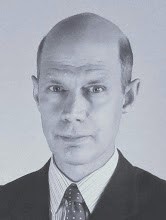
1) Masuzoe Yo'ichi won. However, there is little reason for the Liberal Democratic Party leadership to get all happy about the victory. Masuzoe only just surpassed the total for the two weak anti-nuclear candidates combined, even with 70% of the Liberal Democratic Party voters and greater than 90% of the New Komeito voters voting for him -- at a time when the LDP is eight times as popular as any of the opposition parties.
As for what happens next, Masuzoe has to get along with an LDP-dominated metropolitan legislature. As NHK so kindly reminded Masuzoe and the rest of this morning in the historical review clip prefacing the live studio interview of him, Masuzoe broke away from the LDP in 2009 declaiming, "The LDP's historical role in Japanese politics has come to an end."
Have fun with that.
2) The candidate the Democratic Party of Japan's supported, an ex-prime minister backed by the most popular prime minister of the last 40 years, came in third. Will heads roll at DPJ headquarters? No! Timidity and failure are now party trademarks.
3) The outcomes of Utsunomiya Kenji's candidacy was far from embarrassing. It was also far from victory. Interestingly, he did better the further away one drew from the Metropolitan district's core.
4) Tamogami Toshio received 610,000 votes. That is not enough in the way of a ground force to overthrow the government (not that Tamogami would want to -- in my recollection, Prime Minister Abe Shinzo appointed him head of the country's Air Self Defense Forces). However, it sure makes for a nice base from which to recruit new members for Tamogami's hard core revisionist, paranoid and xenophobic Ganbare Nippon! organization. We should also expect that his rallies, which were merely attracted thousands, will now attract tens of thousands, marching and shouting without police intervention (or Ishiba Shigeru complaining about the noise, I am guessing) right past the Diet buildings.
This was a fundraising and membership drive for Tamogami. The news media, by shying away from hard looks at Tamogami's past and his followers and their intimidating methods for whatever reason, served as silent enablers to this fiasco.
Go try to tell the South Koreans and Chinese this morning about Japan's deeply ingrained pacifism. They will laugh.
Showing posts with label Utsunomiya Kenji. Show all posts
Showing posts with label Utsunomiya Kenji. Show all posts
Monday, February 10, 2014
Sunday, February 09, 2014
What Could Have Been - The Tokyo Governor's Election Edition

Campaign flyers for Tokyo Metropolitan District Governor's election. Left: Hosokawa Morihiro. Right: Tamogami Toshio. Click on image to open in large format.
Well let me tell you 'bout the way she looked
The way she'd act and the colour of her hair
Her voice was soft and cool
Her eyes were clear and bright
But she's not there.
- Rod Argent, "She's Not There" (1964)
This morning, election morning, the residents of the Tokyo Metropolitan District will be waking up to a city covered with a record-breaking but rapidly melting mass of snow. Fitting is it that a brief, intense and yet somehow empty gubernatorial campaign season ends with the metropole stuck beneath in a cold, damp white blanket.
Former Minister of Health, Labour and Welfare Masuzoe Yo'ichi seems guaranteed victory. He managed to campaign without controversy, on what seemed to be the unchallenging proposition, "Yes, I am good enough." And "good enough" seems indeed good enough to prevail, if enough of the electorate tramps out in the snow to the election centers.
Former Prime Minister Hosokawa Morihiro ran on the premise of "Utsunomiya Kenji, the anti-nuclear candidate, is too uninspiring to win" -- which might be true. However, Hosokawa turned out to be even less inspiring Utsunomiya or indeed any reasonably animate human being. Despite the electric jolt of having former prime minister Koizumi Jun'ichiro as buzz creator, Hosokawa's campaign was pretty much dead on arrival. As Okumura Jun pungently put it, "at least the Vasa sailed 1300 meters before it sank, much better than Hosokawa's candidacy." - Link).
Utsunomiya Kenji's candidacy needed more time. This seems weird for a candidate who did not stop running for the governorship even after losing to Inose Naoki in a landslide. In the year after finishing a distant second, Utsunomiya made 130 public appearances, as if he knew he was going to get another shot at the governorship soon. Of all the candidates, only Utsunomiya was ready from the git-go, his posters appearing in my mailbox the first day of the campaign season. As the campaign season progressed and voters could take a look at him his candidacy became more credible -- especially in contrast to Hosokawa's.
However, the presence of two strong anti-nuclear candidates, one supported by the traditional left parties, one not, divides the progressive and nuclear-phobic vote, meaning Utsunomiya seems destined to finish second again.
The candidature of former Air Self Defense Forces Chief of Staff Tamogami Toshio has been a travesty from beginning to end. The man has no business running for a local assembly seat, much less the governorship of the world's mightiest megalopolis. The news media, which should have buried him on the first day under a mountain of ugly facts about him and his followers, instead have at times seemed gleeful enablers of his candidacy. He will end up with an entirely revolting number of votes, most of which will come from voters who know next to nothing about him.
The voters of Tokyo, of course, have a right to feel robbed. In the build up to former governor Inose Naoki's resignation, the parties and the news media speculated about a whole raft of potential candidates, pretty much any of whom could have prevailed against the current core quartet. On the Liberal Democrat Party side, the potential nominees included Environment Minister Ishihara Nobuteru (whose home was literally around the corner from mine way back when in Suginami-ku), Education Minister Shimomura Hakubun (like he would ever give up that portfolio), former Finance Ministry bureaucrat/Koizumi assassin/Mr. Masuzoe and self-image train wreck Katayama Satsuki and former multiple Winter and Summer Olympian Hashimoto Seiko (I am sure Senator Hashimoto much prefers being where she has been, marching at the head of the Japan delegation at the Sochi games). On the Democratic Party of Japan side there was discussion of nominating of Nagatsuma Akira, the bureaucracy's bête noire.
Of December's would be candidates, there was one potential matchup that would have really sizzled. If only the Abe Shinzo LDP had put its reputation on the line by following up on the rumors and nominating Koike Yuriko to be its champion, with the Democrats responding in kind with Ren Ho. That would have been a battle for the ages, pitting sharp looks with sharp minds and even sharper tongues -- and one worthy of the prize that is Tokyo.
Wednesday, February 05, 2014
Very Kind Of Them #16
Over at the East Asia Forum, Peter Drysdale and his esteemed team have published my look at the Tokyo Metropolitan District's electing a new governor.
As of today Masuzoe Yo'ichi seems assured of victory, with Utsunomiya Kenji again coming in second and Hosokawa Morihiro limping in in third place. The scary possibility is that General Tamogami Toshio (Ret.) has a more than a decent chance of finishing in the top three.
Tokyo governor election to spell trouble for the LDP?(Continue Reading)
On 9 February, voters in the richest municipality in the world, the Tokyo Metropolitan District, will elect a new governor. Despite the job's many attractions, Japan's stultified political parties were unable to find candidates within their own ranks. Instead, they have had to line themselves up behind independents — all men (there are no women running) who have either burned their bridges with the established parties or never had any bridges at all...
As of today Masuzoe Yo'ichi seems assured of victory, with Utsunomiya Kenji again coming in second and Hosokawa Morihiro limping in in third place. The scary possibility is that General Tamogami Toshio (Ret.) has a more than a decent chance of finishing in the top three.
Monday, February 03, 2014
Funny Business In The Tokyo Election?
Nuisance candidates, nobodies recruited to run in contests because they have names similar to those of a legitimate candidate, are a recurrent low-level feature of Japanese politics. They can exist because of the quaint custom of requiring voters to write down the names of candidates on ballot papers. Two candidates with similar names would result in a certain percentage of voters mismarking their ballots, with the voter putting down the name of one candidate while intending to vote for the other.
Most of the time nuisance candidates are simply that -- a nuisance -- stealing a few votes away from a candidate, not changing an election's outcome. Their presence can contribute to some eyebrow-raising final election results, though.
There is an argument that nuisance candidacies exist largely in the imagination -- as excuses why a candidate received the vote he or she did. The low number of similarity-of-name problems hobbling the candidacies of LDP candidates indicates, however, that there is actual funny business going on. Their primary goal has been seemingly to prevent Communist Party candidates from capturing the required percentage of the vote necessary for the party to receive a refund of the candidacy deposit (kyotakukin - Link).
Utsunomiya Kenji is likely to receive the 10% of the vote he needs to have his 3 million yen deposit returned to him after next Sunday's Tokyo gubernatorial by-election. That seemingly has not prevented someone -- or a group of someones -- from at least trying to steal votes away from a candidate supported by both the Communists and the Socialists.
Because there is another "Kenji" among the 16 other candidates for governor - a "Himeji Kenji" -- listed as being an individual involved in "building management."
A "Himeji Kenji" would be difficult difficult to mistake for an "Utsunomiya Kenji" most of the time -- even though it pits a "Name of a medium-sized city in Western Japan + Kenji" candidate against as "name of a medium-sized city of Eastern Japan + Kenji" candidate. The kanji would just be too different.
However, for reasons unexplained and yet completely transparent, "Himeji Kenji" chose to have his name listed on the ballot written entirely in syllabic hiragana -- no kanji at all -- and by the purest, most idiotic quirk of the draw, "Himeji Kenji" is in the #1 position of the list of candidates.
Who is in the #2 position, also all by the luck of the draw? Utsunomiya Kenji, written in kanji.
The confusion may cause only a few votes to slide to the nuisance candidate, whose name (ひめじけんじ) is so much easier to write than legitimate candidate's (宇都宮健児). In the case of a ballot marked just "Kenji" in hiragana the vote will be split, each candidate recorded as receiving 1/2 a vote.
Later - In comments, reader 井上エイド informs me that the listing order is not random, as indicated in the above underlined segments. Instead it reflects the order of the receipt of the candidate registration -- which makes the likelihood of "Himeji Kenji" being a stalker all the greater.
Most of the time nuisance candidates are simply that -- a nuisance -- stealing a few votes away from a candidate, not changing an election's outcome. Their presence can contribute to some eyebrow-raising final election results, though.
There is an argument that nuisance candidacies exist largely in the imagination -- as excuses why a candidate received the vote he or she did. The low number of similarity-of-name problems hobbling the candidacies of LDP candidates indicates, however, that there is actual funny business going on. Their primary goal has been seemingly to prevent Communist Party candidates from capturing the required percentage of the vote necessary for the party to receive a refund of the candidacy deposit (kyotakukin - Link).
Utsunomiya Kenji is likely to receive the 10% of the vote he needs to have his 3 million yen deposit returned to him after next Sunday's Tokyo gubernatorial by-election. That seemingly has not prevented someone -- or a group of someones -- from at least trying to steal votes away from a candidate supported by both the Communists and the Socialists.
Because there is another "Kenji" among the 16 other candidates for governor - a "Himeji Kenji" -- listed as being an individual involved in "building management."
A "Himeji Kenji" would be difficult difficult to mistake for an "Utsunomiya Kenji" most of the time -- even though it pits a "Name of a medium-sized city in Western Japan + Kenji" candidate against as "name of a medium-sized city of Eastern Japan + Kenji" candidate. The kanji would just be too different.
However, for reasons unexplained and yet completely transparent, "Himeji Kenji" chose to have his name listed on the ballot written entirely in syllabic hiragana -- no kanji at all -- and by the purest, most idiotic quirk of the draw, "Himeji Kenji" is in the #1 position of the list of candidates.
Who is in the #2 position, also all by the luck of the draw? Utsunomiya Kenji, written in kanji.
The confusion may cause only a few votes to slide to the nuisance candidate, whose name (ひめじけんじ) is so much easier to write than legitimate candidate's (宇都宮健児). In the case of a ballot marked just "Kenji" in hiragana the vote will be split, each candidate recorded as receiving 1/2 a vote.
Later - In comments, reader 井上エイド informs me that the listing order is not random, as indicated in the above underlined segments. Instead it reflects the order of the receipt of the candidate registration -- which makes the likelihood of "Himeji Kenji" being a stalker all the greater.
Subscribe to:
Posts (Atom)