Whew, that was fast.
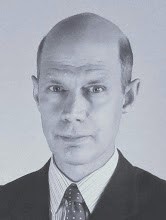
But a single day had to pass after the Obokata announcement of a new and better pathway to producing stem cells, one seemingly consigning to the footnotes the government's 110 billion yen investment in Yamanaka Shinya's induced pluripotent stem cell method, for Education Minister Shimomura Hakubun to announce a plan to dramatically raise both the Riken research center's official status and the Riken staff pay (Link). The Yomiuri Shimbun, perhaps getting a little ahead of itself, speculates that under new guidelines research centers of Riken's new elevated status could offer hot researchers pay packages of USD 1 million per year. (Link - J)
Whatever one may want to say about the Abe Administration, one cannot complain about its moving too slowly and meekly to exploit opportunities to get behind a winning team.
Showing posts with label Yamanaka Shinya. Show all posts
Showing posts with label Yamanaka Shinya. Show all posts
Sunday, February 02, 2014
Friday, January 31, 2014
Damn You Science!

Abenomics is getting the stuffing kicked out of it this week. The Nikkei plunged 500 points yesterday, finishing the day down 376 points (-2.43%), adding to the losses since January 9. The yen has been on a mild strengthening trend, threatening earnings reporting of the big exporters. U.S. Senate Majority leader Harry Reid's rejection of a request for fast-track trade authority has put the Trans Pacific Partnership on hold.
Yesterday, Prime Minister Abe Shinzo's plans for reviving Japan's economy received another blow, this time from a bubbly 30-year old girl geek in pearl earrings.
Stem cell 'major discovery' claimed
BBC News
Scientists in Japan showed stem cells can now be made quickly just by dipping blood cells into acid.
Stem cells can transform into any tissue and are already being trialled for healing the eye, heart and brain.
The latest development, published in the journal Nature, could make the technology cheaper, faster and safer.
The human body is built of cells with a specific role - nerve cells, liver cells, muscle cells - and that role is fixed.
However, stem cells can become any other type of cell, and they have become a major field of research in medicine for their potential to regenerate the body.
Embryos are one, ethically charged, source of stem cells. Nobel prize winning research also showed that skin cells could be "genetically reprogrammed" to become stem cells (termed induced pluripotent stem cells).
Acid bath
Now a study shows that shocking blood cells with acid could also trigger the transformation into stem cells - this time termed STAP (stimulus-triggered acquisition of pluripotency) cells.
Dr Haruko Obokata, from the Riken Centre for Developmental Biology in Japan, said she was "really surprised" that cells could respond to their environment in this way.
She added: "It's exciting to think about the new possibilities these findings offer us, not only in regenerative medicine, but cancer as well."
(Link)
Dr. Obokata's paper was published in Nature, whose account of the discovery (Link) fails to mention that it rejected her original paper. According to last night's NHK report, the reviewer told her that her results, if true, would contradict 100 years of research into cellular biology.
The coverage of Dr. Obokata's new pathway to stem cells has been lavish and fawning (Link - J video) -- which is rather inconvenient for Prime Minister Abe. He already has his stem cell hero, Nobel laureate Yamanaka Shinya. They have a mutually beneficial relationship, Mr. Abe plying Dr. Yamanaka with honors (Link) and cash (Link). Dr. Yamanaka's patented induced pluripotent pathway to stem cells was supposed to be the nucleus of a bio-engineering revolution, a showcase of Japanese prowess in technological and business development -- and Mr. Abe was going to be its munificent and enthusiastic patron.
Now here comes this lacrosse-playing, turtle-keeping, media darling young lab rat with a method of creating stem cells that is cheaper, more efficient, faster and with fewer potential complications than Dr. Yamanaka's.
It must all seem so unfair.
Original image courtesy: BBC
Monday, December 23, 2013
Niseko Bound And Unbound
My New York style maven pseudo-cousin (I hail from Northern California, where family trees are...complicated) A.K. arrives in Tokyo today, years after she promised to drop by. As is the wont of one living on the bleeding edge of fashion and design, she will be trolling Tokyo for a couple of days, meeting with folks too far out even for Harajuku or Shibuya.
After only the briefest of stints in the capital, however, A.K. will be striking out for her real destination: Niseko. (Link)
That A.K., who goes everywhere in search of that which is most rarefied and daring, should leave New York to document the Christmas-into-New Years scene in Niseko means that the Hokkaido ski resort town has arrived. Not that this is any news to the ten thousands of Australians, Hong Kong residents and Singaporeans who have been traveling there each year to pound away at the mountain with their skis and snowboards -- and the tens of thousands of more folks from all over who visit the township in the summer. (Link - J)
The success of Niseko, and the way it has achieved its success through attracting not only foreign visitors but small-scale foreign investment (Link) should make the village the central focus of every national and local government effort to promote tourism and economic growth in rural communities.
However, nowhere will one find anyone in government flogging a "Learn From Niseko!" slogan. That national government bureaucrats would not want to do so is not surprising. But why not the politicians, when it is economic development of any kind that makes people's livelihoods better and Japan's government coffers fuller?
The Abe administration's glaring lack of interest in Niseko's market- and foreign-private-investor sector supported rise (I have never heard any of the economics-linked Cabinet members talk about the place) seems a strong indicator that the administration's free markets and private enterprise rhetoric is just that: rhetoric. Indeed from the way Abe and his folks maneuver, uncharitable eyes would see an administration interested only in economic transformation it can control. Whether it is rewarding multinationals with balance sheet inflating attacks on the value of the yen, coopting new industries though regulatory change and subsidies (the drafting Mikitani Hiroshi of Rakuten and the coddling of Nobel Prize winner Yamanaka Shinya and his pluripotent stem stells) or the promises of regulation-lite enclaves, all whilst dumping longtime partners on the down slope of economic history such as Japan Agriculture and the Post Office, the goal of Abe and the Liberal Democratic Party does not seem to be an internationally open economic environment -- despite the reality that this approach to economic transformation seems to work .Instead, the goal seems the formation of new, dependable and dependent voting blocs.
Which is just about the worst goal for an economics policy imaginable.
After only the briefest of stints in the capital, however, A.K. will be striking out for her real destination: Niseko. (Link)
That A.K., who goes everywhere in search of that which is most rarefied and daring, should leave New York to document the Christmas-into-New Years scene in Niseko means that the Hokkaido ski resort town has arrived. Not that this is any news to the ten thousands of Australians, Hong Kong residents and Singaporeans who have been traveling there each year to pound away at the mountain with their skis and snowboards -- and the tens of thousands of more folks from all over who visit the township in the summer. (Link - J)
The success of Niseko, and the way it has achieved its success through attracting not only foreign visitors but small-scale foreign investment (Link) should make the village the central focus of every national and local government effort to promote tourism and economic growth in rural communities.
However, nowhere will one find anyone in government flogging a "Learn From Niseko!" slogan. That national government bureaucrats would not want to do so is not surprising. But why not the politicians, when it is economic development of any kind that makes people's livelihoods better and Japan's government coffers fuller?
The Abe administration's glaring lack of interest in Niseko's market- and foreign-private-investor sector supported rise (I have never heard any of the economics-linked Cabinet members talk about the place) seems a strong indicator that the administration's free markets and private enterprise rhetoric is just that: rhetoric. Indeed from the way Abe and his folks maneuver, uncharitable eyes would see an administration interested only in economic transformation it can control. Whether it is rewarding multinationals with balance sheet inflating attacks on the value of the yen, coopting new industries though regulatory change and subsidies (the drafting Mikitani Hiroshi of Rakuten and the coddling of Nobel Prize winner Yamanaka Shinya and his pluripotent stem stells) or the promises of regulation-lite enclaves, all whilst dumping longtime partners on the down slope of economic history such as Japan Agriculture and the Post Office, the goal of Abe and the Liberal Democratic Party does not seem to be an internationally open economic environment -- despite the reality that this approach to economic transformation seems to work .Instead, the goal seems the formation of new, dependable and dependent voting blocs.
Which is just about the worst goal for an economics policy imaginable.
Subscribe to:
Posts (Atom)