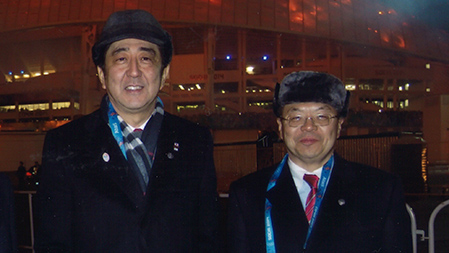
Yesterday's resignation of Democratic Party leader Renho only days after a major DP victory in the Sendai mayoral election, together with the resignation of Cabinet-support sapping Inada Tomomi as Minister of Defense opens up to Prime Minister Abe Shinzo an opportunity to initiate what 24 hours ago would have been considered political suicide: dissolve the Diet and call a House of Representatives election. Indeed, this decision may already have been made -- it certainly makes the Inada resignation more comprehensible ("Why now? She is about to be let go in the Cabinet reshuffle!" was a natural, immediate reaction to yesterday's announcement).
As the results of the July 2 Tokyo Metropolitan Assembly elections have shown, the LDP's recent dominance has been all about the absence of a centrist opposition with a clear pathway to victory. Offer a ruthless alternative, one that leaps over the structural impediments and clientalism designed to return the LDP to power time after time, and the resentment of the voters will lift you to victory. Koike Yuriko, with her amazing ability to tear away the Komeito from its coalition with the LDP at the same time as dog whistling to the Tamogami Right (too quickly forgotten is her calculated dissing of the South Koreans) provided Tokyo voters with just such an alternative.
The obvious decision for Abe, who faces declining poll numbers and obvious factional maneuvering against him, is dissolve the Diet, proclaiming, "I am asking for the judgment of my performance from the voters" or something like that. With the DP leaderless and no national Koike party as yet, the chances are fairly good that Abe's LDP will march to another victory under his command. Perhaps one which fails to return a Constitution revision-capable 2/3rds majority in the House of Representatives for the ruling coalition -- but still a simple LDP majority (take that, Komeito!) in the lower house.
At least, that's the way it looks.
Showing posts with label Abe Cabinet. Show all posts
Showing posts with label Abe Cabinet. Show all posts
Friday, July 28, 2017
Monday, August 15, 2016
On The Meaning Of Yasukuni Today
Over the next few hours a herd of Diet members will march through the confines of Yasukuni Shrine, participating in an annual political and personal rite. The march will offend many inside Japan and many outside of it. The governments of China and South Korea will offer critical comment.
One focus of attention attention today will be on the number of Diet members who show up (we should expect an uptick from last year's numbers as newly elected members of the House of Councillors make their debuts). Another will be a will she/won't she as regards newly-elected governor of Tokyo Koike Yuriko, whose heretofore staunch nationalist posture now clashes with her task of leading a cosmopolitan metropole.
The greatest emphasis, however, will be on visitations by members of the Cabinet. One, Minister of Reconstruction Imamura Masahiro, already paid his visit to the shrine on Thursday the 11th. Minister of Internal Affairs and Communications Takaichi Sanae has vowed to pay a visit today. Minister of Defense Inada Tomomi, who leads a special group within the LDP dedicated to visiting Yasukuni, was suddenly dispatched a study tour of SDF operations in Djibouti. Her gleeful departure from the airport on Friday left little doubt that the purpose of of her trip was the government's trying to keep her away from the shrine on the end-of-war day.
In light of Minister Inada's bubbly egress from Japan it is not inappropriate to revisit a point I have made previously about the August 15 Yasukuni sampai.
For some of the 210,000 or so who visit the shrine on a typical August 15, a visit on the end of war day is an act of REVERENCE, a time to reflect upon and pay tribute to the sacrifices of those died in service to the nation.
For many, including those who arrive in various kinds of dress up – black suits and ties, phony military uniforms or Hawaiian shirts (a favorite of gangster bosses) – the visit to Yasukuni on August 15 is an opportunity to TRANSGRESS, to engage in an activity notable only for being in very bad taste. It is the same delicious sense of being stupid and bad in public, of violating the rules of good society along with one's equally transgressive peers, which is the foundation of the current political support for Donald Trump or the hero worship of Vladimir Putin.
The qualitative difference between the two can be summed up by the difference, in English, between patriotism and nationalism. Patriotism is (and for this definition, I am indebted to my TUJ Summer Semester student T. S.) when one loves one's country enough to die for it. Nationalism is (and for this definition, I am indebted to my TUJ Summer Semester student L. K.) is when one loves one country so much one one hates others for it.
For too many showing up today at Yasukuni today it will be nationalism, not patriotism, which propels them through the torii.
One focus of attention attention today will be on the number of Diet members who show up (we should expect an uptick from last year's numbers as newly elected members of the House of Councillors make their debuts). Another will be a will she/won't she as regards newly-elected governor of Tokyo Koike Yuriko, whose heretofore staunch nationalist posture now clashes with her task of leading a cosmopolitan metropole.
The greatest emphasis, however, will be on visitations by members of the Cabinet. One, Minister of Reconstruction Imamura Masahiro, already paid his visit to the shrine on Thursday the 11th. Minister of Internal Affairs and Communications Takaichi Sanae has vowed to pay a visit today. Minister of Defense Inada Tomomi, who leads a special group within the LDP dedicated to visiting Yasukuni, was suddenly dispatched a study tour of SDF operations in Djibouti. Her gleeful departure from the airport on Friday left little doubt that the purpose of of her trip was the government's trying to keep her away from the shrine on the end-of-war day.
In light of Minister Inada's bubbly egress from Japan it is not inappropriate to revisit a point I have made previously about the August 15 Yasukuni sampai.
For some of the 210,000 or so who visit the shrine on a typical August 15, a visit on the end of war day is an act of REVERENCE, a time to reflect upon and pay tribute to the sacrifices of those died in service to the nation.
For many, including those who arrive in various kinds of dress up – black suits and ties, phony military uniforms or Hawaiian shirts (a favorite of gangster bosses) – the visit to Yasukuni on August 15 is an opportunity to TRANSGRESS, to engage in an activity notable only for being in very bad taste. It is the same delicious sense of being stupid and bad in public, of violating the rules of good society along with one's equally transgressive peers, which is the foundation of the current political support for Donald Trump or the hero worship of Vladimir Putin.
The qualitative difference between the two can be summed up by the difference, in English, between patriotism and nationalism. Patriotism is (and for this definition, I am indebted to my TUJ Summer Semester student T. S.) when one loves one's country enough to die for it. Nationalism is (and for this definition, I am indebted to my TUJ Summer Semester student L. K.) is when one loves one country so much one one hates others for it.
For too many showing up today at Yasukuni today it will be nationalism, not patriotism, which propels them through the torii.
Wednesday, August 03, 2016
Friends Of Shinzo Cabinet, Take Two
For the first three years of his second premiership, Abe Shinzo surprised many with his restraint and balance. His Cabinets, with a few exceptions, displayed with a mixture of scandal-free operations, diligent policy implementation and submersion of factional and personal rivalries. A deft hand at personnel and calendar management was evident.
Which is what is making the runup to today's announcement of a new Cabinet lineup such a downer. There are too many returnees, too many members of the Seiwakai (Mr. Abe's own faction), too many non-experts being placed as window dressing in posts requiring expertise and too few unfledged MPs getting their first shot at leading a ministry. Most of the first timers will be doubly hobbled because they will not even have a ministry behind them. Instead they will be state ministers shepherded around by the Cabinet Office.
Staying in place are Suga Yoshihide at Chief Cabinet Secretary, Takaichi Sanae at General Affairs, Aso Taro at Finance, Kishida Fumio at Foreign Affairs, Shiozaki Yasuhisa at Health/Pensions/Labor and the Komeito's Ishii Keichi at Infrastructure & Tourism.
Suga Yoshihide is the heart and soul of the Abe administration. Lacking the prerequisites for leadership of the modern LDP and without a thirst for the premiership, he returns to 1) being charge of the bureaucracy, including the recruitment and advancement of the top 600 bureaucrats, 2) being in charge of the Cabinet's work flow and 3) being the chief government spokesman.
Enough for anybody, really.
Takaichi and Shiozaki are Abe loyalists. Both served Abe as cabinet ministers in his first term (2006-07). Aso is something an Abe frenemy. He needs to be kept close even though 1) he cannot fundamentally be trusted and 2) his tongue repeatedly creates controversy.
Entering the Cabinet are Inada Tomomi and Seko Hiroshige. Both are more than mere Abe loyalists: they are sycophants. Seko indeed has played Mini-Me to Abe these past three years (Link), traveling with him around the world, making a particular spectacle of himself in dealings with Vladimir Putin. Both are largely amateurs in the policy areas they will be managing.
The inclusion of Inada and Seko in the Cabinet, combined with the retention of Takaichi and the rumored slide of Abe personal retainer Furuya Kenji into the vacant party post of elections chairman sends a distrubing message -- that Abe, post-House of Councillors 2016, is not in a mood to share with other factions and forces within the LDP. Closeness or service to the party president will be rewarded; all others will just have to lump it.
Loyalty is of course important for rulers. However, so are knowledge and perspective - neither of which sycophants and/or personal debtors can provide. Leadership demands that one restrain oneself, not take all one can, convincing those not in the inner circle that the system has rewards, not just humiliations, for them.
Abe's seeming abandonment of magnanimity and restraint has me worried. Abe put together a similar team of loyalist and fellow travelers in 2006, one which the news media dubbed the "Friends of Shinzo" Cabinet. Their calamitous performances individually and as a Cabinet make me worried about their echo today.
[For my earlier take on the proposed new lineup of the LDP secretariat, click here.]
Which is what is making the runup to today's announcement of a new Cabinet lineup such a downer. There are too many returnees, too many members of the Seiwakai (Mr. Abe's own faction), too many non-experts being placed as window dressing in posts requiring expertise and too few unfledged MPs getting their first shot at leading a ministry. Most of the first timers will be doubly hobbled because they will not even have a ministry behind them. Instead they will be state ministers shepherded around by the Cabinet Office.
Staying in place are Suga Yoshihide at Chief Cabinet Secretary, Takaichi Sanae at General Affairs, Aso Taro at Finance, Kishida Fumio at Foreign Affairs, Shiozaki Yasuhisa at Health/Pensions/Labor and the Komeito's Ishii Keichi at Infrastructure & Tourism.
Suga Yoshihide is the heart and soul of the Abe administration. Lacking the prerequisites for leadership of the modern LDP and without a thirst for the premiership, he returns to 1) being charge of the bureaucracy, including the recruitment and advancement of the top 600 bureaucrats, 2) being in charge of the Cabinet's work flow and 3) being the chief government spokesman.
Enough for anybody, really.
Takaichi and Shiozaki are Abe loyalists. Both served Abe as cabinet ministers in his first term (2006-07). Aso is something an Abe frenemy. He needs to be kept close even though 1) he cannot fundamentally be trusted and 2) his tongue repeatedly creates controversy.
Entering the Cabinet are Inada Tomomi and Seko Hiroshige. Both are more than mere Abe loyalists: they are sycophants. Seko indeed has played Mini-Me to Abe these past three years (Link), traveling with him around the world, making a particular spectacle of himself in dealings with Vladimir Putin. Both are largely amateurs in the policy areas they will be managing.
The inclusion of Inada and Seko in the Cabinet, combined with the retention of Takaichi and the rumored slide of Abe personal retainer Furuya Kenji into the vacant party post of elections chairman sends a distrubing message -- that Abe, post-House of Councillors 2016, is not in a mood to share with other factions and forces within the LDP. Closeness or service to the party president will be rewarded; all others will just have to lump it.
Loyalty is of course important for rulers. However, so are knowledge and perspective - neither of which sycophants and/or personal debtors can provide. Leadership demands that one restrain oneself, not take all one can, convincing those not in the inner circle that the system has rewards, not just humiliations, for them.
Abe's seeming abandonment of magnanimity and restraint has me worried. Abe put together a similar team of loyalist and fellow travelers in 2006, one which the news media dubbed the "Friends of Shinzo" Cabinet. Their calamitous performances individually and as a Cabinet make me worried about their echo today.
[For my earlier take on the proposed new lineup of the LDP secretariat, click here.]
Sunday, February 07, 2016
On A House of Representatives Election in April
I hate writing about stupid things...and a Diet dissolution after the passage of the Budget is a very stupid thing.
However, everyone is speculating about an early House of Representatives election, how it will allow Prime Minister Abe to take advantage ofhis excellent Cabinet and party support poll numbers, how it will allow him to renew the employment contracts of his HoR colleagues well before the next rise of the consumption tax, how it will set up a knockout blow to the opposition in the mandated Summer 2016 House of Councillors election.
Assuming he and his party win big...which is an assumption.
The issue is turnout...and holding a snap election in April could increase turnout -- which could lead to a reversal of fortune (though probably not a loss of the majority) in the currently very accommodating House of Representatives.
Losing seats in a House of Representatives election could set up a reversal in the current scenario for the House of Councillors. The operative plan is to ride the current popularity of the Liberal Democratic Party (it is outpolling the main opposition Democratic Party of Japan 4 to 1) to a repetition of the wholesale larceny of seats seen in 2013, driving the DPJ to marginal status and possibly securing enough seats for an assault on the Constitution -- though that latter goal may require the cooperation of Hashimoto Toru's Osaka Ishin no Kai seat holders -- and who in his/her right mind wants to associate/negotiate with the volatile Mr. Hashimoto?
We have to remember Fall 2014, when Mr. Abe blew everyone away with his sudden, duplicitously packaged (Reed, Pekkanen and Scheiner called it a "bait-and-switch") dissolution and general election. The DPJ was caught flat-footed in that instance by the dissolution (as was yours truly). It and the other opposition parties never really got a campaign going before the election day was upon them. Nevertheless, the DPJ managed to claw back seats it had lost in 2012 to Hashimoto's Japan Innovation Party and Watanabe's Your Party, while LDP stayed stuck in place.
This time:
1) the DPJ is not waiting for Abe Shinzo to surprise it: the party apparatus seems to have selected House of Representatives candidates and seems to be sending them out on pre-emptive, campaign-like encounters with the voters.
2) Unlike in 2014, Abe does not have a clear referendum issue in his docket, as he had with delaying of the rise in the consumption tax. Discussion of Trans Pacific Partnership legislation will take months, not weeks. Meanwhile, the shock of the Bank of Japan's latest extreme gesture of imposing negative interest rates seems to have already worn off.
Abe could, of course, announce a further delay of the rise in the consumption tax and make that his new referendum issue for an April dissolution. Somehow the adage "Fool me once, shame on you. Fool me twice, shame on me" pops into the head when I think of Abe trying to pull off the same trick twice.
If we could add to this 3) a return to some of the enthusiasm the electorate used to have for gleeful punishment of the LDP for being the LDP -- an springtime dissolution could be disastrous for Abe Shinzo's hopes of climbing past Nakasone and Koizumi in the list of longest-serving prime ministers.
However, considering the contempt Abe is displaying toward the opposition (check out his introductory paragraphs of his Policy Speech on January 22 or his smart ass replies to question in the Diet regarding a revision of political donation laws), maybe he really is prepped and primed to pull the plug on this Diet come April Fools Day.
Surprise!
However, everyone is speculating about an early House of Representatives election, how it will allow Prime Minister Abe to take advantage ofhis excellent Cabinet and party support poll numbers, how it will allow him to renew the employment contracts of his HoR colleagues well before the next rise of the consumption tax, how it will set up a knockout blow to the opposition in the mandated Summer 2016 House of Councillors election.
Assuming he and his party win big...which is an assumption.
The issue is turnout...and holding a snap election in April could increase turnout -- which could lead to a reversal of fortune (though probably not a loss of the majority) in the currently very accommodating House of Representatives.
Losing seats in a House of Representatives election could set up a reversal in the current scenario for the House of Councillors. The operative plan is to ride the current popularity of the Liberal Democratic Party (it is outpolling the main opposition Democratic Party of Japan 4 to 1) to a repetition of the wholesale larceny of seats seen in 2013, driving the DPJ to marginal status and possibly securing enough seats for an assault on the Constitution -- though that latter goal may require the cooperation of Hashimoto Toru's Osaka Ishin no Kai seat holders -- and who in his/her right mind wants to associate/negotiate with the volatile Mr. Hashimoto?
We have to remember Fall 2014, when Mr. Abe blew everyone away with his sudden, duplicitously packaged (Reed, Pekkanen and Scheiner called it a "bait-and-switch") dissolution and general election. The DPJ was caught flat-footed in that instance by the dissolution (as was yours truly). It and the other opposition parties never really got a campaign going before the election day was upon them. Nevertheless, the DPJ managed to claw back seats it had lost in 2012 to Hashimoto's Japan Innovation Party and Watanabe's Your Party, while LDP stayed stuck in place.
This time:
1) the DPJ is not waiting for Abe Shinzo to surprise it: the party apparatus seems to have selected House of Representatives candidates and seems to be sending them out on pre-emptive, campaign-like encounters with the voters.
2) Unlike in 2014, Abe does not have a clear referendum issue in his docket, as he had with delaying of the rise in the consumption tax. Discussion of Trans Pacific Partnership legislation will take months, not weeks. Meanwhile, the shock of the Bank of Japan's latest extreme gesture of imposing negative interest rates seems to have already worn off.
Abe could, of course, announce a further delay of the rise in the consumption tax and make that his new referendum issue for an April dissolution. Somehow the adage "Fool me once, shame on you. Fool me twice, shame on me" pops into the head when I think of Abe trying to pull off the same trick twice.
If we could add to this 3) a return to some of the enthusiasm the electorate used to have for gleeful punishment of the LDP for being the LDP -- an springtime dissolution could be disastrous for Abe Shinzo's hopes of climbing past Nakasone and Koizumi in the list of longest-serving prime ministers.
However, considering the contempt Abe is displaying toward the opposition (check out his introductory paragraphs of his Policy Speech on January 22 or his smart ass replies to question in the Diet regarding a revision of political donation laws), maybe he really is prepped and primed to pull the plug on this Diet come April Fools Day.
Surprise!
Monday, November 30, 2015
Oh King Of Awful Majesty!

Rex tremendae majestatisPrime Minister Abe Shinzo is in Paris today, a participant in the mass gathering of world leaders for the COP 21. The good and the mighty will come together, maybe, to map out the next step in our saving of ourselves from the consequences of our lifestyles and organizations, at least as far as climate change goes.
qui salvandos salvas gratis,
salva me, fons pietatis!
"King of Awful Majesty
You who save the worthy without charge,
save me, oh font of mercy!"
[Link - video]
While Mr. Abe is likely to be still asleep at this hour, a brilliant morning awaits him politically. The latest Kyodo News poll is out and it is a stunner for the PM and his allies.
First is the baseline Cabinet support number. It has risen a solid 3.5 points, continuing the Abe Cabinet's popularity's steady climb out its August nadir. Support for the Abe Cabinet now stands at 48.3% of all respondents, with 40.2% of respondents not supporting (down 0.8% from last month). Only 11% of the voters remain on the sidelines (down 2.7% since last month).
Q: Do you support the Abe Cabinet?Asked the reason why they support the Cabinet, a staggering 36.5% of the respondents now say it is because "There is no other appropriate person but Abe Shinzo." This represents a rise in this figure of 8.4 points over a single month. At no time in recent memory has such a large fraction of the electorate enthusiastically/resignedly seen no alternative to the current leader.
Support 48.3%
Do not support 40.4%
Don't know/can't say 11.3%
Emphasizing the "One Abe to Rule Them All" theme was the movement in favor of the Liberal Democratic Party over this last month -- which is there was no such movement.
Here are the support figures for the parties, both from the survey over this weekend and the one conducted October 7-8 (in parenthesis).
Q: Which party do you support?
LDP 36.7% (36.8%)
Komeito 4.2% (3.6%)
DPJ 10.2% (10.4%)
Communist 4.2% (4.2%)
Innovation 1.1% (4.4%)
Osaka Ishin 4.4%
DSP 0.8% (1.2%)
Other parties 1.4% (1.3%)
Undecided 36.5%% (36.1%)
Osaka Ishin, fresh off its triple victory in the prefectural, mayoral and assembly elections on November 22, has siphoned off the support from the rump Innovation Party (no surprise here) and some further votes from...somewhere else (time will tell). While it has been tempting to write off Osaka Ishin as a minor regional force, with no hope of a national reach anytime soon, attracting 4.4% support in a national poll should shake up some quarters as it surpasses the support for the indubitably national Communist and Komeito parties.
The DPJ secretariat should also be breathing a sigh of relief today, as the poll shows that the bitter and pointless attempt by DPJ conservatives to unseat the moderate party leadership, revealing the ideological divisions within the main opposition party, has not cost the party much of its support. Yet.
In addition to basking in the glow of a near 50% approval rating that is his alone, Abe Shinzo will likely be beaming from the results of the last question of the survey. The responses seemingly refute the concept that Japanese voters are risk-averse when it comes to deploying the Self Defense Forces.
Q: Do you agree with or oppose the dispatch of the Self Defense Forces to the South China Sea to engage in 'cautionary surveillance' (keikai kanshi) of China's building of artificial islands?"
Agree with 52.7%
Oppose 39.9%
No opinion/not sure 7.4%
If you had told me yesterday 52% of Japanese voters are ready and willing to send the SDF into a confrontation with China, I would have thought you daft. Today I obviously would not think you daft...but I am not convinced the Japan normalization partisans should be toasting each other in victory. A telephone poll by definition does not have the respondents looking at a map. For those on the main islands of Japan, the difference between the East China Sea and the South China Sea could be kind of fuzzy. The Senkakus and the Spratlys are both in "the south" at least as seen from everywhere in Japan except Okinawa, and there both in a "China Sea" of a sorts. Asking the voters would they be willing "to have the SDF sailing in between increasingly militarized artificial islands lying in between the Philippines and China" might have generated a different percentage of approving respondents.
Whatever the reality of the level of support for provocative peacemaking, Mr. Abe has reason to look at the mirror today, turn his head to the right, and sigh:
"Perfect."
Image: Sunrise from atop Mitake-san, looking toward Yokohama and the Chiba Peninsula. Ome City, Tokyo Metropolitan District, 28 November 2015.
Image courtesy: MTC
Sunday, November 01, 2015
That Feeling Of Recursion
How important is resolution of the issue of the move of the functions of the Marine Corps Airbase Futenma to...anywhere but where they are now? On Friday, Prime Minister Abe Shinzo presided over a cabinet meeting. He had to do so because Chief Cabinet Secretary Suga Yoshihide, holder of position in charge of Cabinet meetings, is in Guam reviewing sites and facilities being prepared for the relocation of fraction of the U.S. Marine Corps forces currently based at Futenma. Though it was not much remarked in the reporting on the Suga visit (Link) Friday's meeting marked the first time in 19 years that a PM had to fill in for an absent chief cabinet minister.
When and what was the occasion of the last time a CCS was out of town and the PM had to direct a cabinet meeting? When Chief Cabinet Secretary Kajiyama Seiroku was in Okinawa, negotiating (successfully, as it turned out) Nago City's acceptance of being the host of a Futenma Replacement Facility (FRF). Prime Minister Hashimoto Ryutaro presided over that cabinet meeting, a seeming eon ago (Remember the press conference of Hashimoto, with U.S. Ambassador Walter Mondale standing behind him, announcing the move of the Marines base from Futenma to Nago within five or at most seven years?) (Link -J)
Speaking of the move to Nago, the Ministry of Land, Infrastructure, Transport and Tourism approved a resumption of the groundwork for the FRF, overriding Okinawa Governor Onaga Takeshi's revocation of the initial construction permit (Link). While a logical move, the ministry's action represents further erosion of the guarantees of local autonomy, found in Articles 92, 94 and 95 of the Constitution. (Link)
Since the candidates supported or provided by Liberal Democratic Party of Abe Shinzo lost, in order, the Nago City election, the Okinawa Governor's election and all of Okinawa House of Representatives seats to anti-base construction candidates, Thursday's resumption of construction is a failure of the concept of local, democratic control.
When and what was the occasion of the last time a CCS was out of town and the PM had to direct a cabinet meeting? When Chief Cabinet Secretary Kajiyama Seiroku was in Okinawa, negotiating (successfully, as it turned out) Nago City's acceptance of being the host of a Futenma Replacement Facility (FRF). Prime Minister Hashimoto Ryutaro presided over that cabinet meeting, a seeming eon ago (Remember the press conference of Hashimoto, with U.S. Ambassador Walter Mondale standing behind him, announcing the move of the Marines base from Futenma to Nago within five or at most seven years?) (Link -J)
Speaking of the move to Nago, the Ministry of Land, Infrastructure, Transport and Tourism approved a resumption of the groundwork for the FRF, overriding Okinawa Governor Onaga Takeshi's revocation of the initial construction permit (Link). While a logical move, the ministry's action represents further erosion of the guarantees of local autonomy, found in Articles 92, 94 and 95 of the Constitution. (Link)
Since the candidates supported or provided by Liberal Democratic Party of Abe Shinzo lost, in order, the Nago City election, the Okinawa Governor's election and all of Okinawa House of Representatives seats to anti-base construction candidates, Thursday's resumption of construction is a failure of the concept of local, democratic control.
Thursday, October 22, 2015
My Morning News for 22 October 2015
What has caught my attention:
- Still slack-jawed with amazement am I at the Government of Japan's seemingly brand new approach to the decision of the International Court of Justice on the so-called scientific whaling program, outlined in this pdf available on the Ministry of Foreign Affairs website: http://www.mofa.go.jp/files/000104046.pdf
For a government that has until this point claimed the moral high ground in disputes, calling for a strict adherence to international law (Link) the Abe administration claim that the ICJ does not have jurisdiction anymore over research whaling is mind-blowing. Taking disputes to the ICJ is a consensual process: both states accede adjudication willingly, under the presumption that whatever the Court's decision will be, the states will abide by it.
Unsurprisingly, the Australian Government is stunned by the GOJ's move (Link 1 and Link 2). What can the government of Australia do? Rescind the just agreed-upon visit by the Prime Minister (Link)? Downgrade security coordination? Mess with the submarine acquisition?
As for the Abe Government/MOFA, what the heck do they think they are doing? Is not strict adherence to the rule of law the cudgel of choice for bashing the People's Republic of China for that country's actions in the East China and South China Seas? Or does the rule of law only apply to territorial disputes (a possible reading of Abe's address to the U.S. Congress, cited above)?
- Party time at the party headquarters!
Masterful is the Liberal Democratic Party's latest gambit on a two-tiered system for the legally-mandated rise in the consumption tax from 8% to 10% on 1 April 2017: have the list of those items eligible for a lower tax rate expand incrementally (Link - J).
Absolutely gob-smacking brilliant! Have a tiny list of items at the outset, simplifying the passage of the necessary adjustment legislation through the upcoming 2016 Regular Session of the Diet, allowing the coalition partner Komeito to keep its promises of a lower tax rate for household necessities made to the Married Women's Division of the Sokka Gakkai. Include the new, lower tax rate as a part of the package of goodies coalition candidates can crow about in their House of Councillors campaigns next summer. Then, from here until eternity, have representatives of companies and industrial & consumer groups lounging around in the hallways of the LDP, begging for inclusion of their items in the list of "household necessities."
- I wrote a short piece for the FCCJ's Number One Shimbun arguing that Abe Shinzo is likely to avoid visiting Yasukuni for the rest of his term in office. My reasoning? Abe has found something even better than Yasukuni. (Link)
I have worried that Abe can reverse himself, that in the giddy atmosphere of Abe's unchallenged reelection as president of the LDP and the continuing lack of public interest in the opposition parties he might pay a visit to Yasukuni out of sheer adolescent exhilaration.
My worries were considerably lessened by Hagi'uda Ko'ichi's declaration to the Nikkei that in the name of regional peace Abe need not go to Yasukuni (Link). If Hagi'uda, the Yasukuni bagman (Link) whom I have characterized as Abe's "Id" (in the Freudian sense, with Abe as the Ego and Suga as the Super-Ego) is now on board with Abe's avoiding Yasukuni in the interests of diplomacy, then the deal is pretty much done.
- Still slack-jawed with amazement am I at the Government of Japan's seemingly brand new approach to the decision of the International Court of Justice on the so-called scientific whaling program, outlined in this pdf available on the Ministry of Foreign Affairs website: http://www.mofa.go.jp/files/000104046.pdf
For a government that has until this point claimed the moral high ground in disputes, calling for a strict adherence to international law (Link) the Abe administration claim that the ICJ does not have jurisdiction anymore over research whaling is mind-blowing. Taking disputes to the ICJ is a consensual process: both states accede adjudication willingly, under the presumption that whatever the Court's decision will be, the states will abide by it.
Unsurprisingly, the Australian Government is stunned by the GOJ's move (Link 1 and Link 2). What can the government of Australia do? Rescind the just agreed-upon visit by the Prime Minister (Link)? Downgrade security coordination? Mess with the submarine acquisition?
As for the Abe Government/MOFA, what the heck do they think they are doing? Is not strict adherence to the rule of law the cudgel of choice for bashing the People's Republic of China for that country's actions in the East China and South China Seas? Or does the rule of law only apply to territorial disputes (a possible reading of Abe's address to the U.S. Congress, cited above)?
- Party time at the party headquarters!
Masterful is the Liberal Democratic Party's latest gambit on a two-tiered system for the legally-mandated rise in the consumption tax from 8% to 10% on 1 April 2017: have the list of those items eligible for a lower tax rate expand incrementally (Link - J).
Absolutely gob-smacking brilliant! Have a tiny list of items at the outset, simplifying the passage of the necessary adjustment legislation through the upcoming 2016 Regular Session of the Diet, allowing the coalition partner Komeito to keep its promises of a lower tax rate for household necessities made to the Married Women's Division of the Sokka Gakkai. Include the new, lower tax rate as a part of the package of goodies coalition candidates can crow about in their House of Councillors campaigns next summer. Then, from here until eternity, have representatives of companies and industrial & consumer groups lounging around in the hallways of the LDP, begging for inclusion of their items in the list of "household necessities."
- I wrote a short piece for the FCCJ's Number One Shimbun arguing that Abe Shinzo is likely to avoid visiting Yasukuni for the rest of his term in office. My reasoning? Abe has found something even better than Yasukuni. (Link)
I have worried that Abe can reverse himself, that in the giddy atmosphere of Abe's unchallenged reelection as president of the LDP and the continuing lack of public interest in the opposition parties he might pay a visit to Yasukuni out of sheer adolescent exhilaration.
My worries were considerably lessened by Hagi'uda Ko'ichi's declaration to the Nikkei that in the name of regional peace Abe need not go to Yasukuni (Link). If Hagi'uda, the Yasukuni bagman (Link) whom I have characterized as Abe's "Id" (in the Freudian sense, with Abe as the Ego and Suga as the Super-Ego) is now on board with Abe's avoiding Yasukuni in the interests of diplomacy, then the deal is pretty much done.
Friday, October 16, 2015
Flaming Cabinet Pick Threat Level: DISCO INFERNO
「パンチより パンツが先に 入閣し」 #パンツ高木 川柳 pic.twitter.com/a26W1pUTi4— ヒルコ 蛭義 (@damdamj) October 15, 2015Panchi yori
Pantsu ga saki ni
nyukaku shi
Before "The Punch"
It is "The Pants" ("the underpants")
Who got in the Cabinet first!
- Tweeted senryu by @damdamj, retweeted by Senator Yamamoto Taro
------------------------
Most of the time the push-off replies "No Comment" and "I will not dignify that question with an answer" are the politician's friends.
There are some questions, though, which a politician has to answer with a direct "Yes" or "No" and let the chips fall as they may.
This afternoon, newly minted Minister of Reconstruction Takagi Tsuyoshi, shown below seated beside the Prime Minister at today's 14th meeting of the Reconstruction Promotion Council (this is a just-released tweet from the Prime Minister's Residence) was confronted by one such question. Rather than surrender to the inevitable, he reached into the grab bag of push-off answers and let fly with one of the politer of the formulaic phrases:
「今日はそういった場所ではございませんので、お答えを控えさせていただく」 (Link - J)
"Today we are not at a place where we should be talking of such things so I should like to forego responding to your question at this time."

Minister Takagi Tsuyoshi
Unfortunately for Minister Takagi, the question being yelled at him at the Prime Minister's Residence was in regards certain allegations of misconduct of a rather peculiar kind. These allegations have been prominent in the headlines of the scandal sheets and the weekly magazines this week.
What was the question?
"Minister Takagi, it is true you were arrested 30 years ago for breaking into a young woman's home and stealing her underwear?"
Hope as one might, plead for delay as one might, there is no wiggle room here, so to speak.
This was really a "Yes" or "No" moment for Takagi.
Blew it he did.
By choosing to evade the question, he has instead opened the floodgates for what is a rising tide of ridicule.
Will the brand new minister's increasingly likely resignation damage the Abe administration? No, not significantly.
Will the resignation of a minister only 10 days after his installation increase pressure on Prime Minister Abe to reverse his present course and instead schedule an Extraordinary Diet Session for sometime in the last two months of this year? Possibly.
As for the above senryu it is a play on the words panchi ("punch") and pantsu ("underpants") which are separated by a single space in the table of the kana syllabary. "The Punch" referred to is the fist of Liberal Democratic Party Senator and former Ground Self Defense Forces Colonel Sato Masahisa in the face of Democratic Party of Japan Senator Konishi Yukihiro, a misleading image made infamous by The New York Times. (Link)
Colonel Sato, despite being one of the Prime Minister's favorite Senators and invaluable in the campaign to push (literally, in the final showdown) the security legislation through the House of Councillors, was not rewarded for his service with a cabinet post.
Saturday, September 05, 2015
Ooops, I...
...have taken another major project that will keep me from posting regularly.
This time I will be hardly in evidence for just over a month. Inshallah.
Too bad, really. With the end of the longest Diet extended session ever; Abe's reelection as president of the Liberal Democratic Party; new parties emerging out of yet another Hashimoto Toru's ego-driven pile up; an emerging knot of schooled protest cadres taking on the security legislation and ultra-right wing harassment; and the likelihood of a Cabinet Reshuffle in October, the tightly-wound world of Japanese politics is about to a little looser.
Meanwhile, I do not think I ever acknowledged Dr. Jeffrey Lewis publishing an excerpt from an email I wrote (publishing it without checking with me first -- which is OK with me, but only because he is the one who did it) in one of his astonishingly intelligent contributions to Foreign Policy. (Link)
This time I will be hardly in evidence for just over a month. Inshallah.
Too bad, really. With the end of the longest Diet extended session ever; Abe's reelection as president of the Liberal Democratic Party; new parties emerging out of yet another Hashimoto Toru's ego-driven pile up; an emerging knot of schooled protest cadres taking on the security legislation and ultra-right wing harassment; and the likelihood of a Cabinet Reshuffle in October, the tightly-wound world of Japanese politics is about to a little looser.
Meanwhile, I do not think I ever acknowledged Dr. Jeffrey Lewis publishing an excerpt from an email I wrote (publishing it without checking with me first -- which is OK with me, but only because he is the one who did it) in one of his astonishingly intelligent contributions to Foreign Policy. (Link)
Wednesday, September 02, 2015
Tokyo On File* - The Latest On Apologies (For Your Listening Pleasure)
As is our wont, Timothy Langley and I sat down and talked about a hot topic in Japanese politics. Last week we reviewed the Cabinet Statement on the 70th Anniversary.
The video is hard for me to look at due to my necktie's being askew. So I cannot recommend a viewing. However, the conversation is decidedly listenable, except for when I call Chairman of the National Safety Commission Yamatani Eriko "Minister Nakatani." Nakatani Gen is this blessed land's Defense Minister.
For those wanting to read about the Statement, I cannot recommend any analysis more highly than Kent Calder's essay reproduced in The Japan Times. He homes in on the most important failure: the Statement's lack of agency (Link). Interestingly this week Kitaoka Shin'ichi, the second-in-command of the 21st Century Commission that provided the prime minister with a framework for the Statement, complained that he wanted the Statement to be in the first person rather than in the passive voice. (Link - J)
The video is hard for me to look at due to my necktie's being askew. So I cannot recommend a viewing. However, the conversation is decidedly listenable, except for when I call Chairman of the National Safety Commission Yamatani Eriko "Minister Nakatani." Nakatani Gen is this blessed land's Defense Minister.
For those wanting to read about the Statement, I cannot recommend any analysis more highly than Kent Calder's essay reproduced in The Japan Times. He homes in on the most important failure: the Statement's lack of agency (Link). Interestingly this week Kitaoka Shin'ichi, the second-in-command of the 21st Century Commission that provided the prime minister with a framework for the Statement, complained that he wanted the Statement to be in the first person rather than in the passive voice. (Link - J)
Thursday, August 27, 2015
Abe Shinzo's Secrets

About three weeks ago Timothy Langley and I had a long YouTube conversation about the implications of the Wikileaks release of July 31 (Link). The release itself featured rather innocuous information regarding Japanese trade and climate change thinking in 2007. What was stunning was the information demonstrated that the United States' National Security Agency was intercepting, translating and then disseminating the transcripts of the telephone calls of Japanese government officials in Tokyo.
At that time of our conversation Mr. Langley told me that despite efforts of the current governments to downplay the significance of this spying, the story was not going away.
Looks like he was right:
Abe Asks U.S. to Investigate Alleged NSA Spying on Japanese GovernmentIt is a rare instance where the United States feels a need to express its regrets to a leader of Japan. Abe, however, has received an apology of sorts (Mr. Abe now knows what it is like to hear "Regret" when what one wants to hear is "Sorry") both from U.S. Vice President Joe Biden (Link) and now from President Obama himself.
Wall Street Journal
TOKYO—Prime Minister Shinzo Abe on Wednesday asked U.S. President Barack Obama to investigate alleged spying by the National Security Agency on the Japanese government and companies, Mr. Abe’s spokesman said.
Documents posted online by WikiLeaks last month suggested that conversations involving government officials, central bankers and Japanese companies had been secretly intercepted by the U.S. agency. In a phone conversation Wednesday morning Tokyo time, Mr. Obama expressed regret that the issue has caused trouble for Mr. Abe and the government, according to Chief Cabinet Secretary Yoshihide Suga...
(Link)
During the recording of the podcast on August 7, I thought the issue with legs would be the hunt for the door openers. The extent and depth of the infiltration into the communications of government officials, particularly the extraordinary number of telephone numbers tapped inside Japan's Ministry of Finance, indicated full cooperation, either knowing or unknowing, of Japanese entities and individuals. My thought was that the current Abe administration would demand to know who allowed the NSA access to Japan's communications networks or even physically into the ministries and the Prime Minister's Residence, that these collaborators or dupes might be reprimanded or even punished.
My thinking now, in light of Prime Minister Abe and President Obama having a conversation on a subject that should have been closed by the previous conversation with Vice President Biden, is that the prime minister has a much bigger worry on his mind.
The Wikileaks release featured analyses of internal communications from Abe's first term in office. The list of high priority targets includes "EXEC SCY TO CHIEF CAB SCY" - the executive secretary to the chief cabinet secretary -- meaning that the U.S. was listening in on the calls made by the executive secretary of the person who is the operations command center of Japan's bureaucracy, the Cabinet and the Prime Minister's staff.
Bad enough news for the alliance-- one has to have a serious attitude problem to dare tap such a nexus of power in a country that supports the U.S. in almost every instance (not to mention figures out how to pay for a lot of what the U.S. wants to do).
The timing of the tapping activity and closeness to the center of the intercepts, however, raises a searing question for Abe: what, if not everything, the United States government knows and has shared about what transpired inside the Prime Minister's Residence in late July, August and early September, 2007.
The facts that his Diet colleagues do not know.
The facts that his supporters do not know.
The facts that possibly only his closest aides, Aso Taro and Yosano Kaoru know.(Link)
The sports newspapers and the weeklies accounts of Abe's last weeks in office in 2007 were pretty wild and woolly. Abe has been insulated from the repercussions of these "revelations," however, because everyone knows the sports newspapers and weeklies will print anything, no matter how implausible, misrepresented or just plain made up.
But if the U.S. was listening in to the calls being made by Yosano's executive secretary, then some folks, maybe a lot of folks, might just know...the truth.
------------------------------------
Only semi-prophetic was I on Monday. While I did guess correctly that a close associate of the prime minister would claim the Abe administration's prudent stewardship of the Japanese economy was the reason for the sudden surge in the value of the yen, I missed guessing the identity of the perpetrator. I had hoped the claimant would be LDP Political Research Council Chair Inada Tomomi. Instead, it was the equally close Friend of Shinzo, Economic Revitalization Minister Amari Akira, who checked in with the fundamental stability claim (Link).
Image courtesy: Prime Minister's Residence
Tuesday, August 25, 2015
Where We Go After Down

US Dollar versus JPY over the last eleven hours
After a Monday of global stock market instability and collapse the Abe government will be facing questions about what it can do to protect Japan’s economy from damage. The Cabinet will have its regularly scheduled Tuesday meeting. Afterward media organizations will ask Chief Cabinet Minister Suga Yoshihide what if anything the Abe government intends to do to restore confidence in Japanese markets. Prime Minister Abe likely faces as similar fate in the Diet, the opposition homing in on the unfair but entirely reasonable question of what he as prime minister will order his subordinates to do.
The answer Suga and Abe will not own up to is that there is virtually nothing the Abe government can do except watch the screens with dread. This government is tapped out when it comes to either deploying cash or inspiring confidence. Increased fiscal stimulus was already in the cards for this autumn; it is now a virtual certainty. Such fiscal stimulus is designed, however, to cope with the heretofore obstinate refusal of the Japanese economy to respond to the ministrations of the Bank of Japan, not to quell current market turmoil.
Liberal Democratic Party hacks will be tempted to argue that the public need not be worried, that equities markets are wrong and Japan's future is bright because of the yet-to-be realized growth effects of the Third Abenomics or robotics or some other such rigmarole. I am waiting for some peppy puppy (please, please, please let it be Liberal Democratic Party Policy Research Council Chair Inada Tomomi) to say, "Just look at how much the yen strengthened yesterday! It is a sign that global investors appreciate the opportunities and stabilities created by the Abe program!" That the effect any of the major proposals of the Third Arrow would be deflationary, exacerbating the market's fears about growth, will not trouble any part of the soft squishy heads of the Abe True Believers, of course.
Had we a ruthless, determined opposition in this blessed land, television shows this morning would feature street smart and mean-looking (yes, I am thinking of Renho) MPs complaining that the Japanese government would have the capacity to deploy assets to calm markets, making Japan the global leader Abe Shinzo always blabs about, a except of course that Team Abe robbed the national piggy bank to inflate the profits of its zaikai and construction industry friends.
That Japan lacks a serious opposition means of course the country will not be tying itself into knots, each side blaming the other. Of course it also means that the country will generate zero ideas on what it is that the government must do, as members of the parties in power will merely keep repeating the idiot mantra, "Markets go up. Markets go down. The important thing is to not panic. Wait for the government's current policies to bear fruit."
Image courtesy: Yahoo! Finance Japan
Saturday, August 15, 2015
Will Abe Take A Trip Down Yasukuni Lane This Day?

Yasukuni Shrine seen from Hosei University. 25 July 2015.
Will Abe Shinzo make the short trip to Yasukuni today? The smart money says, "No."
However, given
- that yesterday's Cabinet Statement contained all the magic words the international community wanted to hear, if without the tone or sense of agency the international community wanted,
- that the security legislation and the Tokyo 2020 Olympics have become embarrassments
- that Xi Jinping is not in a position to be open to chummy photo opportunities with Abe thanks to the tanking the Chinese markets and insecurity among the cadres engendered by the spreading anti-corruption campaign, meaning the loss or gain of a summit is not in play,
- that the construction plans for a Henoko replacement facility for USMC Air Base Futenma have come undone
- that Abe himself faces an LDP party leadership election next month,
I am willing to entertain the notion that the barriers preventing Abe from paying a surprise visit today are a lot lower than most analysts are willing to admit.
True, the chances of such a visit setting off serious anti-Japanese rioting in South Korea and China are not zero. Japanese companies, especially the big names, would likely suffer significant property damage and business losses. Given that Abe's second run for the presidency of the Liberal Democratic Party and second turn in the premiership are largely seen as having been framed as a quid pro quo with with the barons of Big Business, the chances for a provocative Yasukuni visit would seem slim.
And he said on August 12 that he won't go (Link - J).
Then again, despite many warnings not to, Abe paid his visit on December 26, 2013...

Yasukuni Shrine, 15 August 2014.
Tuesday, May 05, 2015
Very Kind Of Them: Tokyo On Fire, Episode 10 - Nuclear Power in Japan
Nancy Snow was away two weeks ago, leaving Timothy Langley and me to carrying out a males-only exchange of views on Japan's nuclear reactor restarts, power plant siting issues, the Fukui injunction against the restart of the Takahama reactors, the US-Japan security relationship, the April local elections and the landing of a drone on the roof of the Prime Minister's Residence.
Tuesday, April 14, 2015
Hitting The Road

Playground (2015). Image by MTC.
Why should I care?
Why should I care?
- Pete Townsend, "5:15" (1973)
There's no success like failure
and failure's no success at all.
- Bob Dylan, "Love Minus Zero/No Limit" (1965)
It was not a terribly good weekend for Democratic Party of Japan leader Okada Katsuya. Liberal Democratic Party/Komeito coalition-backed candidates won 10 out of 10 governor seats up for election. The LDP came out as the top seat holder in 40 of the 41 prefectural assemblies holding elections, the sole blot on the perfect record being in Osaka Prefecture. The DPJ finished out the day with fewer total seats in the both the prefectural and the 17 specially designated city assemblies. And to top it off someone hacked Okada's personal Twitter feed on Saturday, generating a flood of spam tweets to all of those following his feed.
The LDP did all right. Its candidates certainly won the governorships. However, only two of the races -- Hokkaido and Oita -- were competitive. In truth, not even the Oita race was competitive, as in former Socialist bastion Oita former Socialist prime minister Murayama Tomiichi campaigned for the LDP-Komeito candidate, an old friend of his. The LDP raised the number of prefectures where it holds an outright majority in the assembly from 21 to 24. It finished the day with 50.48% of all prefectural seats nationwide. On the minus side, the LDP's total number of prefectural seats fell by 43 to 1153.
The big winners were the Japan Innovation Party, the Komeito and the Communists. The JIP increased its national total in the prefectures from 62 to 70 seats and won a plurality if not a full majority of the seats in the Osaka prefectural assembly. The Komeito won every seat it contested on the prefectural level, going from 169 seats to 169 seats (demonstrating once again the party leadership's knowledge of its voters) and raised its seat totals in the specially designated cities from 172 seats to 174. Indeed only one Komeito candidate failed to win a seat on Sunday, coming up short in a race for a seat in the Osaka City assembly.
The Communists, in many races the only opposition candidate, had a field day. The JCP blasted from 75 total seats to 111 in the prefectural assemblies. The JCP now owns at least one seat in every prefectural assembly, including the six not holding election this cycle - a historic first for the party. In the specially designated city assemblies, the JCP moved past the DPJ as the #3 party in the nation, raising its seat totals in these cities from 103 seats to 136 (the LDP is #1 with 301 seats, the Komeito #2 with 174).
All the wins and losses, however, come with a caveat: voter turnout was terrible. New record lows for voter turnout were set in 38 of the 41 prefectures holding assembly votes. In the specially designated city assembly races, 12 of 17 suffered new record low turnout. On average, voter turnout in the gubernatorial elections was down over 5% from turnout in 2011, the one big exception being the competitive race in Hokkaido. However, even in the Hokkaido gubernatorial race turnout declined, from 59.62% to 59.46%.
Average turnout for prefectural assembly (brown line) and gubernatorial (blue line) elections since 1947. Image courtesy Tokyo Shimbun.

Bad turnout of course favors the parties with strong with strong internal mechanisms guaranteeing dutiful voting by its members and clients. It disfavors, and indeed is a symptom of the weakness of, parties that rely attracting floating voters for their victories.
Hence, the DPJ did as well as it should have done -- which is not well at all.
There is a serious amount of specious framing going on of the results as well. News accounts have portrayed the DPJ's losses in the prefectural assemblies as devastating, with the Yomiuri Shimbun crowing:
In prefectural assembly elections in 41 prefectures, the total number of seats won by DPJ-backed candidates fell 82 from the previous elections to 264.
Of course, the Yomiuri's editors know full well that the DPJ of 2011 is not the DPJ of today. The DPJ that ran candidates in 2011 was the big tent DPJ, before the departures of Ozawa Ichiro and friends over the consumption tax rise and the skedaddling of the mostly Kansai-based opportunists to Hashimoto Toru's Isshin no kai.
A look at the numbers

Image courtesy: NHK News
shows that the DPJ was defending only 276 seats on Sunday. The party's candidates won 264 prefectural seats, a decline of -4.3% in the national total. The purported big winning LDP (for that is the way the Yomiuri characterized the LDP's results in its English-language edition) was defending a 1196 seats total. Finishing with 1153 means a decline of -3.6% nationally.
Not that dramatic a difference if you ask me.
The results on Sunday, however, do demonstrate the hurdles Okada-san and the DPJ have to overcome in order to return the party to good graces with the voters, if not with political reporters and editors:
- get people excited about voting again (like I said in this article)
- dump the chase-a-scandal-a-day tactics in the Diet. Spending time grilling cabinet members about their political funding organizations did not make the DPJ more popular this winter. The days of haranguing and the decidedly minor revelations did not affect the public opinion polling of the Cabinet or the LDP. (The videos of the latest NHK poll results are available here and here.)
The latter is easy. The former, however, is hard. The DPJ rode in blissful ignorance on the escalator to power in 2009, propelled upward by a 25 year cycle of "Anyone But The LDP" public revulsion at Japan's ruling party. When being just "anyone else" is sufficient for victory, one can be, as the DPJ was in 2009, just a pale-lipped copy of the LDP, with the LDP's political DNA still visible beneath the overlay of an opposition party.
We now live in an era of "One Strong, Many Weak" (ikkyo tajaku). A superpowerful LDP feeds off of and encourages lower voter turnout, resulting in Japan's wild deviation from Duverger's Law (don't laugh at the link).
For the DPJ to become more relevant and for democratic processes to revive Okada and his loyalists have to come up with popular policies, not just popular-sounding policies. The party has to nurture a generation of new politicians while submitting its existing apparatus and message to rigorous and regular testing.
Otherwise, this happens -- and will keep happening.
The effort may be futile. As I have stated any number of times, a hard conservative Abe Cabinet and LDP, running the loosest and most liberal economic policy in the developed world leaves very little room on the political spectrum for the DPJ to plant its flag on.
However, if the results of Sunday demonstrate anything to Okada and Company, it is that the DPJ's present path and strategy have no future.
Change or decay -- it will be one or the other.
* * *
With this, I will be taking a break from regular posting for a while. I need to devote my energies to a new venture. I may pop in and out every so often, if changes in the political climate merit comment.
Time, as Robert Allen Zimmerman would have it, for my boot heels to be wanderin'.
Sunday, April 12, 2015
Very Kind Of Him #57 - The Flip Side Of My Remarks
Jeffrey Kingston of Temple University Japan has quoted me copiously in an opinion article published in The Japan Times (Link: Abe gets negative reviews ahead of U.S. visit). The quotations are certain to make me persona non grata in the Kantei.
I am grateful for Professor Kingston's quoting me. The quotes are verbatim.
However, I disagree with characterization that my overall assessment of Abe is negative.
Prime Minister Abe Shinzo is not really the majority of the population's idea of a dream date. The PM lacks most of the commonly recognized personality traits and qualities of a successful politician. Nevertheless, his Cabinet is the most reliably popular one for three decades. Abe is also fully back from the political Siberia his illness banished him to in September 2007. For four years he wandered the halls or slumped in his seat in the upper reaches of the House of Representatives, a weird ghostly figure. His resurrection and return should be the stuff of legends.
Abe has also fulfilled the proposition I set forth in February 2013: that he and his team will provide Japan with stable government (Video and Slides). The political opposition remains, three years out from the Noda Yoshihiko Self-Destruct Dissolution, an afterthought, a mosquito buzzing around the ruling coalition -- annoying but easily crushed. Heck, the opposition could not even snatch the Hokkaido governorship in today's first round of the Unified Local elections. (Link - J)
Abe, of course, has not just kept the opposition down and irrelevant: he has outmaneuvered and marginalized almost every potential political rival inside the LDP. The last possible holdout against "Abe's Way Or The Highway," LDP General Council Chair Nikai Toshihiro, a frequent critic of several key Abe administration policies, declared in an article published this week that "all of the holders of the top leadership posts of the LDP" is in support of Abe's reelection as party president this fall" -- meaning himself included. (Link - J)
As for "Abe Magic" and the "Abe Paradox" in the article -- again, correctly recorded -- these simple phenomena observable in the public polling data. They are also two manifestations of a single astonishing achievement: the conjuring up of a sense of inevitability to Abe's continued rule despite his inability to convince the majority of the voters to support whatever it is he is planning to do. Are the voters so starved for stability in the prime minister's spot that they are willing to say they support a Cabinet whose policies they do not like?
Seemingly.
Not at lot has gone really right in Abe's second stint. The economy is still weak; the monetary carpet bombing of the land with yen has not resulted in zero inflation; the collective self defense proposals are a spaghetti bowl of promises (and way behind schedule); Okinawa is in open revolt.
However, it is year three, Abe is still here and he is sticking to his much delayed agenda. He is letting all the hardships, bad news (the Algerian gasworks attack; the Hiroshima landslides; the murder of Goto Kenji) and missed targets roll off his back. Of course, a PM with a majority in the House of Councillors and a supermajority in the House of Representatives should be invincible. Abe's successors, from both LDP and Democratic Party of Japan, have shown how it is possible to fail in this blessed land's top office despite controlling more than the requisite number of seats in both Houses.
Abe succeeds despite himself. That is not negative. It is amazing.
I am grateful for Professor Kingston's quoting me. The quotes are verbatim.
However, I disagree with characterization that my overall assessment of Abe is negative.
Prime Minister Abe Shinzo is not really the majority of the population's idea of a dream date. The PM lacks most of the commonly recognized personality traits and qualities of a successful politician. Nevertheless, his Cabinet is the most reliably popular one for three decades. Abe is also fully back from the political Siberia his illness banished him to in September 2007. For four years he wandered the halls or slumped in his seat in the upper reaches of the House of Representatives, a weird ghostly figure. His resurrection and return should be the stuff of legends.
Abe has also fulfilled the proposition I set forth in February 2013: that he and his team will provide Japan with stable government (Video and Slides). The political opposition remains, three years out from the Noda Yoshihiko Self-Destruct Dissolution, an afterthought, a mosquito buzzing around the ruling coalition -- annoying but easily crushed. Heck, the opposition could not even snatch the Hokkaido governorship in today's first round of the Unified Local elections. (Link - J)
Abe, of course, has not just kept the opposition down and irrelevant: he has outmaneuvered and marginalized almost every potential political rival inside the LDP. The last possible holdout against "Abe's Way Or The Highway," LDP General Council Chair Nikai Toshihiro, a frequent critic of several key Abe administration policies, declared in an article published this week that "all of the holders of the top leadership posts of the LDP" is in support of Abe's reelection as party president this fall" -- meaning himself included. (Link - J)
As for "Abe Magic" and the "Abe Paradox" in the article -- again, correctly recorded -- these simple phenomena observable in the public polling data. They are also two manifestations of a single astonishing achievement: the conjuring up of a sense of inevitability to Abe's continued rule despite his inability to convince the majority of the voters to support whatever it is he is planning to do. Are the voters so starved for stability in the prime minister's spot that they are willing to say they support a Cabinet whose policies they do not like?
Seemingly.
Not at lot has gone really right in Abe's second stint. The economy is still weak; the monetary carpet bombing of the land with yen has not resulted in zero inflation; the collective self defense proposals are a spaghetti bowl of promises (and way behind schedule); Okinawa is in open revolt.
However, it is year three, Abe is still here and he is sticking to his much delayed agenda. He is letting all the hardships, bad news (the Algerian gasworks attack; the Hiroshima landslides; the murder of Goto Kenji) and missed targets roll off his back. Of course, a PM with a majority in the House of Councillors and a supermajority in the House of Representatives should be invincible. Abe's successors, from both LDP and Democratic Party of Japan, have shown how it is possible to fail in this blessed land's top office despite controlling more than the requisite number of seats in both Houses.
Abe succeeds despite himself. That is not negative. It is amazing.
Friday, April 10, 2015
Abe, Abe Uber Alles
No, this is not one of those childish comparisons of Abe to Hitler, complete with photo of Abe with a penciled in mustache.
No, this is a post praising Abe for succeeding in driving the country forward according to his plan and pretty much according to his schedule, with virtually zero political consequences.
Yesterday, the House of Councillors passed what was nominally the largest budget on record. True, passage came 9 days after the start of the new fiscal year, necessitating a brief bridge budget to keep the government offices open. Still considering that calling a December House of Representatives election blew the budget compilation process right out of the water...and furthermore considering that the opposition spent the last two months pounding away at the discrepancies, errors and dissimulations in the campaign finance declarations of members of the Cabinet, the dispute over the safety of nuclear reactor restarts, increasing economic disparities or the continuing strife in Okinawa, passing the budget only nine days late should probably be seen as something of a minor miracle.
While we are on the topic of the obstructionist tactics of the opposition, they ended up being an immense waste of time. The Cabinet's popularity stayed basically steady; the a-historially high levels of support for the ruling Liberal Democratic Party did not budge; and support for the mainstream opposition Democratic Party of Japan and the Japan Innovation Party stayed limited (5% to 8%). After expending two months of Diet time in attacks, the ruling party and opposition are pretty much where they were before the Diet session opened.
Opposition parties at some point will have to shake off the habit of chasing after minimal violations (like Minister Matsushima Midori's fans), admitting that these harrying tactics have never been more than facilitation of factional and individual fights within the LDP. Abe has outmaneuvered and marginalized every possible rival within his party sos plashing the PM with mud cannot raise the prospects of intra-party rivals to try to replace him.
Oh, what a lucky (or clever) party leader the PM is.
Even Abe's supposed Achilles' heel -- his revisionist views of history. Of the three East Asian leaders who set forth on the journey to consolidate their political base, it is Republic of Korea President Park Geun-hye who finds herself odd person out. China'x Xijinping and Abe have tranformed themselves into the unquestioned and popular (if we make the Abe Cabinet's popularity equivalent to Abe's personal appeal -- which I suspect it actually is not) leaders of their parties and their governments. Park has not.
We should not be surprised if we see a shift in the emphasis of Xi's diplomacy away from the presumably pliant but weak Park to the stubborn and difficult yet in command Abe.
Not surprising that the equities markets gave a cheer this morning, the Nikkei jumping above 20,000 for the first time in 15 years.
For like a colossus is our Abe, perhaps hollow inside but hard without, standing aloof and tall, way above all who surround him.
Damn.
No, this is a post praising Abe for succeeding in driving the country forward according to his plan and pretty much according to his schedule, with virtually zero political consequences.
Yesterday, the House of Councillors passed what was nominally the largest budget on record. True, passage came 9 days after the start of the new fiscal year, necessitating a brief bridge budget to keep the government offices open. Still considering that calling a December House of Representatives election blew the budget compilation process right out of the water...and furthermore considering that the opposition spent the last two months pounding away at the discrepancies, errors and dissimulations in the campaign finance declarations of members of the Cabinet, the dispute over the safety of nuclear reactor restarts, increasing economic disparities or the continuing strife in Okinawa, passing the budget only nine days late should probably be seen as something of a minor miracle.
While we are on the topic of the obstructionist tactics of the opposition, they ended up being an immense waste of time. The Cabinet's popularity stayed basically steady; the a-historially high levels of support for the ruling Liberal Democratic Party did not budge; and support for the mainstream opposition Democratic Party of Japan and the Japan Innovation Party stayed limited (5% to 8%). After expending two months of Diet time in attacks, the ruling party and opposition are pretty much where they were before the Diet session opened.
Opposition parties at some point will have to shake off the habit of chasing after minimal violations (like Minister Matsushima Midori's fans), admitting that these harrying tactics have never been more than facilitation of factional and individual fights within the LDP. Abe has outmaneuvered and marginalized every possible rival within his party sos plashing the PM with mud cannot raise the prospects of intra-party rivals to try to replace him.
Oh, what a lucky (or clever) party leader the PM is.
Even Abe's supposed Achilles' heel -- his revisionist views of history. Of the three East Asian leaders who set forth on the journey to consolidate their political base, it is Republic of Korea President Park Geun-hye who finds herself odd person out. China'x Xijinping and Abe have tranformed themselves into the unquestioned and popular (if we make the Abe Cabinet's popularity equivalent to Abe's personal appeal -- which I suspect it actually is not) leaders of their parties and their governments. Park has not.
We should not be surprised if we see a shift in the emphasis of Xi's diplomacy away from the presumably pliant but weak Park to the stubborn and difficult yet in command Abe.
Not surprising that the equities markets gave a cheer this morning, the Nikkei jumping above 20,000 for the first time in 15 years.
For like a colossus is our Abe, perhaps hollow inside but hard without, standing aloof and tall, way above all who surround him.
Damn.
Monday, March 23, 2015
Very Kind Of Him #53 - The 70th Anniversaries
In a video talk from two weeks ago, Timothy Langley and I visit the various low points for the human species in this year's commemorative calendar, at least until September rolls around:
Link: Tokyo on Fire!: Episode 6 - Pacific War Anniversary
For the record the Abe Cabinet on Friday declared in a Cabinet Decision (kakugi kettei) responding to a question from Party of Future Generations member Wada Masamune that the words "invasion" (shinryaku) and "colonial domination" (shokuminchi shihai) found in the Murayama Statement are "difficult" to define -- and that the Cabinet will not try to do so. (Link - J)
Yes, a Cabinet Decision of "Sorry, we can't help you. Yes, it is a government statement. No, we do not know what it means."
To put a positive gloss on this Cabinet Decision, should Abe break down, listen to advisors like Kitaoka Shin'ichi (Link) and put those words in the 70th anniversary Abe Statement (Abe danwa) he will not have to defend a particular meaning for them. So the contested terms can be there -- pleasing the governments of China, South Korea and the U.S. -- without Abe having to explain them to anyone -- mollifying his movement's core supporters.
Of course, the lack of a willingness to explain the Murayama Statement -- which the Abe government has been saying it classes it alongside other apologetic postwar statements, accepting them all "as a body" (zentai to shite) -- can only be defended as pure opportunism. In terms of condemnation, the avenues of attack (ex: simple logic - how can can a government accept concepts it cannot define?) seem endless.
Link: Tokyo on Fire!: Episode 6 - Pacific War Anniversary
For the record the Abe Cabinet on Friday declared in a Cabinet Decision (kakugi kettei) responding to a question from Party of Future Generations member Wada Masamune that the words "invasion" (shinryaku) and "colonial domination" (shokuminchi shihai) found in the Murayama Statement are "difficult" to define -- and that the Cabinet will not try to do so. (Link - J)
Yes, a Cabinet Decision of "Sorry, we can't help you. Yes, it is a government statement. No, we do not know what it means."
To put a positive gloss on this Cabinet Decision, should Abe break down, listen to advisors like Kitaoka Shin'ichi (Link) and put those words in the 70th anniversary Abe Statement (Abe danwa) he will not have to defend a particular meaning for them. So the contested terms can be there -- pleasing the governments of China, South Korea and the U.S. -- without Abe having to explain them to anyone -- mollifying his movement's core supporters.
Of course, the lack of a willingness to explain the Murayama Statement -- which the Abe government has been saying it classes it alongside other apologetic postwar statements, accepting them all "as a body" (zentai to shite) -- can only be defended as pure opportunism. In terms of condemnation, the avenues of attack (ex: simple logic - how can can a government accept concepts it cannot define?) seem endless.
Friday, March 06, 2015
Very Kind Of Them #51
The very nice folks at Langley Esquire have been sitting me down on Friday afternoons with Dr. Nancy Snow and company president Tim Langley to discuss the week in politics. In this most recent iteration, we have a conversation on how scandals grip and then release both the denizens of Nagatacho and the public's imagination. (Link - YouTube Video)
Tuesday, March 03, 2015
Live Blogging The Robert Shiller Press Conference
.jpg)
Are We Headed for Another Financial Crisis?
Robert J. Shiller
Economist and Nobel Laureate
Foreign Correspondents' Club of Japan
11:00~12:00
------------------------------------------------------
11:06 Shiller presentation: Of course there is going to be a crisis, the history of the last 800 years is a cascade of crises.
11:08 My view is that financial crisis is a crisis of human emotions, the loss of confidence, a psychological effect.
11:09 In 2005, the new edition of Irrational Exhuberrence focused on the housing market, rather than the stock market (first edition focus)
11:10 The weakness/source of concern now is bond markets, where prices of bonds seem way out of line.
11:11 So talk today is about stock markets, housing markets and then some observations of world bond markets, where the yields are startingly low.
11:15 Cyclically adjusted price earnings (CAPE) in U.S. markets are at their third highest marks in history, second only to the 2000 millenium boom and the 1929 Roaring Twenties.
11:16 Japanese CAPE ratios were astronomical in the EARLY 1980s but now shrunk to global norms.
11:18 Japanese confidence in rising share prices remains aberrantly positive.
11:20 U.S. economy is now in deflation.
11:21 Trend in yields in U.S. bonds in relentless downward, and downward at an almost constant rate for the last 30 years.
11:24 Psychologically, loss of confidence, less of a sense of security, from 1) capitalist ideology (everyone for himself/herself)
11:22 Trends in bond yield declines are a global phenomenon, somewhat irrespective of the particular actions of central banks.
11:24 2) computer technology,
11:25 The result is excess savings and the bidding up of the prices of existing businesses and governments. The lack of security is thus leading people to cut back spending and/or starting their own businesses.
11:27 Entrepreneurial and development successes are receding, leading to weakness in confidence that is often called secular stagnation.
11:29 Q: How much can politics can change economic psychology? (Abe reference)
11:31 The "Three Arrows" are actually concrete proposals, not an attempt to talk up the economy. That is what makes the proposals worthwhile, as just cheerleading has a poor record of success.
11:33 Shiller - NASDAQ high yesterday, adjusted by CPI inflation, is not at historic highs. So not so significant.
11:34 Japanese confidence bled into world markets, distorting international flows toward Japan, in the same way that overconfidence in tech magic led to NASDAQ historic highs.
11:37 Shiller - I had a conversation with Prime Minister Abe a year ago - unfortunately I (Shiller) did most of the talking so I have little so say about Mr. Abe's thinking about Abenomics.
11:38 (Says an interesting thing about labor force security - MTC here). Shiller sees the easier firing of Japanese workers as a good thing for efficiency. Intriguing...really?
11:42 In the U.S., there is a socialist economy in the housing markets.
11:44 Schiller - Decision to create the euro was politically an act of genius and not an act of genius economically. Euro is important as a symbolic act, but one with too many economic consequences. Symbolism is good.
11:47 Income inequality - Piketty, capital accummulation; Shiller, technological inequality.
11:48 Shiller quotes Norbert Wiener on whether the nuclear weapon or the computer is more dangerous. Worries about robots replacing human labor.
11:50 Abe advisor and fellow Yale economics professor Hamada Koichi is offering commentary on the presentation.
.jpg)
Hamada Koichi
FCCJ press conference of Robert Shiller on 3 March 2015
--------------------------------------------
11:51 Hamada: "There is a rosy future for the Japanese economy."
11:52 Hamada: "Mr. Abe is holding back, allowing the figures to speak."
"Oil prices are a positive. A million workers have entered the labor force. Wage are increasing. But Abe must do reforms, overcoming obstacles."
11:54 Hamada+Shiller - Womenomics is important. Shiller: it is inspiring. Hamada: numbers are returning (???) to the job market.
[Nota bene: the % of women in the Japanese workforce is higher than the participation rate for U.S. women - MTC)
11:57 Q: with true declines in populations and aging of populations, is not there no exit out of slowing or contracting economies?
Shiller: government policy to combine career and family is an important step to reversing or slowing decay in confidence.
11:59 If you want to end inequality, you should have career insurance -- takes care of the insecurity of life planning. Governments must have a plan to tax the wealthy and subsidize work, do it now for the future rather than try to deal with inequality (worsening?) in 20 year's time.
Subscribe to:
Posts (Atom)