I know that I should not because the Yomiuri organization employs the husband of a dear friend. The YS has also made, through its Japan News, a concerted effort to force The Japan Times to figure out the mechanics and purpose of an English-language newspaper.
However, my prejudices, suspicions and disdain for the editors of the Yomiuri all get bolstered by the publication of pieces like this:
Kono remark twisted 'comfort women' issue
The Yomiuri ShimbunA statement in 1993 by then Chief Cabinet Secretary Yohei Kono that suggested the government admitted forced recruitment of so-called comfort women aggravated what had already become a diplomatic problem between Japan and South Korea.
The Asahi Shimbun in 1992 published an article on the issue of comfort women that included some misinterpretations. The story reported that the Imperial Japanese Army had controlled and supervised the establishment of comfort stations, as well as the recruitment of women.
It also said the military mainly recruited Korean women under the name of Teishin Tai (volunteer labor force) in a forcible manner. It misleadingly labeled the “Jyoshi Teishin Tai” (women’s volunteer corps) under the wartime labor mobilization system as “comfort women hunting.”
The major focus of the problem was thus whether the comfort women were forcibly recruited.
The Cabinet of then Prime Minister Kiichi Miyazawa announced in July that year results of an investigation into the issue, in which it said there was no evidence that women were recruited against their will by the military.
Since then, however, criticism against Japan in South Korea has not let up. In an effort to politically settle the issue, Kono made the statement in August 1993, saying the government admitted the military was directly or indirectly involved in establishing and managing comfort stations and transferring comfort women. It also apologized and expressed remorse to former comfort women.
However, as the misunderstanding that the government admitted the defunct Imperial army forcefully recruited comfort women has spread, the first Cabinet of Prime Minister Shinzo Abe approved a written answer to Diet questions on the matter at a cabinet meeting in March 2007.
In it, the government said there were no descriptions in any documents the government found that directly pointed to forced recruitment of women by the military or government authorities.
(Link)
The Japanese version of the above can be found here.
There are false narratives whose origins can be traced back errors in one newspaper story printed long ago. However, it is the height of absurdity to trace the negative view of Japan's Imperial Age system of military brothels to a vocabulary mistake, if there even was one, by the cross-town rival The Asahi Shimbun.
As for the lack-of-documentation argument, I wish someone would stand up to it with a simple parallel:
"You know, Kim Jong-il's verbal apology of 17 September 2002 was only him talking. There exist no official government documents actually proving that Japan's so-called abductees were taken against their wills. Sure they say they were abducted -- but where is the documentary evidence for this?"
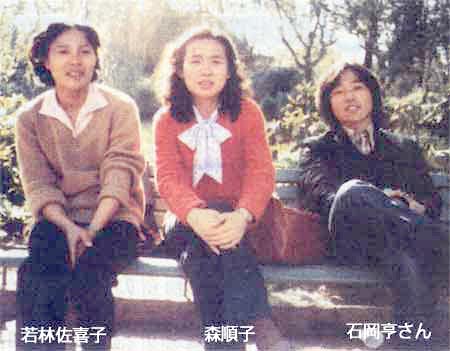
And before turning away, thinking "MTC, you are just being vulgar" consider how much of the abductee movement's pull depends the stories of Soga Hitomi and Yokota Megumi -- who, being minors just going about their daily lives at the time of their disappearance, clearly fit the definition of abduction. Less is said about the disappearances of adults like Arimoto Keiko, who as a student studying English in Europe made the unfortunate mistake of befriending members of the
[For the record it is Arimoto's story that is the most compelling, with her, her husband and infant being murdered after their betrayal by Japan's Socialist Party.]
...where the non-issue over use or non-use of physical force in abduction, where there is illusion of choice, whether to be lured or not be lured, has its clearest parallel.
As for the applause line in the above for the Abe Cabinet's 2007 revision of the Kono Statement, what can one say? Sycophancy is unbecoming to anyone, but least of all to a purported news organization.
Later - My thanks to the readers who pointed out the incorrect terrorist group name.