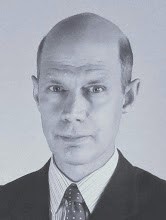
For those like myself who are still confused about what the heck is wrong with Japanese personal consumption, Professor Ono Yoshiyasu of Osaka University offers a two page review of the macro effects of government policies of the last 15 years, with some guesses about the individual saver's thinking processes, courtesy the fine folks at the Australia-Japan Research Centre.
Professor Ono's paper makes for a depressing, if brief, reading experience. He certainly sees little good in the "purging the bad from the system" experiments of the late 90s and early millenium.
The concept of a "stagnation dynamics" is great oxymoronic fun, though.
Monday, March 12, 2007
Sunday, March 11, 2007
Remembering the Brilliantine
The other day I said something on the order of that the problem with the Abe Cabinet is Shiozaki Yasuhisa—and that the problem with Shiozaki Yasuhisa is Abe Shinzō.
What do I mean by that?
Abe had the misfortune of becoming the prime minister after serving a year as Chief Cabinet Secretary. I say misfortune because Abe's service in that post under Koizumi seems to have left him ignorant about the functions of a proper Chief Cabinet Secretary.
Koizumi had a fine set of antennae. He tended to know and pick up rather quickly what the majority of the voters were thinking—or even, better what they would be willing to think, if given a little shove. What Koizumi needed next to him was 1) someone to run the day-to-day business of government, coordinating the activities of the bureaucracies with the political program set by the PM, 2) answer the questions of journalists at the daily briefings, and 3) keep him abreast of right wing thinking.
Koizumi, though a patriotic nationalist, was not a conservative. Intellectually, he preferred liberalism and/or libertarianism. He rarely relied on institutions; was not much a joiner in pressure or power groups; tended not to listen to what the traditional establishment said; and generally behaved in a highly individualistic and self-willed manner. He was hardly a right winger of the nemawashi, kurodokoro and kokutai political tradition. He needed someone close by who could set him straight about what a conservative--a real knee-jerk, fire-breathing conservative--felt about certain issues.
Abe fit the bill, perfectly.
A famous example of Abe's riding to Koizumi's rescue occurred in the immediate aftermath of the announcement of Princess Kiko’s pregnancy. The Diet was set to debate the proposal of opening up the throne to direct primogeniture, creating the possibility of Princess Aiko becoming a reigning empress. At the announcement of Kiko-sama's pregnancy, Abe remarked to Koizumi in a matter-of-fact way that the discussion and the legislation were now moot. Koizumi, to his eternal credit, could not grasp Abe's point. He asked Abe why the effort to revise of the imperial house law could not proceed. Abe, his brain probably bursting from incredulity, managed to explain that if the revision passed, and Kiko-sama gave birth to a boy, then many persons would scream that the Diet had stolen the throne from Kiko's son.
Koizumi, grandson of a dockworker who rose up in the world by eloping the bosses's daughter, who himself has no relationship with his third son, relied on Abe to remind him of the "blood and semen" obsessions of the typical conservative.
Hence when Abe became PM, he named Shiozaki Yasuhisa to fulfill the administrative and communications roles he had played under Koizumi. As for relations with the right wing, Abe would handle these matters himself, as he was one of the right wing's golden boys.
Unfortunately for Abe, he is not Koizumi. He has almost no understanding--emotional, intellectual, gut or otherwise--of what the people are thinking. Indeed, Abe probably really doesn't care.
The problem is, of course, that nowadays, a prime minister sort of has to care what the people are thinking. Politics can no longer be conducted in contempt of the citizenry—or by third parties handing out bags of money.
Hence Abe needs a ugly, old, leather-skinned Chief Cabinet Secretary—an ancient reptile of a pol who could grab Abe by the collar, drag him in the Prime Minister's office, throw him into the big chair there, press down on Abe's left shoulder with his right hand, get right in the PM's face and tell him, "Your mouth is making my life difficult. Now you're going to go out there and say the following to the press. Not one word less. Not one word more. OK? And then when you're done, you will come right back here—because you and I are going to call in a few of your ministers for a little talk. Now get out there."
Shiozaki Yasuhisa is not that person. He is a smart, careful, well-spoken, good-looking conservative with a sense of Japan's place in the world. However, he does not scare Abe in the least—and that's what Abe needs, to be a little less blasé about his and his government's conduct.
What do I mean by that?
Abe had the misfortune of becoming the prime minister after serving a year as Chief Cabinet Secretary. I say misfortune because Abe's service in that post under Koizumi seems to have left him ignorant about the functions of a proper Chief Cabinet Secretary.
Koizumi had a fine set of antennae. He tended to know and pick up rather quickly what the majority of the voters were thinking—or even, better what they would be willing to think, if given a little shove. What Koizumi needed next to him was 1) someone to run the day-to-day business of government, coordinating the activities of the bureaucracies with the political program set by the PM, 2) answer the questions of journalists at the daily briefings, and 3) keep him abreast of right wing thinking.
Koizumi, though a patriotic nationalist, was not a conservative. Intellectually, he preferred liberalism and/or libertarianism. He rarely relied on institutions; was not much a joiner in pressure or power groups; tended not to listen to what the traditional establishment said; and generally behaved in a highly individualistic and self-willed manner. He was hardly a right winger of the nemawashi, kurodokoro and kokutai political tradition. He needed someone close by who could set him straight about what a conservative--a real knee-jerk, fire-breathing conservative--felt about certain issues.
Abe fit the bill, perfectly.
A famous example of Abe's riding to Koizumi's rescue occurred in the immediate aftermath of the announcement of Princess Kiko’s pregnancy. The Diet was set to debate the proposal of opening up the throne to direct primogeniture, creating the possibility of Princess Aiko becoming a reigning empress. At the announcement of Kiko-sama's pregnancy, Abe remarked to Koizumi in a matter-of-fact way that the discussion and the legislation were now moot. Koizumi, to his eternal credit, could not grasp Abe's point. He asked Abe why the effort to revise of the imperial house law could not proceed. Abe, his brain probably bursting from incredulity, managed to explain that if the revision passed, and Kiko-sama gave birth to a boy, then many persons would scream that the Diet had stolen the throne from Kiko's son.
Koizumi, grandson of a dockworker who rose up in the world by eloping the bosses's daughter, who himself has no relationship with his third son, relied on Abe to remind him of the "blood and semen" obsessions of the typical conservative.
Hence when Abe became PM, he named Shiozaki Yasuhisa to fulfill the administrative and communications roles he had played under Koizumi. As for relations with the right wing, Abe would handle these matters himself, as he was one of the right wing's golden boys.
Unfortunately for Abe, he is not Koizumi. He has almost no understanding--emotional, intellectual, gut or otherwise--of what the people are thinking. Indeed, Abe probably really doesn't care.
The problem is, of course, that nowadays, a prime minister sort of has to care what the people are thinking. Politics can no longer be conducted in contempt of the citizenry—or by third parties handing out bags of money.
Hence Abe needs a ugly, old, leather-skinned Chief Cabinet Secretary—an ancient reptile of a pol who could grab Abe by the collar, drag him in the Prime Minister's office, throw him into the big chair there, press down on Abe's left shoulder with his right hand, get right in the PM's face and tell him, "Your mouth is making my life difficult. Now you're going to go out there and say the following to the press. Not one word less. Not one word more. OK? And then when you're done, you will come right back here—because you and I are going to call in a few of your ministers for a little talk. Now get out there."
Shiozaki Yasuhisa is not that person. He is a smart, careful, well-spoken, good-looking conservative with a sense of Japan's place in the world. However, he does not scare Abe in the least—and that's what Abe needs, to be a little less blasé about his and his government's conduct.
Friday, March 09, 2007
Seven hundred and thirty-seven...
....is the number of the day.
737 = number of hours police spent questioning one defendant, trying to get her to confess to vote buying on behalf of a candidate in the April 2003 Kumamoto prefectural assembly election. Others arrested in the purported vote buying scheme, some of them men and women in their 70s, were questioned for over 500 hours.
395 = number of days one defendant spent in jail under administrative detention
With unrelenting pressure applied, the 12 defendants signed police-concocted confessions. However, the judge, looking at the evidence presented, found all the defendants not guilty on February 23.
In the verdict, the judge excoriated the actions of the police, writing:
Yesterday all 11 surviving defendants in the case were delivered from double jeopardy when the prefectural police headquarters chose not to appeal the verdict.
Banzai! Banzai! Banzai!
No, I do not believe the nation's policemen (I reserve judgment on the female members of the force) have the slightest idea what their job is supposed to be.
Why do you ask?
The Asahi Shimbun has more of the gory details.
737 = number of hours police spent questioning one defendant, trying to get her to confess to vote buying on behalf of a candidate in the April 2003 Kumamoto prefectural assembly election. Others arrested in the purported vote buying scheme, some of them men and women in their 70s, were questioned for over 500 hours.
395 = number of days one defendant spent in jail under administrative detention
With unrelenting pressure applied, the 12 defendants signed police-concocted confessions. However, the judge, looking at the evidence presented, found all the defendants not guilty on February 23.
In the verdict, the judge excoriated the actions of the police, writing:
"There was no objective physical evidence* and it is doubtful that the 'meetings to buy votes' ever took place."
* kyakkanteki na shōko - a phrase that seems to be popping up all over nowadays
Yesterday all 11 surviving defendants in the case were delivered from double jeopardy when the prefectural police headquarters chose not to appeal the verdict.
Banzai! Banzai! Banzai!
No, I do not believe the nation's policemen (I reserve judgment on the female members of the force) have the slightest idea what their job is supposed to be.
Why do you ask?
The Asahi Shimbun has more of the gory details.
Some Like It Hotter Still

Ken Belson, writing for The New York Times, had a fairly decent article on Takaozan this week.
However, he missed the big story of the weekend--that the yamabushi of Takaozan have their annual fire walk this Sunday (March 11, at 13:00).
A Mr. Wada Yoshio, a man with a seriously finer camera than mine, has a site with several pages of super photos of last year's festival.
A good thing to go take a gander at on Sunday, if the weather cooperates.
Photo: Preparing the coals for the firewalk
Takaozan, Tokyo Metropolitan District
March 12, 2006
Photo credit: MTC
Some Like It Hot
Matsuoka Toshikatsu, the minister with the golden utility bill, is...
Actual caption: "Kinda hard to keep lookin' cool in such an environment, isn't it?"
Interestingly, judging from tody's shasetsu page, the editors of the Nihon Keizai Shimbun find themselves seriously unamused at Matsuoka's Diet statements of the other day.
I guess the Nikkei folks think that their readership might have a hangup about someone trying to blow off charges of accounting fraud.
I can't imagine why.
Feelin' the Heat.
In Hot Water Now.
In Need of a Cold Shower.
Oh, just make up your own caption.
 Courtesy: Sankei Shimbun
March 9, 2007
In Hot Water Now.
In Need of a Cold Shower.
Oh, just make up your own caption.
 Courtesy: Sankei Shimbun
March 9, 2007
Actual caption: "Kinda hard to keep lookin' cool in such an environment, isn't it?"
Interestingly, judging from tody's shasetsu page, the editors of the Nihon Keizai Shimbun find themselves seriously unamused at Matsuoka's Diet statements of the other day.
I guess the Nikkei folks think that their readership might have a hangup about someone trying to blow off charges of accounting fraud.
I can't imagine why.
Zing!
Amid all the sound and the fury...ANU Professor Tessa Morris-Suzuki is offering the progressive view of the comfort women issue in Japan's 'Comfort Women': It's time for the truth (in the ordinary, everyday sense of the word) with only a tiny amount of gratuitous point scoring.
Oh, why be coy. With some really great gratuitous point scoring:
Even if you think that Abe has received a raw deal in all the coverage, you have to love the parenthetical zinger in the second paragraph.
Oh, why be coy. With some really great gratuitous point scoring:
Abe, of course, has his own history in relation to this issue. Early in 2001, the Japanese national broadcaster NHK made a documentary program about the recently-concluded Women's International War Crimes Tribunal. A few days before the program was due to go to air, NHK's Executive Director General of Broadcasting had a meeting with Abe, who was then Deputy Chief Cabinet Secretary. They discussed the content of the documentary, and immediately after, the program's producers were instructed by NHK management to make last minute alterations which substantially weakened the critical tone of the program.
Four years later, the issue became headline news when an NHK whistleblower came forward to say that Abe Shinzo had exerted direct pressure on the national broadcaster to have the content of the program changed (an intervention which would have violated Japan's public broadcasting regulations). Abe, who admitted discussing the program with NHK staff, denied that his meeting had constituted "political pressure". (Should that have been "political pressure in the narrow sense of the word"?) The story caused a political furore, in which most of the mass media focused on attacking the credibility of the whistleblower.
Even if you think that Abe has received a raw deal in all the coverage, you have to love the parenthetical zinger in the second paragraph.
Wednesday, March 07, 2007
De Re Nakagawa Shoichi
Barking again -- but really rather less than the headline indicates.
My response to the 17.8% growth figure in Chinese defense spending is a bit more sanguine: something's gotta defend all those tankers leaving Port Sudan and Lobito and the ore carriers leaving Cape Lampert and Mejillones.
Last time I looked, "Peaceful Development" ("Peaceful Rise" is sooooo early 2004) does not mean, "Oh no, we have no intentions on becoming a superpower fast."
My response to the 17.8% growth figure in Chinese defense spending is a bit more sanguine: something's gotta defend all those tankers leaving Port Sudan and Lobito and the ore carriers leaving Cape Lampert and Mejillones.
Last time I looked, "Peaceful Development" ("Peaceful Rise" is sooooo early 2004) does not mean, "Oh no, we have no intentions on becoming a superpower fast."
De Re Shiozaki Yasuhisa
In a discussion of the Abe Cabinet's ills, Bruce Wallace of the Los Angeles Times reminded me that Abe Shinzō was Koizumi Jun'ichirō's Chief Cabinet Secretary.
Not a trivial fact...
No, not trivial at all...
It helps to explain how it is that Shiozaki Yasuhisa finds himself forever insisting, "No, no, the ship was designed to sink upon leaving the harbor."
Not a trivial fact...
No, not trivial at all...
It helps to explain how it is that Shiozaki Yasuhisa finds himself forever insisting, "No, no, the ship was designed to sink upon leaving the harbor."
The Tsukioresan-Nantai Traverse
Area represented in the Diet by Kajiyama Hiroshi, son of Kajiyama Seiroku (the "gunjin" of Tanaka Makiko's famous "gunjin, bonjin, henjin" assessment of the choices in the 1998 LDP presidential race).
Daigo Township:
area: 325.8 sq. kms
population in 1955: 42,124 in 7,779 households
population in 2006: 22,103 in 7,337 households
 Fukuroda Falls
Daigo Township, Ibaraki Prefecture
March 4, 2007
 Creeper up a Trunk
Daigo Township, Ibaraki Prefecture
March 4, 2007
 Burnt snag atop Tsukioresan (423m)
Daigo Township, Ibaraki Prefecture
March 4, 2007
 Mt. Nantai (654m)
Daigo Township, Ibaraki Prefecture
March 4, 2007
 Kamiogawa Station at 17:42
Daigo Township, Ibaraki Prefecture
March 4, 2007
Near the border between Ibaraki and Fukushima Prefectures on the Suigun Line. Six and a half hours with a lunch break; concrete steps until saddle, rugged trail thereafter; with huge trees. Cheapest fare is 5900 yen roundtrip. Far out--three and a half hours out by JR local train from Ueno with a layover in Mito.
Photo credits: MTC
Daigo Township:
area: 325.8 sq. kms
population in 1955: 42,124 in 7,779 households
population in 2006: 22,103 in 7,337 households
 Fukuroda Falls
Daigo Township, Ibaraki Prefecture
March 4, 2007
 Creeper up a Trunk
Daigo Township, Ibaraki Prefecture
March 4, 2007
 Burnt snag atop Tsukioresan (423m)
Daigo Township, Ibaraki Prefecture
March 4, 2007
 Mt. Nantai (654m)
Daigo Township, Ibaraki Prefecture
March 4, 2007
 Kamiogawa Station at 17:42
Daigo Township, Ibaraki Prefecture
March 4, 2007
Near the border between Ibaraki and Fukushima Prefectures on the Suigun Line. Six and a half hours with a lunch break; concrete steps until saddle, rugged trail thereafter; with huge trees. Cheapest fare is 5900 yen roundtrip. Far out--three and a half hours out by JR local train from Ueno with a layover in Mito.
Photo credits: MTC
Tuesday, March 06, 2007
Kane to Seiji
It was absolute high comedy in the Diet yesterday as Agriculture, Forestry and Fisheries Minister Matsuoka Toshikatsu tried to avoid asking questions in the House of Councillors Budget Committee about his utility bills. Specifically, how his office in the House of Representatives Office Building (and if you have ever been to a Diet member's office, you know how tiny those damn things are) managed, according to Matsuoka's accounts, to run up a 5 million yen tab in water/sewer/gas/electricity in 2005.
The first problem is, of course, that all utilities are provided free of charge to the offices of Diet members. Indeed, there is no gas, electricity or any other sort of meter in front of the Diet member's office that a meter maid could read in order to determine what the Diet member, his/her political secretary and the two administrative secretaries were using.
The second problem is, of course, 5 million yen is a lot of water, electricity and gas. As Mino Monta pointed out on his morning program, 5 million yen is equal to to the total water/sewerage/gas and electricity bill of a typical family of four (and remember, this includes washing machines, dishes for three meals a day for four persons and a daily ofuro) for NINETEEN YEARS!
Unsurprisingly, Ogawa Toshio of the Democratic Party sort of went to town at Matsuoka's expense:
"You say you have special heating arrangements. What, do you have like a hundred electric heaters in there?"
"We all have a faucet in our offices for the tea and coffee. Do have another faucet or other water connections?"
"Since water, heat and electricity are provided at no charge to Diet offices, why do you have this on your expense report? This is accounting fraud, isn't it?
Great stuff.
The first problem is, of course, that all utilities are provided free of charge to the offices of Diet members. Indeed, there is no gas, electricity or any other sort of meter in front of the Diet member's office that a meter maid could read in order to determine what the Diet member, his/her political secretary and the two administrative secretaries were using.
The second problem is, of course, 5 million yen is a lot of water, electricity and gas. As Mino Monta pointed out on his morning program, 5 million yen is equal to to the total water/sewerage/gas and electricity bill of a typical family of four (and remember, this includes washing machines, dishes for three meals a day for four persons and a daily ofuro) for NINETEEN YEARS!
Unsurprisingly, Ogawa Toshio of the Democratic Party sort of went to town at Matsuoka's expense:
"You say you have special heating arrangements. What, do you have like a hundred electric heaters in there?"
"We all have a faucet in our offices for the tea and coffee. Do have another faucet or other water connections?"
"Since water, heat and electricity are provided at no charge to Diet offices, why do you have this on your expense report? This is accounting fraud, isn't it?
Great stuff.
Subscribe to:
Posts (Atom)