Friday, October 13, 2006

De Re Sakurai Yoshiko

I was trying to determine what it is about Sakurai Yoshiko that drives me up the wall.

I hated the thought that it might be her appearance--that I am creeped out by her choice of foundation (I think it is Shiseidō's "Funereal Beige") and by the mind-boggling amounts of hairspray she must use (if the natural covering on our heads were meant to billow out in an immobile shell like a frozen spinnaker, Amaterasu would have endowed our follicles with little carbon nanotube factories).

I did not want to believe it is her stiff side-to-side head movements.

I would surely be disappointed in myself if it were her alarming voice: a measured, soft and ultimately menacing sibilance that gives Harada Mieko's Lady Kaede a run for her money in the "Yikes!" department.

When I find something distasteful, I do not want it to be simply because of style. I want my unhappines to arise out of a substantive disagreement.

To try to figure out whether I had a real beef with Sakurai's thinking, or whether it was just Sakurai's atmospherics that upset me, I decided to read her writings.

A not very difficult task as the Fuji Sankei Group let her run amok in the pages of Business Sankei every day last week.

So I dutifully photocopied five of her recent essays, and sighed at the prospect of having to pick through her expostulations.

I caught a break yesterday (October 12), however, when I chanced upon Ms. Sakurai's contribution to that day's Sankei Shimbun :

"Abe shushō ni mōsu: Nipponkoku no daisenryaku egake" ("I Tell Prime Minister Abe: Outline the Japanese State's Great Strategy!") [no link]

Boy did that ever sound militant in the English...almost...PRC/DPRK-level militant.

But I digress.

Reading through the pummeling Sakurai-san gives the Chinese government for its fecklessness and the Japanese government for its spinelessness, I realized what it is about her that drives me bananas.

Her consistency.

Her ugly, triumphant glee at wading through the inconsistencies of others, grabbing hold of them and holding them up, wriggling, for all to see.

Paragraph after paragraph of slopping through the reversals, revisions and changes of others, then contrasting them with her (or Japan's, she elides the two sometimes) adamant, unwavering certainty.

It was in that instant I recalled Emerson's dictum:

"A foolish consistency is the hobgoblin of little minds."
A foolish consistency...an inhuman flaying of others for their failings, contemptuous of the historical context within which those failings occurred, followed by the suggestion of a simple, clear and impossible-to-implement counterproposal whose only purpose is to humiliate.

Now that..that is worthy of my dyspepsia.

Or am I just completely off-base?

Later - Due to exhaustion and anger, the original version of the above included two indefensible accusations. I have since removed them.

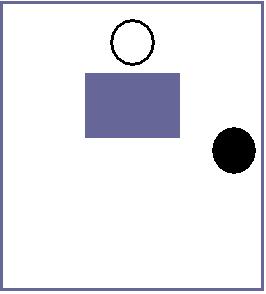
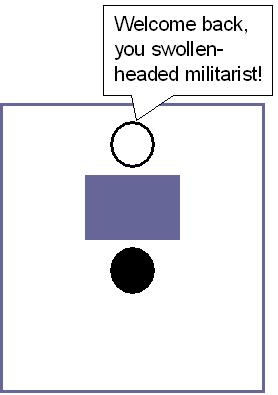
Graphical Analysis of Japanese Sanctions Regime: Simulation Under Actual Economic, Political and Geographic Boundary Conditions

Black to stop play and lose in three moves.

Simulation Start Position


Position after One (1) Move


Position after Two (2) Moves


Position After Three (3) Moves


Run Simulation again? (click one) YES / NO

Les Amours Fous des Sud-Coréens

Pour le Francophones:

Nucléaire : ambivalences sud-coréennes
Le Monde

Par Robert Dujarric - L'essai nucléaire nord-coréen met les Sud-Coréens dans une situation délicate. Ils ne souhaitent pas que des sanctions aboutissent à la chute du régime de Pyongyang, qui conduirait à une réunification. Pour eux, subventionner le Nord est moins coûteux et dangereux que de fusionner avec lui. Heureusement pour les diplomates sud-coréens, l'administration Bush, confrontée au fiasco irakien et au défi nucléaire iranien, cherche aussi à éviter une crise en Asie.

Mais, au-delà des péripéties diplomatiques des semaines à venir, il faut essayer de comprendre ce que représente la "bombe" nord-coréenne pour certains Sud-Coréens. La Corée du Sud est un pays profondément divisé par l'histoire du XXe siècle, comme le fut la France du XIXe entre les admirateurs de la Révolution et les Français en deuil du roi très chrétien.

As Mr. Dujarric notes in the text, South Korea is an odd bird--a country where the progressives are from the backward provinces, proudly and vocally ignorant of the outside world and its ways, while the conservatives are urban professionals with exposure to foreign influences.

Try as I might (Communists versus the LDP? Socialists versus the DPJ?) I cannot think of similar duality for Japan.

Thursday, October 12, 2006

Why I don't

Strange--with everybody and his/her mother commenting on the North Korean nuclear test, I find myself reticent to offer my two yen's worth.

That is saying something--because it is rumored that I have an opinion on EVERYTHING.

Still, a fundamental honesty about the depth of my ignorance prevents me from my usual pontifications.

Let us see if I can pass a simple test to tell whether or not I am worthy to speak about the nuclear test:

Section A: North Korea

1) We all know Pyongyang is the DPRK's largest city. What is the second largest?

2) How long is the DMZ? How wide is it?

3) What are the names of the major agricultural regions?

4) What is the name of the number 3 person in the hierarchy?


Section B: Japan-DPRK relations

1) What is the most valuable export, by total value, from the DPRK to Japan?

2) How much of this good was shipped at the peak of the trade? When was the peak?

3) How much money was being tranferred each year from Japan to the DPRK prior the 1998 missile tests?

4) How much money was tranferred in 2005?

5) How many North Korean passport holders have permanent residence?


Section 3: Disarmament and non-proliferation

1) What is the formula for calculating yield based on energy detected though ground motion?

2) What is the minimal amoung of plutonium necessary to trigger a chain reaction? What is the minimun amount of uranium?

3) What role does deuterium play in nuclear weapons production? What role does tritium play?


I do not know the answers to any of these basic questions.

I have never been to North Korea.

I indeed have never laid eyes on a single bit of North Korean territory.

So what do I know?

Fantasies, rumors, lies and wild, screamingly untethered guesses.

Not a good basis for analysis.

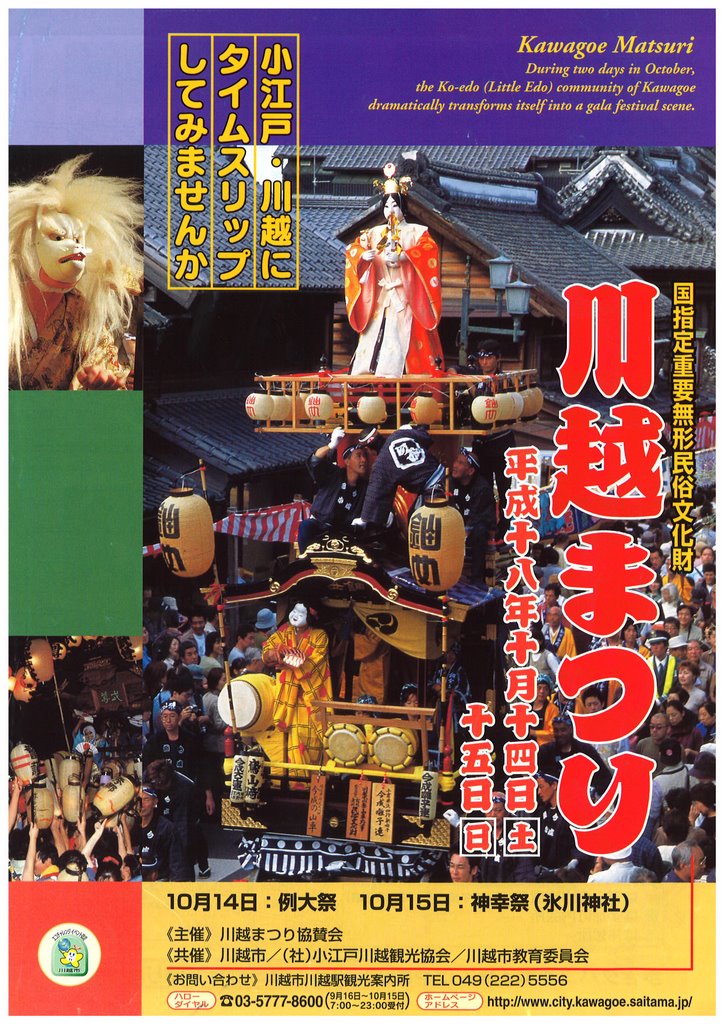
Kawagoe Matsuri, October 14 and 15


If Tokyo is getting you down and you are not going to be taking a trip to Kyoto or Takayama any time soon, then get thee to Kawagoe (via either the JR or Seibu lines) this weekend for the Kawagoe Matsuri.

It looks like a damn decent substitute for the Gion and Takayama matsuri.


To appreciate the town of Kawagoe it is best to make a visit at some other time of the year. It is an especially nice place to go on a day of light rain when one cannot contemplate even spending one more minute indoors.


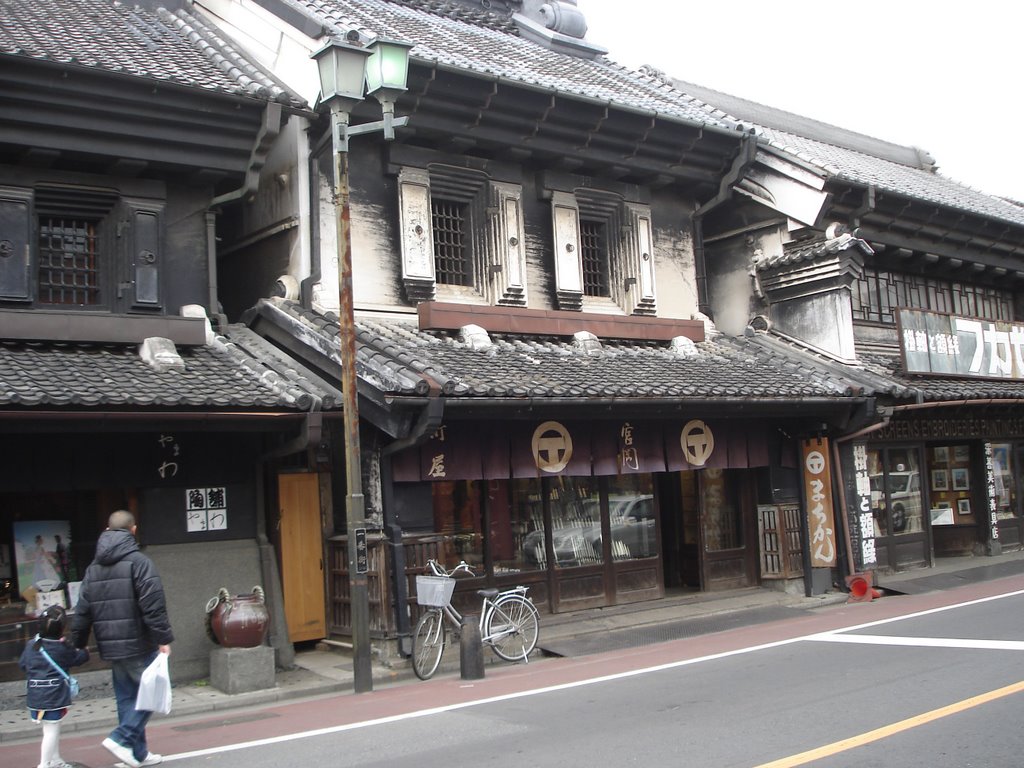
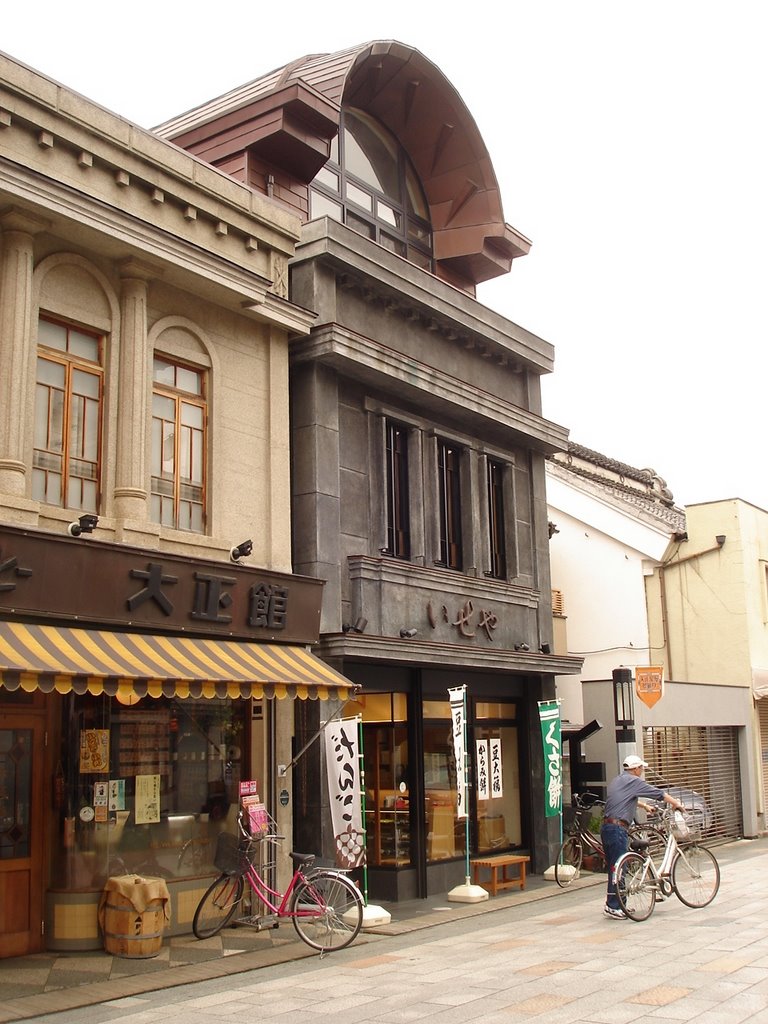
I doubt there is another town close to central Tokyo that preserves so much Edo to Early Showa era architecture (not much on the Meiji side, I'm afraid). While touristy, the kura and Taisho districts are graced with quaint shops containing merchandise I am actually tempted to purchase (make me turn over my wallet when I enter the cutlery shop, for example). The candy lane and the restaurants are charming as all heck.

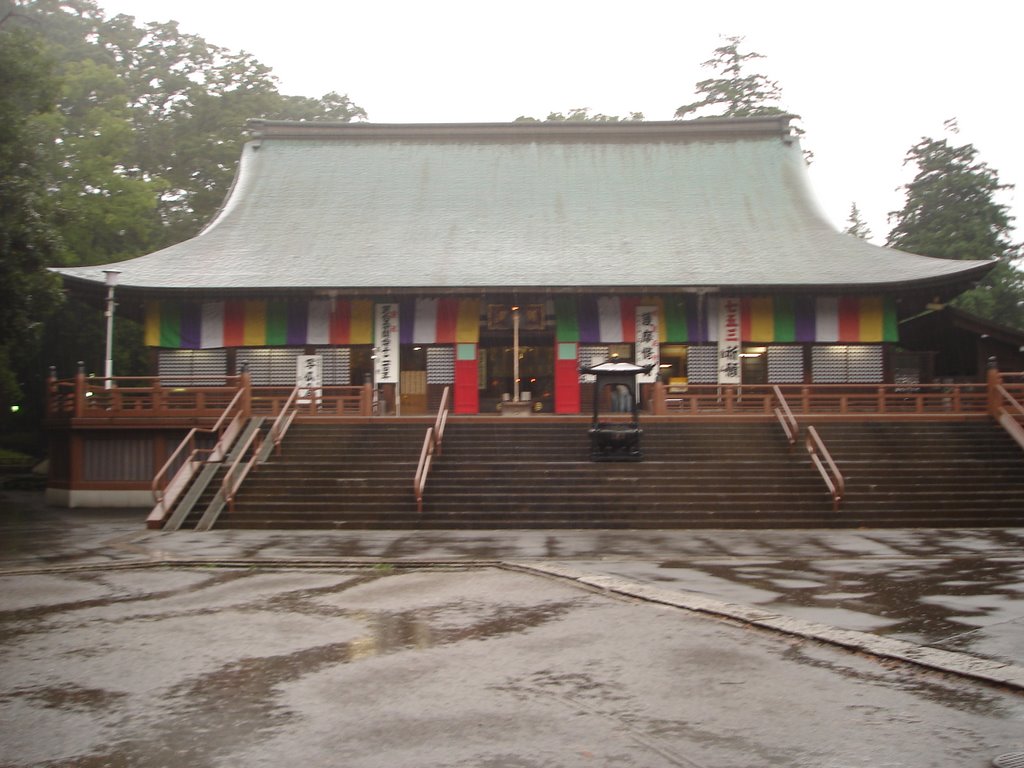
The Kitain on the town east side is an overlooked treasure. Head temple of the Tendai sect in the Kantō, it was shown special favor by the third Tokugawa Shogun, Iemitsu. When the original buildings burned down in 1638, Iemitsu had rooms of Edo Castle disassembled and shipped to the Kitain to replace the lost living quarters. Consequently, the Kitain preserves what I believe are the only surviving Edo Castle interiors.


The time to go the the Kitain is probably in Golden Week when the temple treasures go on display. My guess is the monks are sitting on a mountain of extraordinary stuff.

When I visited in the temple in March this year, someone had tacked up an original Wen Zhengming (1470-1559) landscape scroll behind a mound of some Tokugawa lacquered household crap--directly under the light fixture in a case without temperature or humidity controls.

I nearly had a coronary.

Thursday, October 05, 2006

Understanding the Abes, Not

Maybe somebody could help me out with this.

He is dedicated to education reform--but he attended a single private school all his scholastic life, riding the escalator, never facing juken hell.

He and his wife, furthermore, have no children.

He is interested in promoting pride in being Japanese.

However, half of his speech to the Diet seems to have been in heavily accented English and his government is modeled upon the American White House system. His wife is a fanatic for all things South Korean.

I am no going to use the "H" adjective here...but folks, keeping this Utsukushii Nippon confection aloft is going to take a nauseating amount of spin.

Wednesday, October 04, 2006

Incompletion Backwards Principle

Kim Jong-il is losing his touch.

Where once he could drive three wedges between the countries of East Asia before lunchtime, now all his jiving and jigging just drive them closer together.

In July, he gives a big thumbs up to missile tests.

In response, the Security Council, after some initial hemming and hawing by China and Russia, gives him a big thumbs down, coming down on his government like a load of lumber.

The U.S. and Japan were pushing for a load of bricks...but c'mon, the DPRK and China are allies, for Amaterasu's sake (and just how many of the thousands of DPRK workers allowed to toil in the forests of the Russian Far East have military or security services backgrounds, do you think?)

This time around, I was willing to bet good money that Abe was going to have to burn the Yasukuni card in order to get Hu Jintao to meet him--or at least promise a year-long, renewable moratorium on visits to the shrine

Along comes the DPRK Foreign Ministry announcement of an intent to test a nuclear device...and boom (well, hopefully not boom), the heads of state now have to meet without preconditions in order to talk about this new existential threat to the major cities of the region.

Which means that Abe gets to keep Yasukuni in his back pocket for a rainy day.

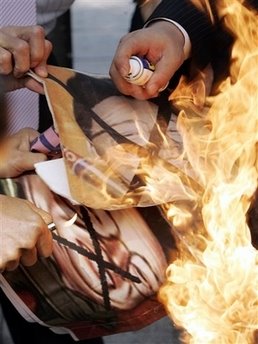
Courtesy: AP Photo


Call me an idiot, but we may be seeing the emergence at last of a new dynamic at work in Northeast Asia.

Somewhere in between the massive shift of the world's manufacturing capacity to China, the war on terror (which has brought U.S. standards of conduct so low it can no longer criticize Russian practices), the endless profligacy of the U.S. government and populace and the immense buildup of currency reserves in the oil authoritarian states and East Asia, the dependable 20th century emnities and knee-jerk rivalries--the stuff that Kim Il-song swam in as though through water--have become tenuous and unreliable.

I would not go so far as buy into all of R. Taggart Murphy's analysis. I think the Chinese bought into what is called Bretton Woods II by accident, trying achieve a completely different goal. Tag agrees to disagree. Still, everybody has a now share in the America-centric game...and if a bunch of American volunteers die in a miserable little war somewhere on an entirely peripheral matter involving one very dim man's desire to show up his father, well, we'll all get to pay for it.

And criticize from the sidelines.

And Kim, looking at the whole, will see the japes and gambols of Presidents Ahmedinejad and Chavez, the petroleum-powered tweekers of America's nose--and completely misunderstand his place in all of it.

Kim, boobie, you have nothing to sell.

You're not in this game at all.

Tuesday, October 03, 2006

Amaterasu, guide us!

Lest we be cast into the seas of fire!

It works like clockwork, doesn't it? I write a post about how sick I am of the racchi mondai's overwhelming the Japanese government's capacity to negotiate with the DPRK.

Eight hours later, the other shoe drops.

North Korea says will conduct nuclear test
Reuters

SEOUL - An increasingly isolated North Korea said on Tuesday it would conduct its first-ever nuclear test, blaming a U.S. "threat of nuclear war and sanctions" for forcing its hand.

(...)

"The U.S. extreme threat of a nuclear war and sanctions and pressure compel the DPRK (North Korea) to conduct a nuclear test, an essential process for bolstering nuclear deterrent, as a corresponding measure for defense," the statement said.

(...)

Japan's new prime minister, Shinzo Abe, said any nuclear test by North Korea would be unacceptable.


Yep, just like stunning success of containing the nuclear program of the Islamic Republic of Iran, all you have to do to keep the DPRK in line is set unreasonble, humiliating preconditions for any negotiation and keep racheting up the pressure through sanctions and international isolation.

Works every time.

Please, count me out

Tonight, barring a miracle, those who dare watch television (as a recovering TV addict who has gone cold turkey I will be either swimming, cooking or riding a train at the time)--you will have a chance to witness what looks like a visit to the Marianas Trench of bathos.


What we all really need to see--a dramatic recreation (guaranteed to be tasteful, believable and not at all maudlin) of the life of Yokota Megumi.


Can the families of the abducted please give the rest of us a break? It is bad enough that they get not only a cabinet-level post and one of the Special Advisor to the Prime Minister posts dedicated to their hopeless cause...but they also are the first non-politicians the new prime minister deigns to meet.

However horribly the government of Japan treated the families of the abducted--and they were treated horribly, do doubt about it--do the rest of us have to have our noses ground into the dirt over it? [No, not really--we could just not watch the program when it airs on Nippon Television (Channel 4) at 21:00 tonight]

Do the surviving family members realize how far beyond the pale they have pushed their complaint? I am so sick of the stranglehold the families and their handlers have on any aspect of North Korea-related policy I am finding myself--Amaterasu help me--in agreement with Gregory Clark.

Eeek!

Monday, October 02, 2006

Standing on their Heads

The editors of the Sankei Shimbun, seeing their beloved champions wounded and bleeding from the sarcastic darts of the Mainichi Shimbun, sing a new, stirring patriotic ode to the "beautiful Japanese" as it is not being taught to elementary school children.

Today's lament: how the limitation on the number of kanji is anti-democratic.


小学生の英語 国語こそ知的活動の基礎

...

言語というものが、単にコミュニケーションの道具だけでなく、知識を習得し、物を考え、ある民族の精神の骨格を形成するのになくてはならぬ手立てであることを、もう一度深く考えてみるのによいきっかけとなった。

戦後の国語政策は知識や情報の大衆化・民主化を目指すという旗印の下、ひたすらその平易化が図られてきた。漢字制限はその最たるもので、小学生の6年間でわずかに1006字しか教えられていない。

 これでは漢字仮名交じり文を基本とする国語文を十分に読む力が養えるはずがない。抽象的思考に使える言葉はほとんどが漢字語彙(ごい)であり、それを漢字制限によって抑制すれば精密で論理的な思考力が身に付くはずもない。美しい詩文や物語に触れて、豊かな情緒を涵養(かんよう)することもままならない。

Before attempting a direct translation, let's have a go at the low hanging fruit.

Call me snide and immature, but if you are going to publish a lament decrying the hopelessness of introducing children to the complexities of certain abstract concepts because the children are not familiar with the kanji of the technical terms then YOU HAD BETTER NOT USE FURIGANA TO SHOW THE PRONUNCIATION OF NOT ONE BUT TWO TECHNICAL TERMS USED IN THAT SAME SENTENCE.

OK, breathe, breathe...maybe irony is a cultural affect. On to the next thought.

Let us see if the statement holds any water (i.e., let us see if we can spot the politics, shall we?)


English for Elementary Students: Our National Language is the Basis of Intellectual Activity

[cut]

Language is not just a tool for communication. It is the acquisition of knowledge, the way of thinking about things, a means without which a certain ethnic group cannot formulate the framework of its ethos. This has become a good chance for us to once more to try to think deeply on this matter.

Under the banner of popularizing and democratizing knowledge and information, education policy in the postwar era has been engaged in singleminded vulgarization. The limitations on the number of kanji embodies this for only 1006 kanji are taught in the first 6 years of elementary school.

It is unlikely that texts of sentences using mixtures of kanji and kana can foster reading abilities. The words of abstract thinking are almost all in the kanji lexicon (LEH-ku-sih-KON). If the restrictions on the number of kanji one can use become a limitation, then the ability to think with precision is not likely to develop. One will not appreciate beautiful poetic language or stories. The fostering of hearty enrapture (en-RAHP-chur) will not take place.

Oh, Amaterasu...where to begin...

[I know that last sentence is weak. I am open to suggestions about other ways to translate 豊かな情緒を涵養(かんよう)することもままならない]

Amaterasu, yes!

About this minzoku (ethnic group) ethos business...which minzoku are you referring to here? All of them, or one in particular--an early 20th centurey construct that sort of excludes zainichi chosenjin, Ainu and Okinawans? Or are we elevating Osaka-ben to a cultural determinant--along with pairing off to tell jokes and an inexplicable longing to leap into fetid rivers? Oh, I know the editors could have been using minzoku to mean just "a people"--but come on, this is the Sankei Shimbun here.

And then there is that funny little problem with kanji...you know what I mean. It is like kan (pause) ji --the "writing" of the "Han" people.

Funny thing is, of course, Japanese are not Han. Not even close.

So kanji--the writing of the Han--really is not Japanese. It is sort of a "borrowed ethos" with a lot of ugly compromises.

Hysterically, of course, kana--the bad guys in the Sankei's version of events--ARE Japanese--they were created by Japanese--in order make comprehensible...the...abstract meanings contained in the imported Chinese...kanji.

And what's more a lot of what is considered "beautiful Japanese"---like the poems in the Kokinshū or the Genji monogatari--they are all in nothing but kana.

Ergo: learning English in elementary school is...oh forget it.