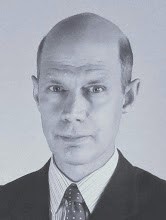
1) Masuzoe Yo'ichi won. However, there is little reason for the Liberal Democratic Party leadership to get all happy about the victory. Masuzoe only just surpassed the total for the two weak anti-nuclear candidates combined, even with 70% of the Liberal Democratic Party voters and greater than 90% of the New Komeito voters voting for him -- at a time when the LDP is eight times as popular as any of the opposition parties.
As for what happens next, Masuzoe has to get along with an LDP-dominated metropolitan legislature. As NHK so kindly reminded Masuzoe and the rest of this morning in the historical review clip prefacing the live studio interview of him, Masuzoe broke away from the LDP in 2009 declaiming, "The LDP's historical role in Japanese politics has come to an end."
Have fun with that.
2) The candidate the Democratic Party of Japan's supported, an ex-prime minister backed by the most popular prime minister of the last 40 years, came in third. Will heads roll at DPJ headquarters? No! Timidity and failure are now party trademarks.
3) The outcomes of Utsunomiya Kenji's candidacy was far from embarrassing. It was also far from victory. Interestingly, he did better the further away one drew from the Metropolitan district's core.
4) Tamogami Toshio received 610,000 votes. That is not enough in the way of a ground force to overthrow the government (not that Tamogami would want to -- in my recollection, Prime Minister Abe Shinzo appointed him head of the country's Air Self Defense Forces). However, it sure makes for a nice base from which to recruit new members for Tamogami's hard core revisionist, paranoid and xenophobic Ganbare Nippon! organization. We should also expect that his rallies, which were merely attracted thousands, will now attract tens of thousands, marching and shouting without police intervention (or Ishiba Shigeru complaining about the noise, I am guessing) right past the Diet buildings.
This was a fundraising and membership drive for Tamogami. The news media, by shying away from hard looks at Tamogami's past and his followers and their intimidating methods for whatever reason, served as silent enablers to this fiasco.
Go try to tell the South Koreans and Chinese this morning about Japan's deeply ingrained pacifism. They will laugh.
Monday, February 10, 2014
Sunday, February 09, 2014
What Could Have Been - The Tokyo Governor's Election Edition

Campaign flyers for Tokyo Metropolitan District Governor's election. Left: Hosokawa Morihiro. Right: Tamogami Toshio. Click on image to open in large format.
Well let me tell you 'bout the way she looked
The way she'd act and the colour of her hair
Her voice was soft and cool
Her eyes were clear and bright
But she's not there.
- Rod Argent, "She's Not There" (1964)
This morning, election morning, the residents of the Tokyo Metropolitan District will be waking up to a city covered with a record-breaking but rapidly melting mass of snow. Fitting is it that a brief, intense and yet somehow empty gubernatorial campaign season ends with the metropole stuck beneath in a cold, damp white blanket.
Former Minister of Health, Labour and Welfare Masuzoe Yo'ichi seems guaranteed victory. He managed to campaign without controversy, on what seemed to be the unchallenging proposition, "Yes, I am good enough." And "good enough" seems indeed good enough to prevail, if enough of the electorate tramps out in the snow to the election centers.
Former Prime Minister Hosokawa Morihiro ran on the premise of "Utsunomiya Kenji, the anti-nuclear candidate, is too uninspiring to win" -- which might be true. However, Hosokawa turned out to be even less inspiring Utsunomiya or indeed any reasonably animate human being. Despite the electric jolt of having former prime minister Koizumi Jun'ichiro as buzz creator, Hosokawa's campaign was pretty much dead on arrival. As Okumura Jun pungently put it, "at least the Vasa sailed 1300 meters before it sank, much better than Hosokawa's candidacy." - Link).
Utsunomiya Kenji's candidacy needed more time. This seems weird for a candidate who did not stop running for the governorship even after losing to Inose Naoki in a landslide. In the year after finishing a distant second, Utsunomiya made 130 public appearances, as if he knew he was going to get another shot at the governorship soon. Of all the candidates, only Utsunomiya was ready from the git-go, his posters appearing in my mailbox the first day of the campaign season. As the campaign season progressed and voters could take a look at him his candidacy became more credible -- especially in contrast to Hosokawa's.
However, the presence of two strong anti-nuclear candidates, one supported by the traditional left parties, one not, divides the progressive and nuclear-phobic vote, meaning Utsunomiya seems destined to finish second again.
The candidature of former Air Self Defense Forces Chief of Staff Tamogami Toshio has been a travesty from beginning to end. The man has no business running for a local assembly seat, much less the governorship of the world's mightiest megalopolis. The news media, which should have buried him on the first day under a mountain of ugly facts about him and his followers, instead have at times seemed gleeful enablers of his candidacy. He will end up with an entirely revolting number of votes, most of which will come from voters who know next to nothing about him.
The voters of Tokyo, of course, have a right to feel robbed. In the build up to former governor Inose Naoki's resignation, the parties and the news media speculated about a whole raft of potential candidates, pretty much any of whom could have prevailed against the current core quartet. On the Liberal Democrat Party side, the potential nominees included Environment Minister Ishihara Nobuteru (whose home was literally around the corner from mine way back when in Suginami-ku), Education Minister Shimomura Hakubun (like he would ever give up that portfolio), former Finance Ministry bureaucrat/Koizumi assassin/Mr. Masuzoe and self-image train wreck Katayama Satsuki and former multiple Winter and Summer Olympian Hashimoto Seiko (I am sure Senator Hashimoto much prefers being where she has been, marching at the head of the Japan delegation at the Sochi games). On the Democratic Party of Japan side there was discussion of nominating of Nagatsuma Akira, the bureaucracy's bête noire.
Of December's would be candidates, there was one potential matchup that would have really sizzled. If only the Abe Shinzo LDP had put its reputation on the line by following up on the rumors and nominating Koike Yuriko to be its champion, with the Democrats responding in kind with Ren Ho. That would have been a battle for the ages, pitting sharp looks with sharp minds and even sharper tongues -- and one worthy of the prize that is Tokyo.
Saturday, February 08, 2014
From Russia With ?

Well, that sure was icky.
No, not the Frieze of Dictators views in the VIP section at the Opening Ceremonies of the Sochi Olympics (Aliev and Narzabayev and Lukashenko...whoa, Lukashenko!).
No, not the "Wow, Such A Lot of Countries Vladimir Putin Would Like To Conquer" parade of nations that escaped from the clutches of the Soviet Union two decades ago (Hmmm, Lithuania! So small, so...flat).
Not the poor Georgians, unable to decide what faces to wear as they trudged out onto the field of Putin's colossal Potemkadrome.
Not the reimagination of Soviet times as a march of red wheels (a reference to Solzhenitsyn?), red scarves, Constructivism and awesome red, white and black graphics (CCCP Cool - hey, every nation's leaders, except Japan's of course, have a right to remember their country's past in the manner they prefer, right?).
No, it was the sight of Prime Minister Abe Shinzo, waving wanly, with, no, not his wife Akie standing by his side. No, with his too constant companion, the Second Stupidest Man to Ever Serve in the Kantei™ *, by his side.
On second thought, if you are attending an ex-KGB agent's propaganda extravaganza, best to bring your own administration's Trofim Lysenko with you.
On third thought, maybe it was a kind of protest against the Russia's LGBT laws.
Which, if that was what it was, is noble, bold, edgy and icky.
-------------------------
* "Second Stupidest Man to Ever Serve in the Kantei" is actually the nicer of my two set phrases describing Seko Hiroshige.
Image source: screen shot of NHK rebroadcast
Friday, February 07, 2014
Trying A Little Machiavelli, Mr. Suga?

The Abe Administration has been hitting a rough patch of late. Abe Shinzo allies have been torching the government's credibility. Attempts at damage control have been eating up the PM's and the Chief Cabinet Secretary Suga Yoshihide's time and attention. I am perhaps not alone in being puzzled at how poorly the Abe Administration has been handling a string of embarrassments, after being almost impervious to scandal during its first year in office.
Most surprising has been the seeming passivity of Suga. As each new nonsensical, indefensible situation has rolled up, he has dismissed it with an airy "oh, so-and-so was just stating a private opinion" or "there is nothing legally wrong with what X-san has done" -- as if he were unaware how his excuses were undermining his reputation as a super-competent manager and spokesman.
When faced with a situation of seeming senselessness, I try to remember Bruce Pandolfini's 13th Commandment of chess:
"If you can't see the point of your opponent's move, assume there isn't any."
However, what has been perplexing in the case of Suga has not been his choice of moves. It has been his lack of movement. In a more orderly and business-like world -- the world of the first year of the Abe Cabinet, let us say -- Momii Katsuto, Hasegawa Michiko and Hyakuta Naoki would all have resigned from their NHK positions by now. Nothing would be allowed to fester and serve as a distraction from the overall, multi-year march toward a more powerful Prime Minister's Residence and a more powerful Japan.
Suga, after a year when he seemed in total command, seems lethargic and reactive, letting the news cycle and scandal swallow up the agenda.
Perhaps the above dictum needs to be turned on its head. Inverted, it reads:
"If you can't see the reason for your opponent's inaction, assume there is one."
So let us assume that Suga Yoshihide is appearing wan and listless on purpose. Why would he want to do this?
1) Punish Abe for Yasukuni
According to the narrative published in the Yomiuri Shimbun late last year, Abe humiliated Suga in December, rejecting Suga's pleas to not go to Yasukuni. In the account of what took place before and on December 26, Suga simply swallowed his pride and set about composing an apologetic statement for Abe to read after the Yasukuni sanpai.
But what if Suga did not simply swallow his pride? What if, in suitable pique, he decided to let just Abe run things for a while, making insincere excuses for Abe's buddies violations of The Prime Directive -- "only Abe Shinzo gets to burn Abe Shinzo's political capital"?
What if Suga were simply just letting the Abe Revolution falter, just to remind a too-big-for-his-britches Abe who the de facto prime minister is?
Or
2) Let the Crazies Run the Asylum For a While Because We Will Make Them Sad Later
Abe today is off for Sochi, Russia, set to have a tête-à-tête with President Vladimir Putin in concert with being one of the few Western Alliance leaders to attend tonight's Winter Olympics opening ceremony. Today is, by unfortunate coincidence, Northern Territories Day -- the day when the government reminds all of us of its failure to heretofore win back the four islands and collection of islets of the Southern Kuriles, lost to the Russians in 1945.
It is well-known that one of Abe's main goals is a peace treaty with Russia, finally ending World War II. It is second in importance only to the revision of the Constitution, on a par with the economic revival of the nation. It is also well-known that not even a judo-loving and nearly untouchable Putin is thinking of conceding the reversion of all of the Southern Kuriles/Northern Territories.
Signing a peace treaty will require Abe to sacrifice, accepting the return of at best Shikotan and the Habomai group -- basically the same deal Japan was offered and which it rejected in 1956.
Letting the revisionist crazies run amok for a while prepares the foundation for a searing betrayal of these same crazies and their principles "for the good of the nation." From a theatrical point of view, it is after the fanatabulists make a hash of things that Abe/Suga can stab them in the back with a "half-a-loaf is better than nothing" solution for the vexing problem of the peace treaty, ignoring rightist demands for every square centimeter of the Southern Kuriles and nothing less.
In other words, Suga, either with or without Abe's consent, is letting Abe's most dangerous and frivolous friends make fools of themselves so that he can bin them when it is time for the adults to sit down and cut a few deals.
So perhaps the deterioration of the Abe Cabinet governance this winter is not a bug. Maybe it is a feature.
Original image courtesy: Reuters
Thursday, February 06, 2014
Not That Many Dolphins Killed - An Update

The Fisheries Research Agency (Suisan Sogo Kenkyujo - pictured above) has an opening for a small cetaceans data specialist. Applicants have to possess a Ph.D. in a relevant discipline or have a Ph.D. completed by the start of the employment term. The position is open to both men and women researchers, with full maternity and child leave benefits.
The applicant would be expected among other duties to be able to calculate the maximum harvestable yield of dolphins and whales in Japan's near seas. If you have a Ph.D. in cetacean studies or statistical biology there is a job waiting for you in the Kanazawa district of Yokohama City. Your application, however, is due TOMORROW (February 7).
Here is the pdf of full job description. (Link - J)
What of interest to me is the figure in the body the job description of "approximately 2,000 head" as the total number of 9 species of dolphins and small whales killed in harpoon and drive hunts in 2012. This is the strongest evidence so far, in the absence of official figures, that my guess of a week ago -- that the quoted canonical figure of up to 22,000 small cetaceans being killed each year in Japanese hunts -- is off by an order of magnitude.
It seems that aside from the smaller Short Finned Pilot Whale harpoon hunt of Okinawa (about 34 animals), the smaller Baird's Beaked Whale hunt of Wadaura, Chiba Prefecture (24 animals) and a tiny (10?) number of Baird's being landed in Hokkaido, the only area still in the business of hunting small cetaceans is Taiji, in Wakayama Prefecture. Activists watching the drive hunts there have counted approximately 600 dolphin killed in the first four months of the hunting season (Link). This number of kills at this point in the season would indicate that the"approximately 2,000 head" figure for all small cetaceans is the new Japan normal.
The 2,000 figure, an 80% drop from the number being killed only five years ago, would also validate another of my suspicions: that there is no commercial market for dolphin meat. It is basically a free good, a supply searching for a demand, a by-product, now, of a need to kill dolphins in order to provide a cover story for Taiji's lucrative live dolphin trade.
From The Holy Crap Department, An Announcement
"Shusuke Nomura gave his life to the Divine in front of a lot who do not believe that a human being can communicate with the Divine through one's life," Hasegawa stated. She added, "No matter what the (late Emperor Showa's) Humanity Declaration said, and no matter what the Constitution states, our Emperor once again became a living god" through Nomura's act, effectively rejecting the Constitutional stipulation that the Emperor is a symbolic monarch.Nomura Shusuke was an ultra-right activist and party leader. On 20 October 1993 he committed suicide in the guest reception room on the 15th floor of the headquarters of The Asahi Shimbun. He had demanded a meeting with the persons responsible for the publication of a derogatory drawing depicting his Association of the Wind (風の会) as The Louse Party (虱の党). Not getting the attention he felt he deserved, he shot himself.
The Hasegawa in the above quote is Hasegawa Michiko, one of the three persons whom Abe Shinzo appointed to Board of Governors of national broadcaster NHK on October 25 last year. The quoted remarks are from a memorial essay she published as part of a special tribute to paid to Nomura on the 20th anniversary of his suicide.
I am not making this up.
Seriously, I am not making this up.
Read the Mainichi Shimbun's English-language article about the whole matter here.
It is official now: the excrement has hit the rotary air motion device.
Wednesday, February 05, 2014
May Have Got Memo, Did Not Read It
Dear Japan Communist Party,
Please check your email. There should be a message from the Liberal Democratic Party, the New Komeito and the Democratic Party of Japan.
If it is not there, it should be. As a stopgap, I am forwarding what I believe is a translation of the main body of the text:
Later - If the above is unintelligible (Since you wrote it, would unintelligibility be a surprise? - Ed.) it is in reference to this (have looked, have not found an English-language source).
Please check your email. There should be a message from the Liberal Democratic Party, the New Komeito and the Democratic Party of Japan.
If it is not there, it should be. As a stopgap, I am forwarding what I believe is a translation of the main body of the text:
Hashimoto Toru is resigning as mayor of Osaka City in order to win reelection to office. He wants to claim a mandate for his One Osaka plan.
Holding a by-election will cost the taxpayers money.
If we all pull together and agree to refuse to run candidates in this by-election, Hashimoto can be reelected without an actual vote, saving the taxpayers their money.
This automatic reelection will solve nothing because the situation in the assemblies will be as they were. Furthermore, since there was no actual polling of the electorate, Hashimoto will not be able to claim a mandate.
If we hang together on this we come out looking like fiscally prudent, sober folks. Hashimoto comes out looking like the petulant child.
What is he going to do? Call another election to replace the one we would not let him have?
Let us stay focused on the goal: getting him to resign and not run for reelection.
If we stick together on this we can send him back to daytime television, where he belongs.
Later - If the above is unintelligible (Since you wrote it, would unintelligibility be a surprise? - Ed.) it is in reference to this (have looked, have not found an English-language source).
And In Other News
I cannot say I am a huge fan of Martin Fackler's everything-including-the-kitchen-sink take on the travesty of Momii Katsuto becoming the president of NHK (Link). I much prefer Jonathan Soble's article on the ongoing collapse of the national public broadcaster's reputation. (Link)
To be frank, worrying out loud now about the deterioration of independence of the NHK news department seems almost coy. After years of simultaneously stolid and enervated reporting, NHK News loosened up and show some of its latent capabilities during the brief summer of the Democratic Party of Japan's turn as the party in power, pulling out of the vault some stories it had long shelved and allowing its reporters to take some liberties.
When it became clear that Abe Shinzo was returning to the premiership, however, NHK newscasts quickly became all but unwatchable. Not for obvious pro-government pieces but for the glaring lack of pieces critical of government.
"Amaterasu! Not another heart-warming tale of plucky Tohoku tsunami survivors trying to cope with the loss of their hometowns followed by cute animal tricks videos culled from the Internet. Aaarggh, switch me one of the commercial channels, quick."
The disastrous and highly visible train wrecks of Momii and Abe's choice for the NHK Board of Governors Hyakuta Naoki (click here to see Michael Penn's awesome photograph of Hyakuta at the problematic rally for Tokyo gubernatorial candidate Tamogami Toshio) are at least taking place in the public arena. Discussion of NHK News's retreat into quiet, problematic self-censorhip (How can one reliably quantify the stories and facets of the news a network has not reported? Long-time viewers and admirers can see the changes happening, but how to prove the existence of absences?) is relegated to the whispering of presumed fools and ideologues.
Far more serious for the serious news hound than NHK's managerial troubles is Tokyo Broadcasting's abandonment in March of the "Asa Zuba!" morning talk show newscast (Link). A new morning program, whose format remains a secret, with a pretty young thing from Nihon Terebi as the main co-anchor, will be replacing what has been, even in founder's Mino Monta's absence, the most consistently progressive, skeptical and entertaining newscast on television.
To be frank, worrying out loud now about the deterioration of independence of the NHK news department seems almost coy. After years of simultaneously stolid and enervated reporting, NHK News loosened up and show some of its latent capabilities during the brief summer of the Democratic Party of Japan's turn as the party in power, pulling out of the vault some stories it had long shelved and allowing its reporters to take some liberties.
When it became clear that Abe Shinzo was returning to the premiership, however, NHK newscasts quickly became all but unwatchable. Not for obvious pro-government pieces but for the glaring lack of pieces critical of government.
"Amaterasu! Not another heart-warming tale of plucky Tohoku tsunami survivors trying to cope with the loss of their hometowns followed by cute animal tricks videos culled from the Internet. Aaarggh, switch me one of the commercial channels, quick."
The disastrous and highly visible train wrecks of Momii and Abe's choice for the NHK Board of Governors Hyakuta Naoki (click here to see Michael Penn's awesome photograph of Hyakuta at the problematic rally for Tokyo gubernatorial candidate Tamogami Toshio) are at least taking place in the public arena. Discussion of NHK News's retreat into quiet, problematic self-censorhip (How can one reliably quantify the stories and facets of the news a network has not reported? Long-time viewers and admirers can see the changes happening, but how to prove the existence of absences?) is relegated to the whispering of presumed fools and ideologues.
Far more serious for the serious news hound than NHK's managerial troubles is Tokyo Broadcasting's abandonment in March of the "Asa Zuba!" morning talk show newscast (Link). A new morning program, whose format remains a secret, with a pretty young thing from Nihon Terebi as the main co-anchor, will be replacing what has been, even in founder's Mino Monta's absence, the most consistently progressive, skeptical and entertaining newscast on television.
Very Kind Of Them #16
Over at the East Asia Forum, Peter Drysdale and his esteemed team have published my look at the Tokyo Metropolitan District's electing a new governor.
As of today Masuzoe Yo'ichi seems assured of victory, with Utsunomiya Kenji again coming in second and Hosokawa Morihiro limping in in third place. The scary possibility is that General Tamogami Toshio (Ret.) has a more than a decent chance of finishing in the top three.
Tokyo governor election to spell trouble for the LDP?(Continue Reading)
On 9 February, voters in the richest municipality in the world, the Tokyo Metropolitan District, will elect a new governor. Despite the job's many attractions, Japan's stultified political parties were unable to find candidates within their own ranks. Instead, they have had to line themselves up behind independents — all men (there are no women running) who have either burned their bridges with the established parties or never had any bridges at all...
As of today Masuzoe Yo'ichi seems assured of victory, with Utsunomiya Kenji again coming in second and Hosokawa Morihiro limping in in third place. The scary possibility is that General Tamogami Toshio (Ret.) has a more than a decent chance of finishing in the top three.
Tuesday, February 04, 2014
Money Flows To Where It Is Respected, Dudes
From The Wall Street Journal:
In other words, Japanese equities markets are not where you park your investment money. They are where you have fun -- or not, as the case may be -- with your gambling money. Gambling is all one can do in the globe's great graveyard for both value and activist investing.
To abuse another metaphor, you cannot talk to a Japan equities investor about climate change, only the weather. You cannot go into detail about how rising sea levels will eat away at the beach, spill over the seawall, undermining and finally washing away the foundation of the beach house. A Japan equities investor really only needs to know about the surf report, dude.
Which is why I continue to be amazed/appalled at the present government's infatuation with equities markets.
"In terms of investor flows into and out of equities, Japan behaves very much like an emerging market, even though it's an advanced industrialized region," said Norihiro Fujito, senior investment strategist at Mitsubishi UFJ Morgan Stanley Securities.
(Link)
In other words, Japanese equities markets are not where you park your investment money. They are where you have fun -- or not, as the case may be -- with your gambling money. Gambling is all one can do in the globe's great graveyard for both value and activist investing.
To abuse another metaphor, you cannot talk to a Japan equities investor about climate change, only the weather. You cannot go into detail about how rising sea levels will eat away at the beach, spill over the seawall, undermining and finally washing away the foundation of the beach house. A Japan equities investor really only needs to know about the surf report, dude.
Which is why I continue to be amazed/appalled at the present government's infatuation with equities markets.
Subscribe to:
Posts (Atom)