Thursday, September 21, 2006

Fun with Graphs 2: Lies, Damned Lies and Reports from Japan

In reporting on euphoria, Hans Gremiel of the Associated Press suffers from something remarkably reminiscent of amnesia.
Japan's next leader faces economic juggle
AP

by Hans Gremiel - September 20, 2006 - TOKYO
(...)

Koizumi has been one of Japan's most popular and longest-serving prime ministers for good reason.

Under his watch, unemployment has dropped, the stock market has rocketed, the government has been streamlined and bad debt has been mopped up at the nation's banks. The public corporations running the nation's highways have been privatized, and he passed a plan to do the same to the post office. Corporate profits have climbed and Japan's economy has now expanded for six straight quarters.

Uh, Hans? Rocketed?

Pulled out of a steep nose dive, maybe.

Seriously, how has the stock market performed under Koizumi's premiership?

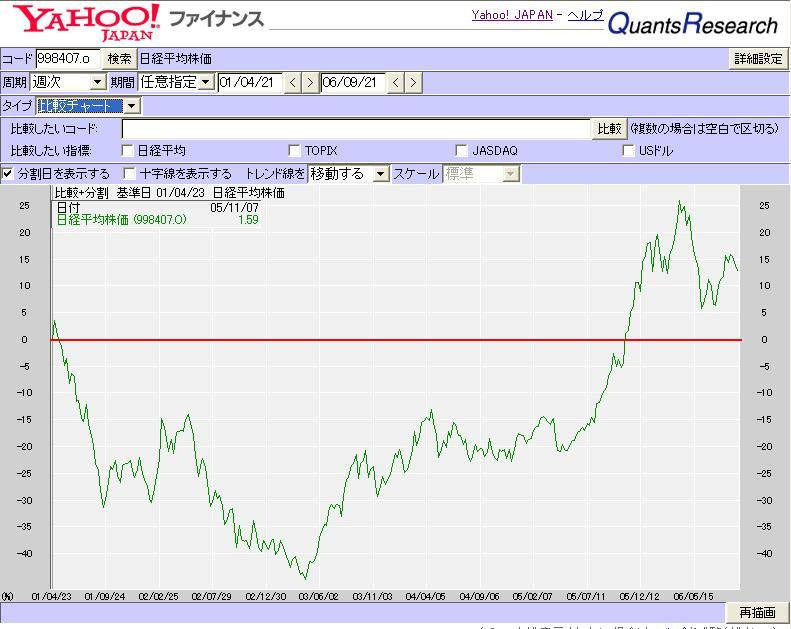
Let's look at a snapshot of Nikkei's performance from April 21, 2001, when Koizumi was elected LDP party president, until today.

The graph comes courtesy of Yahoo Japan's Quants service. I have added a red line to show the zero line.


Yowsa, up almost...13%...over 5 1/2 years.

After being underwater for 4 1/2 of those 5 1/2 years.

Yep, looks like we're in hagi, boys and girls.


Please, Please Don't Go to Yasukuni (and I'll Feel Fine)

The Chinese official media's continuing silence on the relationship between Abe Shinzō and leaders of the Tsukurukai remains deafening.

Not one peep about textbooks.

Abe urged to keep his word, mend ties
China Daily

China expressed hope yesterday that the newly-elected president of Japan's ruling party will "make sincere efforts" to improve Sino-Japanese relations.

(...)

"We hope the new LDP leader can match his words with action and make sincere efforts for the improvement of bilateral relations," said Foreign Ministry spokesman Qin Gang.

Abe who has repeatedly declared that he seeks better ties with China is set to succeed Junichiro Koizumi as Japan's prime minister next Tuesday, given the LDP's majority in the House of Representatives which has the final say in the choice.

He has defended Koizumi's pilgrimages to the Yasukuni Shrine, where Japan's war dead, including World War II criminals are honoured; and refused to say whether he would visit the shrine as prime minister.

"The key to solving the present difficulties is for the Japanese leader to make an early resolution on removing the political barrier of the shrine visits, and bringing bilateral relations back on to the normal track," Qin told a regular news briefing on Tuesday.

Judging from Abe's political record and his words and actions while serving as chief cabinet secretary in the cabinet of the outgoing prime minister, it is hard to expect breakthroughs in the settlement of disputes between the two nations, said Zheng Donghui, a researcher on Japan at the China Institute of International Studies.

The son of a foreign minister and grandson of a prime minister, Abe has positioned himself as a hawkish politician. Pacifists say Abe is a nationalist who will push for a militarized Japan, while supporters claim he just wants a stronger foreign policy.

"Anyway, he can't avoid the problem of the Yakusuni Shrine, on which he has to make a wise political decision if he wants to improve Sino-Japanese relations," Zheng said.

Mea Maxima Culpa - In a previous post, I said that Yagi Hidetsugu and Shimada Yōichi were the chairman and vice chairman of of the Tsukurukai.

Neither is correct.

Yagi stepped down from the position of chairman to the position of vice-chairman in March of this year. In May, he resigned from position of vice chairman.

Shimada Yōichi was a Senior Editor of the Tsukurukai's civics textbook.

Missing from my list of close Abe confidants associated with the Tsukurukai is Kyoto University professor Nakanishi Terumasa.

Nakanishi resigned from the Tsukurukai's Board of Directors on May 22, 2006.

Fun with Graphs 1: National tastes

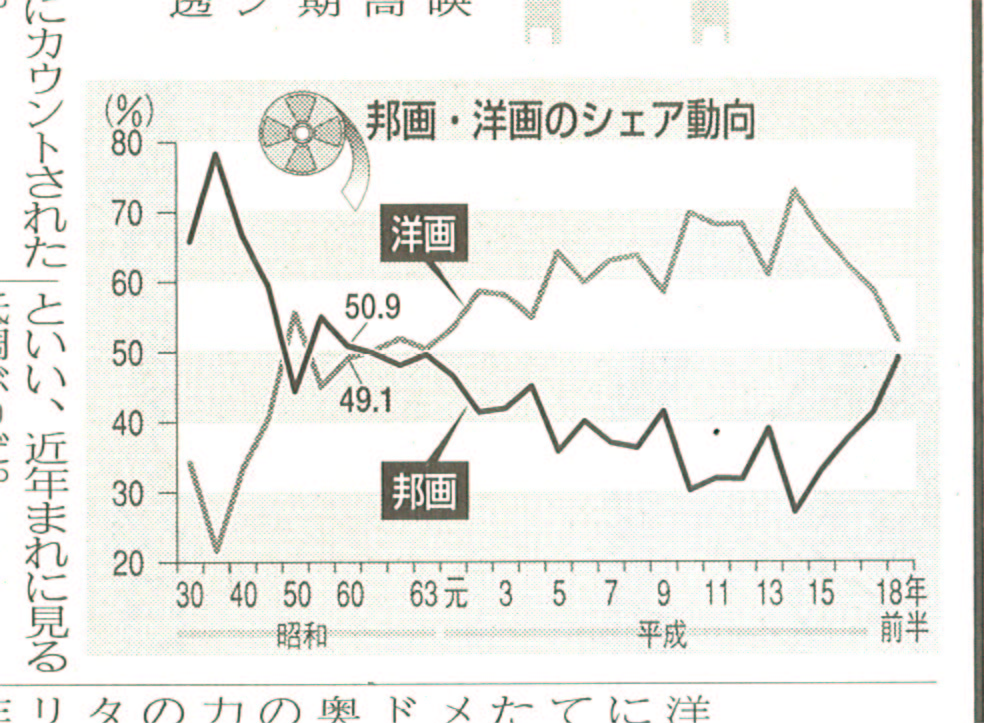
Monday's Sankei Shimbun had an interesting graph of the relative shares of Japan's box office receipts captured by Japanese and non-Japanese films since 1955. The graph shows a recent, steep resurgence of the share of the filmgoer's yen being taken in by Japanese-crafted films

For the first time since 1985 (Showa 60), box office receipts of films made by Japanese studios and independents (dark line) are likely to surpass the receipts of imported films (light line). From an absolute nadir just 8 years ago (Heisei 10 - 1998), when local films captured only 27.1% of all receipts, the share of the box office captured by Japan's filmakers rose to a tantalizing 49% in the first six months of 2006.

To what can we attribute this stunning rise in the popularity of local product over imports?

1) Hollywood is producing more and more awful films

2) Japanese filmakers are producing better and better films

3) Japanese filmakers are making more films that people like (the article quotes critics as saying that Japanese filmakers are making more emotive "date movies" while Hollywood keeps churning out CG-enhanced action spectacles)

4) Rising Japanese nationalism

OK heck, not even the Sankei even gave half a moment's though to #4. Can it.


Courtesy: Sankei Shimbun

Wednesday, September 20, 2006

A Mad Proposal

On Reversing the Depopulation of the Inaka

One of Abe Shinzō's most difficult tasks in this double election year will be to resist the demands of the 41 prefectures not named Tokyo, Saitama, Kanagawa, Chiba, Aichi or Fukuoka for greater public spending.

A big loss in the April local elections will place excrutiating pressures on the Cabinet and the LDP leadership to promise to open up the public purse, especially as the ousted LDP rebels are playing sweet footsie with a suddenly pro-inaka Democratic Party.

So how if the LDP chooses about a really, really radical response--one that proposes to shift private-sector economic activity into the smaller citites and less populated prefectures?

How about proposing a law charging huge tax penalty for any of the 40 largest companies in Japan (in terms of revenues) having their headquarters in Tokyo, Kanagawa, Chiba or Saitama Prefectures--and furthermore setting a legal maximum of five Top 40 companies headquarters in any one todōfuken?

Think of the benefits:

Security - a wider geographic distribution of Japan's economic assets and corporate centers will prevent a natural or man-made disaster from wiping out Japan's economy. (It will also diminish Tokyo's value as a target)

Reversal of local population loss - companies will either bring their employees and their families with them or will hire locally, giving young people a reason to stay in their native districts or move to unfamiliar surroundings

Regional identity - companies will by necessity support the educational , social and cultural organizations of the home of their new headquarters. In doing so, they will keep regional identies alive through people and financial support

Breaking the cycle of stupid - the truly big companies would finally be at a far remove from the ministries and each other, making collusion and intimidation more difficult. The greater remove will also make it much harder for society's leading lights to arrange meetings in bars or on golf courses--the two places where the really, really stupid ideas first come bubbling up out of the mental murk.

The tax penalty would only apply to the top 40 companies...but because a possible shift in the revenues ranking could put them in jeopardy, the companies in spots 40 through 60 would likely have move out the central prefectures as well, as a precaution.


It would be like the end of the sankin kōtai.

Paging George Orwell

It is like shooting elephants in your underwear...

Nationalist candidate wins vote for Japanese ruling party presidency
Associated Press

(...)

"[Abe]'s from the generation that doesn't know war," said Takashi Sasagawa, an LDP member of parliament's powerful lower house. "Not knowing war is his strength, because he can be on equal terms with other countries."

War is Peace.

Freedom is Slavery.

Ignorance...is...Strength.

****

Sasagawa has his base in Kiryu, Gunma Prefecture...and Amaterasu preserve me, I cannot pass up this one chance to post the "Absolutely Worst Japanese Pronunciation Pun Ever."

Here it goes:

An English-speaking foreigner asks his Japanese co-worker about his weekend plans.

"So, do you have anything special planned for this weekend?"

"Yes," replies the co-worker with great zest and a big smile, "I'm going to Kiryu."

If the above makes no impression, try reading the joke out loud.

Monday, September 18, 2006

Odd bits and pieces of what I do know

Sign of the times - The local Jonathan's (Kamiyachō crossing) finally threw in the towel. A new sign on the front door announces that it will be open from 7:00 a.m. to midnight.

So much for 24 hour service...and do not even ask me about the qualifications of the current cook on the morning shift.

They've run out of impoverished Chinese students, I guess.

So what's the new plan?

Patrick Smith has a new article out from his series on Japan after 5 years of Koizumi -- this time on the new relationship between employees and work.

Freer spirits take root in Japan's firms
International Herald Tribune

By Patrick L. Smith - TOKYO You know there is something a little unusual about Yasuyuki Nambu, chief executive and president of the human resources company Pasona, when his assistant starts talking about the farm in the basement of headquarters in central Tokyo.

For a minute there you thought she said "farm."
For the flip side of the equation, the new management paradigm, see his article of three weeks ago "Made in corporate Japan: New approach to business".


Michael Zielenziger writes in from wherever it is he has been hiding since he left Tokyo. His new book, Shutting out the Sun: How Japan created its own lost generation comes out tomorrow in the United States.

It's about people who hide--and try to stay hidden.

He's back - We are all hiding in some way. Some of us for a good reason.

In all the hubbub these past few weeks over whether or not the LDP exiles should be allowed to return to the fold...
EDITORIAL: Rebels return to haunt LDP
The Japan Times

Wednesday, Sept. 13, 2006 - An aftereffect of the legislative battle over postal service privatization a year ago now vexes the Liberal Democratic Party leadership. It is how to treat Diet members who rebelled against the party by voting against the privatization bills.

Of about 60 Lower and Upper house LDP members who cast "no" votes, nearly 40 were told to leave the party. Even though many of these rebels are no longer party members, some of them still possess political resources that the party leadership would like to tap in next year's Upper House election., the most infamous of the Diet's dearly departed quietly slipped back into his party's good graces.
...the reabsorption of the most notorious, most destructive agent of the past year back into the body politic from whence he sprang went by unnoticed.

OK, it happened on the same day as Abe's announcement of his candidacy, so the story kind of got buried.

Yes, Origami Man, the saviour of the final seven months of the Koizumi premiership, quietly and without any fuss, returned to the Democratic Party on September 1.

Oh that Ozawa Ichirō--Mr. "Values for the 21st Century"--he'll take you as long as you're warm.

Sunday, September 17, 2006

I do not think that phrase means what you think it means

Far be it from me to step down from the commanding heights to giggle at an inappropriate appropriation of the English language...but a political poster I passed on the street today must set a new standard for inadvertent self-parody.

English-language slogans are almost always awkward, or at least forced. Kanebō's masterful "For Beautiful Human Life" is a personal favorite. It is heartening to see a Japanese corporation fully prepared for the presence on Earth, either currently or sometime in the near future, of sentient non-human lifeforms with money to spend.

In the "Uhh, are you sure you want to say that?" category, the absolutely wildest error (Warning: Incipient Vulgarity Alert) I have come across in my years here was in a flyer I received on the street from a matchmaking service. The company's slogan, in lovely cursive, mauve script, was:

"Let Cupid Come on You!"

Uh......uhhhm...mmm...hmmm

Today, however, I believe I have seen a mistake that rivals the error in the wedding arranger's flyer, minus the salaciousness.

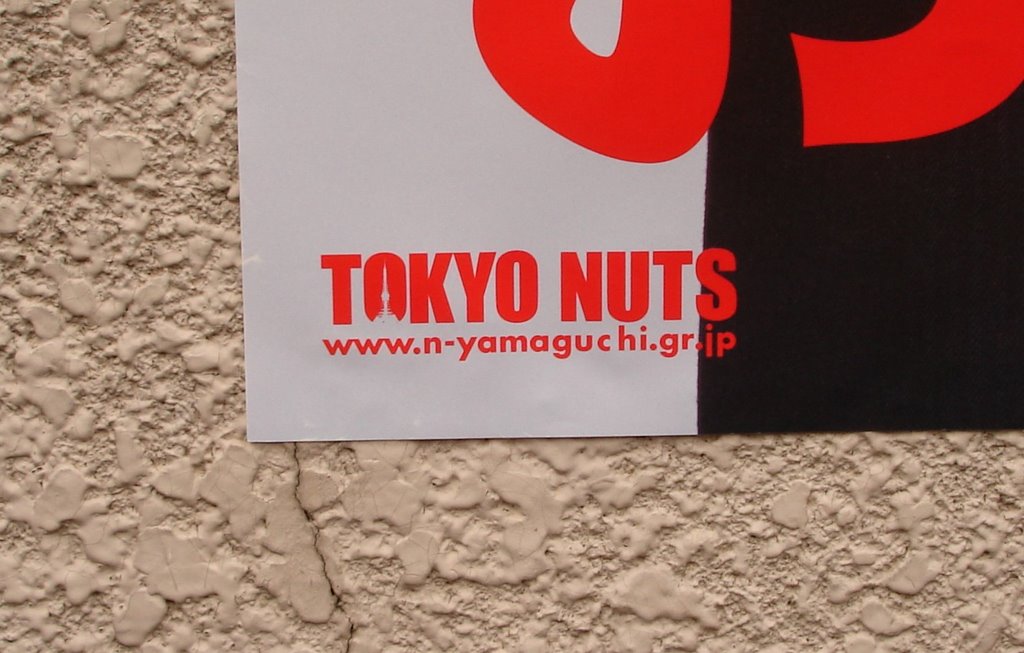
Yamaguchi Natsuo is a Kōmeitō member of the House of Councillors. The poster is for a speech he is going to be delivering in front of the West Exit of Shinjuku Station on May 3, 2007.


May 3, 2007.

Well, there's nothing quite like getting the word out a little ahead of time.

Sadly the words that I am likely to recall from this episode are not the ones he is going to say but those printed in one corner of his poster.

There are those who say the Kōmeitō is a political front organization for a fanatical authoritarian religion. This is an utterly unfair and prejudiced depiction. The Kōmeitō is a political front organization for Japan's largest unregulated provider of microfinance.

Anyway, among those who describe the Kōmeitō and its voters in less than flattering terms there are those who say that for the most part, Kōmeitō voters and candidates are...well, non compos mentes.

In need of screwdrivers.

Black and white waterbirds printed on Canadian $1 bills.

Well, it seems, the Tokyo branch of the Kōmeitō, far from being coy about this, has coming right out with it.

OK, could we have a tight shot of the bottom lefthand corner?

Heckuva job, English-Language Slogan Committee.

Thursday, September 14, 2006

It should be a firing offense...

...to reprint a Kyōdō news bulletin without a disclaimer.

Yes, yes, Kyōdō (Everybody owns us; nobody controls us!) and its already tenuous relationship with the truth have gone through another rough patch.

Japan eyes sending troops to Lebanon: report
Xinhua

Japan is considering sending its ground troops to Lebanon to provide logistical support as U.N. peacekeepers, Kyodo News reported Thursday, citing government sources.

The envisioned move comes after a cease-fire between Hezbollah and Israeli troops in southern Lebanon went into effect Aug. 14 following an earlier passage of a U.N. resolution that urges an end to hostilities between the two parties, it said.

(...)
The report goes on to describe recent mass sightings of flying pigs, demonic ice skating competitions and ethical consumer lending company debt collection practices.

Oh, hold your horses, Lily--somethin's wrong with the Kyōdō report, it seems.

Japan denies reports that it will send troops
Associated Press

Japanese officials have denied reports saying that the country plans to send troops to Lebanon.

The Kyodo News agency had previously reported that the Japanese government was studying a plan to provide logistical support for the UN Interim Force in Lebanon monitoring the cease-fire between Israel and Hizbullah, citing unnamed government officials.

The Kyodo report said it remained uncertain whether Japan would approve the deployment given strong concerns over possible recurrence of fighting in southern Lebanon.

The final decision is expected to be left to the new Japanese government, which will be launched later this month after Prime Minister Junichiro Koizumi steps down, Kyodo said.

Government officials denied a Lebanon mission was in the works.

"We are not considering a dispatch as reported," said Natsuko Sakata, a Foreign Ministry official in charge of Japan's peacekeeping operations.
Oh, shucky darn.

Guess we will just have to chalk it up to incompetence...again.

Wednesday, September 13, 2006

Further Thoughts on the New Nationalists

Patrick L. Smith, who is not based in Tokyo but in Hong Kong, took a valiant stab this weekend at trying to elucidate the differences in the nationalisms of Koizumi Jun'ichirō and Abe Shinzō (full disclosure: Mr. Smith and I have a meal together every time he comes up for a visit):
Uncertain legacy: Japanese nationalism after Koizumi
International Herald Tribune

By Patrick L. Smith TUESDAY, SEPTEMBER 12, 2006

(...)

But Abe's record is more nuanced than Koizumi's, and he appears to be purposely circumspect when nationalism and sensitive diplomacy intersect. While he is known for his tough views toward Asia, he earned this reputation by speaking out forcefully when North Korea admitted several years ago to abducting Japanese citizens.

"He took a firm stance on an issue involving people's security," said Tsuneo Watanabe, a foreign policy expert at the Mitsui Global Strategic Studies Institute. "This is the essence of Abe's appeal. He actually doesn't say much about China, and I doubt he has hawkish views toward anybody, especially the Chinese."

Abe also has two opportunities Koizumi did not enjoy, policy analysts say. He can guard his high reputation among conservatives and nationalists by striking the required poses while naming a foreign minister capable of talking to Beijing and Seoul at a productive level - a realist, in Sakakibara's terminology.

Equally, Koizumi's Koizumi's brand of nationalism has been influenced by traditional sources of support that are in decline. His promise to visit Yasukuni appears partly to have reflected an effort to win the backing of the Association of Bereaved Families, a group representing those with enshrined relatives.

This association is now losing its previous prominence, as even the children of the war dead are aging. Several weeks ago the association's head, a senior Liberal Democrat, spoke in favor of removing controversial war criminals from the shrine - an important signal that the association is aware of the damage the shrine has done Japan.

Abe may thus be less beholden to elements representing an older, somewhat archaic kind of nationalism in the Japanese context. If so, a product of that tradition may prove more responsive to a newer and more vibrant stream in Japanese thinking.

Now this is almost--but not quite--completely mistaken.

Patrick Smith's analysis and reportage are solid. No problems there.

It is is his sources--Katō Kōichi, Sakakibara Eisuke, Watanabe Tsuneo--who let him down.

It is the data input problem: garbage in--garbage out. This trio have not understood Koizumi. They will not understand Abe.

The fundamental analytical thrust remains correct, however; Koizumi's and Abe's nationalisms are different.

Koizumi's nationalism is a nationalism of sentiment (whether or not such a nationalism is "archaic" or not depends on what one thinks archaic means, I suppose).  It is grounded in the notion of noble sacrifice--of the longing to believe that the flower of Japan's youth did not die in vain. That Japan won or lost the war is secondary--what is insupportable is the repudiation of the valor of those who died fighting in protection of the nation--no matter the ideological reason for their sacrifice.

Hence Koizumi's tearful visit to the former airbase of the kamikaze or his recent visit to the former haunts of Yoshida Shōin (OK, OK, it did not hurt that Abe is ostensibly from Yamaguchi Prefecture--but Hagi is not in Abe's district, is it?)

When Koizumi goes to Yasukuni saying he prays for peace, he is not being glib. He feels he is honoring the millions of young Japanese who paid the ultimate price for the security of the nation.

In Koizumi's world view, it is those who would negate the nobility of these sacrifices who are the enemies of peace. For them, each death was just a historical accident, a lemming's death, an instance of being swept over the edge by the force of a river of humanity suddenly set in motion.

Koizumi wants the world to acknowledge the humanity of the individual Japanese soldier, sailor or rescue worker--and bristles when he is told that he cannot do so in the manner he sees proper. It was when the Chinese and South Korean governments tried to dictate to him what he could and could not do that they become his enemies.

(Note, this is exactly the same active template Koizumi used to identify his enemies on the domestic front. Resistance to his desired way of doing things--not ideology or theory--made one the enemy.)

Abe and the new nationalists have a very different agenda.

Their enemies are:

1) The 1947 Constitution
2) The postwar education system
Normally, by extension, any product of these two working together would be the new nationalist's enemy as well.

Unfortunately, the product of the constitution and the postwar education is what I believe is commonly called the nippon kokumin - i.e., the modern Japanese citizen.

So, in addition to the Constitution and the education system, the new nationalists are enemies of the people.

And it is the people's fault.

The new nationalists take as a given, without ever having conducted a poll to confirm this point, that the populace shares their soul-searing mortification over the 1947 Constitution.

They believe that the people cannot for even one more instant countenance that the founding document of the postwar Japanese state was written up, not by Japanese scholars and lawmakers, but by the idealists at SCAP.

Again, the "people" who share this feeling of inadequacy are the same ones who have done very, very well--thank you very much---living under this constitution for 60 years--and who in some instances (let us say for a little over 50% of the total population) owe all their civil rights to the 1947 Constitution.

The faith in this untested theory--that the people are red-faced with shame at the present Constitution--is the origin of the Abe campaign promise for a constitution made "by our own hands" (and not "by my own hands", as The New York Times would have us believe).

I do not doubt, with the persuasive powers of the prime ministership, Abe will be able to generate support for this idea where none existed before.

Still do the citizens truly despise themselves?

As to the education reform, it is Abe's passion. A product of a private school education from the day he was weaned, he believes the students of public schools are prisoners of an out-dated, unpatriotic and anti-Japanese curriculum, frozen amber by Communist Party control of the teacher's union (Nikkyōsō) and underpowered school principals.

Abe supports a complete revision of the Basic Education Law mandating patriotic thought and teaching.

Of course, we all know what happened when the Kōmeitō's legal experts saw the last LDP draft revision of the Basic Education Law with the new patriotism provisions inside.

They, uh, did not like it.

The problems do not end with the domestic scene. Indeed, the real excitement with education reform legislation will come on the international stage.

I foresee China and South Korea going ballistic (oh, please, let it not be literally!) when they realize that Abe's tight circle of advisors on education reform--the five gentlemen collectively known as "Abe's Brain"--include Yagi Hidetsugu and Shimada Yōichi--the chairman and vice chairman of the Atarashii rekishi kyokasho no Tsukurukai (a.k.a., the Tsukurukai).

If he thinks he is going to slip that one past the Chinese and the Koreans--aiiieaaaa!!!

We will live in interesting times.
Tuesday, September 12, 2006

Now where were we...

...before I took off a little time off to go chase after butterflies?
Ah, yes...the plat du jour, the Koizumi-Abe transition.

Freshman Bryan Walsh in the Time office gets off a good shot today--picking up on the issue that has put a hammerlock on the foreign policy apparatus of Japan: the decades of mockery and abuse suffered by the families of the abducted.
The Abe Enigma
Time

By BRYAN WALSH TOKYO - Monday, Sep. 11, 2006

It was hard enough for Shigeru Yokota to know that his only daughter Megumi had suddenly disappeared one day in 1977, almost certainly kidnapped off the street like a string of other Japanese by North Korean agents. But to turn for help to his country's officials--the very people responsible for the safety of Japanese citizens like Megumi--and be met with indifference, or worse: that was a special kind of pain. "At the beginning the government was not supportive at all," says the 73-year-old Yokota, sitting in the lobby of his apartment complex in rainy Kawasaki, a city west of Tokyo, posters of Megumi pinned to the walls. "People would just slap the petitions out of our hands." But when the Yokotas met Shinzo Abe, they knew they'd encountered a different kind of politician.
It was a hell of a lucky guess by Abe--not only that this handful of families not only had suffered an identifiable injury at the hands of their own government, working almost in concert with the DPRK (unlike the Socialist Party, which actually did work in concert with the DPRK, leading to the murders of Arimoto Keiko, Ishioka Toru and their infant daughter)--but that Kim Jong-il's government would ultimately confess to the kidnappings.

A hell of a bet--as risky as any taken on by the lucky Mr. K. himself. The whole matter could have gone nowhere, with the DPRK denying everything.

To this day I do not know why Kim Jong-il admitted his wrongdoing--unless Tanaka Hitoshi had paid him cash up front.

Oh, some say he had his reasons...about 10 billion of them... which never did seem to pan out for him, somehow...

Anyway, Kim's admission transformed Abe into a crusader in the Koizumi mode--a tribune of the people, fighting the branches of the governing structure that had betrayed them.

In Koizumi's case, the enemy of people was the LDP, the postal system and the construction state--the triumvirate that had sucked the life out of the Japanese economy while wreaking havoc on the nation's environment.

In Abe's case, the traitors were in the mandarinate, particularly the Ministry of Foreign Affairs (to be really particular, the MOFA Bureau of Asian Affairs). They had not only not helped the Yokotas, the Hasuikes, the Arimotos...they had actively disparaged their claims.

Which indicates that the incoming Abe may have a bit of a problem holding on to his steadfast reformist image--not that declaring a 5 year timetable for revising the constitution has done him any good.

(Five years? Is he nuts? Why not get the referendum legislation passed and the draft on the table in the next 9 months? Or does he have another way of setting the Democratic Party's pants on fire?)

Koizumi ran a neverending campaign against the recalcitrant elements in his party while the Cabinet and the bureaucracy ran the country. Somebody kept the business of government going even as the LDP warred with itself. Koizumi had thus the freedom to play the reformer even as actual reforms were progressing through the Diet or through the commissions at a snail's pace.

Abe, by contrast, cannnot make the bureaucracy into his nemesis. He must work hand in glove with the bureaucrats to keep the country going.

He also has little leeway to fool around in the political playground - he will be starting out with a huge mandate from his own party. Not for change, mind you, as was the case with the first election of his predecessor, but for a slowdown or even reversal of recent changes.

Furthermore, the DPJ under Ozawa Ichiro seems intent on pre-emptively adopting every single one of the worst anti-progressive ideas of the "forces of resistance" within the LDP.

Abe is going to be hard-pressed to find a worthy domestic foil, an internal enemy against whom he can array his own policy agenda.

(Note to ponder: why is the DPJ gearing up for run against Koizumism now?)

Abe's brain trust will be of no help at all. His fellow travelers are gearing up for an assault upon their boogeymen--a defeatist, masochistic, individualism-worshipping education system and radical, unpatriotic, leftist academics.

Yep those academics--killers every one. It is such a fine line between reading Gramsci and firing bullets out of the Asama Mountain chalet.

Don't those damn academics know--socialism is for propping up local economies of LDP-controlled rural districts and for sunset industries, not for building a culturally neutral intellectual framework for skeptical, rational thought as guard against an unfortunate national predeliction toward authoritarianism (I know I am committing a thought crime here, but is there any other way of explaining those damn graphs?)

Like their homologues in the United States and the Vatican, Japan's new nationalists are declaring war upon the 1960s--thirty years after the fact.

Janis, Jerry, Jimi, Jim, John the XXIIIrd and Ienaga Saburo have shuffled off this mortal coil. When will these folks get over it? Many of them are scarcely older than I am--so what the hell do they remember of the Sixties anyway?

Never and nothing.

Pathetic.